Global buyers evaluating a concrete block machine no longer make decisions based only on the country of origin. Production capacity, repeatability, automation, maintenance requirements, spare parts availability and the ability to integrate the machine into a complete production line are far more important.
This has created a strong opportunity for Turkish machinery manufacturers.
Turkey has developed a broad industrial manufacturing base serving Europe, the Middle East, Africa, Central Asia and other international markets. In the concrete products industry, Turkish-made block machines can offer an important combination of engineering capability, flexible project development and competitive investment cost.
However, being manufactured in Turkey does not automatically make a machine suitable for international production requirements.
A concrete block machine intended for global projects must be evaluated by the same criteria applied to any serious industrial investment: mechanical stability, vibration performance, hydraulic control, automation, mould precision, production consistency, documentation, after-sales support and complete-line compatibility.
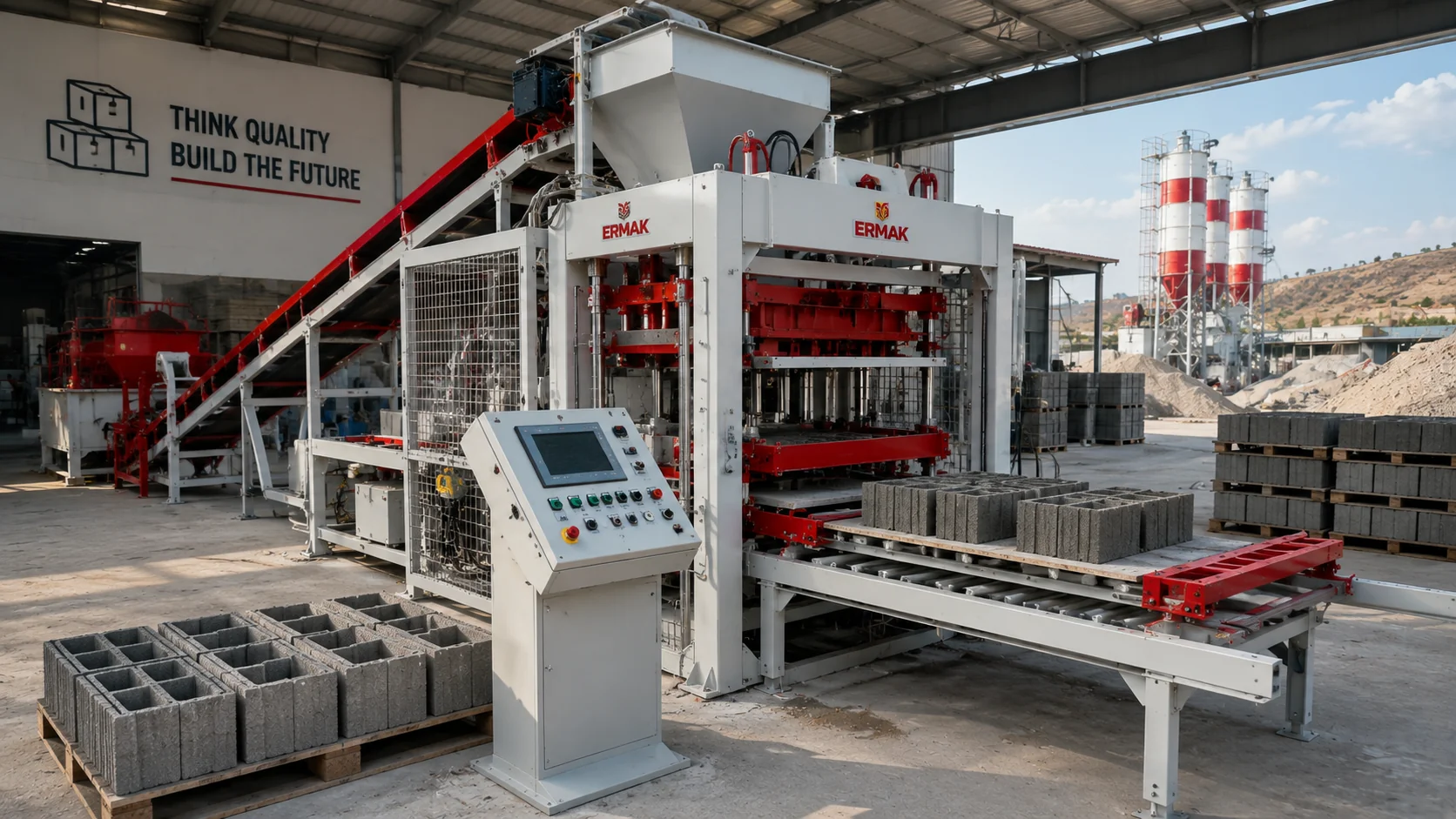
At Ermak Makine, our approach is based on this broader production perspective. The objective is not simply to manufacture a machine that completes a cycle. The objective is to build a system that can repeatedly convert concrete into saleable blocks, pavers and other concrete products under real factory conditions.
What Do Global Production Standards Mean in Concrete Block Manufacturing?
The term “global production standard” can easily become a marketing phrase if it is not defined properly.
For a concrete block plant, global production expectations are not represented by one single certificate or one technical specification. They are the combined result of machine design, product consistency, operational reliability and support throughout the machine’s working life.
A buyer in Germany, Saudi Arabia, Kazakhstan or an African market may have very different raw materials, labour costs and production targets. Yet the fundamental expectations are similar.
The machine should be able to operate consistently, maintain product geometry, support repeatable production recipes, allow efficient maintenance and deliver stable output over long production periods.
This is why global quality should be evaluated through measurable production performance rather than country perception alone.
Mechanical Structure Is the Foundation of Production Stability
A concrete block machine operates under repeated vibration, hydraulic movement and pressing forces.
The machine frame therefore has a direct influence on long-term production stability.
The objective is not simply to make the machine as heavy as possible. The main structure must be designed so that the mould area, vibration system and pressing group maintain their geometric relationship during repeated operation.
Small alignment problems may not be obvious when the machine is running empty. Under continuous vibration and thousands of production cycles, however, they can contribute to uneven wear, inconsistent product height or unnecessary mechanical stress.
For international buyers, frame quality should therefore be assessed as part of long-term production performance rather than only as a specification on a quotation.
Vibration Technology Must Deliver Repeatable Compaction
Vibration is one of the most important systems in concrete block and paver production.
Its purpose is not simply to generate maximum vibration force. The real objective is to compact the concrete mixture consistently inside the mould.
A strong vibration system that cannot be controlled accurately may not provide the same production quality as a well-balanced system with repeatable settings.
The behaviour of vibration should be considered together with the machine frame, production pallet, mould and concrete mix.
For manufacturers producing different products, flexibility also becomes important. A standard hollow block, paving stone and kerbstone may require different production parameters.
The machine should allow these settings to be controlled and repeated without depending entirely on the experience of one individual operator.
Hydraulic Control Affects Both Speed and Consistency
Hydraulic systems are responsible for many of the critical movements inside a concrete block machine.
The pressing group, mould movement and other mechanical operations must be completed at the correct speed and in the correct sequence.
High hydraulic pressure alone does not guarantee production quality.
A more important question is whether the machine performs the same movement consistently from one cycle to the next.
If hydraulic movements become unstable as the system heats up, or if pressure varies unnecessarily during production, cycle time and product quality may both be affected.
This is why hydraulic system design, cooling, filtration and maintenance accessibility should all be considered during machine evaluation.
Automation Should Reduce Variation, Not Add Complexity
Modern concrete block production requires automation, but more automation does not automatically mean a better plant.
The most useful automation is automation that makes production easier to control.
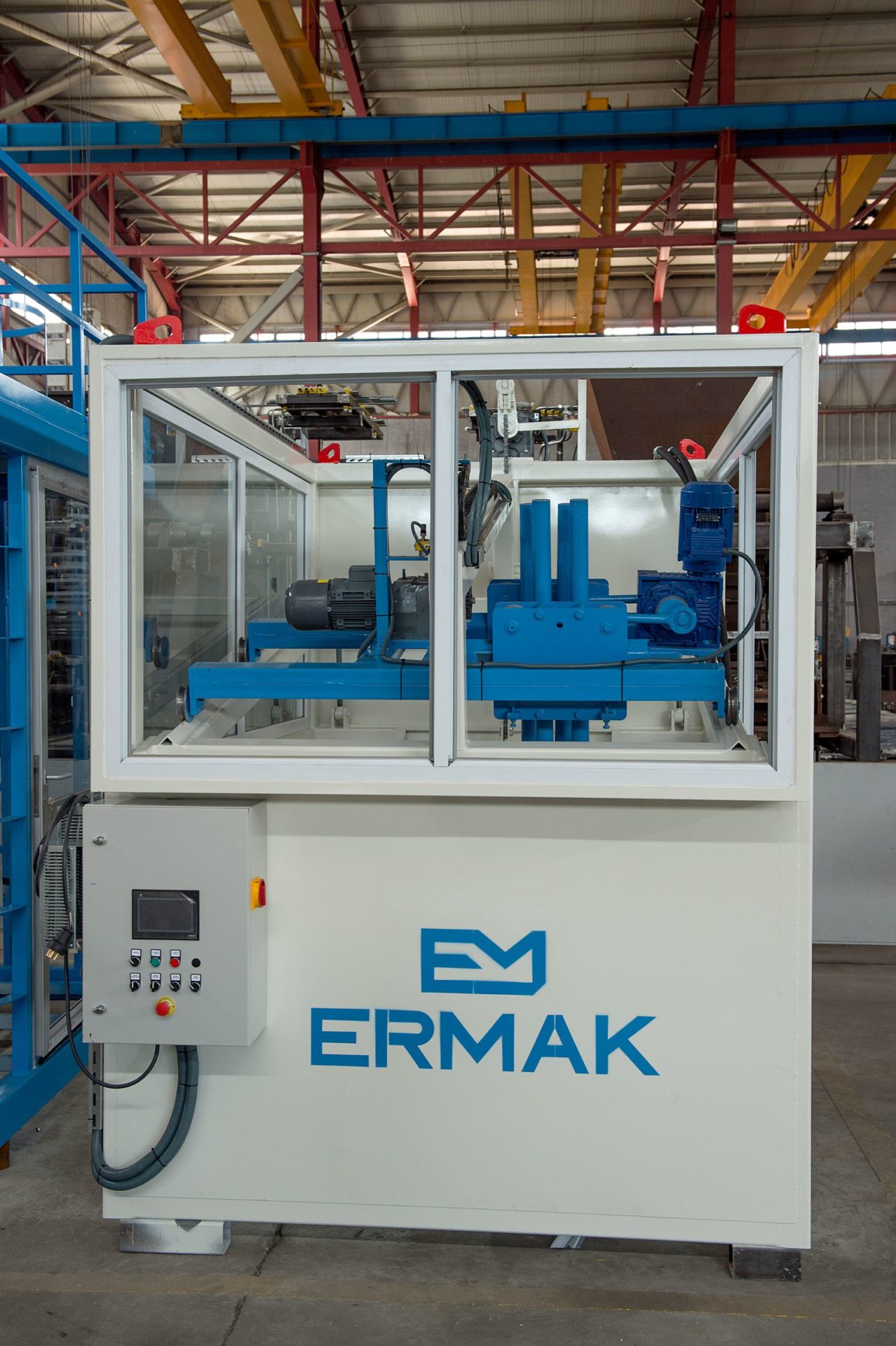
PLC and HMI systems can manage production sequences, store product recipes, monitor sensors, display alarms and help operators switch between different products.
For example, when a factory changes from one paving stone mould to another, production parameters can be recalled from saved recipes instead of being recreated manually each time.
This reduces setup time and lowers the risk of incorrect settings.
At the same time, the automation system should remain understandable to the people who operate and maintain the plant. A highly complex system that requires external support for every minor adjustment can increase downtime rather than reduce it.
Product Quality Must Be Repeatable Across Thousands of Cycles
Producing several good blocks during commissioning is relatively easy.
The real test is producing the same quality continuously throughout a shift.
For global industrial production, repeatability is one of the most important quality indicators.
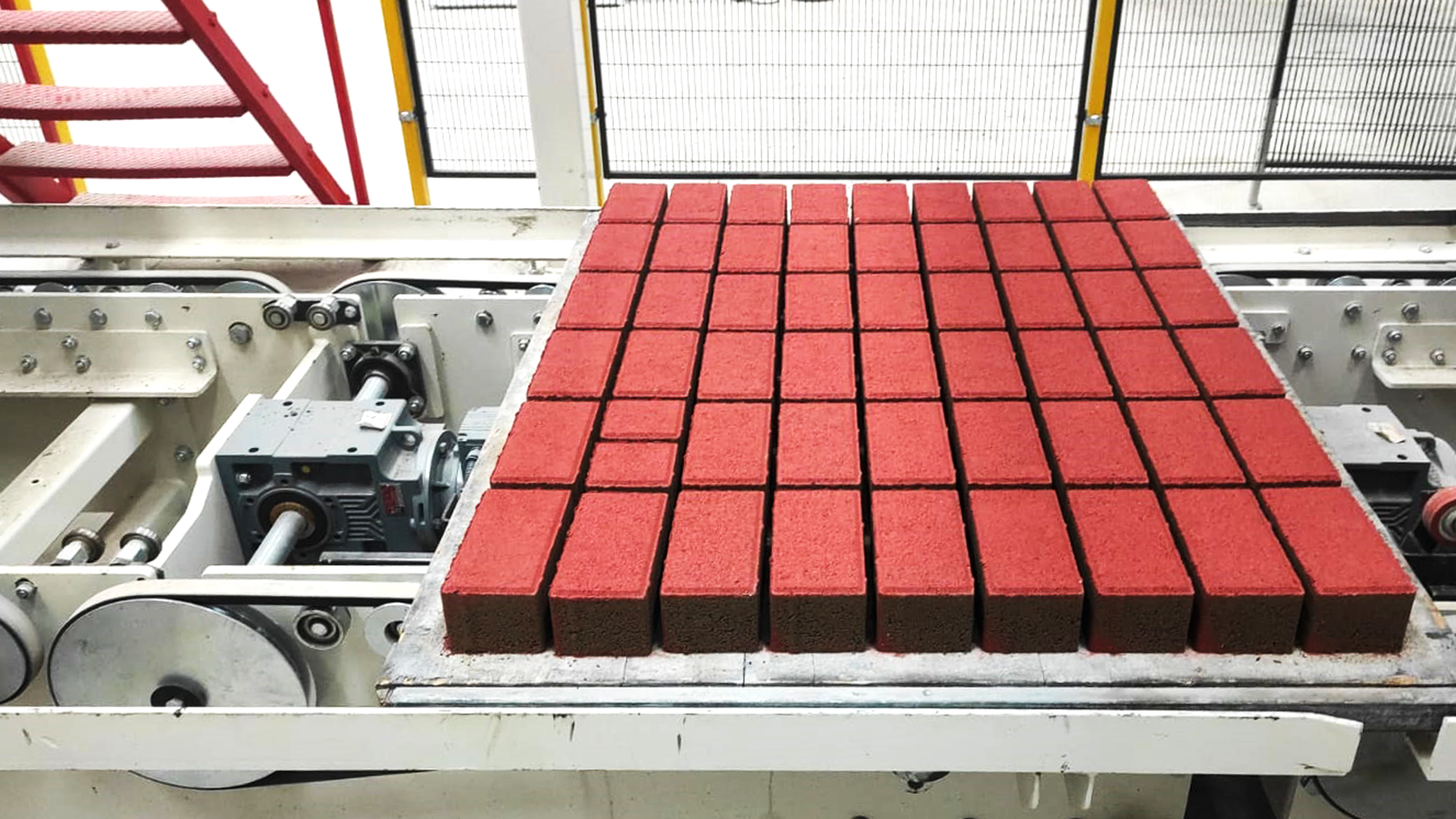
Products from different mould cavities should remain within acceptable dimensional tolerances. Product height should remain stable across the production pallet. Surface appearance should be consistent and product weight should not vary unnecessarily from one part of the mould to another.
These results depend on more than the main machine.
Concrete preparation, mould precision, production pallet condition, vibration, feeding and curing all contribute to final product quality.
Therefore, machine quality should ultimately be evaluated through the stability of the complete production process.
Mould Precision Is Part of Machine Quality
The mould determines the geometry of the final concrete product.
If the mould cavities are not consistent, even a highly capable machine cannot produce uniform products.
This becomes particularly important in interlocking paving stone production, where dimensional differences can affect how individual stones fit together during installation.
For hollow blocks and other masonry products, dimensional stability also affects construction quality and mortar consumption.
The relationship between the mould and tamper head must therefore be carefully controlled.
In a professional production system, the machine and mould should not be treated as unrelated purchases. Their mechanical compatibility has a direct influence on product quality and mould life.
A Global Machine Must Support Different Product Markets
One of the advantages of modern concrete block machinery is the ability to produce multiple product types using different moulds.
A factory may begin with standard hollow blocks and later add paving stones, kerbstones, grass pavers or other precast concrete products.
This makes product flexibility an important investment consideration.
A machine intended for international markets should therefore be evaluated not only for the product required today but also for the future product portfolio.
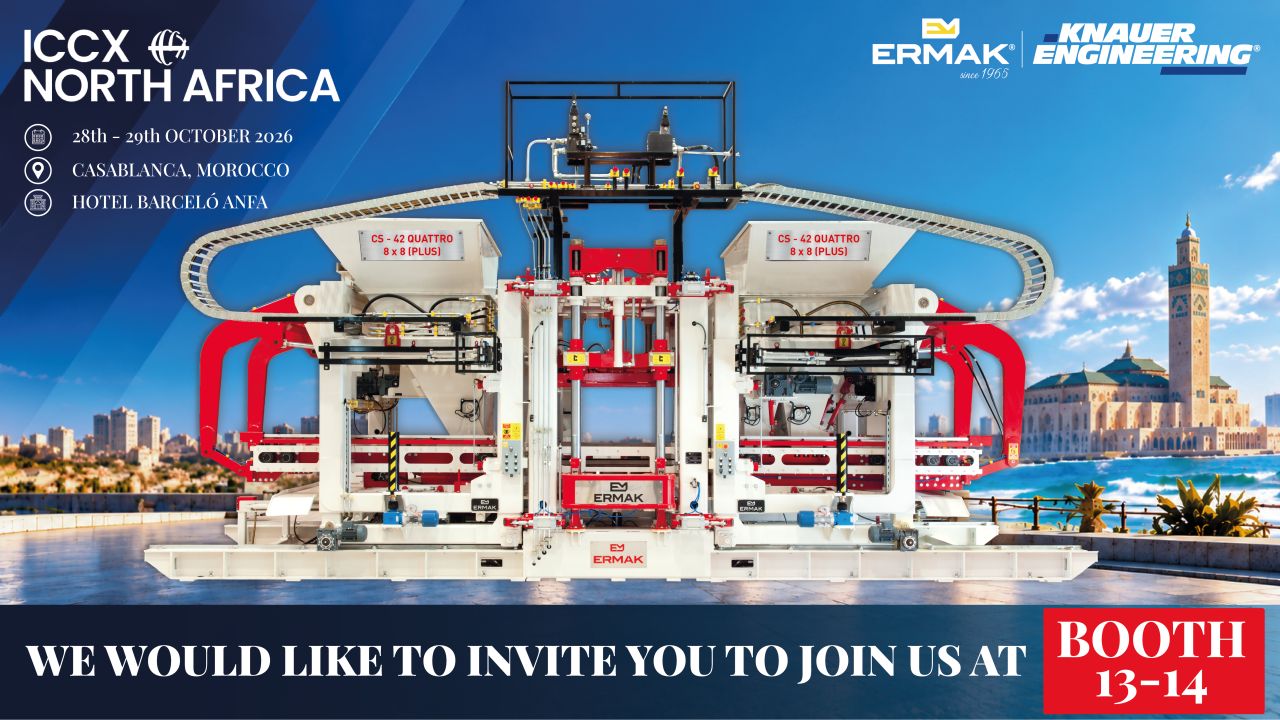
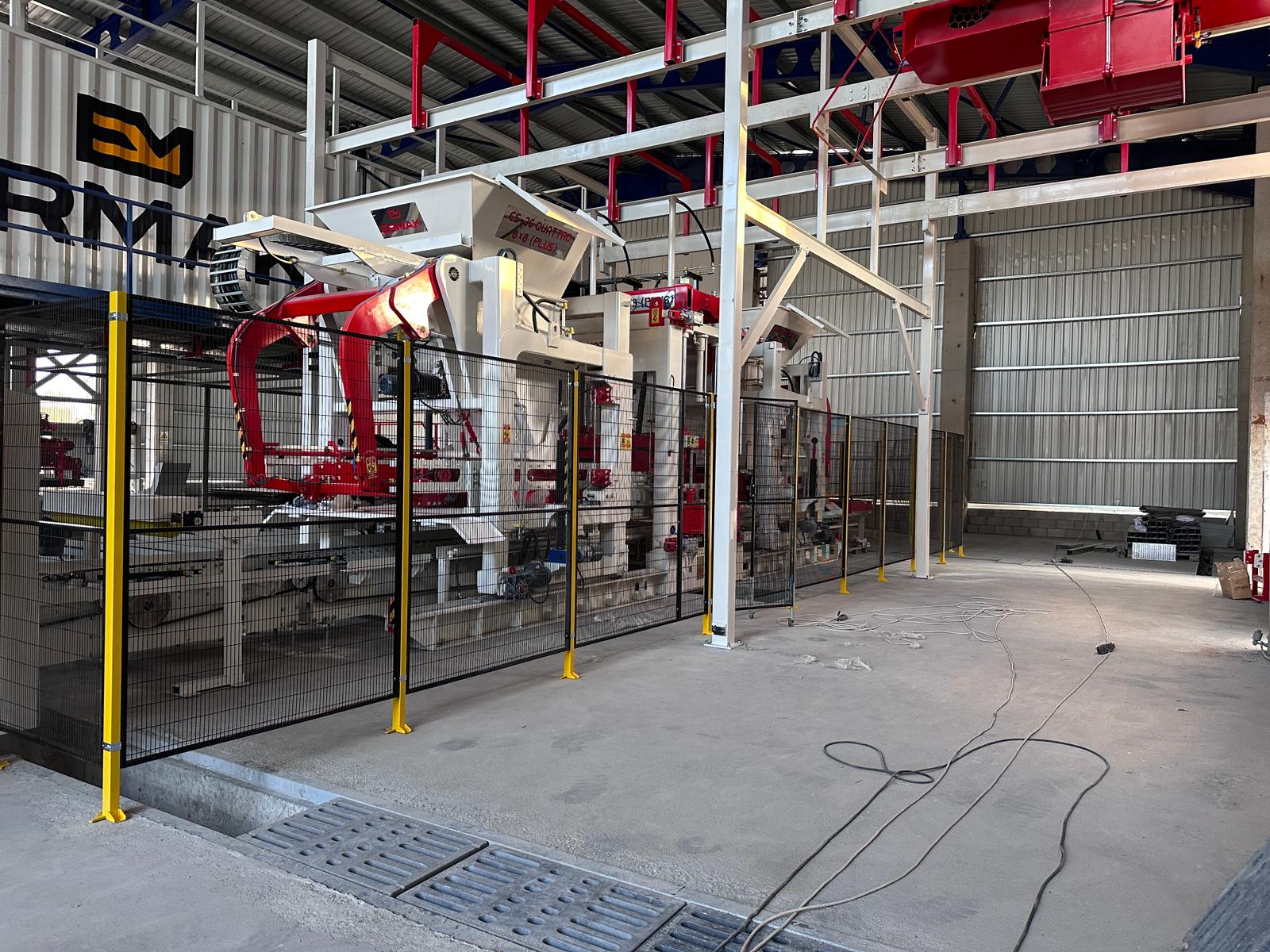
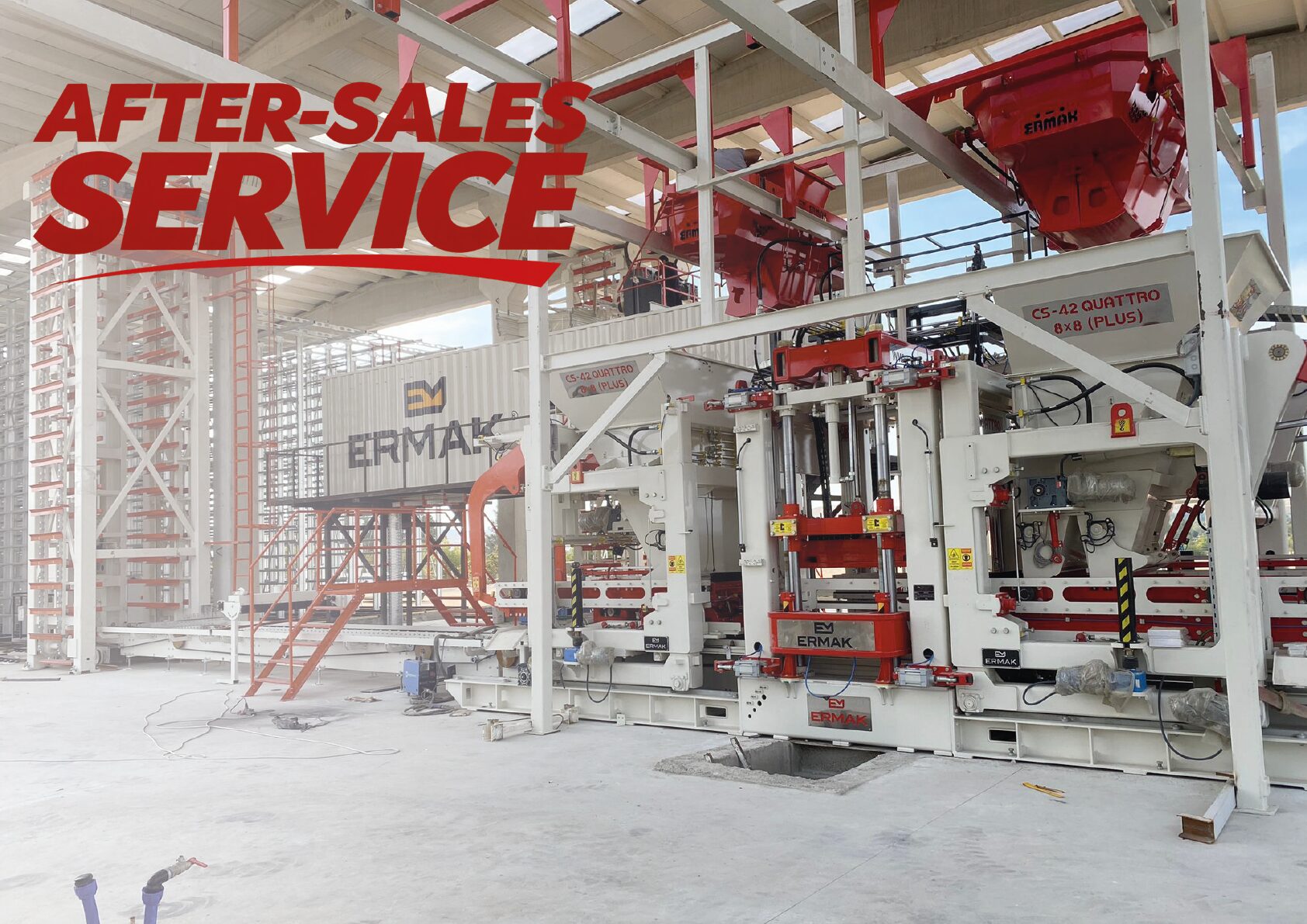
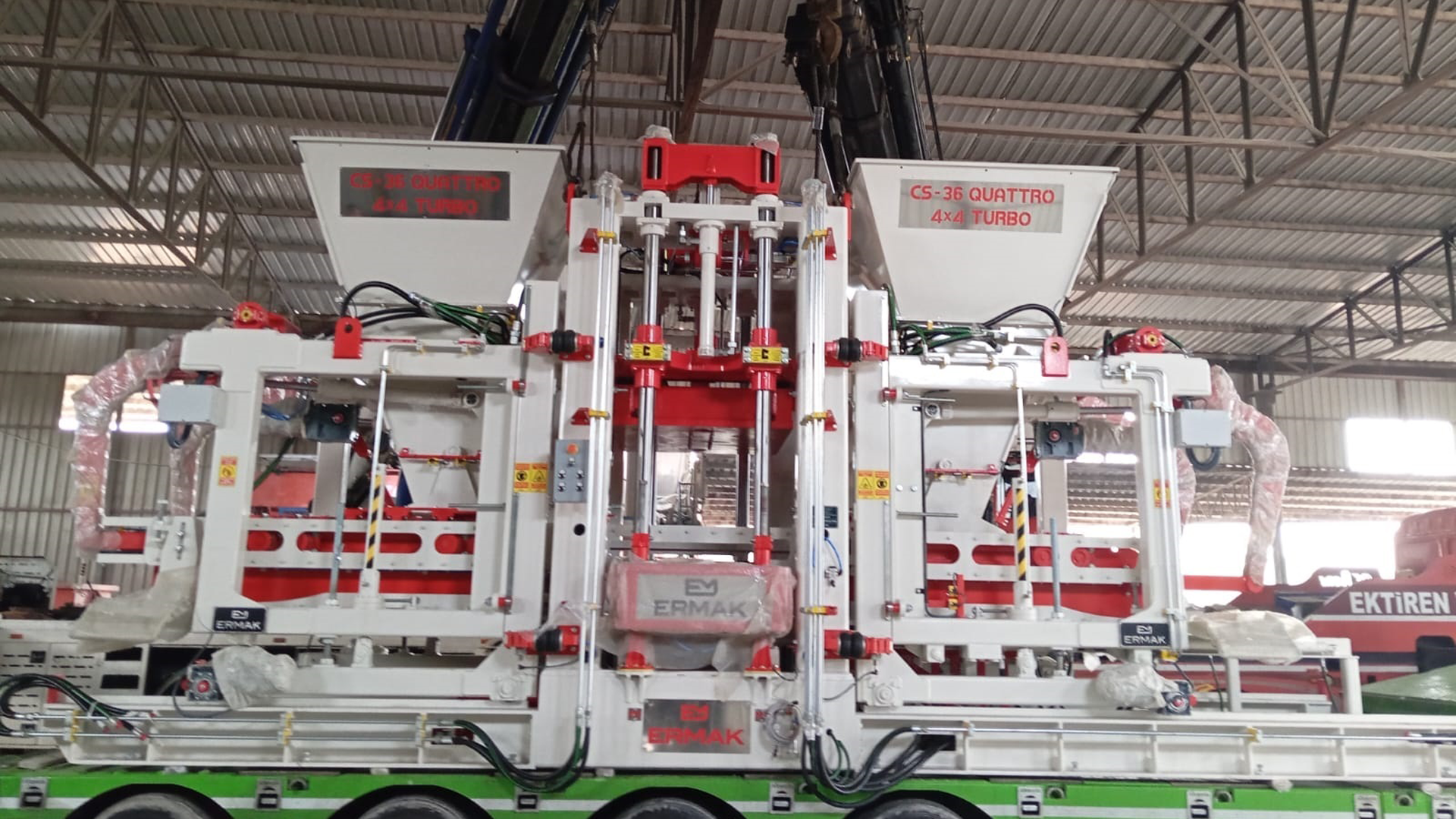
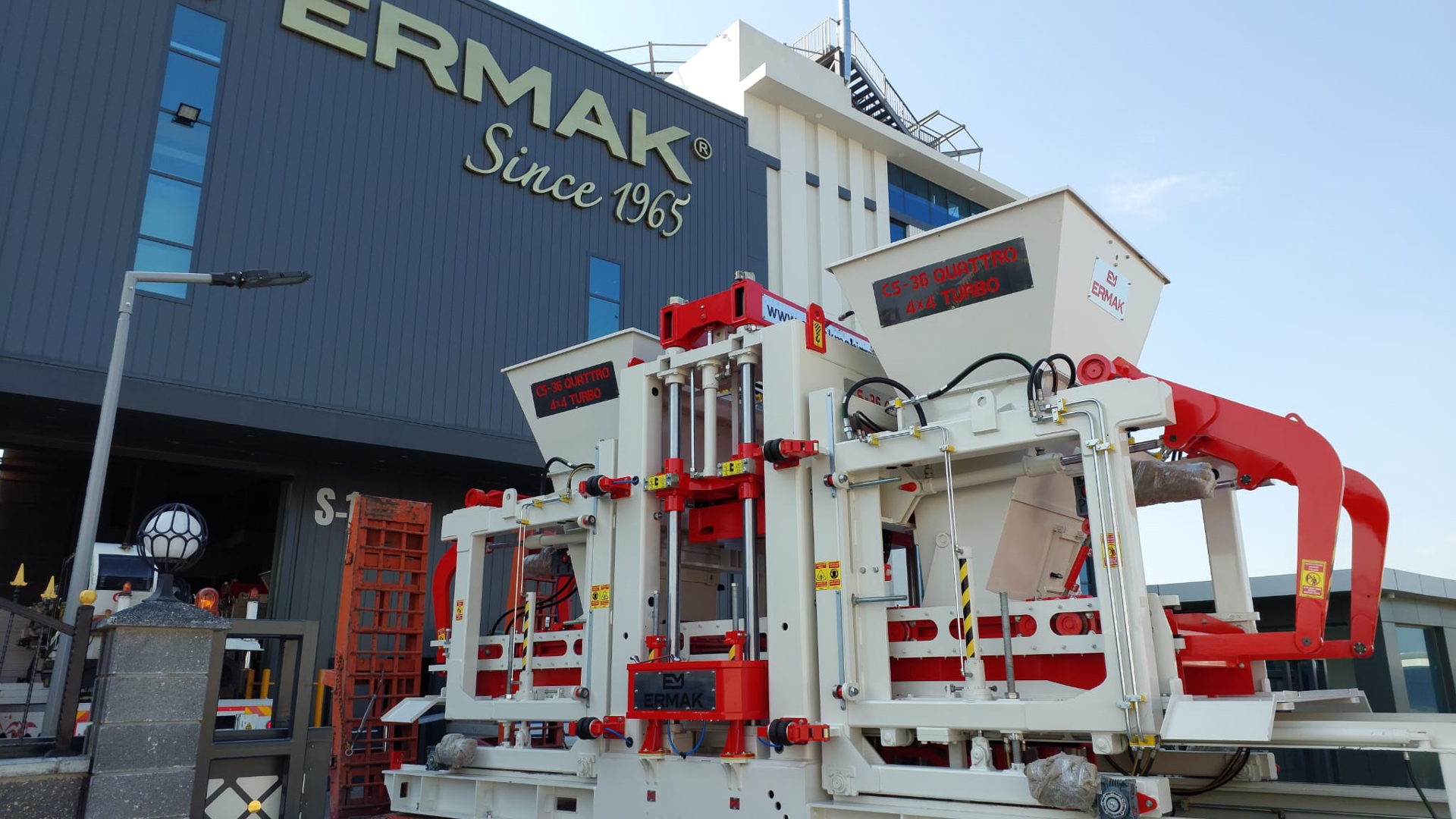
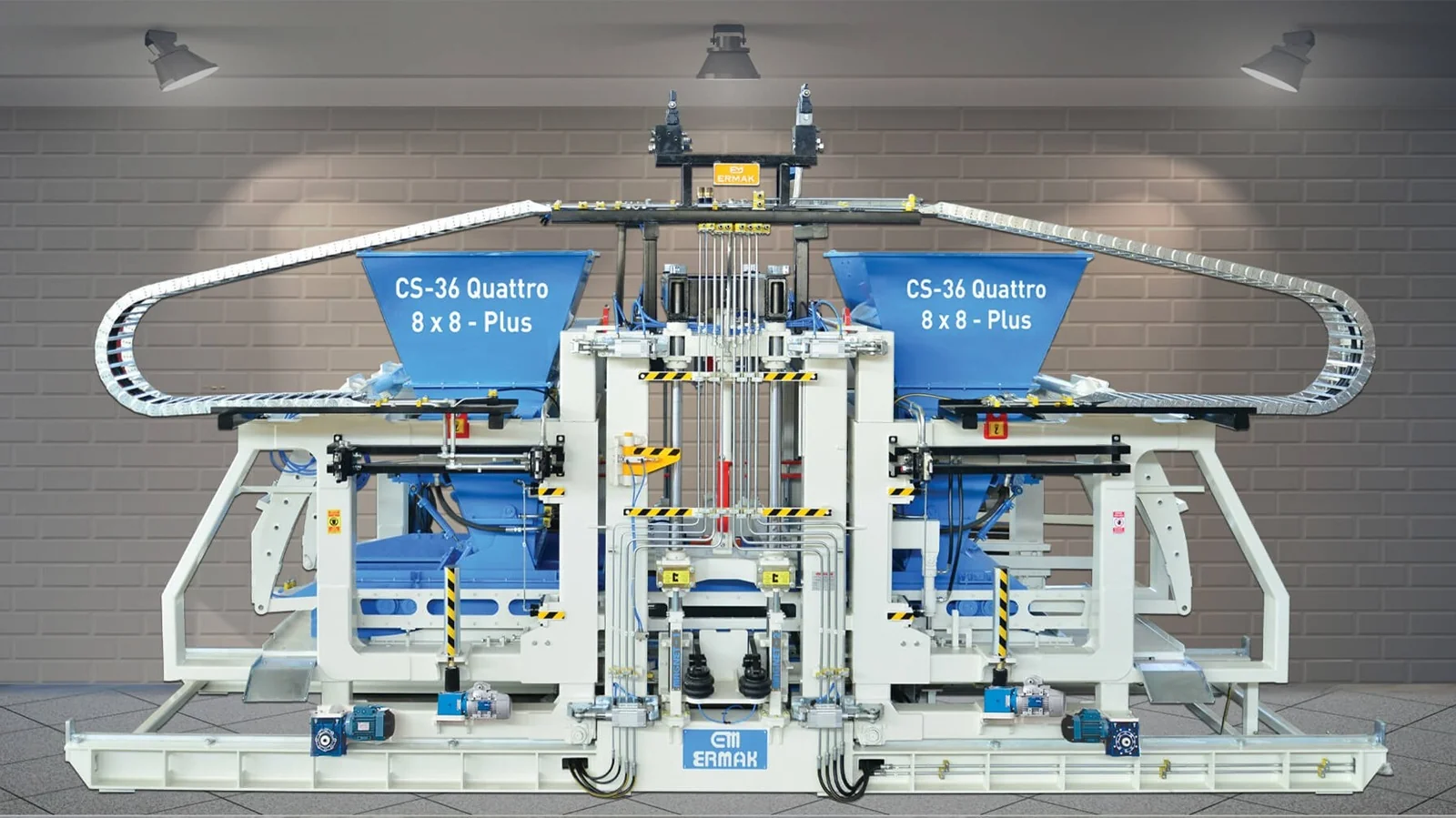
Our Quattro 8X8 Plus concrete block machine is an example of a high-capacity platform developed for the production of different concrete products within a flexible production environment.
The value of this flexibility becomes greater when the rest of the plant is also designed to support changing products and production recipes.
Main Machine Capacity Is Only One Part of Plant Capacity
A common mistake in concrete block plant investment is to focus almost entirely on the production capacity of the main machine.
A machine may have excellent cycle performance but still spend significant time waiting if the rest of the plant is not properly sized.
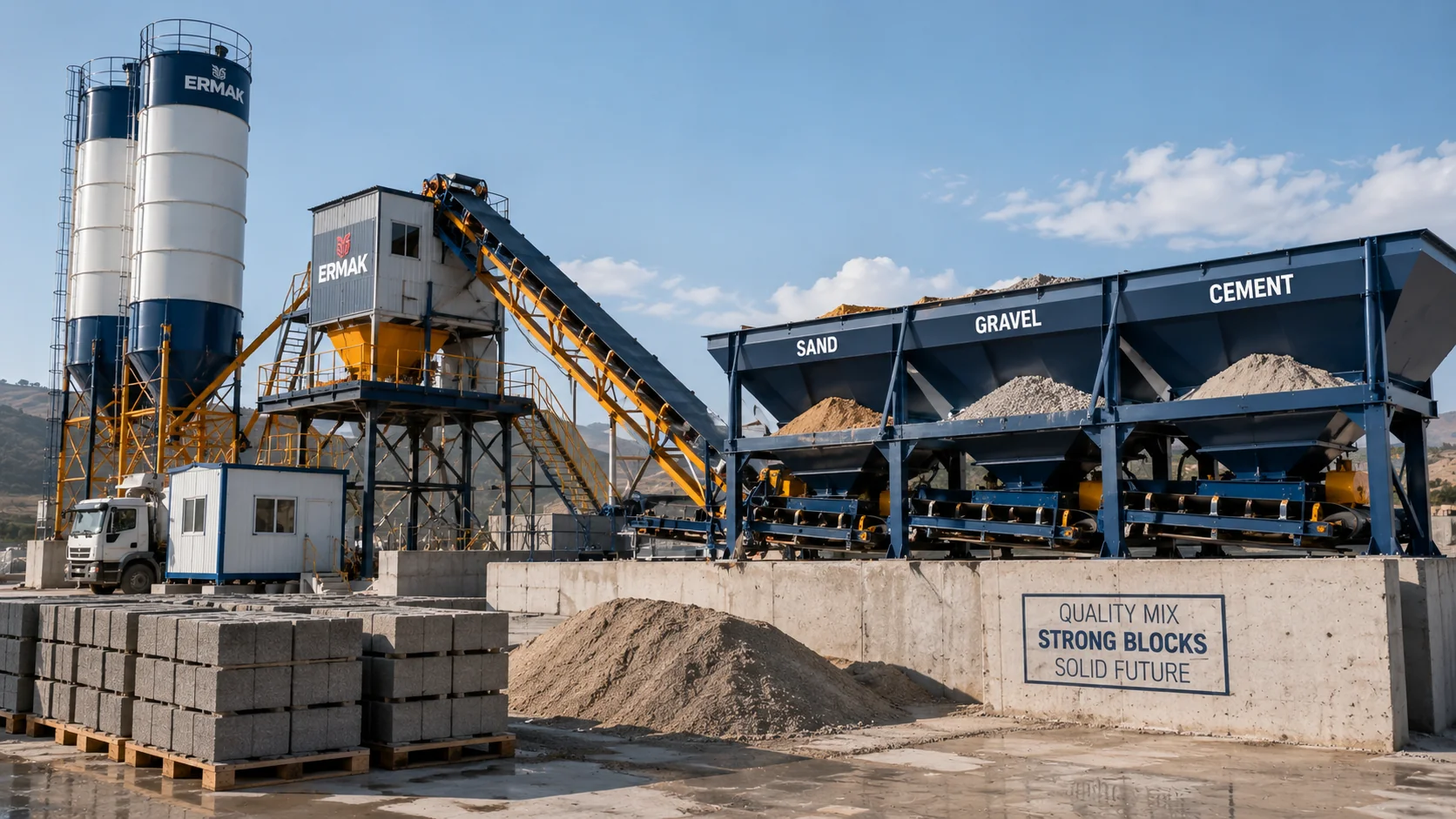
The batching plant must prepare concrete at the required rate. The mixer must support the production rhythm without reducing mixing quality. Wet-side transport must move fresh products without delay. Curing capacity must be sufficient for daily pallet output. Dry-side systems must return empty production pallets quickly enough.
If any of these sections cannot support the main machine, the capacity of the complete factory will be lower than the theoretical capacity shown for the machine.
Global production performance therefore depends on complete-line engineering.
Concrete Batching and Mixing Must Match the Machine
The quality of a concrete block begins before the concrete reaches the machine.
Aggregate grading, moisture, cement dosage and mixing consistency affect the behaviour of the concrete inside the mould.
A high-performance block machine cannot compensate indefinitely for unstable concrete preparation.
This is why the batching plant and mixer should be selected according to the real consumption of the main machine.
For double-layer paving stone production, the situation becomes even more important because different mixes may be required for the base and face layers.
The complete plant must be able to supply both mixes with the consistency and timing required by the production process.
Curing Is Part of Production Quality
Fresh concrete products do not become finished products immediately after leaving the machine.
They require controlled curing.
If curing capacity is too small, production pallets begin to accumulate and the main machine may eventually be forced to stop.
If curing conditions vary significantly, final product performance can also become inconsistent.
This means curing should be considered during the initial plant design rather than treated as a secondary storage issue.
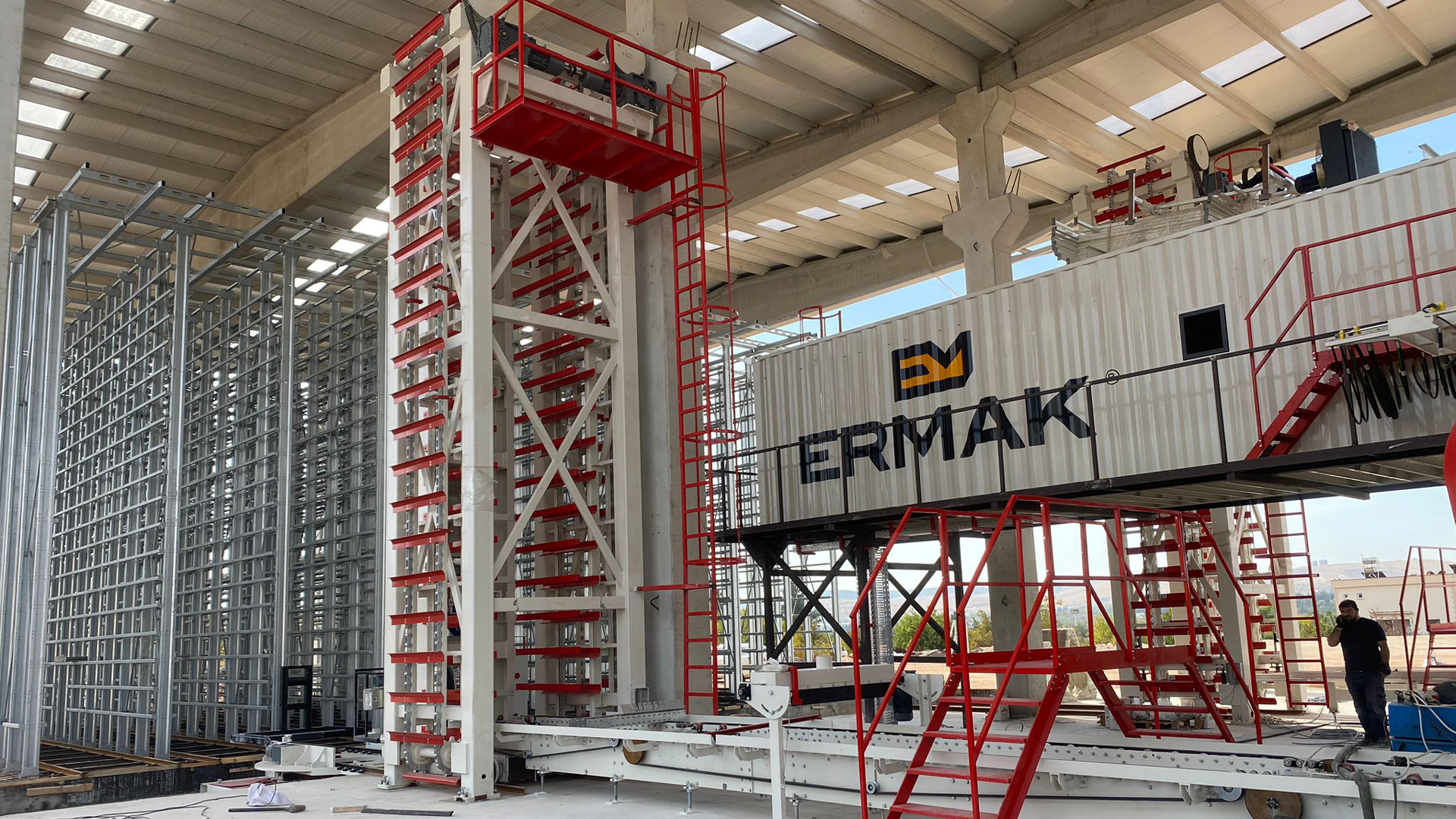
For high-capacity production, rack capacity, curing time and daily pallet flow should all be calculated together.
Dry-Side Automation Protects Main Machine Capacity
After curing, products must be removed from production pallets and prepared for storage or shipment.
If this process is too slow, empty pallets cannot return to the main machine quickly enough.
As a result, a bottleneck on the dry side can eventually reduce output on the wet side.
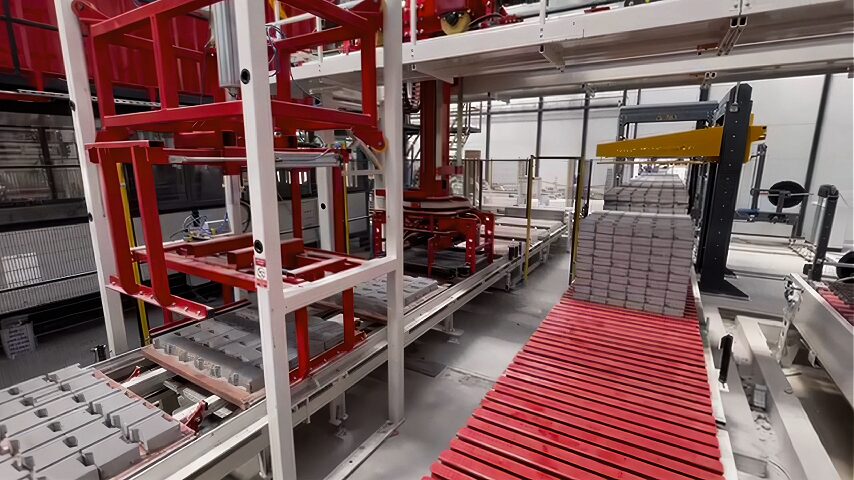
Automatic cubing, robotic palletizing, strapping and packaging systems can therefore have a direct effect on the net capacity of the plant.
These systems should be selected according to the actual product mix and packaging method.
The fastest robot in isolation is not necessarily the best solution. What matters is whether the complete dry-side system can process the output of the main machine without creating unnecessary accumulation.
Production Capacity Should Be Measured as Saleable Output
International buyers should be careful when comparing machine capacity figures.
Theoretical cycle time is useful, but it is not the same as saleable production.
Real production includes mould changes, maintenance, short stops, concrete delays and quality losses.
For this reason, a more useful long-term measure is the amount of acceptable product produced per shift, day or year.
A machine that produces slightly fewer gross units but maintains lower reject rates and fewer production interruptions may generate better financial performance than a machine with a higher theoretical maximum.
The objective should always be stable net production rather than impressive isolated cycle numbers.
Energy Efficiency Should Be Measured Per Saleable Product
Energy consumption is becoming increasingly important in industrial investment decisions.
However, comparing only total installed motor power can be misleading.
Different machines may use motors in different sequences and under different loads.
A more useful measure is energy consumption per unit of saleable production.
Depending on the product, this could be evaluated as kWh per 1,000 blocks or kWh per square metre of paving stone.
This makes it easier to compare the real operating efficiency of different production systems.
The same principle can also be applied to labour, concrete consumption and maintenance costs.
Maintenance Accessibility Is a Quality Feature
A machine may be mechanically strong but still create unnecessary downtime if routine maintenance is difficult.
Filters, lubrication points, sensors, valves and other service areas should be reasonably accessible.
Technicians should not need to remove major assemblies simply to complete routine maintenance.
This has a direct effect on production availability.
Factories sometimes delay preventive maintenance because a task is difficult or time-consuming. Over time, this can increase the risk of unplanned stoppages.
Good machine engineering therefore includes maintainability as well as production performance.
Spare Parts Availability Matters More Than Spare Parts Price Alone
The cost of a spare part is only one element of its economic impact.
A low-cost component can become extremely expensive if the factory must wait several days for it to arrive.
This is especially important in export projects.
The spare parts strategy should distinguish between standard industrial components that may be available locally and machine-specific parts that should be planned together with the manufacturer.
Critical spare parts can be identified during commissioning so that the customer does not need to maintain unnecessary inventory while still protecting the plant from high-cost downtime.
This approach becomes increasingly important in multi-shift factories where each hour of lost production has significant value.
Documentation Supports Long-Term Production
International industrial projects require good documentation.
Operating manuals, electrical drawings, maintenance information and machine-specific records should reflect the equipment that was actually delivered.
Accurate documentation is not only important during installation.
Years later, when the machine requires maintenance, modernization or troubleshooting, updated drawings and configuration records can significantly reduce service time.
For European projects, documentation and applicable conformity requirements also form an important part of the machine delivery process.
For other global markets, the exact regulatory framework may differ, but clear and professional technical documentation remains a strong indicator of manufacturing discipline.
Factory Acceptance and Site Acceptance Reduce Project Risk
Large concrete block machinery should ideally be tested systematically before and after shipment.
Factory Acceptance Testing allows mechanical movements, automation functions, alarms and agreed machine functions to be checked before dispatch.
This is valuable because adjustments can be made while the machine is still inside the manufacturer’s facility.
After installation, Site Acceptance Testing confirms that the machine works correctly with the real factory infrastructure, batching plant and other line equipment.
These processes help separate machine issues from installation and site-integration issues.
For the buyer, this creates a clearer and more controlled commissioning process.
Global Production Also Requires Strong After-Sales Support
A machine may operate for many years.
During that time, operators change, products change, components wear and automation systems may eventually require modernization.
This is why after-sales support should be evaluated before the purchase rather than after the first breakdown.
A global machinery supplier should be able to identify delivered machines accurately, support spare parts requirements and provide technical assistance when needed.
Remote support can also reduce response time for automation-related issues, especially in international projects.
The real value of after-sales service is not simply responding to a customer request. It is reducing the time required to return the plant to normal production.
Turkish Manufacturing Can Offer a Strong Cost-to-Performance Balance
Turkish concrete block machinery is often considered because of investment cost advantages compared with some Western European alternatives.
However, price alone should not be the main reason to choose a Turkish machine.
The stronger argument is the possibility of combining competitive manufacturing cost with industrial engineering, production flexibility and international project experience.
For buyers, the important question is not whether a machine is Turkish, German, Italian or from another manufacturing country.
The correct question is whether the machine meets the production, quality and service requirements of the project at an acceptable total cost of ownership.
Country of origin should provide context. Measurable technical and operational performance should make the final decision.
Total Cost of Ownership Is More Important Than Purchase Price
A concrete block machine may remain in production for many years.
During this period, the initial purchase price becomes only one part of the total cost.
Energy, labour, moulds, maintenance, spare parts, service, downtime and rejected products all influence the final economics of the investment.
This is why two machines with different purchase prices may reverse their economic position after several years of operation.
A lower-cost machine that experiences more downtime or requires frequent component replacement may become more expensive over its working life.
At the same time, an unnecessarily expensive and oversized system may also create poor investment returns if the market cannot use its capacity.
The correct comparison is therefore based on cost per saleable product over the expected life of the plant.
Production Flexibility Is Important for Export-Oriented Factories
Factories serving multiple markets may need to adapt their product portfolio over time.
A project may begin with hollow blocks and later add interlocking pavers or kerbstones.
This makes mould flexibility, recipe management and dry-side adaptability strategically important.
A production line should not become economically obsolete simply because the market demands a different concrete product.
When planning a new facility, investors should therefore consider not only current contracts but also realistic future products.
This does not mean buying every possible option on the first day. It means avoiding unnecessary technical limitations that could prevent future expansion.
Why Complete-Plant Engineering Matters
A concrete block machine is only one element of a manufacturing system.
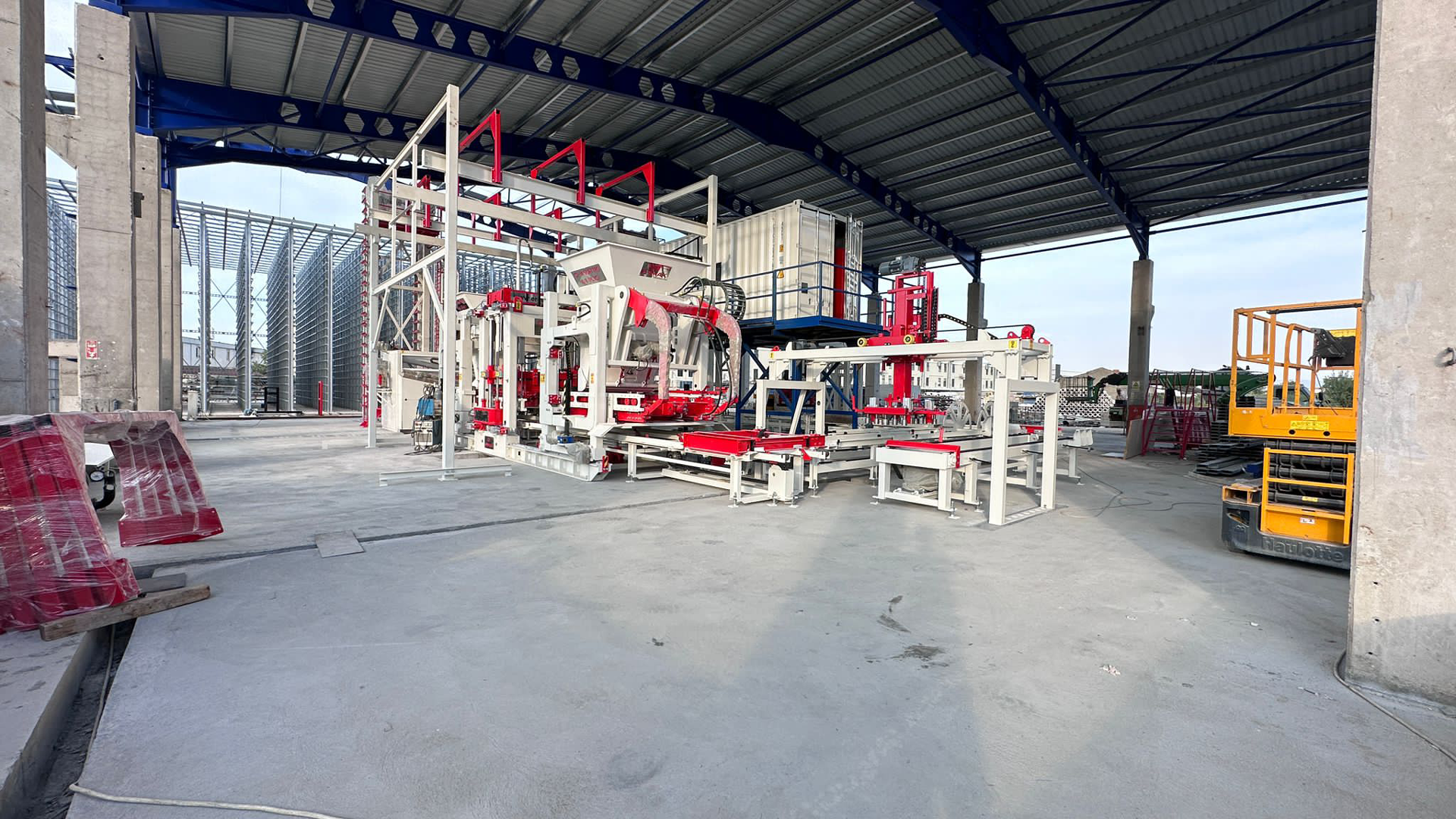
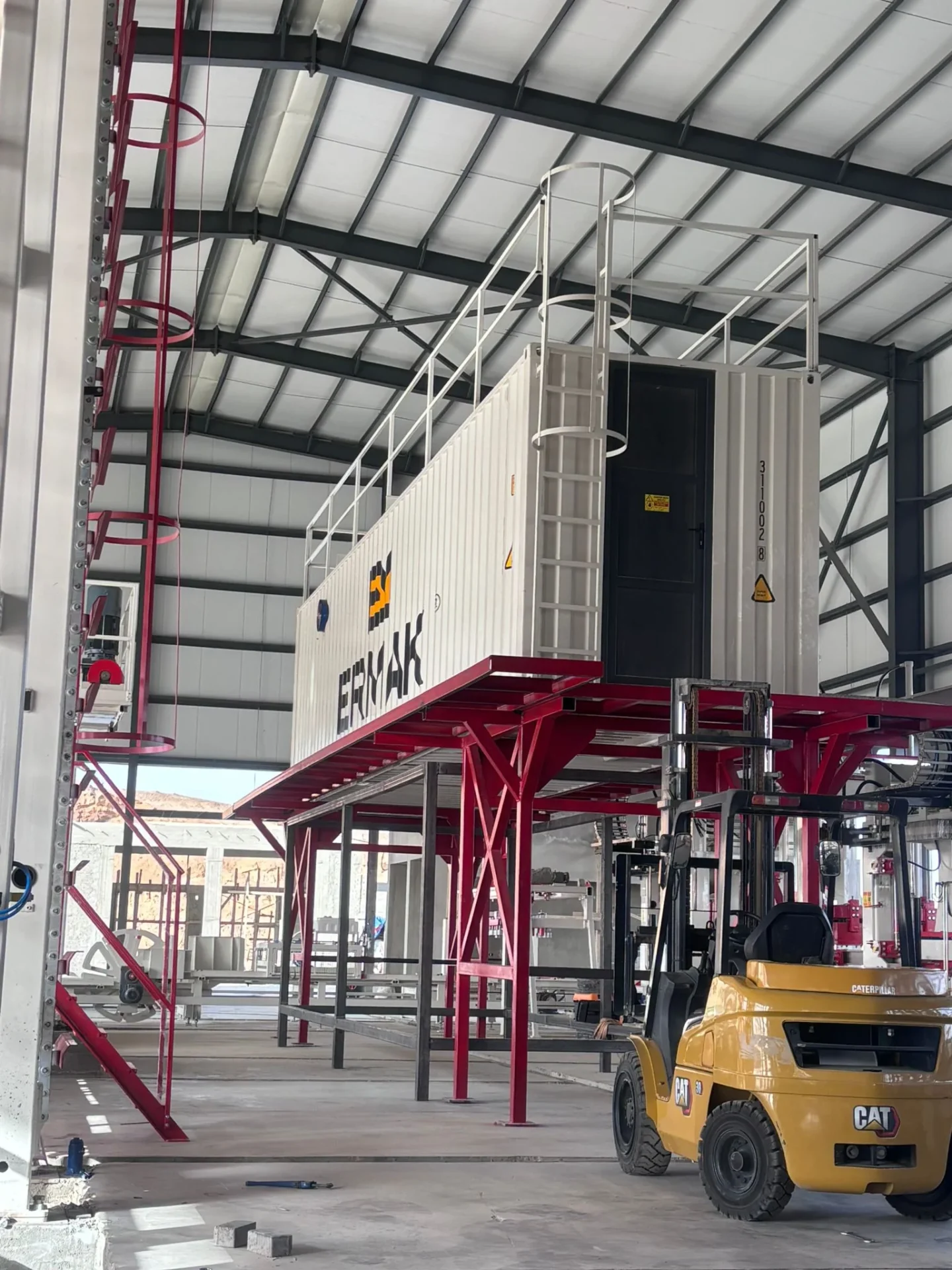
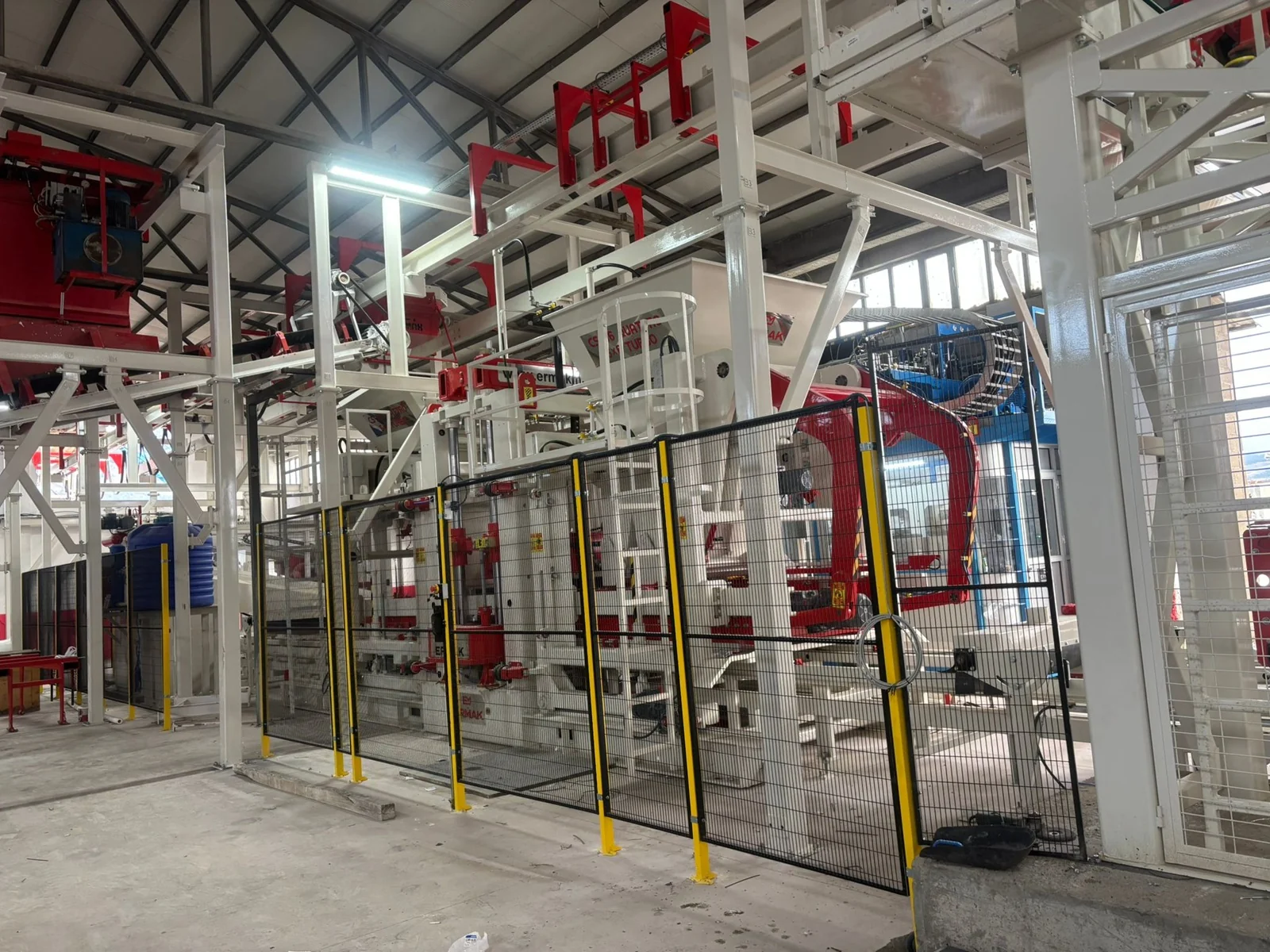
The best production results are achieved when the batching plant, mixer, main machine, production pallets, curing system, dry side and packaging section are designed around the same production objective.
If one section is dramatically stronger or weaker than the others, capital is either wasted or capacity is lost.
This is why complete-plant engineering should focus on balance rather than maximum specifications.
At Ermak Makine, we approach block and paver projects from this complete-line perspective. The objective is to create production systems in which the main machine and supporting equipment work together under real factory conditions.
Buyers comparing different production capacities and plant configurations can review our concrete block machine and production line catalogs to examine the available system options in more detail.
How Should Global Buyers Evaluate a Turkish Concrete Block Machine?
A useful evaluation should go beyond the quotation headline.
The buyer should understand what product was used to calculate capacity, whether the stated output represents theoretical or practical production, how many operators are required and what systems are included in the quoted scope.
Mould price and availability should also be reviewed because the factory may purchase many moulds throughout its operating life.
The batching plant, curing system and dry side should be compared with the main machine rather than evaluated separately.
Technical service capability, critical spare parts, training, documentation and commissioning should also be included in the comparison.
Finally, reference projects should be considered under conditions similar to the buyer’s own project whenever possible.
This process makes it easier to compare machinery manufacturers using actual production requirements rather than assumptions based on country or brand perception.
Turkish-Made Machinery for Long-Term Global Production
The international concrete products market requires more than a machine that looks modern or achieves a fast cycle during a short demonstration.
Factories need equipment that can continue producing consistent, saleable products throughout years of daily operation.
Mechanical stability, controlled vibration, hydraulic repeatability, mould precision, usable automation and balanced complete-line design all contribute to this result.
Service, spare parts and documentation become equally important after the machine enters production.
Turkish-made concrete block machinery can compete successfully in global projects when these elements are approached with the same discipline expected from international industrial equipment.
For investors, the most useful comparison is therefore not based on nationality. It is based on how reliably the complete production system can convert raw materials, labour, energy and machine time into consistent saleable products over the long term.
Companies planning a new block, paver or kerbstone production project can also contact Ermak Makine to discuss target products, capacity requirements and complete plant configuration.
Frequently Asked Questions
Are Turkish concrete block machines suitable for international projects?
They can be, provided that the machine and production line meet the technical, production, documentation and support requirements of the specific project. Country of manufacture alone should not be used as the quality criterion.
What should buyers compare when selecting a concrete block machine?
Important criteria include real production capacity, mechanical design, vibration system, hydraulics, automation, mould quality, energy use, maintenance, spare parts and after-sales support.
Is theoretical machine capacity enough for plant planning?
No. Real plant output is affected by downtime, mould changes, concrete preparation, curing and dry-side capacity. Net saleable output is a more useful planning value.
Why is mould quality important?
The mould creates the geometry of the product. Poor dimensional consistency can affect product appearance, installation and production repeatability.
Does a high level of automation always improve production?
Not necessarily. Automation should match the plant’s capacity, product variety, labour structure and maintenance capability. Unnecessary complexity can increase service requirements.
Why should the batching plant be selected together with the block machine?
The main machine cannot maintain production if concrete is not supplied at the required rate and consistency. The mixer and batching plant must therefore match the real consumption of the machine.
What is the importance of the curing system?
Curing affects both production flow and final product performance. Insufficient curing capacity can eventually stop the main production machine.
Can the same machine produce blocks and paving stones?
Many modern concrete block machines can manufacture different products by changing moulds and production parameters, provided that the machine configuration supports the required product.
What should buyers consider when comparing energy consumption?
Energy should preferably be compared per unit of saleable production rather than only by installed motor power.
Why is after-sales service important in global projects?
International plants may operate far from the machine manufacturer. Fast technical support, accurate spare parts identification and remote troubleshooting can significantly reduce downtime.
Should critical spare parts be purchased with the machine?
A project-specific critical spare parts package can reduce the risk of long stoppages, especially where international shipping times are significant.
What is the difference between machine capacity and complete plant capacity?
Machine capacity describes the production capability of the main machine. Complete plant capacity also depends on concrete preparation, curing, pallet circulation, dry-side handling and packaging.
Why is total cost of ownership important?
The purchase price is only one part of the investment. Energy, labour, maintenance, moulds, spare parts, downtime and rejected products affect the real long-term production cost.
What makes a concrete block machine suitable for global production standards?
The most important requirement is not a single feature. A globally competitive machine should combine mechanical stability, repeatable production, controlled automation, product flexibility, maintainability, technical documentation and dependable long-term support.