Investing in concrete block machinery for the Middle East requires more than selecting a main production machine.
A successful factory depends on how well the complete production system is planned around local market demand, product range, required capacity, automation level, available factory space and long-term operating conditions.
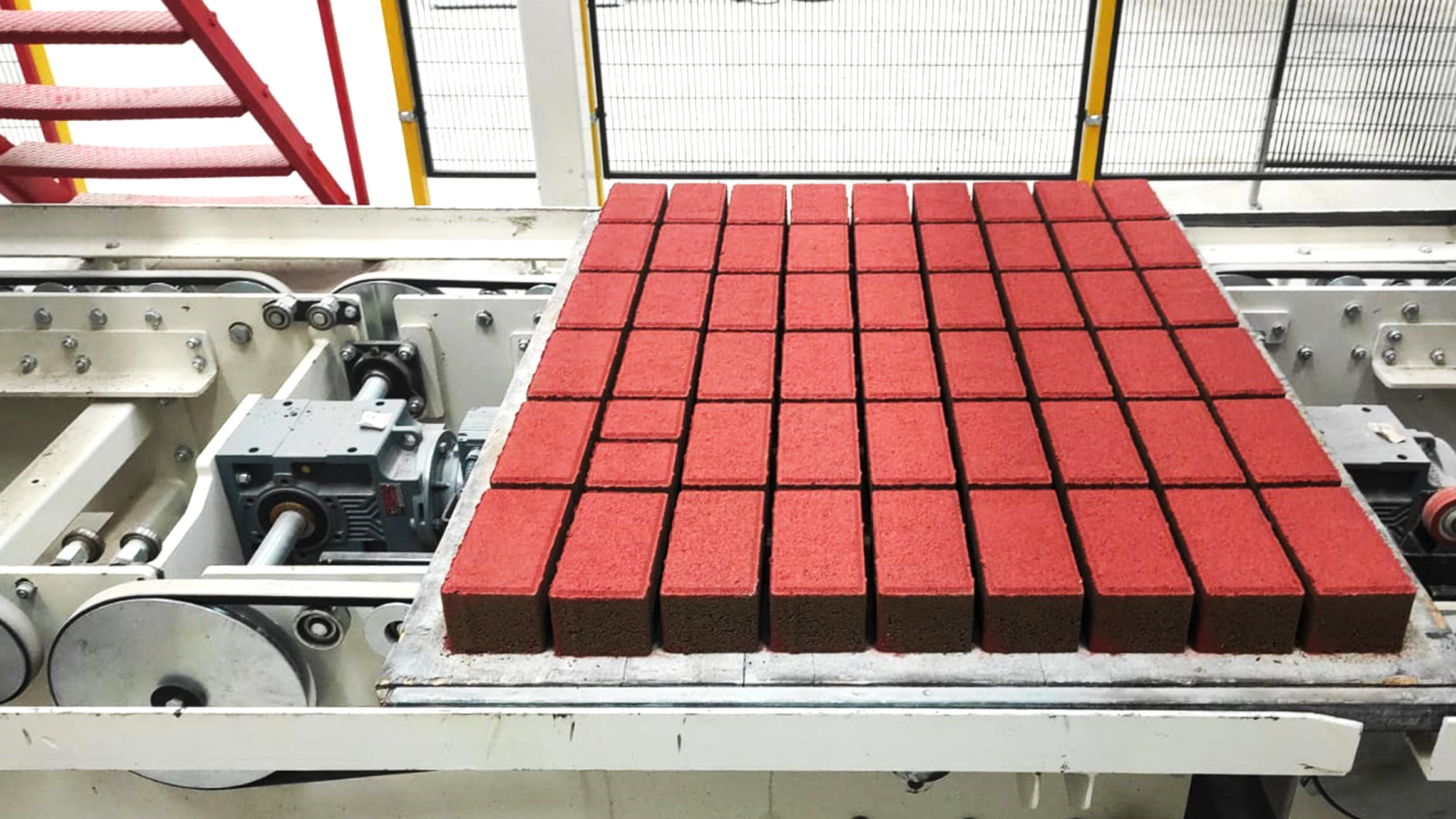
Across Middle Eastern markets, concrete products are widely used in residential projects, industrial developments, infrastructure, landscaping and large-scale urban construction. Depending on the target market, a production plant may need to manufacture hollow blocks, paving stones, curbstones, grass blocks or several of these products on the same line.
For this reason, investors should think in terms of a turnkey production solution rather than a single machine.
The main objective is not simply to install equipment.
It is to establish a balanced production plant capable of delivering consistent products at the required capacity and operating cost.
Start with the Products the Market Actually Requires
Every plant should begin with a clear product strategy.
A factory focused mainly on hollow blocks may require a different machine and mould configuration from a plant targeting architectural paving stones and curbstones.
The first step should therefore be to define the main products that will generate sales.
Typical options may include standard hollow blocks, solid blocks, interlocking pavers, curbstones and landscape products.
This product mix influences the selection of the machine, moulds, production pallet, batching system and automation.
A multi-product line can be particularly valuable when the manufacturer serves contractors, municipalities, distributors and landscaping companies at the same time.
Instead of purchasing separate machines for each product family, suitable products can often be manufactured on the same main machine by changing moulds.
Capacity Should Be Based on Real Market Demand
High production capacity is attractive, but it only creates value when the market can absorb the output.
For this reason, plant capacity should be selected according to realistic sales expectations rather than the largest available machine.
If a company expects to sell a moderate volume during the first years of operation, an extremely large line can create unnecessary investment in:
batching, curing, pallets, storage and handling systems.
On the other hand, a machine that is already working close to its maximum capacity from the beginning can limit future growth.
A better approach is to combine:
current demand + reasonable expansion capacity.
This allows the factory to grow without carrying excessive unused capacity during its early years.
Turnkey Planning Means More Than Supplying the Main Machine
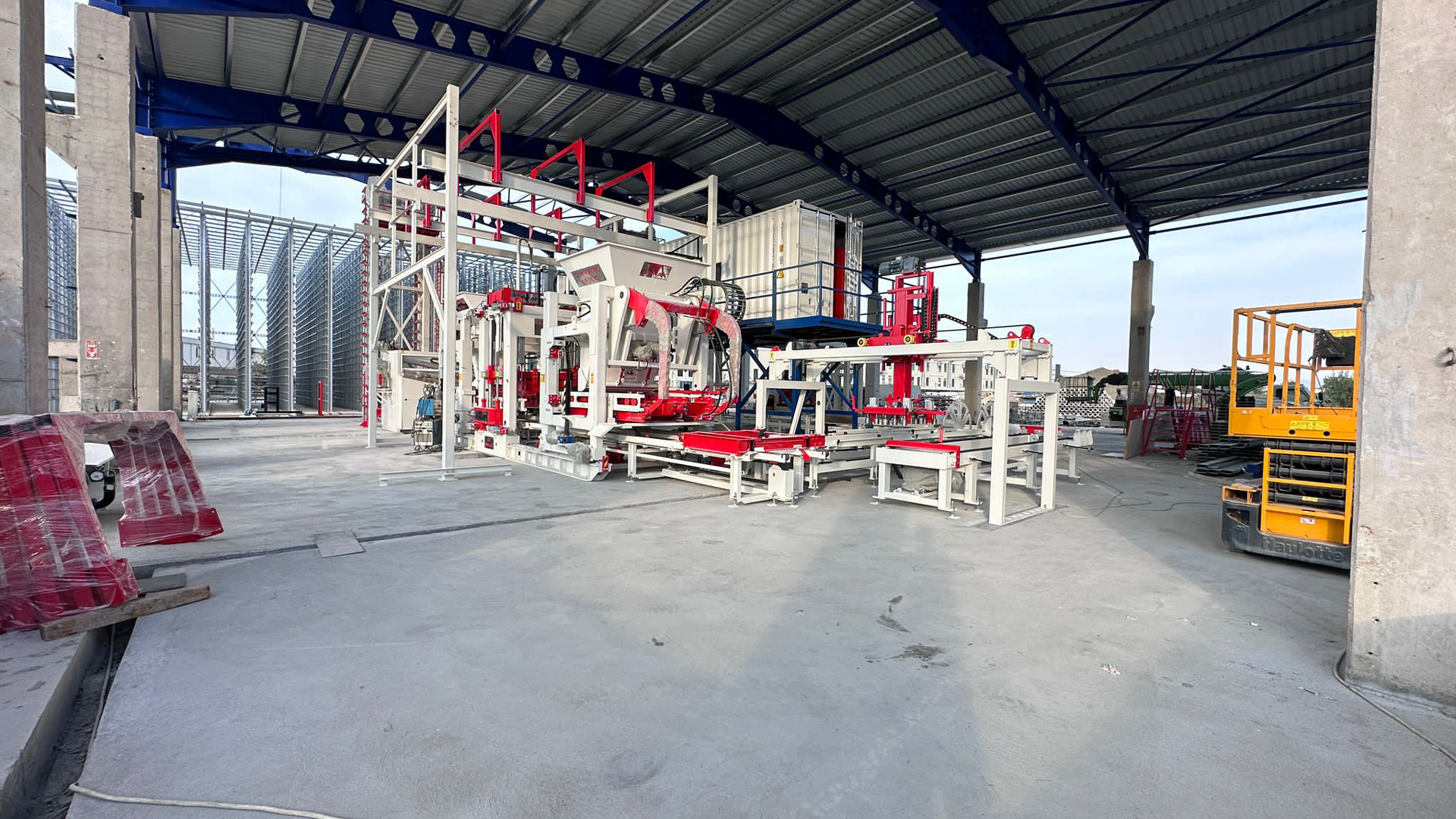
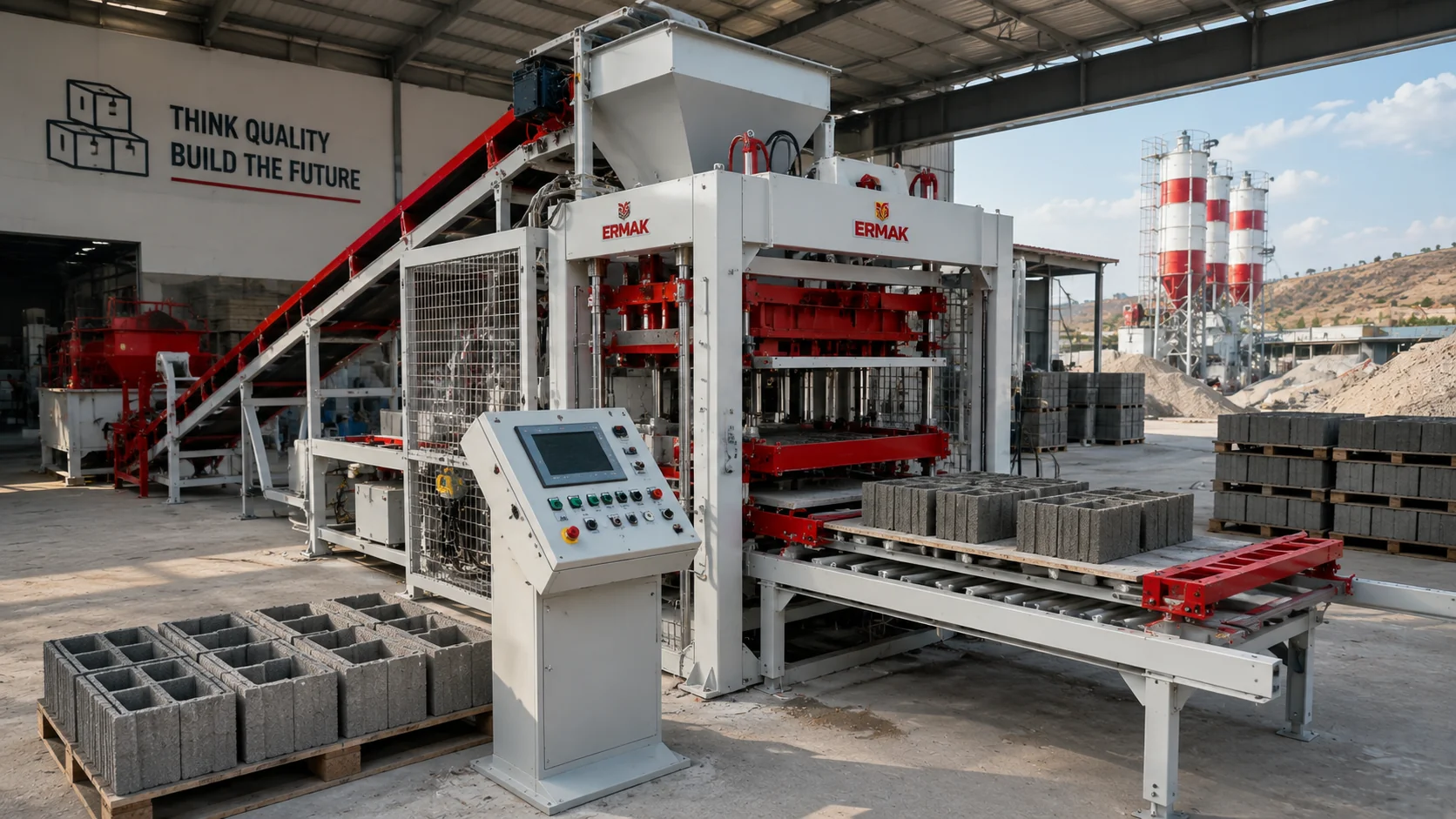
A concrete block production plant includes several connected stages.
The main machine may be the most visible component, but it depends on the rest of the line.
A typical production flow includes:
Raw-material storage → Batching and mixing → Block machine → Curing → Dry-side handling → Packaging → Finished-product storage
If one of these sections has substantially less capacity than the others, the whole plant may operate below expectations.
This is why turnkey planning should focus on the complete material and product flow.
A high-capacity block machine supplied by a small mixer will wait for concrete.
A fast production line connected to an undersized curing system will eventually slow down.
A strong turnkey project avoids these mismatches before installation begins.
Concrete Preparation Must Match the Main Machine
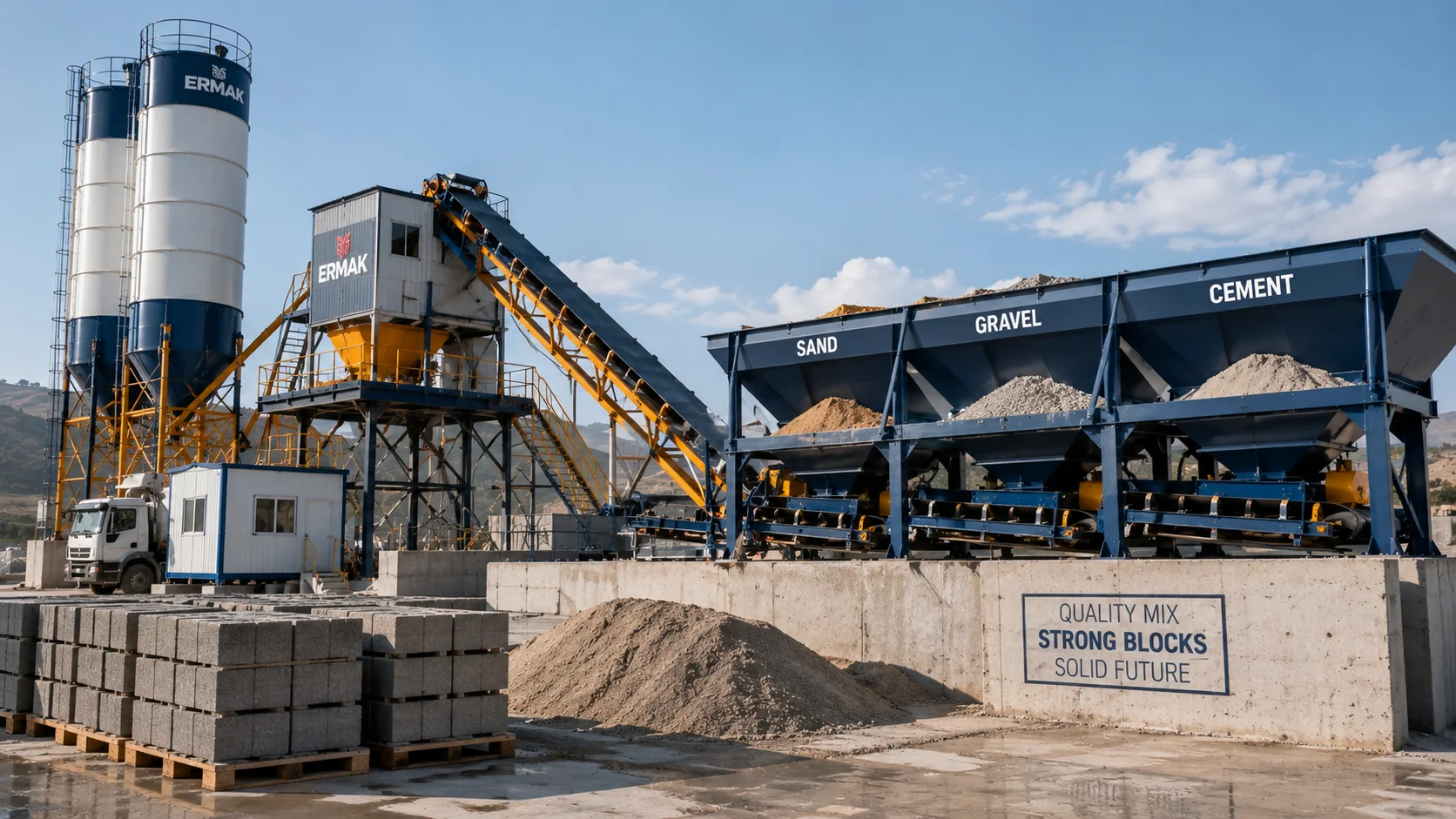
The batching plant and mixer should provide enough concrete to keep the main machine operating without unnecessary waiting.
At the same time, the concrete should remain consistent from one batch to the next.
This is especially important in vibro-pressed products because changes in concrete consistency can affect:
mould filling, compaction and surface appearance.
The batching system should therefore be selected together with the main machine.
The objective is not to install the largest possible batching plant.
It is to provide the correct quantity of concrete at the correct time.
Middle Eastern Climate Should Be Considered
Many Middle Eastern production sites operate in hot and dry conditions for significant parts of the year.
This can affect:
aggregate moisture, water demand and curing conditions.
Raw materials stored outdoors can become very warm, while fresh products may lose moisture quickly if curing is poorly controlled.
For this reason, the production process should be adapted to the local climate.
This does not necessarily require highly complicated systems.
It requires good planning.
Raw-material storage, concrete preparation and curing should all be considered according to the real operating environment of the plant.
Curing Is an Important Part of Product Quality
Concrete blocks and paving stones are not finished when they leave the mould.
They still require controlled curing to develop the required performance.
This makes curing capacity an important part of turnkey plant planning.
A machine producing a large number of pallets per hour needs enough curing space to receive those products.
If the curing section fills before the production shift ends, the main machine cannot continue operating at full capacity.
This is why curing should be designed together with the production machine rather than added as an afterthought.
Automation Level Should Match the Business Model
The Middle East includes both labour-intensive factories and highly automated industrial plants.
There is no single correct automation level for every project.
A smaller factory may operate efficiently with a simpler system.
A large factory supplying infrastructure projects or several regional markets may benefit significantly from automated:
pallet transfer, curing movement, product handling and packaging.
The correct automation level depends on:
production volume, labour costs and the technical capability of the local team.
The goal should be to automate the operations where automation creates measurable value.
Higher Automation Can Support More Stable Production
Automation can improve more than labour efficiency.
It can also help create a more repeatable production flow.
In a high-capacity plant, frequent manual intervention may create variation between shifts.
A well-designed automated line can make the movement of pallets and products more predictable.
However, automation should remain manageable for the local maintenance team.
A complicated system that requires external technical support for every small issue may become difficult to operate.
The strongest solution combines automation with practical maintainability.
Mould Strategy Determines Product Flexibility
Moulds are one of the most important parts of a concrete block factory.
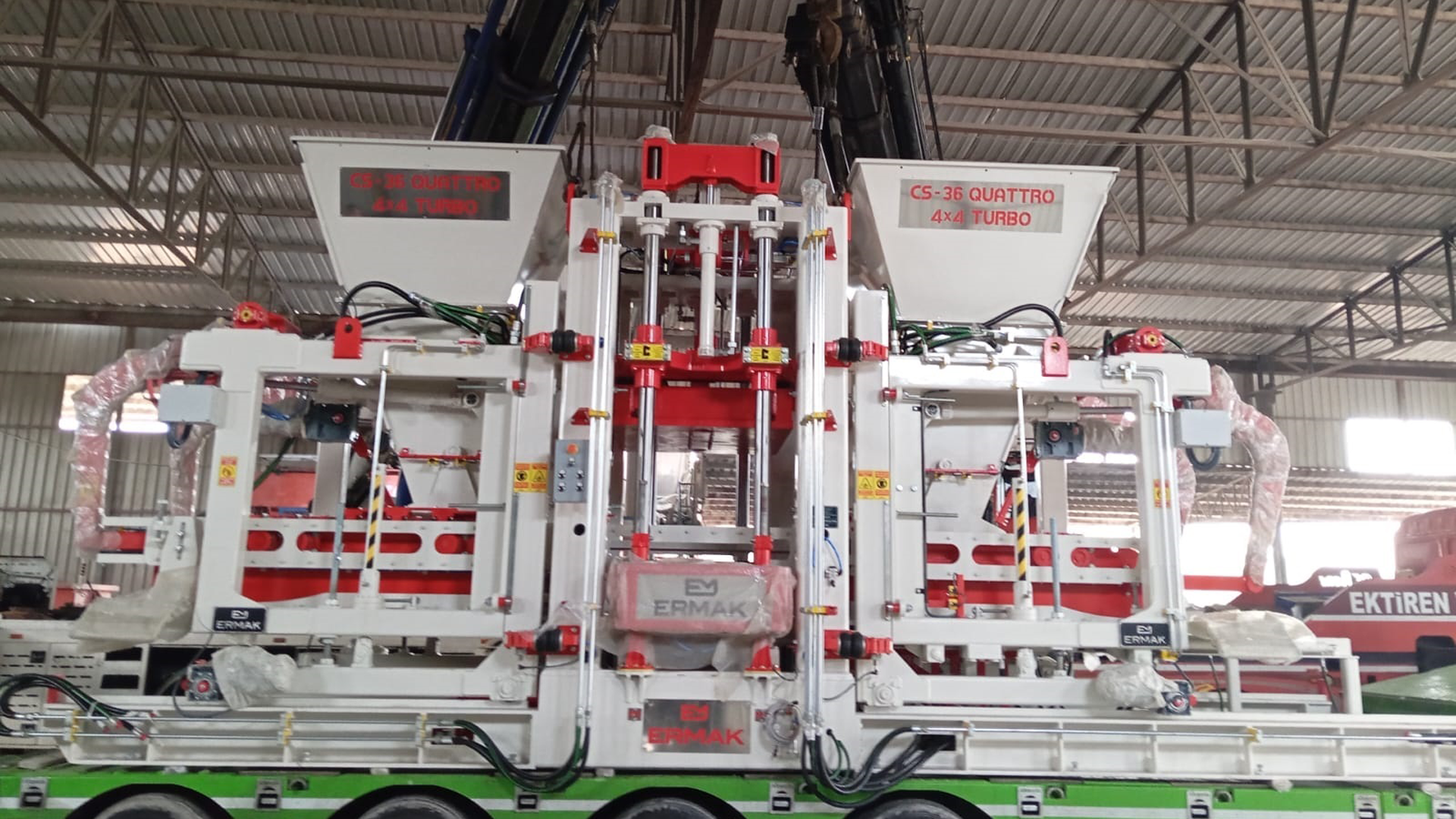
The same production machine can manufacture different products by changing moulds, provided the machine is designed for that product range.
This allows a Middle Eastern producer to respond to different types of demand without investing in a completely separate line for each product.
For example, the factory may produce:
hollow blocks for construction projects, pavers for landscaping and curbstones for infrastructure.
The initial mould package should normally focus on the products with the strongest commercial demand.
Additional moulds can be introduced later as new projects and markets develop.
Product Standards and Dimensions Should Be Confirmed Before Production
Product dimensions can vary between countries, contractors and project specifications.
For this reason, moulds should be ordered according to the exact products required in the destination market.
Using a generic mould without confirming local requirements can create commercial problems after installation.
The buyer should therefore prepare:
product dimensions, drawings and target applications
before finalising the project.
This also makes production-capacity calculations more realistic.
Production Pallets Should Be Included in the Original Plan
In vibro-press production, fresh products generally move through the line on production pallets.
The number of pallets required depends on production speed and how long they remain inside the curing and handling cycle.
If too few pallets are purchased, the main machine may eventually wait for empty pallets to return.
For this reason, pallet quantity should be calculated as part of the turnkey line.
The physical quality of the pallets is also important because damaged pallets can influence product stability and production consistency.
Finished-Product Handling Should Match Production Volume
Once the products have completed curing, they must be removed from production pallets and prepared for storage or shipment.
At lower capacities, relatively simple handling can be sufficient.
At higher production volumes, manual handling can become a bottleneck.
This is where dry-side automation and packaging systems become important.
The objective should be to maintain smooth product flow from the machine to the finished-product yard.
If the dry side works more slowly than the main production line, product accumulation can reduce the practical capacity of the entire factory.
Factory Layout Should Be Designed Before Equipment Is Installed
A good factory layout reduces unnecessary movement.
The production line should ideally follow a logical direction from raw materials to final shipment.
Poor layout can create excessive:
forklift traffic, labour and product handling.
These costs may seem small during project planning but can continue every day for many years.
For this reason, the factory layout should be discussed before equipment manufacturing and shipment are completed.
Important space requirements include:
raw-material storage, production hall, curing, finished products and truck-loading areas.
Finished-Product Storage Should Reflect Sales and Delivery Cycles
A factory producing several thousand blocks or large quantities of paving stones every day can create substantial finished inventory in a short time.
If customers collect products only on certain days, the storage yard must be large enough to hold several days of production.
This is especially important for large infrastructure and contractor-based projects where production and delivery schedules may not be identical.
Storage planning should therefore be connected to sales and logistics rather than treated as unused outdoor space.
Energy Infrastructure Should Be Confirmed Early
Before ordering a complete line, the buyer should confirm the site’s electrical infrastructure.
The production line may include:
the main machine, mixer, batching system, conveyors, compressors and handling equipment.
All these systems create a total electrical requirement.
If the factory’s available transformer or power connection is insufficient, installation can be delayed.
For turnkey projects, power planning should therefore be completed before commissioning.
Water and Compressed Air Requirements Should Also Be Planned
Concrete preparation requires a reliable water supply.
Some production and automation systems also require compressed air.
These utilities should be included in the overall project design.
The goal is to avoid a situation where expensive production equipment arrives at the factory but cannot be commissioned because the supporting infrastructure is incomplete.
A turnkey project should therefore define these requirements during the planning stage.
Installation and Commissioning Are Part of the Investment
Delivering the equipment to the site is only one stage of the project.
The plant must then be:
installed, tested and prepared for regular production.
Commissioning should include real production using the local raw materials and the actual moulds.
This is important because the concrete recipe and machine settings may need to be adjusted according to local aggregates and cement.
The final objective is not simply to confirm that the machine moves.
It is to confirm that the complete factory can produce the required products.
Operator Training Should Be Included
A turnkey production solution should leave the customer with a team capable of operating the plant.
Operators should understand:
normal production, product changes and basic machine alarms.
Maintenance personnel should receive additional instruction related to routine inspections and preventive maintenance.
This knowledge is particularly important for export projects.
The more capable the local team becomes, the less dependent the factory is on external support for normal day-to-day operation.
After-Sales Support Is Critical for Long-Term Production
A concrete block factory is expected to operate for many years.
This means the relationship with the supplier should not end after installation.
Buyers should evaluate:
spare-parts supply, technical assistance, documentation and service support
before finalising the investment.
These factors may not appear as prominently as capacity figures in a quotation, but they become extremely important once the plant begins regular production.
A reliable machine with poor support can still create expensive downtime.
Spare Parts Should Be Planned Before Start-Up
For export projects, spare-parts delivery may involve international transport and customs.
This makes it practical to keep selected critical components at the plant.
The exact spare-parts package depends on the machine configuration.
The goal should not be to buy large quantities of every component.
It should be to prevent a relatively small part from stopping an entire production line for an extended period.
Remote Technical Support Can Be Valuable
Not every machine issue requires an immediate international service visit.
Some electrical and automation problems can be diagnosed remotely.
Remote support can help identify whether the issue is related to:
operation, electrical systems or another part of the plant.
This can reduce unnecessary downtime and help prepare any required on-site service more effectively.
For Middle Eastern customers operating far from the manufacturer’s factory, this can be an important part of the support structure.
Local Technical Capability Should Influence Plant Design
The most advanced machine is not always the most suitable machine.
The local maintenance team’s experience should also be considered.
A plant designed for highly specialised maintenance may create unnecessary dependence on external service if the local team does not have those skills.
For this reason, the supplier and customer should discuss the available technical resources during the project stage.
The production system should be sophisticated enough to meet performance targets while remaining practical to operate and maintain.
Transport and Site Logistics Should Be Planned Early
A complete concrete block plant can include several large machines and many supporting components.
Depending on the project size, equipment may be delivered in multiple shipments.
The site should have appropriate access for:
trucks, unloading equipment and installation operations.
Transport dimensions and unloading requirements should be confirmed before equipment reaches the site.
This prevents avoidable delays during installation.
Total Investment Should Be Evaluated, Not Only Machine Price
A turnkey plant investment normally includes much more than the main production machine.
Typical project costs may include:
Main machine + Batching and mixing + Moulds + Pallets + Curing + Handling + Packaging + Installation + Spare parts + Site infrastructure
This means comparing only the price of two main machines may give an incomplete picture.
The buyer should compare the total scope of each proposal.
A higher quotation may include significantly more equipment or service.
A lower quotation may require many additional purchases after the contract is signed.
Cost per Saleable Product Is a Better Measure
The long-term economic performance of the plant depends on the cost of producing saleable products.
This includes:
raw materials, labour, energy, maintenance and rejects.
A machine that appears inexpensive at the beginning may become costly if it requires excessive labour or experiences frequent downtime.
For this reason, investors should consider the total cost of ownership of the production line.
The strongest investment is normally the one that creates the right balance between:
initial cost, capacity and long-term operating efficiency.
Ermak Turnkey Concrete Production Solutions
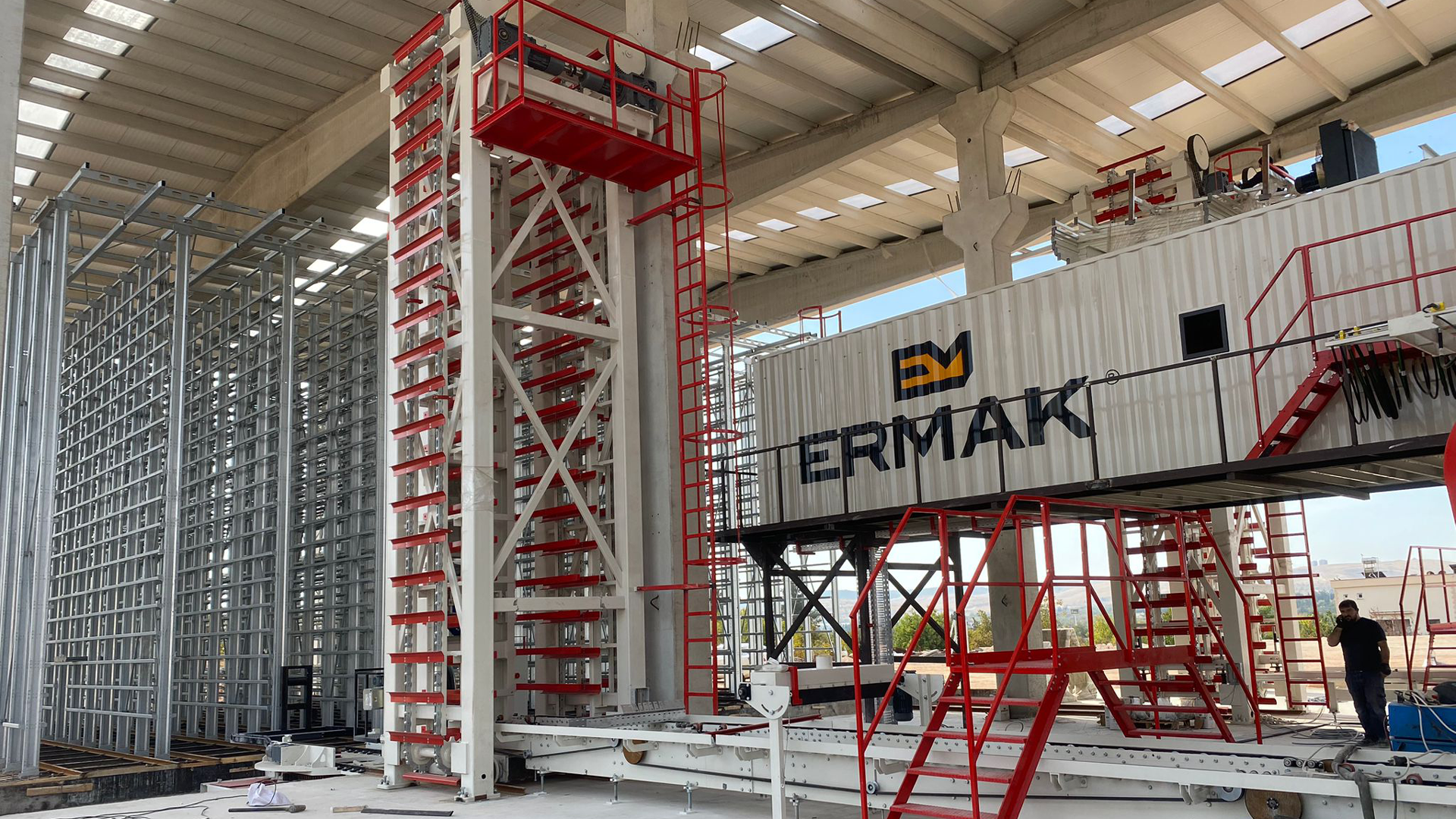
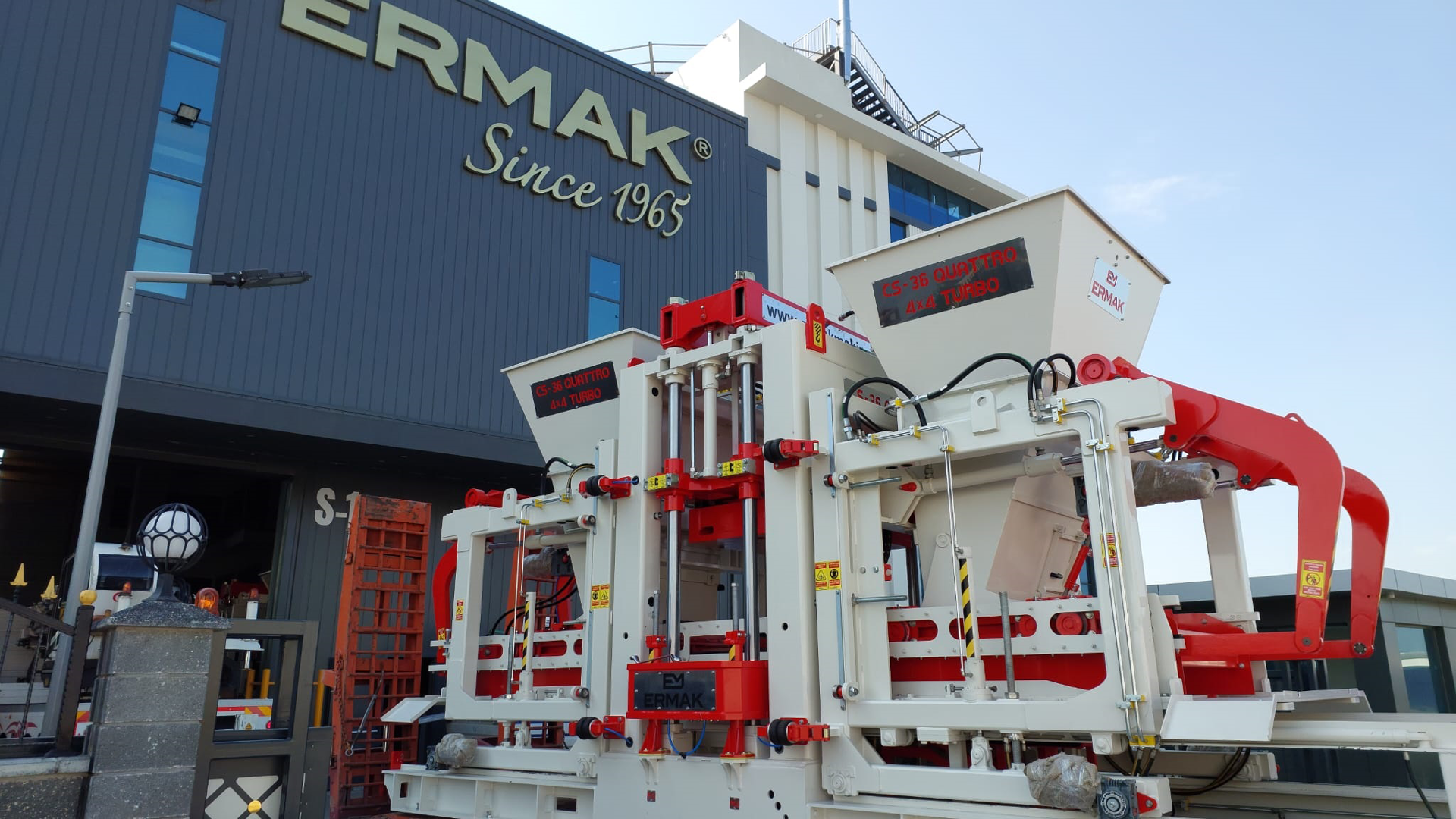
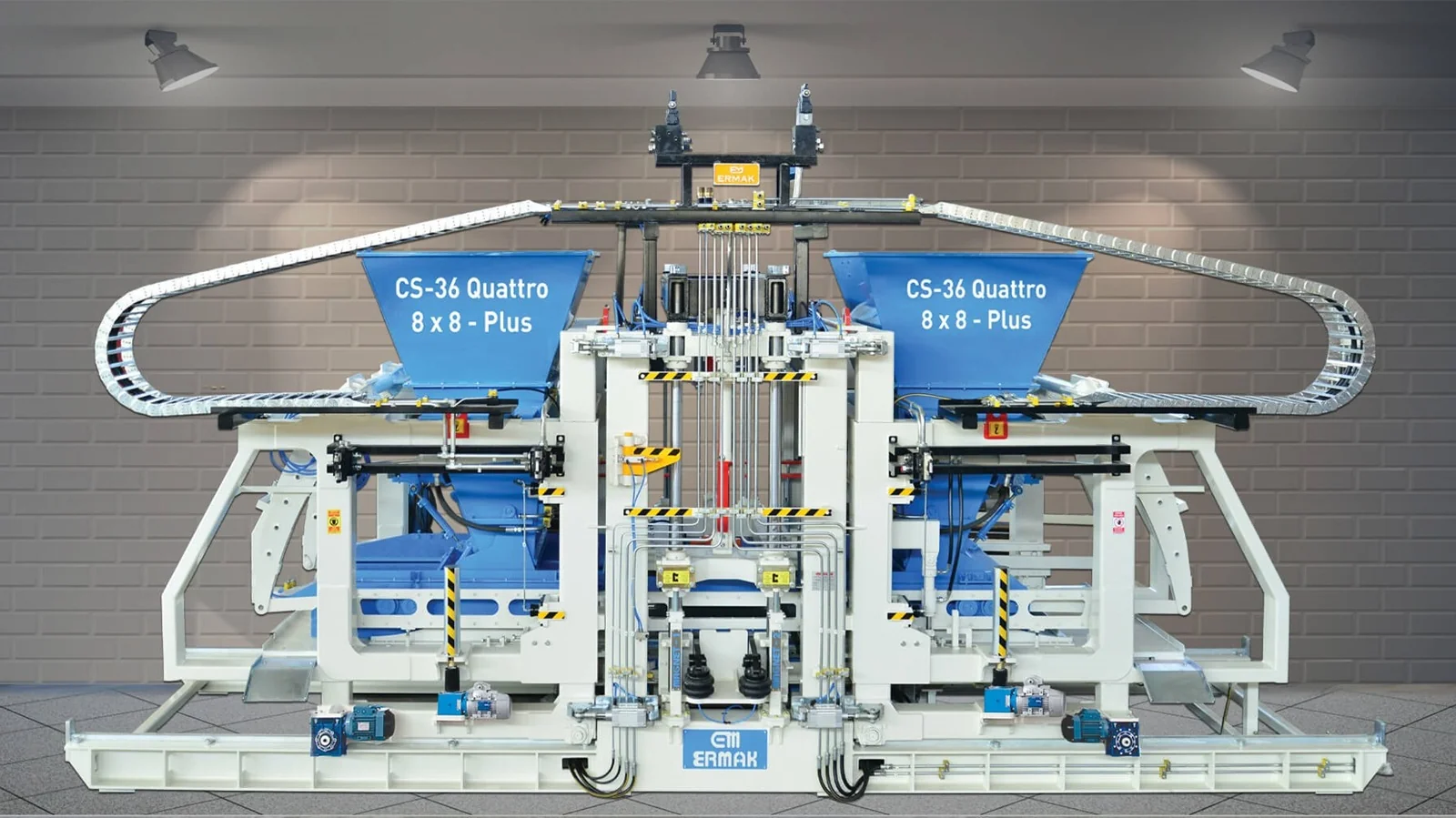
Ermak Makine provides concrete block production machinery together with complementary systems for batching, mixing, moulds and production-line handling.
For Middle Eastern projects, the production system can be planned according to:
target products, required output, automation expectations and available plant area.
This allows the main machine to be considered as one part of the complete factory rather than as an independent purchase.
For investors, the most important benefit of turnkey planning is coordination.
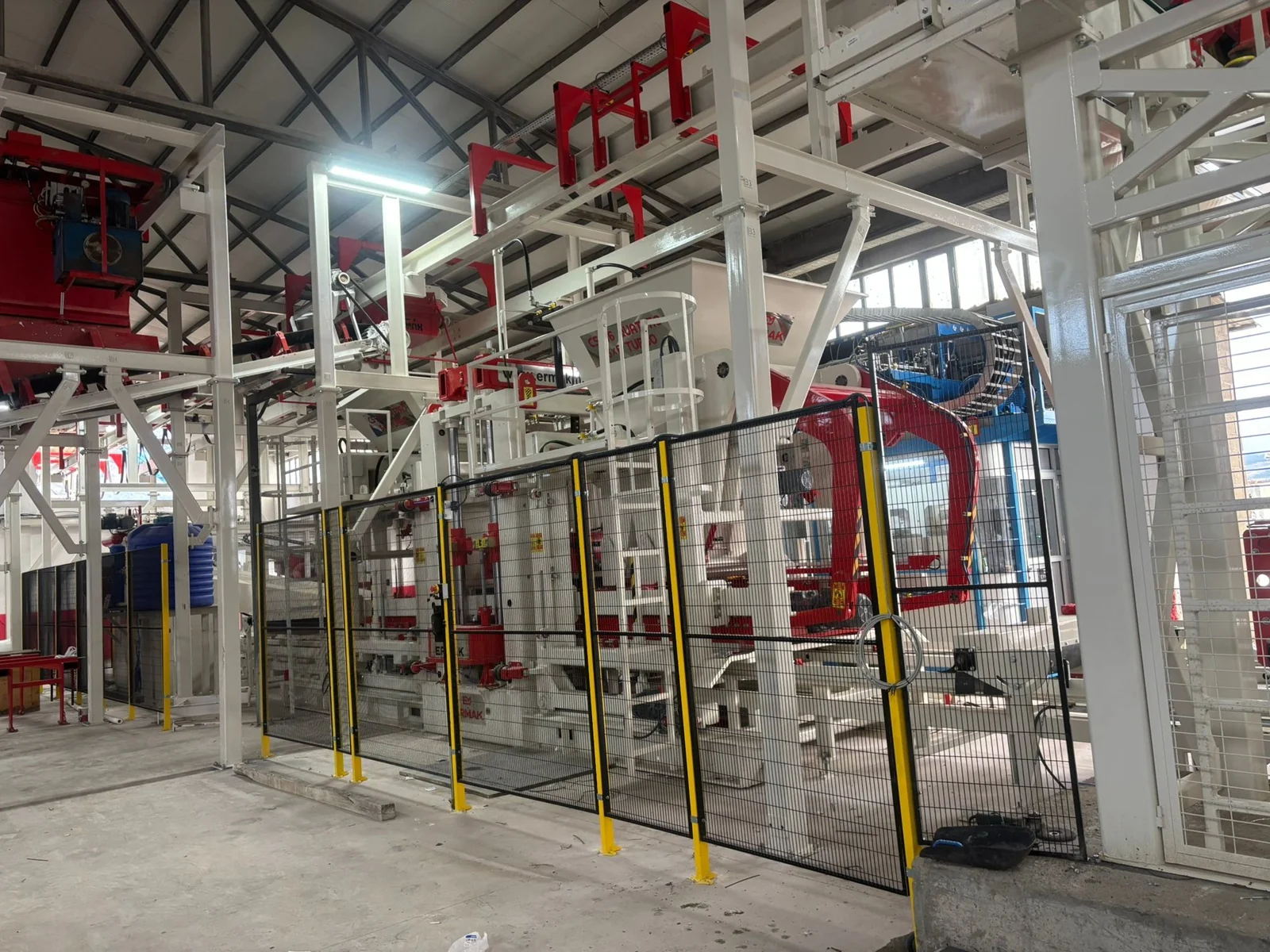
The machine, concrete preparation, moulds, curing and dry-side handling can all be designed around the same production target.
A Practical Approach to Planning a Middle Eastern Block Plant
A new project can begin with a small set of clearly defined questions.
The investor should determine:
- Which products will be manufactured?
- How much daily output is realistically required?
- Will the factory operate one or multiple shifts?
- What automation level is economically justified?
- How much space is available?
- Which products may be added later?
- What local service and spare-parts strategy is required?
Once these points are known, the equipment package can be developed around the actual business plan.
This reduces the risk of overinvestment and helps prevent capacity bottlenecks.
Why Turnkey Planning Matters
The main advantage of a turnkey approach is not simply convenience.
It is the ability to design the complete factory as one production system.
The batching plant should support the mixer.
The mixer should support the block machine.
The machine output should fit the curing capacity.
The dry side should keep up with the cured products.
And the storage yard should be able to manage the factory’s real output.
When these sections are balanced, the plant can use its capacity much more effectively.
For Middle Eastern investors, the right concrete block production solution is therefore not necessarily the largest or most automated plant.
It is the plant that matches the market, product range, local operating conditions and long-term business plan.
Frequently Asked Questions
What products can a turnkey concrete block plant produce?
Depending on the machine and mould configuration, the plant may produce hollow blocks, solid blocks, paving stones, curbstones, grass blocks and other concrete products.
How should production capacity be selected for a Middle Eastern project?
Capacity should be based on realistic market demand, number of shifts and expected future growth rather than only maximum machine output.
Is a fully automatic production line always necessary?
No. The correct automation level depends on output, labour cost and the technical resources available at the plant.
Why is the batching plant important?
The batching and mixing system provides the concrete required by the main machine. If it is too small or inconsistent, the block machine cannot use its full capacity.
Can one machine produce both blocks and paving stones?
Many multi-product block machines can manufacture different concrete products by changing moulds, provided the selected machine supports the required dimensions.
Why should moulds be selected before finalising the plant?
The mould determines product geometry and influences production capacity. Product dimensions should therefore be confirmed before the machine configuration is finalised.
Is curing necessary in hot Middle Eastern climates?
Yes. Hot and dry conditions can increase moisture loss from fresh concrete products, making controlled curing particularly important for consistent production.
How much storage space is required?
This depends on daily output and how many days of finished products remain at the factory before shipment. High-capacity plants can require substantial storage areas.
Should spare parts be purchased with the original machine?
Keeping a practical package of critical spare parts at the plant can reduce downtime, especially for overseas projects where delivery times may be longer.
Does a turnkey solution include installation and training?
This depends on the supplier and contract scope. Buyers should confirm installation, commissioning, operator training and technical support during the quotation stage.
What should be checked before equipment arrives?
Factory foundations, electrical supply, water, compressed air, unloading access and the production layout should be prepared before commissioning.
What is the biggest advantage of a turnkey block production plant?
The main advantage is that the different sections of the factory can be planned around the same production target, reducing the risk of mismatched capacities and unnecessary bottlenecks.