The mould is one of the most important components in a concrete block or paver production system because it directly defines the geometry of the finished product. Even a strong block machine with stable vibration, hydraulic control and automation cannot produce consistent products if the mould cavities are inaccurate, the tamper head is poorly matched or wear is allowed to develop unevenly. For this reason, mould quality should be evaluated as part of the complete production process rather than as a simple accessory to the main machine.
For manufacturers, mould quality affects much more than dimensions. It influences filling behaviour, product height, edge definition, surface appearance, mould change time, maintenance cost and the percentage of saleable output. A low-cost mould can become expensive if it creates dimensional variation, premature wear or frequent production adjustment. The correct comparison should therefore consider precision, material quality, wear behaviour and long-term repeatability together.
Why Mould Tolerance Matters
Tolerance refers to the acceptable dimensional variation in the manufactured mould and, ultimately, in the concrete products produced from it. Every mould contains several critical dimensions, including cavity width, length, height, wall geometry and the clearance between the mould box and tamper head.
These dimensions need to remain within controlled limits because small differences can be repeated thousands of times during production. If one cavity is slightly different from another, the factory may produce products that look acceptable individually but create problems during stacking, installation or construction. The importance of mould tolerance therefore increases as production volume increases.
Cavity-to-Cavity Consistency Is Critical
A multi-cavity mould should not simply produce the correct overall product size. Each cavity should behave similarly to the others. If one cavity produces a slightly heavier, taller or wider product, the difference may indicate dimensional variation, uneven wear or inconsistent concrete filling.
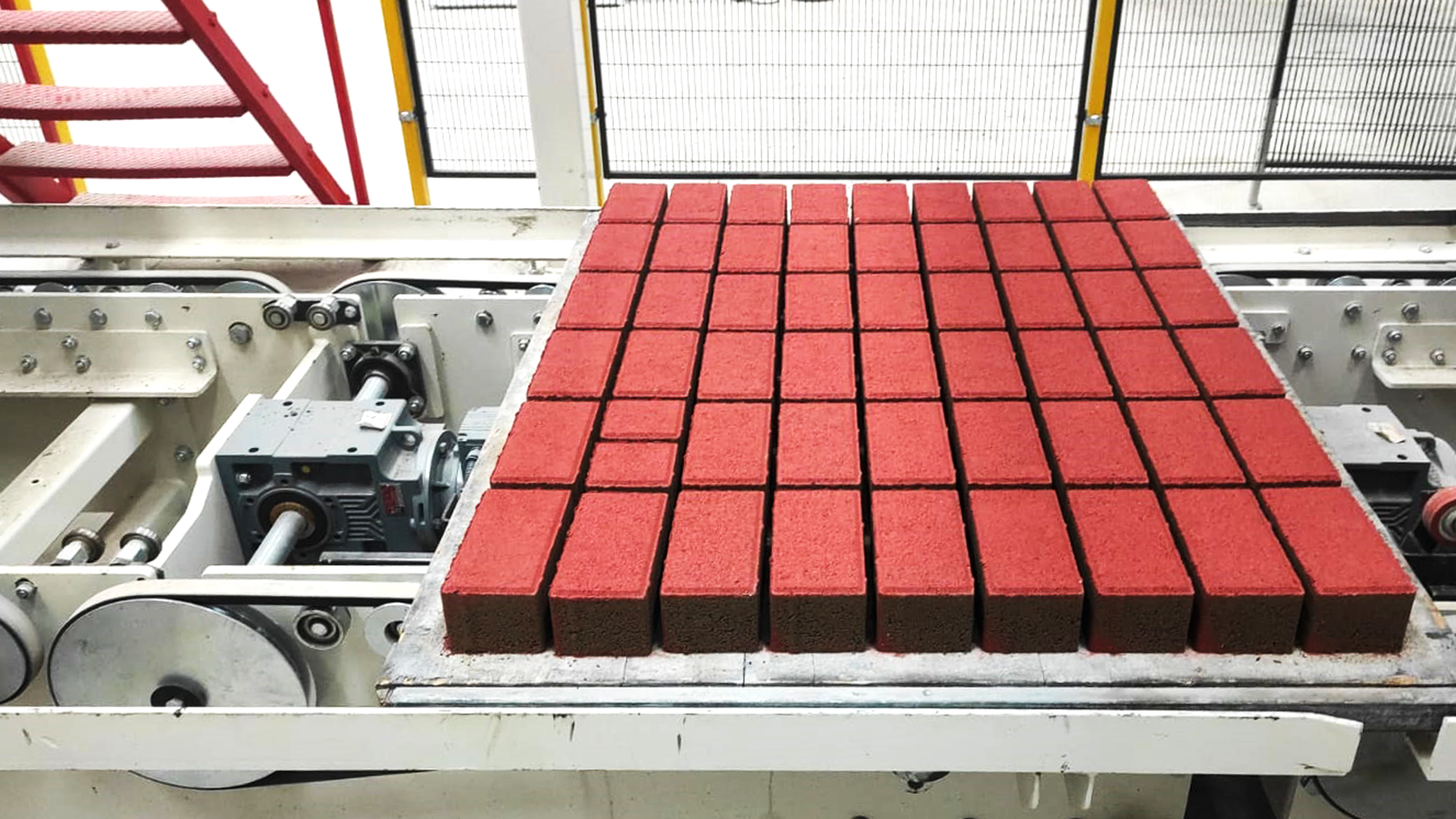
Cavity-to-cavity variation can create serious problems in interlocking pavers because neighbouring stones rely on geometric consistency during installation. It can also affect hollow blocks, where repeated dimensional differences may influence wall alignment or mortar consumption. A good mould should support similar production results across the full production pallet.
Product Height Is Controlled by More Than One Component
Product height is not determined only by the mould box. The tamper head, machine positions, concrete filling, vibration and production pallet condition also influence the final result. However, the mould and tamper system establish the mechanical geometry within which these other factors operate.
If the tamper shoes are not manufactured consistently or if clearance varies across the mould, product height differences can become more difficult to control. This is why mould quality needs to be assessed together with the machine setup rather than through cavity dimensions alone.
Tamper Head and Mould Compatibility Are Essential
The tamper head must correspond accurately with the mould cavities. It needs to enter the mould correctly without unwanted mechanical contact while maintaining the intended relationship with the concrete product during compaction.
Too much clearance can reduce control over product geometry, while insufficient clearance can create friction, wear or mechanical contact. This relationship becomes even more important as the mould wears because clearances gradually change during its operating life.
For this reason, the mould box and tamper head should be manufactured and inspected as a matched system rather than treated as two unrelated components.
Precision Matters Especially in Interlocking Pavers
Interlocking pavers depend on repeatable geometry. Small dimensional differences can affect joint spacing, laying patterns and the overall visual quality of the finished pavement.
A paver may still be structurally strong but commercially unacceptable if its shape varies enough to create uneven installation. This is particularly important for complex geometries with locking features or decorative profiles.
The mould therefore needs to maintain accurate cavity geometry throughout production. Consistent dimensions are not only a manufacturing target; they directly affect the usability of the finished product.
Hollow Blocks Also Depend on Accurate Internal Geometry
For hollow blocks, the internal cores are just as important as the outside dimensions. Core geometry affects product weight, material use and structural characteristics.
If core dimensions vary unnecessarily, different cavities can produce blocks with different masses even when external dimensions appear similar. This can also affect concrete consumption across large production volumes.
Accurate mould inserts and stable wear behaviour help maintain consistent internal geometry throughout the mould’s service life.
Edge Definition Is Part of Product Quality
Sharp and consistent edges improve the visual appearance of concrete blocks and pavers. Worn mould edges can gradually produce rounded or poorly defined products even when the main machine continues operating correctly.
This change may happen slowly, which makes it easy for operators to adapt to declining quality without noticing how far the product has moved from the original standard.
Reference products and regular dimensional inspection can help identify gradual wear before it becomes a major quality issue.
Surface Appearance Can Reveal Mould Problems
Surface defects are not always caused by the mould, but repeated visual problems in the same cavity position can be a useful diagnostic signal. Poor edges, local material build-up or repeated marks may indicate mould wear, damage or contamination.
If the same defect always appears in the same location, the factory should inspect the corresponding mould section before changing unrelated machine settings. Increasing vibration or adjusting concrete recipe may hide the symptom without solving the real cause.
Systematic observation of defect patterns can therefore shorten troubleshooting time.
Mould Wear Is Inevitable
Concrete block moulds operate in an abrasive environment. Aggregate particles move through cavities while the mould experiences repeated vibration, pressure and mechanical contact, so wear is unavoidable over time.
The objective is not to eliminate wear completely but to control how it develops. A good mould should wear gradually and predictably rather than losing geometry quickly or unevenly.
Wear behaviour depends on mould material, heat treatment, product type, concrete composition and daily production volume. Highly abrasive aggregates can accelerate wear significantly.
Material Selection Affects Mould Life
The steel used for mould bodies and wear areas needs to balance hardness, toughness and manufacturability. Extremely hard material is not automatically better if it becomes too brittle for the operating conditions.
Different mould sections may also require different material properties because not every surface experiences the same type of wear. The correct material strategy should therefore be based on function rather than using one specification everywhere.
Good mould engineering considers how the material will behave throughout repeated production, not only how it measures when new.
Heat Treatment Can Improve Wear Resistance
Appropriate heat treatment can increase the wear resistance of mould components and help them maintain geometry longer. However, the quality of heat treatment matters as much as the fact that it was performed.
Uneven treatment or poor process control can create distortion or undesirable material behaviour. Dimensional checks after treatment are therefore important, especially on precision surfaces.
The objective is to increase useful mould life without sacrificing geometric accuracy.
Harder Is Not Always Better
There can be a temptation to compare moulds only by hardness values. While hardness is important for wear resistance, it is only one factor in long-term mould performance.
A highly hardened component that cracks or distorts does not provide useful service life. Material quality, heat-treatment control, geometry and operating conditions need to be considered together.
The strongest mould is the one that maintains usable product geometry for the longest practical production period, not simply the one with the highest hardness figure.
Concrete Mix Influences Mould Wear
Mould life is affected by the material passing through it. Abrasive aggregates, particle shape and concrete composition can all influence wear rate.
Two factories using the same mould design may therefore experience different service lives. One plant may operate with relatively smooth aggregate while another uses highly abrasive crushed material.
For this reason, mould-life comparisons between factories should always consider raw-material conditions rather than assuming that identical moulds must achieve identical production cycles.
Production Volume Changes the Economic Importance of Mould Life
A mould used occasionally has different economic requirements from one used continuously in a three-shift factory. High-volume production makes mould life and replacement consistency much more important because even small dimensional changes can affect very large numbers of products.
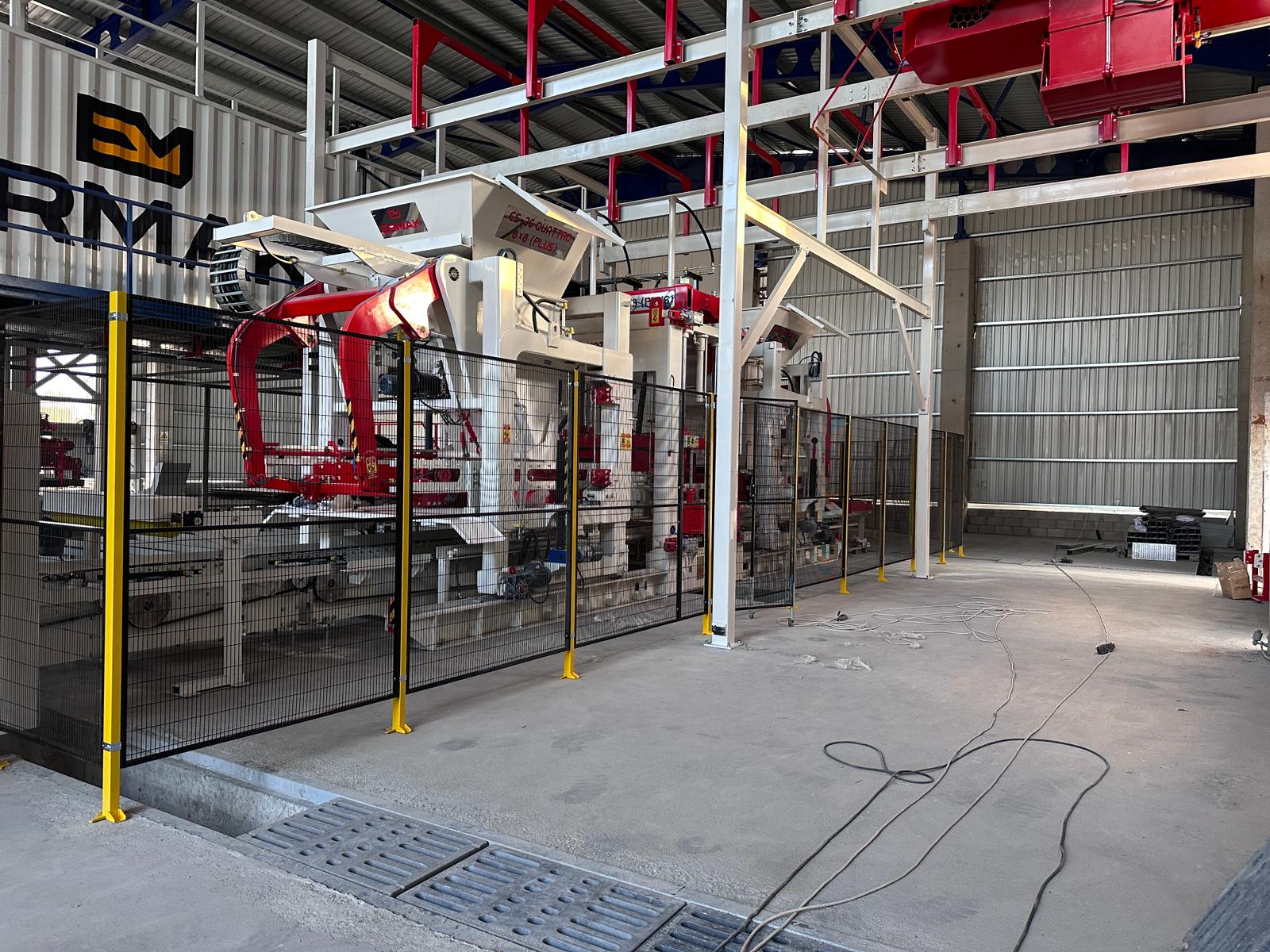
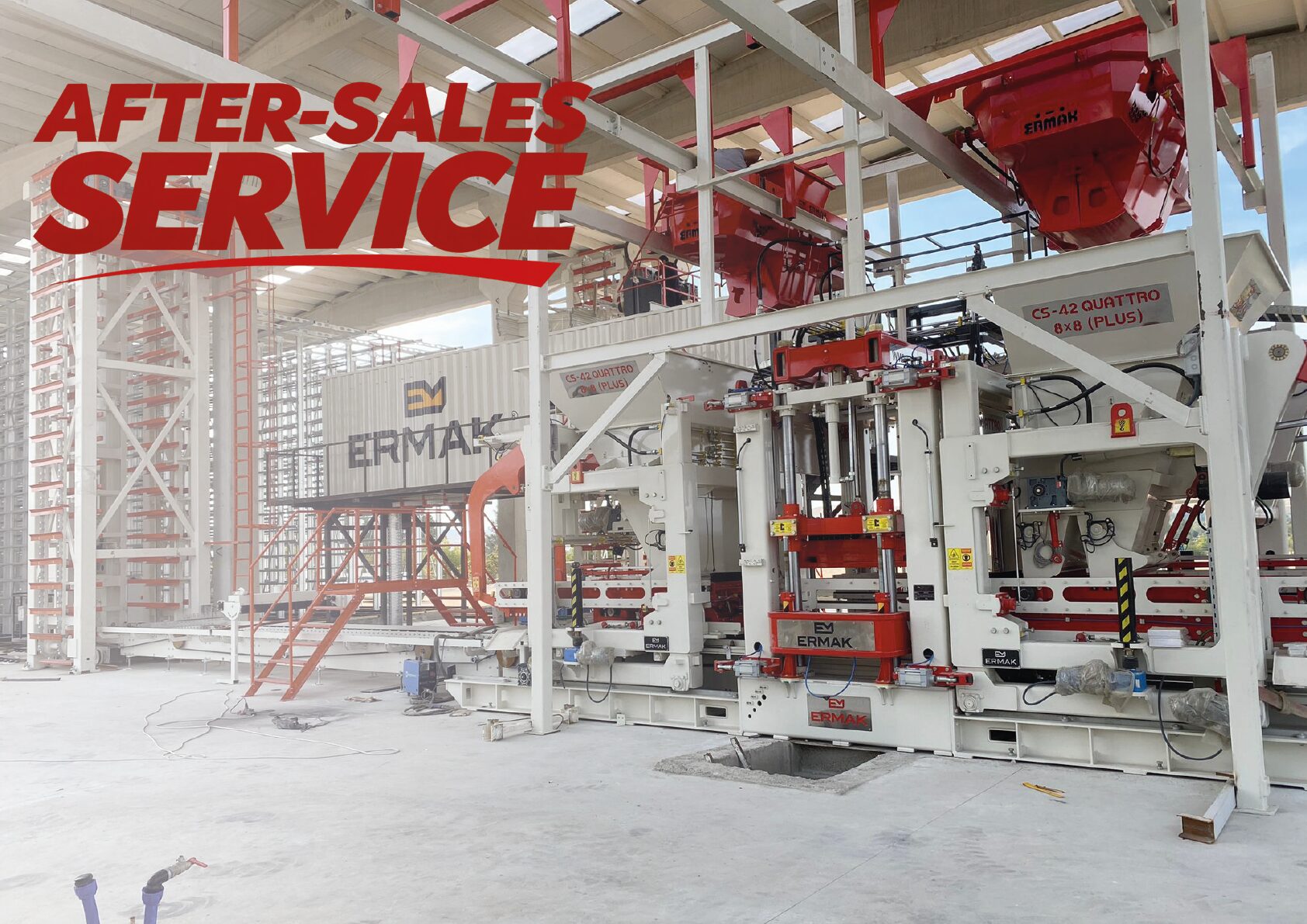
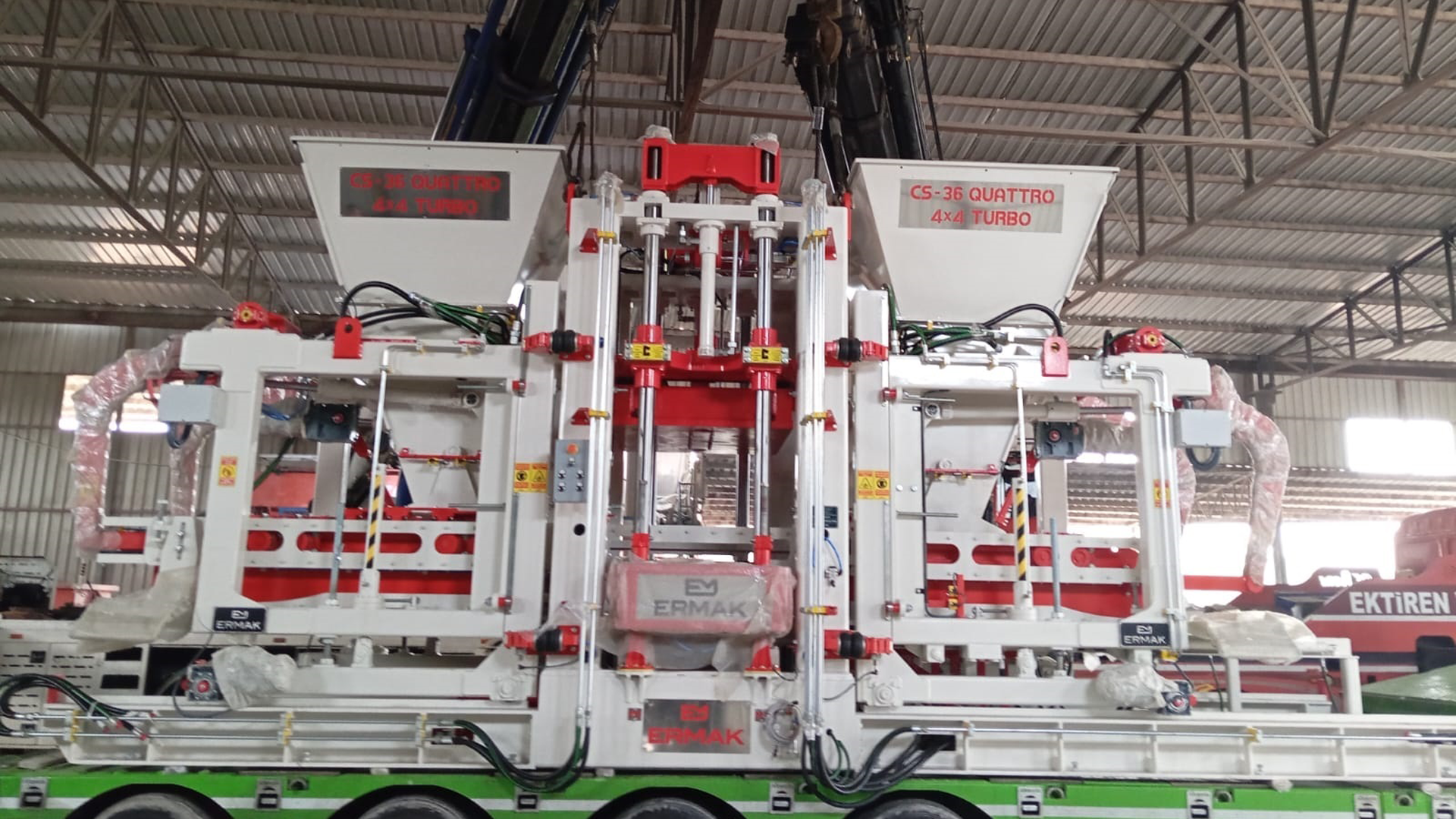
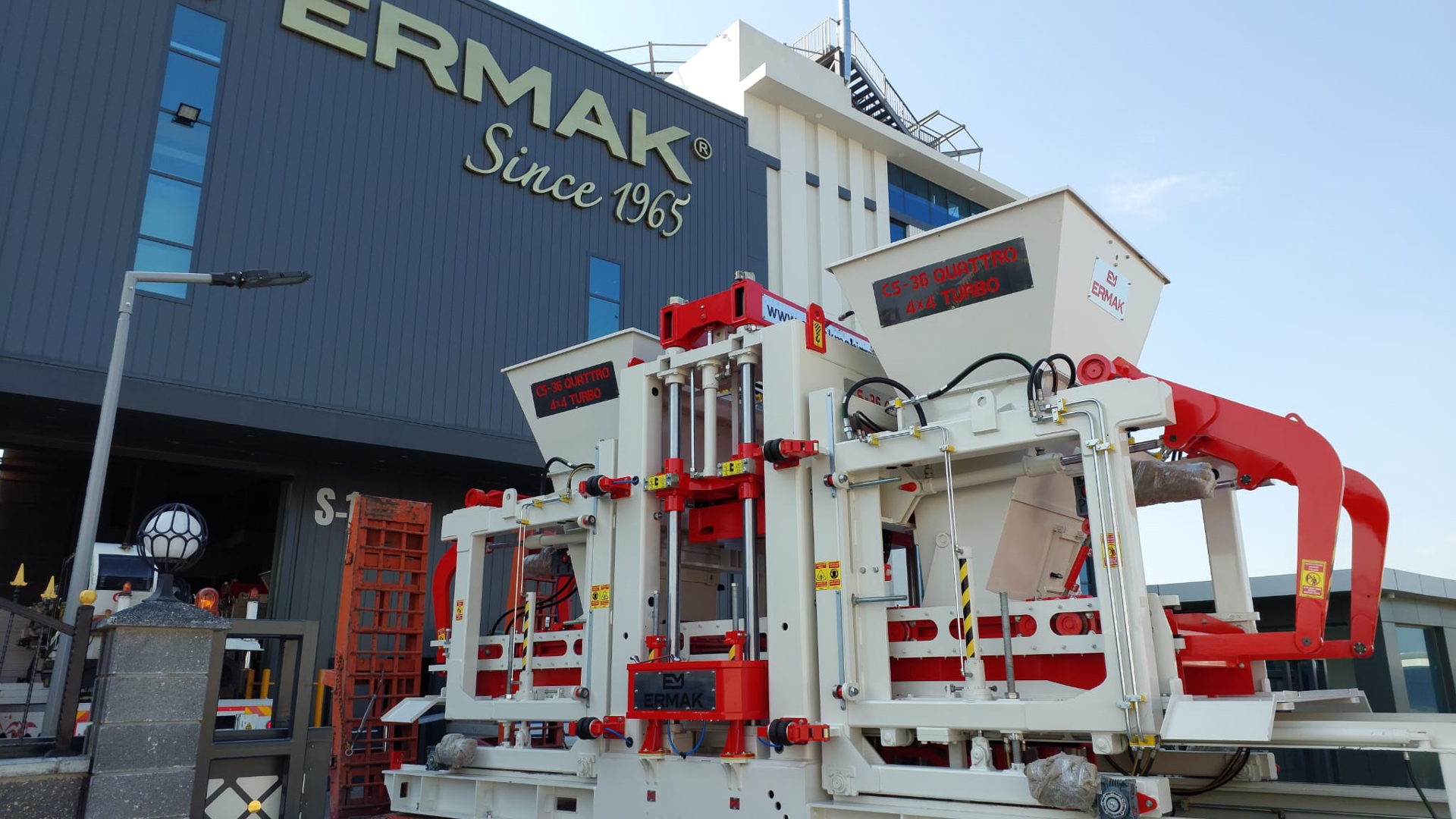
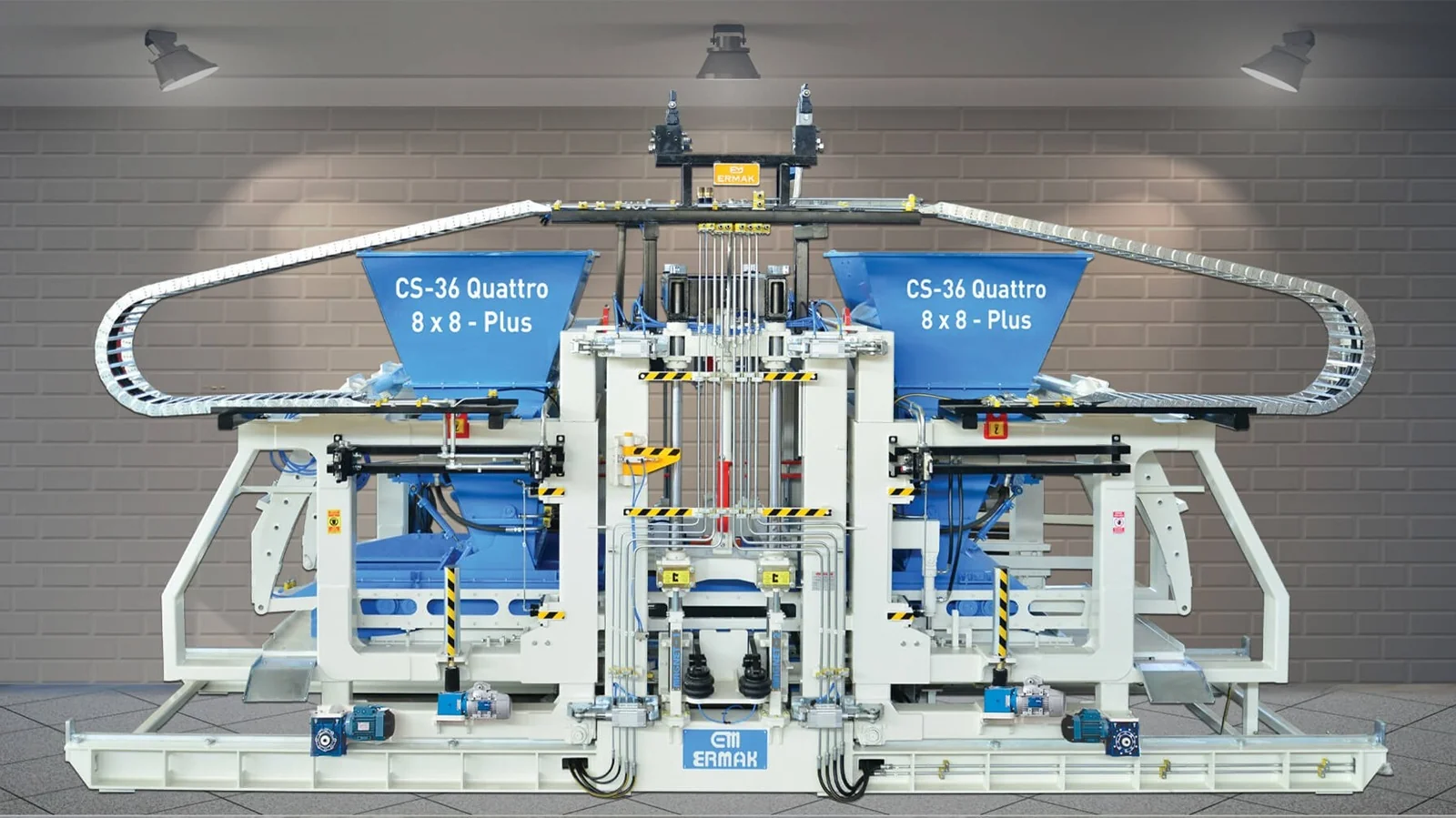
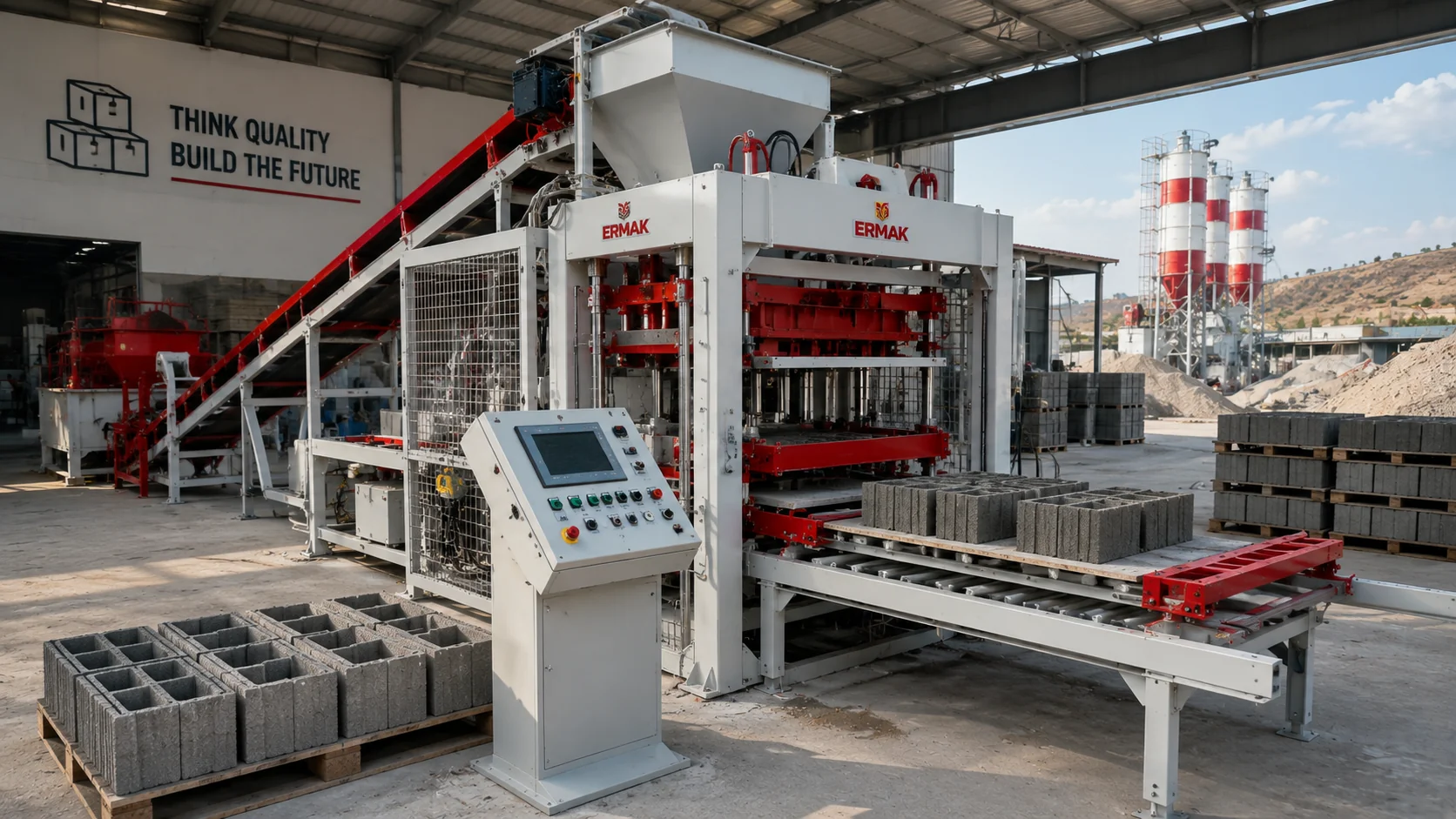
For high-capacity production platforms such as the Quattro 8X8 Plus concrete block machine, mould quality should be selected with the expected annual production volume in mind. A machine capable of high output needs moulds that can maintain acceptable geometry and wear behaviour under the same production intensity.
Wear Does Not Always Occur Uniformly
One side of a mould may wear faster than another because concrete flow, filling behaviour or vibration conditions are not perfectly uniform. Certain cavities may also experience greater abrasion depending on product geometry.
Uneven wear can create cavity-to-cavity variation even while the mould remains usable overall. This is why inspections should compare multiple cavity locations rather than measuring one product and assuming the complete mould is still correct.
A mould can remain operational mechanically while already producing unacceptable variation commercially.
Dimensional Checks Should Be Part of Routine Quality Control
Factories should not wait until customers complain before checking mould-related product dimensions. A simple measurement program can identify gradual changes much earlier.
Length, width, height and other critical product dimensions can be checked at defined intervals. Measurements should include products from different mould cavities so trends can be identified.
The objective is not excessive laboratory inspection. It is to establish enough control to detect when the production process begins moving away from the approved range.
Product Weight Can Support Mould Monitoring
Product weight is not a direct measurement of mould wear, but repeated weight differences can provide useful information. If certain cavities consistently produce heavier or lighter products under the same conditions, the factory may need to inspect filling, mould geometry or wear.
Weight data becomes more useful when combined with dimensions. A product that becomes heavier while dimensions remain similar may indicate changes in compaction or internal geometry, while simultaneous dimensional changes can point toward a different cause.
Using several simple quality indicators together often gives a clearer picture than relying on one measurement.
Product Samples Help Track Long-Term Change
Keeping approved reference samples from a new mould can help production teams understand how product appearance and geometry change over time. Later production can be compared against the original standard.
This is particularly useful for decorative pavers, where gradual edge wear or surface changes may not immediately trigger a dimensional rejection but still affect commercial quality.
Reference samples provide a practical visual benchmark that complements technical measurements.
Mould Wear Can Affect Packaging
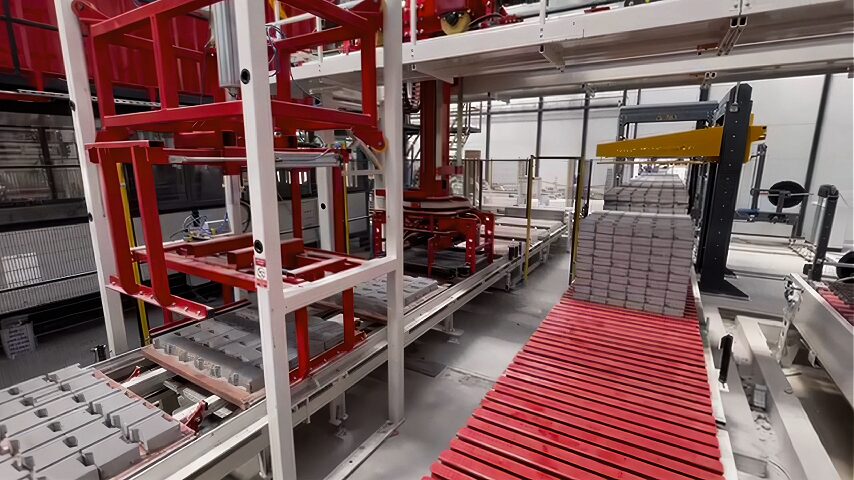
Dimensional inconsistency does not stop at the production stage. Products with varying heights or widths can create unstable cubes during automatic packaging.
A small dimensional difference repeated across several layers may cause the completed package to lean or lose alignment. This can complicate robotic palletizing, strapping and forklift handling.
Mould quality therefore influences not only forming but also dry-side automation and logistics.
Mould Accuracy Can Affect Installation Quality
For paving products, the final customer experiences mould quality during installation. If dimensions vary, laying patterns become more difficult and joint lines may appear uneven.
For blocks, inconsistent dimensions can affect masonry alignment and mortar requirements. A manufacturer may therefore experience complaints even when product strength is acceptable.
This is why dimensional quality should be treated as a market requirement, not only as an internal production specification.
Mould Quality Influences Reject Rate
If mould wear creates products outside dimensional tolerances, those products may need to be rejected even though the concrete itself is perfectly good. This converts raw material, energy and machine time into waste.
The financial impact grows quickly in high-volume plants. A small increase in reject percentage can represent a large number of products over the year.
Replacing or repairing a worn mould at the right time can therefore be more economical than extending its use until the physical component fails completely.
The Cheapest Mould Is Not Always the Lowest-Cost Mould
Mould purchase price is easy to compare, but lifetime cost is more important. A lower-cost mould may become expensive if it wears quickly, requires frequent adjustment or produces higher reject levels.
A useful economic comparison considers purchase price, expected production life, maintenance, repair, changeover time and product quality. These values can then be related to the number of saleable products produced during the mould’s life.
This approach provides a more realistic cost per production cycle or cost per saleable unit.
Replacement Moulds Should Reproduce the Original Geometry
A factory may reorder the same mould design several years after the original purchase. The replacement should reproduce the agreed product geometry as closely as practical.
If replacement moulds vary significantly, the customer may need to adjust packaging, installation expectations or product approvals. This is especially problematic when the product is part of a long-term architectural or infrastructure program.
Good manufacturing records and controlled drawings help ensure repeatability across different mould orders.
Custom Mould Development Requires Clear Product Definition
Special products often require custom moulds. Before manufacturing begins, the product geometry, dimensions and intended use should be clearly defined.
Technical drawings, samples or prototypes can reduce misunderstanding. Complex paver geometries may also require review of demoulding behaviour and practical production limitations.
A visually attractive product design still needs to be manufacturable reliably inside a vibrating concrete block machine.
Mould Design Should Consider Concrete Filling
Cavity geometry affects how concrete enters and distributes inside the mould. Narrow sections, internal corners and complex shapes can create filling challenges.
The mould therefore needs to be designed not only around final product appearance but also around the behaviour of semi-dry concrete during production.
If concrete cannot fill a cavity consistently, operators may compensate with longer feeding or vibration times, reducing capacity. Good mould design supports both product geometry and efficient production.
Mould Design Can Influence Cycle Time
Some products naturally require longer filling or compaction periods than others. Complex cavity shapes or restrictive geometry can increase the time required for stable production.
This means a mould can indirectly affect machine capacity. A machine capable of a very short cycle with a standard block may need a longer cycle with a complex decorative product.
Capacity should therefore always be connected to a reference mould and product rather than treated as one fixed machine value.
Mould Changes Should Be Repeatable
Factories producing several products may change moulds frequently. The mould design should support controlled installation and alignment so operators can return the machine to production without excessive adjustment.
Mechanical interfaces, lifting points and repeatable positioning can reduce changeover time. Saved PLC and HMI recipes can then restore the associated production parameters.
A good mould system therefore contributes to both product quality and production flexibility.
Storage Conditions Affect Mould Condition
Moulds that are not in use still need proper storage. Moisture, contamination and careless handling can damage precision surfaces or create corrosion.
Moulds should be cleaned before storage and supported in a way that avoids unnecessary deformation. Identification should also be clear so the correct tamper head and associated components remain together.
Good storage practices help preserve the accuracy that was originally built into the mould.
Cleaning Should Not Damage Precision Surfaces
Concrete build-up should be removed regularly, but aggressive cleaning methods can damage important mould surfaces if used incorrectly.
Operators should follow appropriate cleaning procedures and avoid creating scratches or deformation that could later affect product geometry or concrete release.
Routine cleaning also makes inspection easier because wear and damage become more visible when surfaces are not covered by hardened concrete.
Preventive Mould Maintenance Reduces Unexpected Problems
A mould should not be considered maintenance-free until replacement. Regular inspection can identify wear, loose components, damage or alignment issues before they create large reject volumes.
Maintenance planning can be based on production cycles, operating hours or regular calendar intervals depending on factory conditions. High-volume moulds may justify more frequent dimensional checks.
The objective is to replace or repair components based on condition rather than waiting for complete failure.
Mould Repair Requires Dimensional Control
Some mould components can be repaired or replaced, but the final geometry should always be verified after the work. A successful repair is not simply one that restores metal to the damaged area.
The repaired mould needs to return to acceptable production dimensions and operate correctly with the tamper head. Otherwise, repair can solve one wear problem while creating a new tolerance problem.
Dimensional inspection should therefore be part of the repair process.
Machine Condition Also Affects Mould Life
Premature mould wear should not automatically be blamed on the mould itself. Machine alignment, vibration behaviour and production pallet condition can all influence mould stress.
If a factory repeatedly experiences unusual wear in the same area across different moulds, the machine should also be inspected. Continuing to replace mould components without identifying the underlying mechanical cause may create unnecessary cost.
Mould and machine maintenance should therefore be coordinated.
Production Pallet Condition Can Influence Product Geometry
A worn or deformed production pallet can change how the mould sits during vibration and pressing. This may create product variation that appears to be a mould problem.
For accurate troubleshooting, the mould, pallet, tamper head and machine alignment should be evaluated together. Replacing a mould will not solve a problem caused by damaged pallets.
The complete forming system needs to provide a stable mechanical reference.
Automation Helps Maintain Product-Specific Settings
Modern block machines can store production recipes for different moulds. These recipes may include filling, vibration and movement parameters that have already been optimized for the product.
When the mould is installed again, the operator can recall these settings rather than recreating them manually. This improves repeatability and shortens startup time after product changeovers.
Automation cannot compensate for a worn mould, but it helps ensure that the correct process parameters are used with a mould that is still mechanically sound.
Mould Quality Affects OEE
Mould problems can influence all three main components of Overall Equipment Effectiveness. Frequent adjustments or mould-related breakdowns reduce availability, longer filling or vibration times reduce performance, and dimensional rejects reduce quality.
A mould can therefore create significant production loss without causing a dramatic machine failure. Gradual wear may slowly reduce OEE over several months.
Tracking mould-related stops, adjustment time and reject rates helps factories understand the real economic effect.
Mould Cost Should Be Included in Total Cost of Ownership
A concrete block plant may purchase many moulds throughout the life of the main machine. Mould cost should therefore be included in the overall Total Cost of Ownership calculation.
The analysis should include initial mould price, expected service life, repairs, replacement frequency and quality losses. For factories with broad product portfolios, mould investment can become a significant long-term expense.
Evaluating moulds only as occasional accessories underestimates their role in factory economics.
How Should Buyers Compare Two Mould Proposals?
Buyers should compare more than the purchase price. The proposed material, manufacturing process, heat treatment, dimensional control and expected maintenance strategy should all be understood.
Lead time is also important because factories often need new products quickly. A technically strong mould supplier that requires very long delivery times may still create commercial limitations.
Replacement capability and drawing control are equally valuable. The supplier should be able to reproduce established product geometry when additional moulds are required later.
Mould and Machine Should Be Considered as One System
When selecting a new production line, the main machine and mould strategy should be evaluated together. Pallet size, vibration characteristics, mould dimensions and expected product range all influence each other.
Investors reviewing different production capacities can examine our concrete block machine and production line catalogs to compare main machine options and the broader production systems around them.
Planning the mould portfolio early also helps determine product-change strategy, storage requirements and future investment needs.
Ermak Makine’s Approach to Mould Quality
At Ermak Makine, we consider mould quality as part of the complete concrete product manufacturing process. The mould needs to work correctly with the main machine, vibration system, production pallets and product recipe if consistent output is expected.
Precision at the beginning of the mould’s life is important, but long-term wear behaviour is equally important. The objective is to maintain product dimensions and repeatability over practical production periods while allowing maintenance and product changes to remain manageable.
For customers planning a new block, paver or kerbstone product range, mould selection should therefore be based on the actual production volume, product geometry and quality target rather than purchase price alone.
What Ultimately Defines a High-Quality Concrete Block Mould?
A high-quality mould is not simply one that fits the machine when new. It should produce consistent cavity geometry, maintain a controlled relationship with the tamper head and wear in a predictable way throughout its service life.
It should also support efficient filling, repeatable changeovers and stable packaging downstream. The material and heat treatment should be appropriate for the operating environment, while maintenance and dimensional checks should help preserve performance.
For concrete block and paver manufacturers, the real measure of mould quality is how long the mould can continue producing dimensionally consistent, saleable products without creating unnecessary adjustment, rejects or downtime.
Companies planning new products, replacement moulds or a complete concrete block production investment can contact Ermak Makine to discuss machine compatibility, product geometry and production requirements.
Frequently Asked Questions
Why is mould tolerance important in concrete block production?
Mould tolerance affects product dimensions, cavity consistency and the relationship between the mould and tamper head. Poor tolerances can create repeated product variation.
Does every mould cavity need to be identical?
Cavities should remain within the defined manufacturing tolerance so products from different positions remain acceptably consistent.
Can mould wear change product dimensions?
Yes. Progressive wear can change cavity geometry, edge definition and internal dimensions over time.
What causes mould wear?
Aggregate abrasiveness, production volume, vibration, product geometry, material selection and machine conditions all influence wear.
Does harder steel always create longer mould life?
No. Hardness needs to be balanced with toughness, geometry and correct heat treatment.
Why is heat treatment important?
Appropriate heat treatment can improve wear resistance and help the mould maintain its geometry for longer production periods.
Can the concrete recipe affect mould life?
Yes. Highly abrasive aggregates and different concrete compositions can significantly influence wear rate.
How can a factory detect mould wear early?
Regular dimensional checks, product-weight monitoring, visual inspection and cavity-to-cavity comparison can reveal gradual changes.
Can mould wear affect automatic packaging?
Yes. Dimensional variation can make finished cubes less stable and create alignment problems during automated packaging.
Does mould quality affect cycle time?
It can. Poor filling behaviour or difficult product geometry may require longer feeding or vibration periods.
Can a worn mould be repaired?
Some mould components can be repaired or replaced, but dimensional accuracy should be verified after the repair.
Why should replacement moulds reproduce the original geometry?
Consistent geometry helps maintain the same product dimensions, packaging arrangements and customer expectations over time.
Does machine condition affect mould life?
Yes. Misalignment, vibration problems or damaged production pallets can contribute to abnormal mould wear.
Should mould cost be included in Total Cost of Ownership?
Yes. Factories may purchase and repair many moulds during the life of the main machine, making mould cost an important long-term operating expense.
What is the most important indicator of mould quality?
The most important indicator is the ability to maintain consistent product geometry across all cavities and continue doing so predictably as production cycles and wear accumulate.