Investing in a concrete block machine for Africa requires more than choosing a machine from a catalogue and shipping it to the project location.
African markets include rapidly growing cities, large infrastructure investments, residential construction, industrial developments and expanding demand for locally manufactured construction materials. However, production conditions can vary significantly between countries and even between cities in the same country.
A concrete block plant planned for one market may need to operate with:
stable industrial electricity, well-developed logistics and easy access to cement and aggregate.
Another factory may face:
power interruptions, long spare-parts delivery times, changing aggregate quality or limited access to experienced maintenance personnel.
For this reason, a successful concrete block plant should be designed around the actual local operating conditions.
The main question should not be:
“What is the biggest block machine we can buy?”
It should be:
“What production system can operate reliably in our market and produce the products our customers actually need?”
Start with the Products Required by the Local Market
Machine selection should begin with the products that will generate sales.
Depending on the country and region, demand may focus on:
hollow blocks, solid blocks, interlocking pavers, curbstones, grass blocks or other concrete construction elements.
A factory supplying residential construction may primarily need hollow blocks.
A company working with municipal and infrastructure projects may also need paving stones and curbstones.
This difference directly affects the machine and mould strategy.
A multi-product machine can be particularly useful where market demand changes throughout the year because the factory can expand its product range by changing moulds rather than purchasing a completely new production line.
The first investment step should therefore be a local market study covering product dimensions, typical customer demand and expected daily sales.
Local Product Dimensions Must Be Confirmed
Concrete block dimensions are not identical in every market.
A product commonly used in one country may have a different:
width, height, wall thickness or geometry
in another country.
This is why buyers should send the required product drawings or dimensions before ordering the machine and moulds.
A quotation based on a generic “20 cm hollow block” may not accurately represent the product required locally.
The mould should match the product that contractors, distributors and construction companies actually buy.
This also allows the manufacturer to calculate production capacity more realistically.
Capacity Should Follow Sales Demand
High capacity looks attractive on a brochure, but unused production capacity does not create revenue.
Suppose the market can initially absorb approximately:
10,000 blocks per day.
Installing a production system designed for several times that amount may require a larger:
batching plant, curing area, pallet inventory and storage yard.
The additional equipment represents capital that may remain underutilised.
On the other hand, selecting a machine that is already near maximum capacity on the first day may leave no room for growth.
The better approach is normally:
Current realistic demand + reasonable future growth capacity.
This gives the plant room to develop without creating an unnecessarily large initial investment.
Theoretical Capacity Is Not the Same as Daily Saleable Production
A machine may have a published production figure based on ideal operating conditions.
Real factory production includes:
start-up, cleaning, product changes, normal adjustments, maintenance and quality checks.
For this reason, investment planning should not assume that the machine will operate at maximum theoretical output during every minute of every shift.
The more useful figure is:
saleable products per normal working shift.
This figure gives a better foundation for calculating:
raw-material consumption, sales potential and investment return.
Consider Starting with One Shift
For many new concrete block plants, starting with one well-organised shift can be more practical than designing operations around continuous production immediately.
This allows the management team to understand:
local demand, machine performance, staffing requirements and product quality
before adding more working hours.
If demand increases, production can often be expanded through a second shift before investing in another complete machine.
The best solution depends on local labour cost, demand and maintenance strategy.
Select Automation According to Local Conditions
A fully automated plant can reduce manual handling and support high production capacity.
However, the most automated solution is not automatically the best solution for every African project.
The appropriate level depends on factors such as:
labour availability, wage levels, production target and access to technical staff.
For example, a high-volume factory close to a major city may benefit from more automation.
A smaller regional factory may achieve stronger investment economics with a simpler system that can be operated and maintained by a smaller technical team.
The objective should be appropriate automation, not maximum automation.
Simple and Reliable Operation Can Be a Major Advantage
For plants operating far from major industrial centres, reliability can be more important than unnecessary complexity.
Every additional automated function may include:
motors, sensors, drives and control components.
These can provide significant advantages, but they also require maintenance knowledge.
The ideal block plant should therefore match the skills available locally.
Technology should make production easier and more reliable, not make the plant dependent on constant external intervention.
Electricity Supply Should Be Evaluated Before Ordering
Electrical infrastructure varies greatly between projects.
Before the machine configuration is finalised, the buyer should confirm:
- Available voltage
- Frequency
- Transformer capacity
- Reliability of the electrical supply
This is especially important for higher-capacity production systems.
If the local electricity network is unstable, the investment may also require additional protection or backup-power planning.
These requirements should be considered before installation rather than discovered when the machine arrives.
Power Interruptions Can Affect the Entire Production Line
An unexpected power loss does not affect only the main block machine.
It may also stop:
the batching plant, mixer, conveyors, compressors and handling equipment.
Repeated interruptions can reduce daily production and complicate production planning.
Where power stability is a concern, the project should evaluate suitable backup or power-management solutions according to the size of the factory.
The correct approach will depend on local conditions, so this should be included in the early project study.
Concrete Preparation Is Critical
A concrete block machine can only produce consistently when the concrete feeding it is consistent.
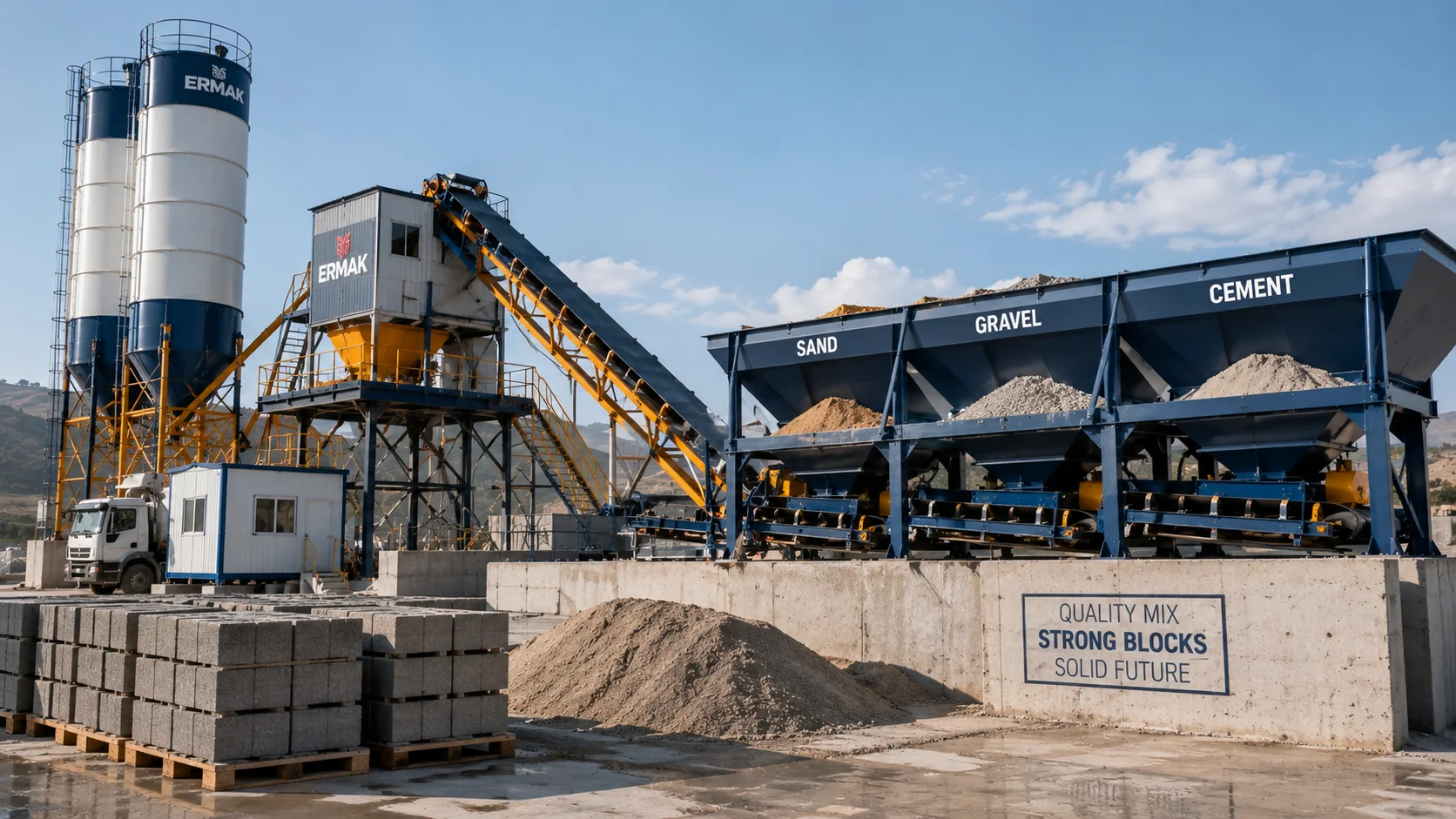
The batching plant should therefore be sized according to the actual demand of the main machine.
An undersized batching system causes the block machine to wait.
An unnecessarily oversized system increases the initial investment.
The two systems should be matched.
For African projects, it is also important to consider how raw materials will behave in real conditions.
Aggregate may come from different local sources and may change in:
grading, moisture and cleanliness.
This can influence the concrete recipe and finished product quality.
Local Aggregate Should Be Tested
One of the strongest advantages of concrete block production is the possibility of using locally available aggregate where suitable.
However, not every material source behaves in the same way.
Before regular production begins, the plant should evaluate the local aggregate and develop concrete recipes accordingly.
A recipe developed using one sand source may not perform exactly the same after the supplier changes.
This is why the production team should learn to recognise changes in raw materials rather than relying on one fixed recipe forever.
Cement Availability Should Be Included in the Business Plan
Cement usually represents an important part of concrete-product manufacturing cost.
The project should therefore consider:
local cement availability, supplier reliability and transport distance.
If the factory is located far from major supply routes, storage capacity may need to be increased.
At the same time, unnecessarily large cement storage increases investment.
Storage should be designed according to:
daily consumption and realistic delivery frequency.
Water Supply and Quality Should Not Be Ignored
Concrete production requires a reliable water source.
Projects should confirm whether the factory will use:
municipal supply, well water or another source.
Where water quality is uncertain, testing may be necessary before finalising the production recipe.
The important point is to identify these conditions before commissioning.
A modern machine cannot compensate for an inconsistent concrete supply caused by poor raw-material planning.
Climate Can Affect Production Conditions
African production locations can include:
hot, dry, humid, coastal or tropical environments.
These conditions can influence raw-material storage and curing.
For example, high temperatures and dry air may cause fresh concrete products to lose moisture quickly if curing is poorly controlled.
In humid or rainy environments, aggregate moisture can change significantly.
The machine itself is only one part of the quality system.
Concrete preparation and curing methods should be adapted to the local climate.
Curing Capacity Must Match Production Capacity
Fresh blocks and paving stones require time to develop strength.
This means the factory must have enough curing capacity for the output of the main machine.
A high-capacity block machine combined with a small curing area will eventually create a bottleneck.
This is particularly important where a plant plans to increase production later by adding another shift.
The curing system should be considered during initial layout planning so that future expansion remains practical.
Finished-Product Storage Can Require Significant Space
A concrete block factory may produce thousands of units every day.
If products remain in the factory for several days before shipment, a large amount of finished inventory can accumulate.
The investment plan should therefore include enough space for:
curing, finished-product storage, forklift movement and truck loading.
Many projects focus heavily on the machine area and underestimate the space required outside the production hall.
For high-volume African markets, storage and logistics can be just as important as machine capacity.
Factory Layout Should Support Simple Product Flow
An efficient production plant should allow materials and products to move in a logical direction.
A practical layout normally follows:
Raw materials → Batching → Block production → Curing → Packaging/stacking → Storage → Shipping
Poor layout creates unnecessary:
forklift movement, labour and handling.
This can increase operating cost for many years.
Factory planning should therefore begin before the machines are shipped.
Mould Strategy Is Especially Important
A block machine can remain in the factory for many years.
The products demanded by the market may change much faster.
Mould flexibility therefore provides an important commercial advantage.
A factory may begin with several core products, for example:
standard hollow blocks, one popular paving stone and a curbstone.
Additional moulds can then be added as new market opportunities develop.
This approach can be more economical than purchasing a large number of moulds before demand has been proven.
Avoid Buying Too Many Moulds at the Beginning
A broad product catalogue may look attractive when launching a new factory.
But every mould requires investment.
If some moulds are rarely used, capital remains tied up in equipment that generates little revenue.
It is usually more practical to begin with products that have clear demand.
As distributors and contractors request additional products, new moulds can be added.
This creates a production portfolio based on actual market feedback.
Spare Parts Planning Is Critical for Remote Plants
For some African projects, obtaining a replacement component from the manufacturer may involve:
international transport, customs clearance and inland delivery.
This means a low-cost component can create a long production stoppage if it is not available locally.
A suitable initial spare-parts package should therefore be part of the original project.
The exact list depends on the machine, but the focus should be on components that have a high impact on production continuity.
The objective is not to build an enormous spare-parts warehouse.
It is to prevent a small missing component from stopping the complete factory for several days.
Common Commercial Components Can Simplify Maintenance
Where practical, globally available industrial components can make overseas maintenance easier.
If a common electrical or hydraulic component is available locally, the factory may be able to replace it without waiting for an international shipment.
Buyers should therefore discuss with the manufacturer which parts are:
standard commercial components
and which are:
machine-specific.
This information helps the customer prepare a more effective spare-parts strategy.
Operator Training Is Essential
A concrete block plant should not depend on one foreign technician for normal daily production.
Local operators should be trained to:
start and stop the system correctly, understand normal alarms, change products and monitor basic quality.
Maintenance personnel should receive additional training appropriate to their role.
Strong local knowledge is particularly valuable for overseas plants because it reduces the need for external support for routine issues.
The goal of commissioning should be to leave the customer with a team capable of operating the factory independently.
Maintenance Training Should Be Practical
Training should not focus only on operating buttons.
The maintenance team should understand the basic routines required to keep the machine available for production.
This includes knowing:
when inspections are required, which areas should be cleaned and how to identify abnormal machine behaviour.
A small problem discovered early is often easier and less expensive to correct than a major failure discovered after production has stopped.
Remote Support Can Reduce Downtime
International plants benefit from technical support systems that can help diagnose problems without waiting for an overseas service visit.
Some automation, sensor or control issues can be evaluated remotely.
This does not eliminate the need for on-site service in every situation.
However, it can help determine whether the issue is:
mechanical, electrical or operational
before expensive travel arrangements are made.
For a factory located thousands of kilometres from the machine manufacturer, this can be a significant advantage.
After-Sales Support Should Be Evaluated Before Purchase
Service should not be considered only after a problem occurs.
Before selecting a machine manufacturer, the buyer should ask how support works after commissioning.
Important questions include:
Who provides technical assistance?
How are spare parts identified and ordered?
Can remote support be provided?
What documentation is supplied?
The quality of this support can have a major impact on the lifetime value of the machine.
Transport and Customs Should Be Included in the Project Budget
The factory investment does not end at the manufacturer’s shipping point.
Depending on the destination, the project may include:
sea freight, inland transport, insurance, customs clearance and unloading.
A complete production line can require several shipments.
The buyer should therefore calculate the delivered project cost, not only the machine price.
Local import taxes and customs requirements vary by country and should be checked during the investment stage.
Installation Site Preparation Should Begin Early
While machinery is being manufactured and transported, the customer’s site should be prepared.
This can include:
machine foundations, electricity, water, compressed air and building access.
If these items are incomplete when the equipment arrives, commissioning can be delayed.
Good communication between the manufacturer and local project team helps avoid these problems.
Start-Up Should Include Trial Production
A machine is not fully commissioned simply because it moves correctly.
The start-up process should include actual production.
Local:
aggregate, cement and target moulds
should be used to establish suitable production settings.
This is also the ideal time to train operators.
The goal is not only to demonstrate that the machine works.
It is to demonstrate that the factory can produce its intended products.
Quality Control Can Begin with Simple Routines
A new factory does not need an unnecessarily complicated quality system on the first day.
However, basic quality checks should be established immediately.
Products can be monitored for:
dimensions, weight, visible defects and reject rate.
Required strength and other performance testing should then be carried out according to the relevant local standards.
A simple but consistent quality-control system is far more useful than occasional complex testing.
Product Quality Builds Local Market Trust
In growing construction markets, price is important, but product consistency is also important.
Contractors and distributors want products that remain similar from one delivery to the next.
If block dimensions vary or paver appearance changes frequently, customers may move to another supplier.
Consistent production therefore supports not only manufacturing efficiency but also the reputation of the local brand.
Plan for Expansion Without Overinvesting
Many successful block factories grow after the market becomes established.
Expansion may take the form of:
a second shift, additional moulds, more automated handling or additional storage.
The original plant should ideally leave room for this development.
However, future growth should not become an excuse for purchasing equipment that is far too large for today’s market.
A flexible plant is usually more valuable than an oversized plant.
Local Labour and Automation Should Be Balanced
Labour economics differ across African countries.
In some markets manual handling may remain financially practical.
In others, high production volumes justify more automated systems.
The best plant should therefore be designed for the local business environment rather than copied directly from a European, Asian or Middle Eastern factory.
The same concrete block machine can be part of several different plant configurations depending on the customer’s automation needs.
Evaluate Cost per Saleable Block
One of the most useful financial measurements is not simply machine price.
It is:
Total production cost per saleable block
or, for paving stones:
Total production cost per saleable square metre.
This includes the effects of:
cement, labour, energy, maintenance and rejects.
A machine with a lower purchase price may not be the better investment if it requires much more labour or produces high reject rates.
Long-term operating economics should therefore be considered during equipment selection.
Ermak and African Concrete Block Projects
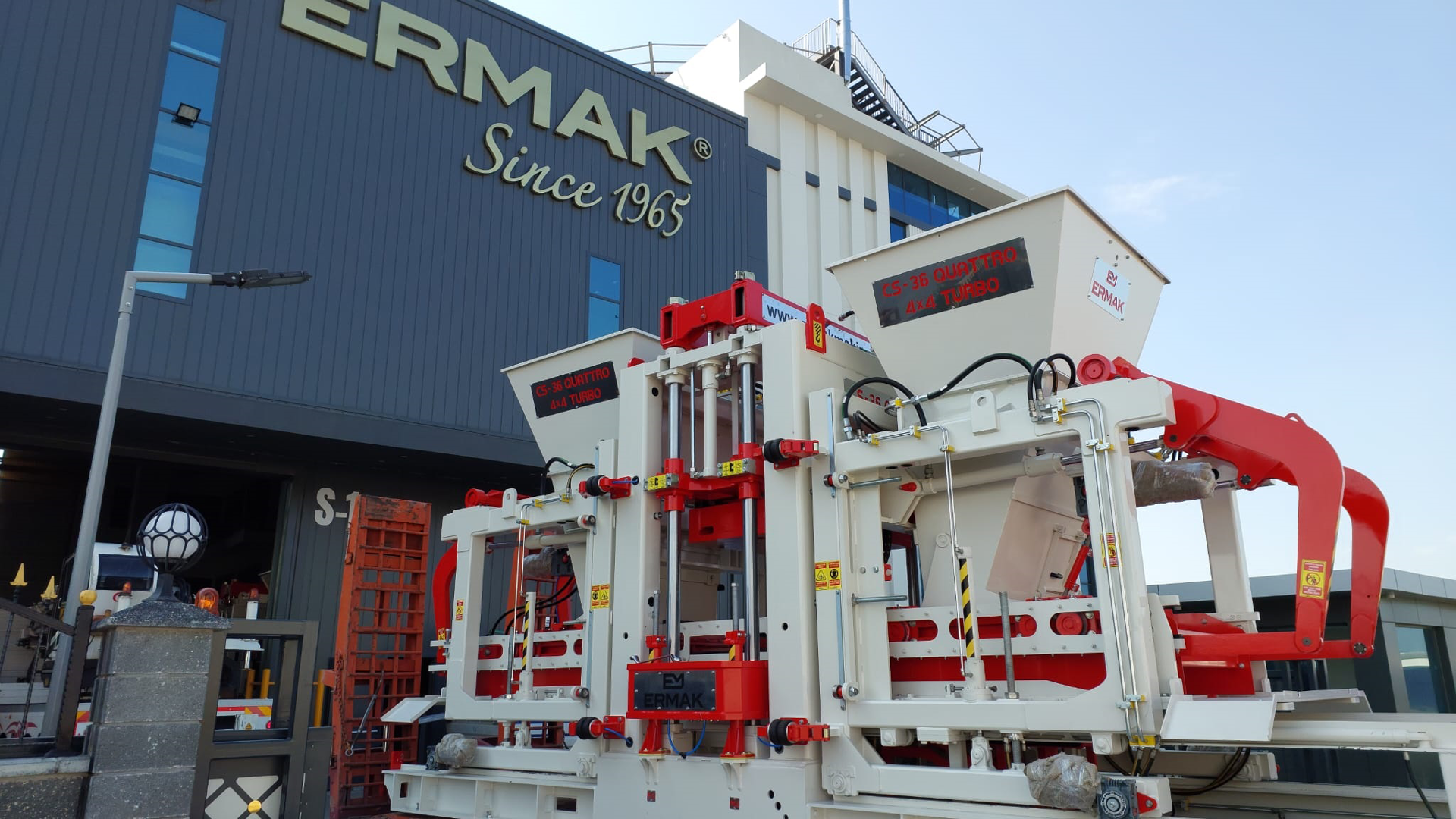
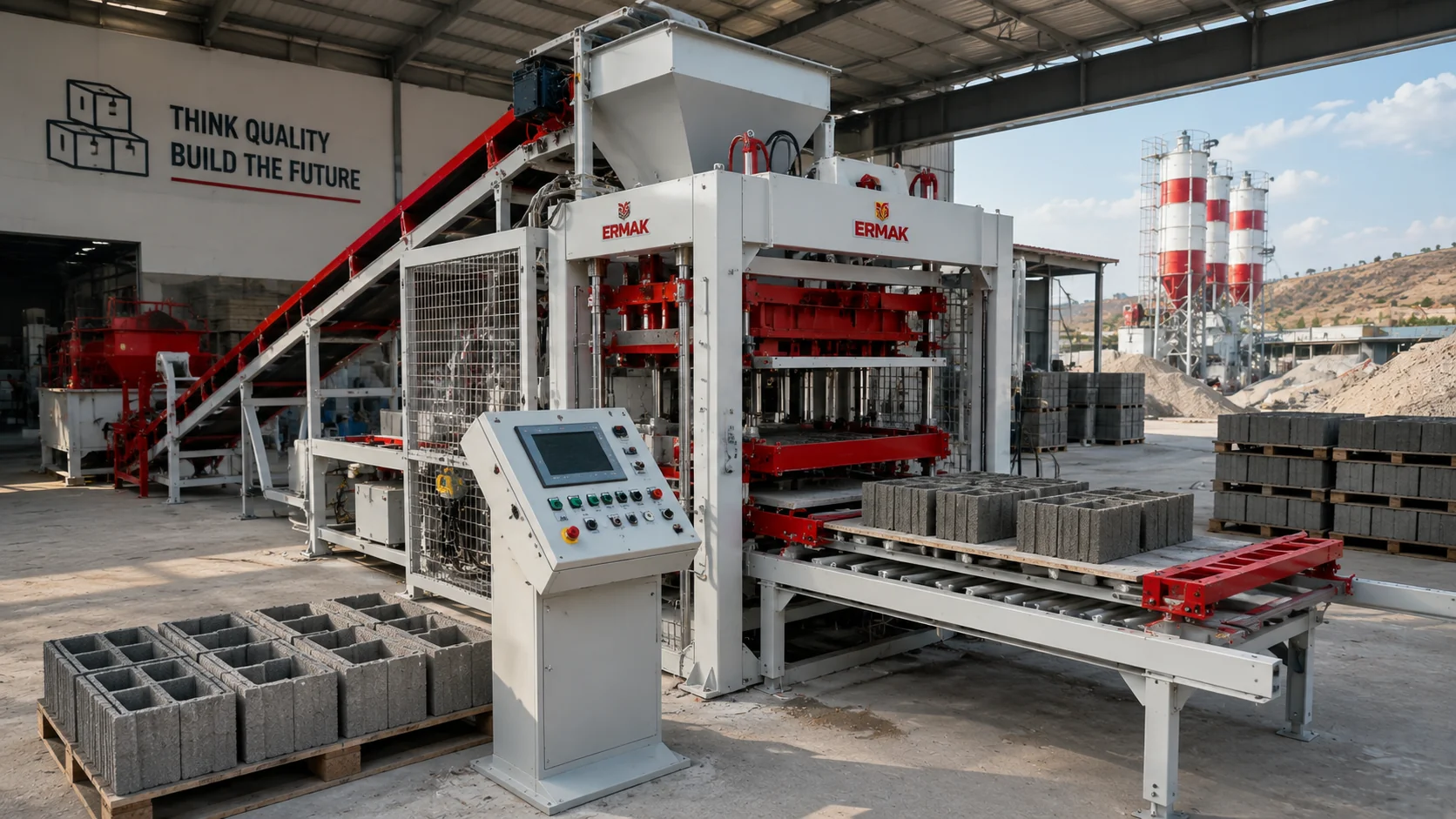
Ermak Makine has been manufacturing concrete-product machinery since its early industrial development in Turkey and today offers machinery for hollow blocks, paving stones, curbstones and related concrete products.
For African projects, the machine itself should always be selected together with the operating conditions of the destination country.
The most important project information normally includes:
target products, required daily capacity, available electricity, desired automation level and local raw-material conditions.
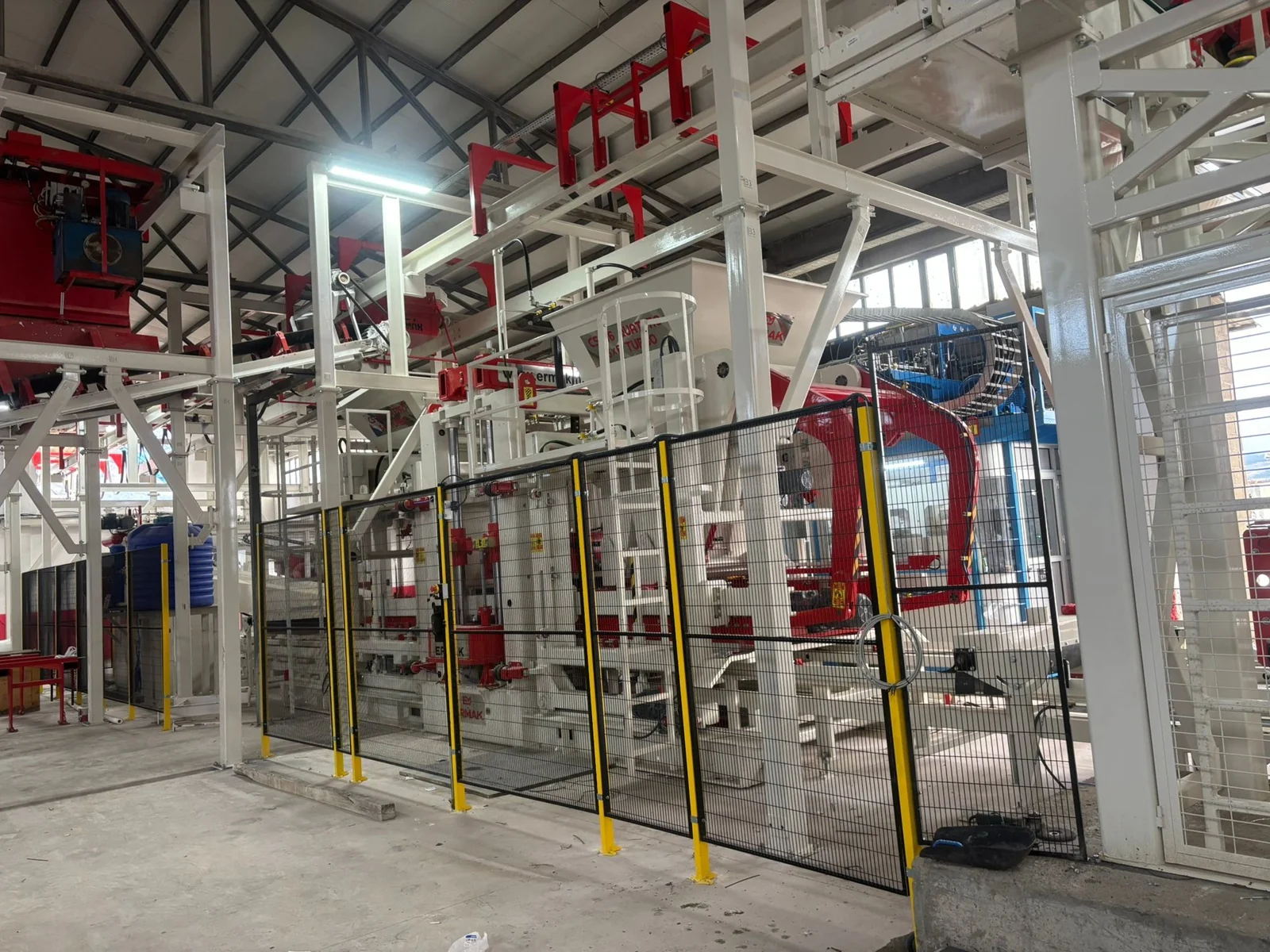
From this information, the machine, batching system, moulds and support package can be planned as one production project.
The objective is not simply to deliver equipment to Africa.
The objective should be to establish a factory that can continue producing reliably after installation and commissioning are complete.
What African Buyers Should Evaluate Before Ordering
A practical investment decision can focus on a limited number of questions:
- Which products have real local demand?
- What daily production is realistically required?
- Is local electricity suitable for the proposed plant?
- Are aggregate, cement and water sources reliable?
- What automation level makes economic sense?
- Which critical spare parts should remain at the factory?
- How will operators and maintenance staff be trained?
- What technical support is available after commissioning?
If these points are clear, machine selection becomes much easier.
Building a Reliable Concrete Block Plant in Africa
Africa offers significant opportunities for local concrete-product manufacturing, but a successful plant requires local planning.
A machine designed without considering:
electricity, raw materials, staff capability and logistics
may be difficult to operate even if its technical specifications are excellent.
A better strategy is to design the factory around the real conditions of the project.
This means matching:
machine capacity + concrete preparation + moulds + curing + labour + support
to the local market.
The highest-capacity system is not automatically the most profitable.
The most automated plant is not automatically the most reliable.
And the lowest machine price does not automatically create the lowest production cost.
For African investors, the strongest project is usually the one that combines appropriate technology, realistic capacity and dependable long-term support.
Frequently Asked Questions
What type of concrete block machine is suitable for Africa?
There is no single machine for the entire continent. The correct system depends on target products, daily demand, available utilities, labour conditions and required automation.
Can one machine produce hollow blocks, pavers and curbstones?
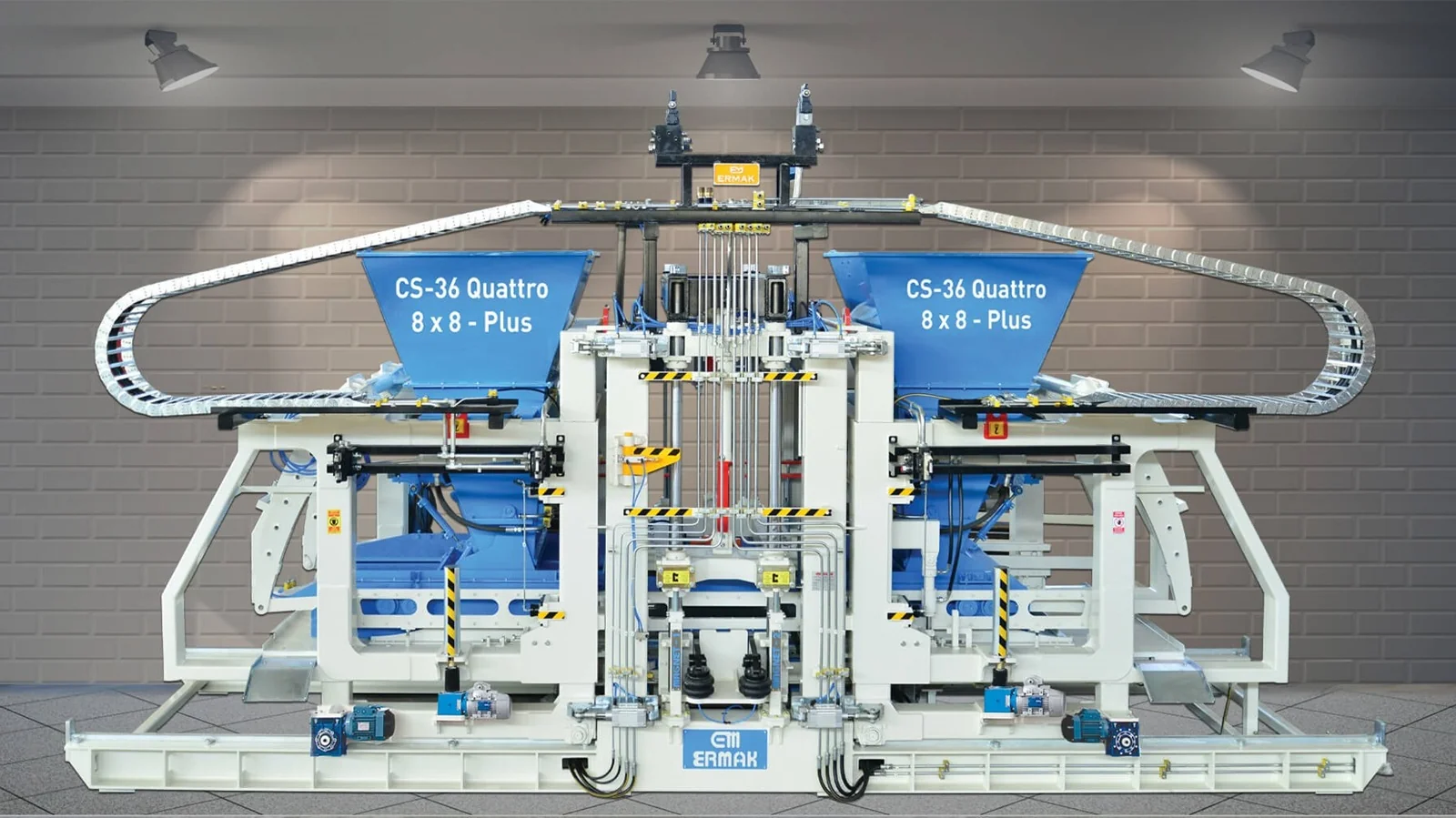
Many multi-product concrete block machines can manufacture different products using different moulds. The exact product range should be confirmed for the selected machine.
How should block-machine capacity be selected?
Capacity should be based on realistic daily sales plus reasonable future growth. Buying dramatically more capacity than the market can use may increase the investment unnecessarily.
Is a fully automatic concrete block plant necessary?
Not always. The appropriate automation level depends on production volume, labour costs and local technical resources.
What should be checked about electricity before purchasing a block machine?
Available voltage, frequency, transformer capacity and supply reliability should be confirmed before the equipment configuration is finalised.
Can local aggregate be used for block production?
Suitable local aggregate can often be used, but its grading, cleanliness and moisture characteristics should be evaluated before the final production recipe is established.
Why are spare parts especially important for African projects?
International transport and customs can extend delivery times. Keeping critical components locally can reduce the risk of long production stoppages.
Should operator training be included with installation?
Yes. Local operators and maintenance staff should be trained so normal factory operation does not depend entirely on external technicians.
Is remote support useful?
Yes. Some automation and diagnostic problems can be evaluated remotely, reducing unnecessary delays before on-site service is arranged.
How much storage area does a block plant need?
It depends on daily production, curing method and how many days of finished products are normally stored before shipment. Storage should be planned together with machine capacity.
Should African buyers start with many moulds?
Usually it is more economical to begin with the products that have proven local demand and add new moulds as the market develops.
What should be included in the total investment budget?
In addition to the main machine, buyers should consider batching and mixing, moulds, pallets, curing, handling, electrical infrastructure, installation, transport, spare parts and site preparation.
What is the most important factor in planning a concrete block plant for Africa?
The complete system should be designed for local operating conditions rather than simply selecting equipment according to catalogue specifications.