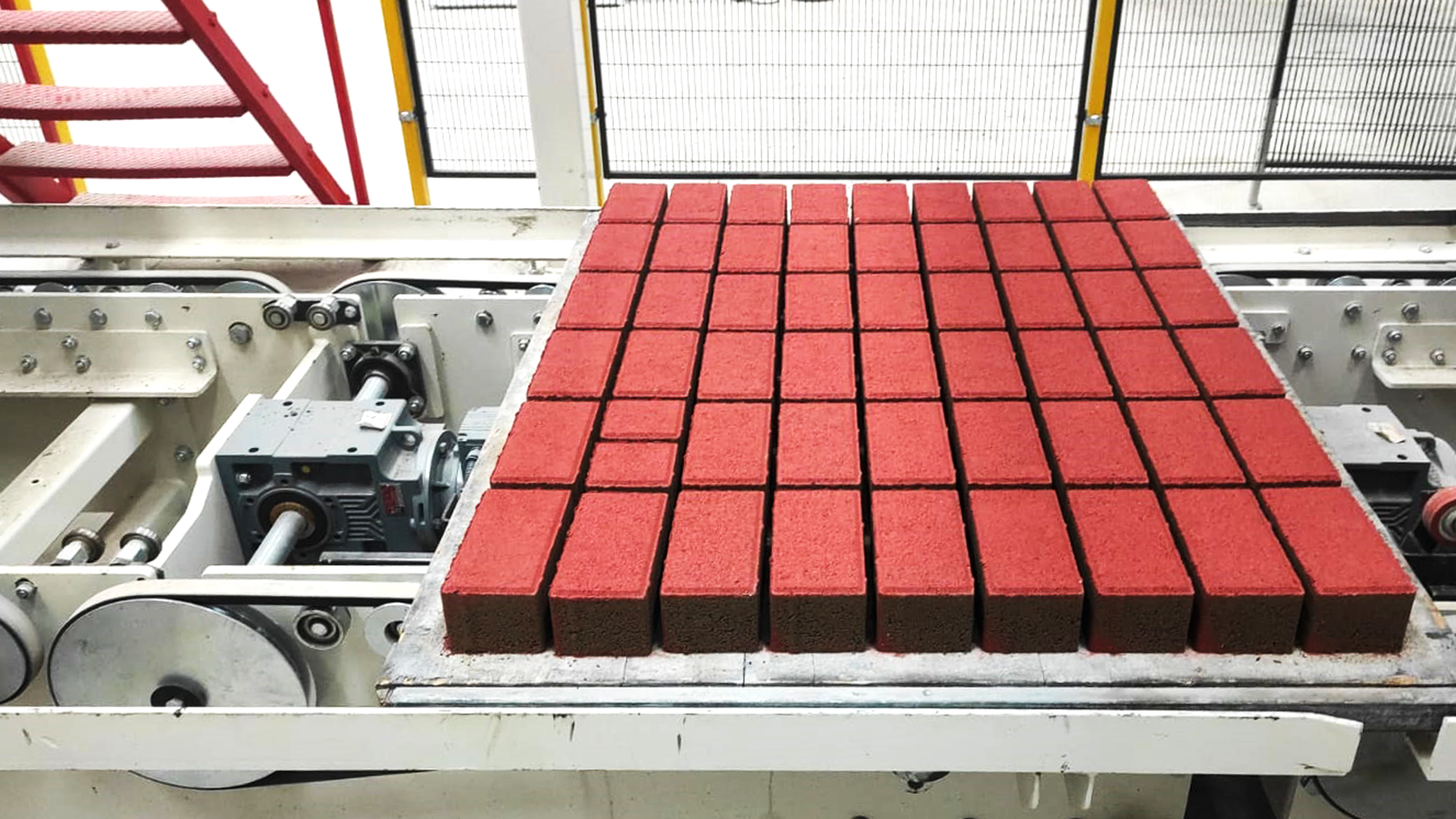
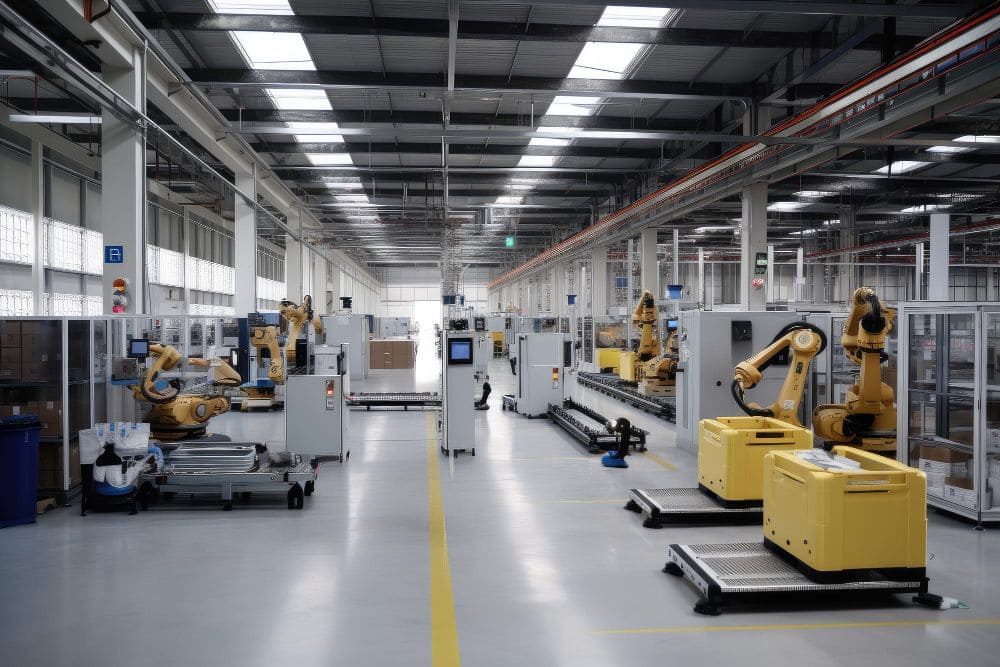
Concrete paver washing machines are used to create decorative surfaces by removing a controlled portion of the cement-rich surface layer and exposing the aggregate underneath. The process can transform a standard concrete paver into a more architectural product with visible stone texture, stronger colour contrast and a higher-value appearance. However, the final result depends on much more than the washing machine itself. Concrete mix design, aggregate selection, face-mix quality, timing, water pressure, filtration and downstream handling all influence the finished product.
For buyers, this means that a washing machine should not be selected only by maximum capacity or pump power. The correct system needs to match the type of paver being produced, the required surface appearance and the capacity of the rest of the factory. A machine that washes aggressively but creates inconsistent aggregate exposure or excessive product damage may be technically powerful but commercially weak. The objective is controlled surface treatment that can be repeated reliably across large production volumes.
What Does a Concrete Paver Washing Machine Do?
A washing machine removes part of the surface mortar before it becomes too hard to process effectively. By washing away this thin upper layer, selected decorative aggregates become visible and the paver develops a more natural stone-like appearance. The depth of washing can be adjusted according to the product design, allowing manufacturers to create anything from a lightly exposed texture to a stronger exposed-aggregate finish.
The process is particularly useful for architectural paving, landscaping products, pedestrian areas and projects where surface appearance is an important selling point. The washing machine therefore acts as a finishing system rather than a forming machine. The basic geometry and structural quality of the paver must already be correct before the product reaches the washing stage.
Product Design Should Come Before Machine Selection
The first question should not be “How many square metres can this machine wash?” but “What kind of surface do we want to produce?” Different aggregate sizes, colours and face-mix recipes can create very different results even when the same washing equipment is used. Buyers should therefore define the target product before selecting the machine.
A factory producing lightly textured decorative pavers may need different water pressure and processing conditions from a factory producing deeply exposed aggregate products. The washing system should support the intended product family rather than force the manufacturer to redesign products around the limitations of the machine. Product samples and trial production are especially valuable during this stage.
Aggregate Selection Has a Major Effect on Surface Appearance
Washing reveals the material already present inside the upper layer of the paver. This makes aggregate colour, particle size and distribution central to the final visual result. White stone, granite, coloured natural aggregate or darker materials can create very different products even when the base concrete recipe is similar.
Aggregate should also be distributed evenly throughout the face layer. If one production batch contains significantly different aggregate concentration from another, the washing machine may reveal those inconsistencies very clearly. This is why washed paver quality begins with controlled batching and mixing, not with the washing machine itself.
Face-Mix Production Can Improve Control
Double-layer paver production is often well suited to washed decorative products because the upper layer can be designed specifically for appearance. The structural base layer can focus on strength and economical raw material use, while the face mix can contain selected aggregate, pigment and a more refined decorative recipe.
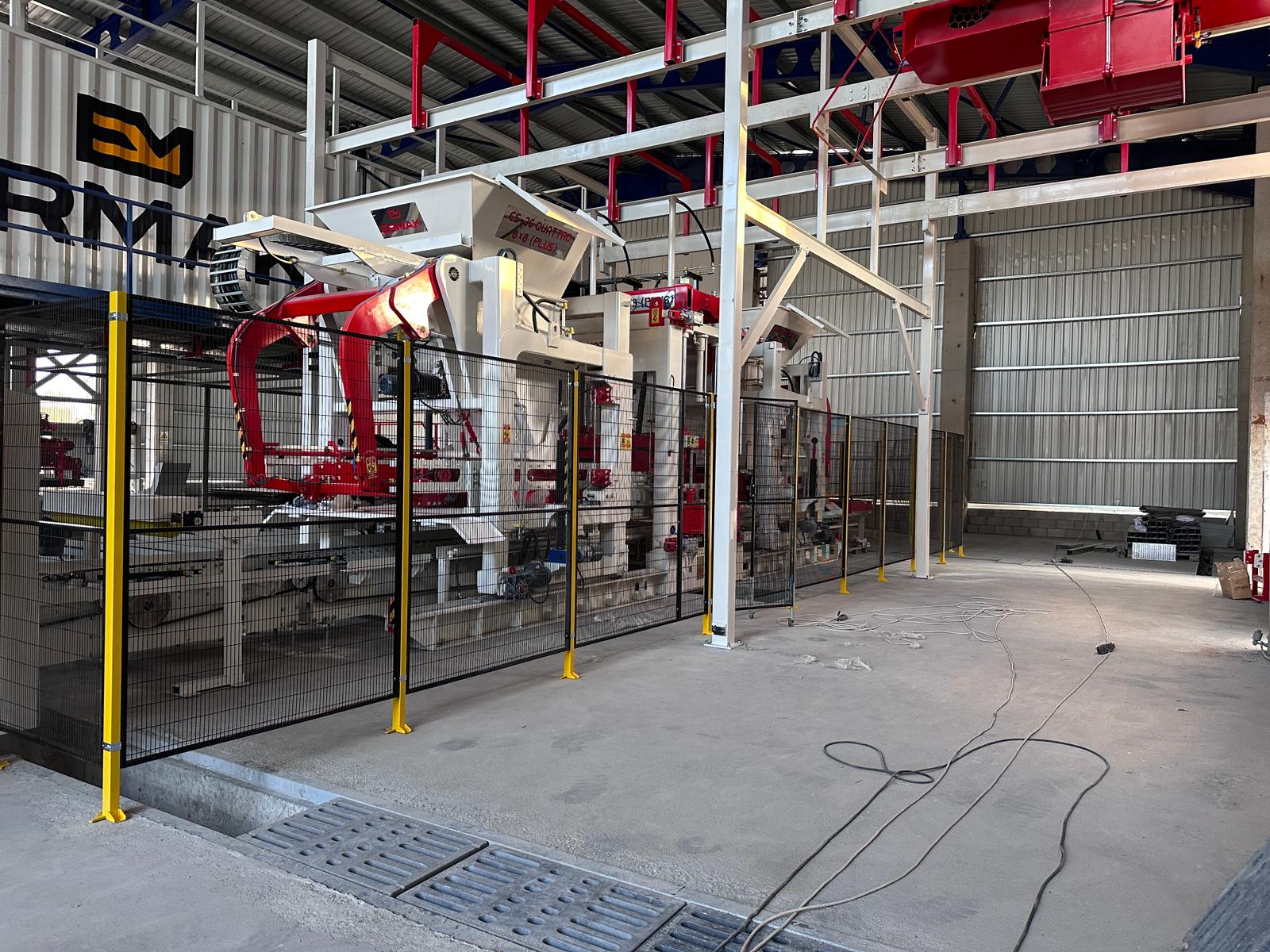
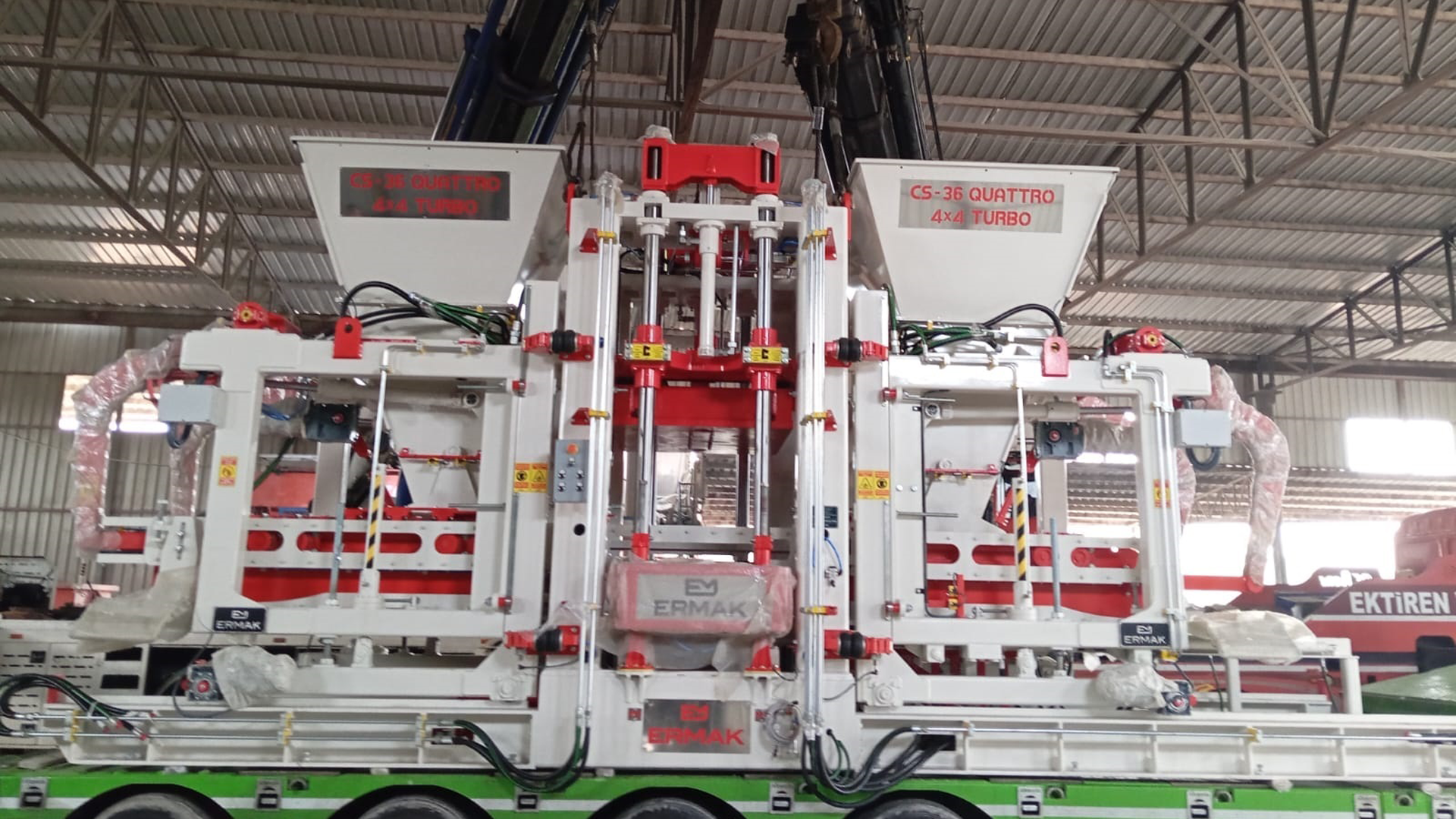
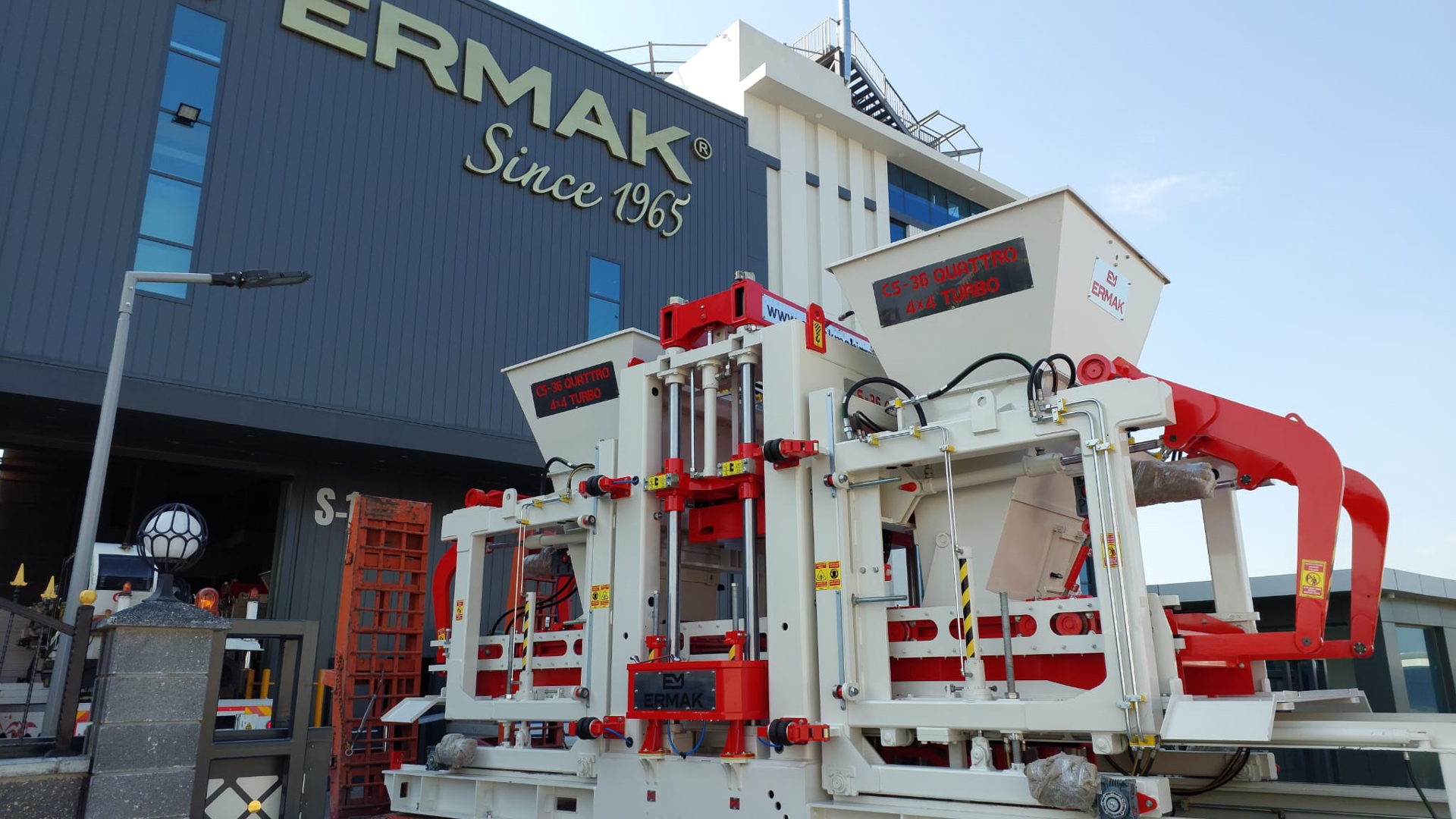
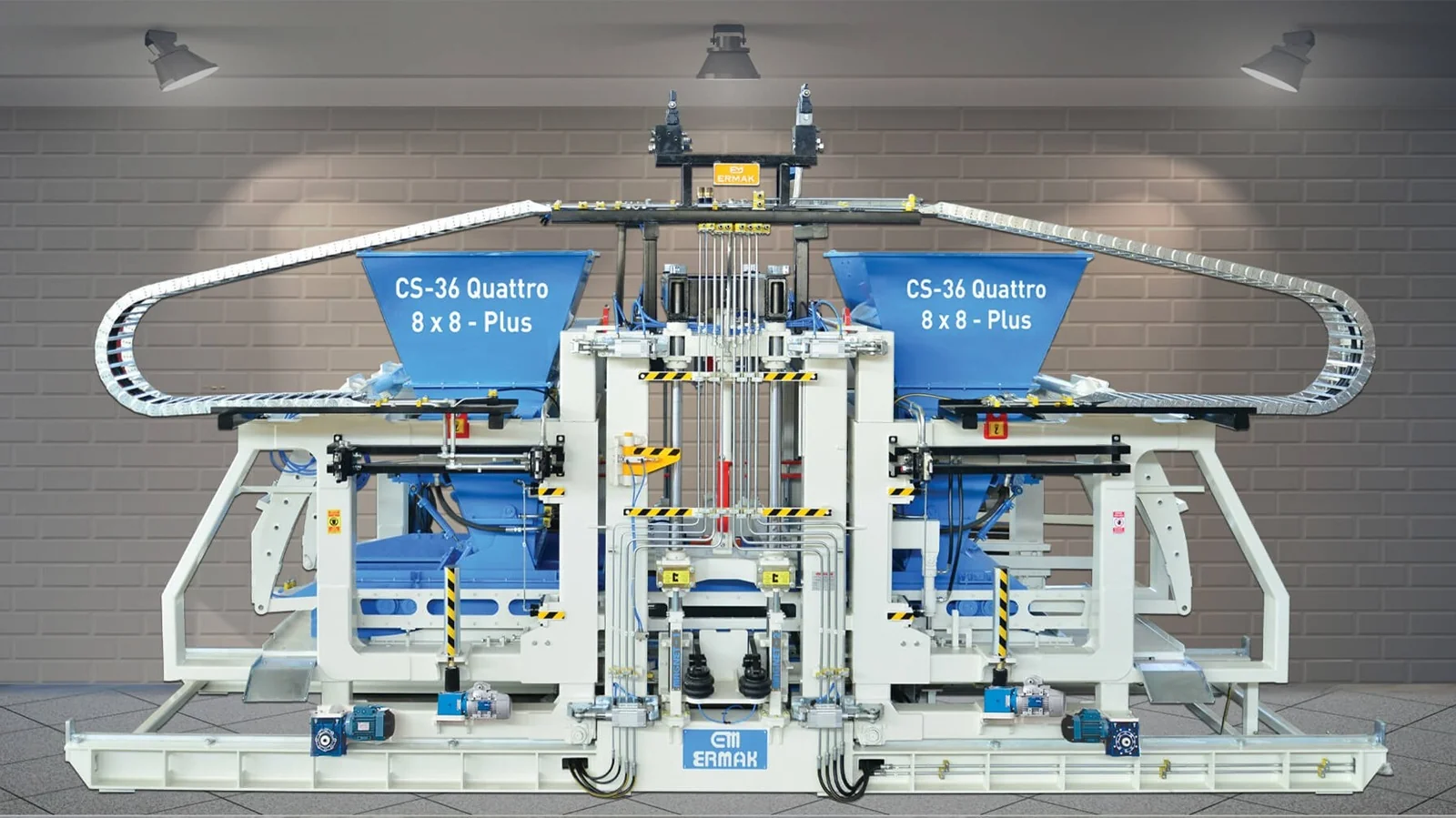
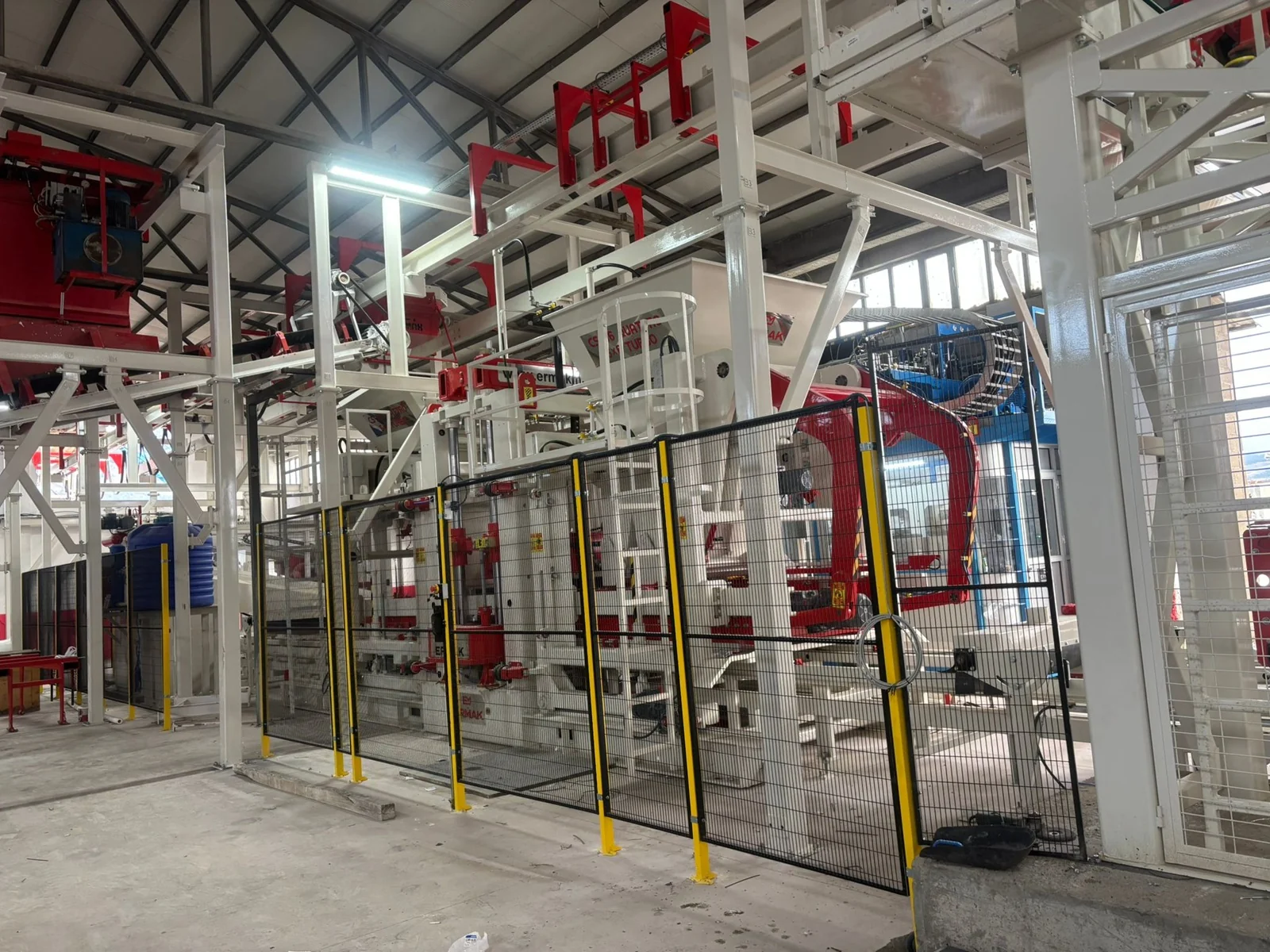
This approach allows manufacturers to use higher-value materials only where they contribute to the visible surface. It can also provide better control over washed appearance because the decorative aggregate is concentrated near the top of the product. When planning a high-capacity system such as the Quattro 8X8 Plus concrete block machine, face-mix production and downstream surface treatment should be considered together rather than as unrelated options.
Washing Cannot Correct Poor Paver Quality
A washing machine can improve appearance, but it cannot compensate for poor compaction, inaccurate geometry or inconsistent concrete. In fact, washing often makes upstream problems easier to see because the process removes surface paste and reveals the internal aggregate structure.
If one part of the paver is less dense, if the face mix is distributed unevenly or if the aggregate composition varies, the washed surface may look inconsistent. Weak edges may also deteriorate during processing. For this reason, the paver entering the washing system should already meet the required dimensional and structural quality.
Timing Is One of the Most Critical Variables
Washed concrete surfaces are highly sensitive to processing time. If washing is performed too early, excessive cement paste may be removed, edges can weaken and aggregate particles may become loose. If the product is washed too late, the surface may already be too hard to expose effectively.
The correct timing depends on the concrete recipe, cement type, environmental conditions, curing method and any surface treatment agents used. This is why washing should be developed as a controlled process rather than a fixed machine setting. A successful production line needs both the right equipment and a repeatable time window between forming and washing.
Surface Retarder May Be Part of the Process
In many exposed-aggregate applications, a surface retarder can be used to slow the setting of the upper cement layer while the rest of the paver continues developing strength. This creates a controlled window during which the surface paste can be removed more easily.
The exact process depends on the selected chemistry and product design, so the retarder should not be treated as a generic solution. Dosage, application consistency and timing all influence the final appearance. Buyers planning a washing line should therefore consider the complete surface-treatment process, including any chemical systems required to achieve repeatable results.
Water Pressure Must Be Controlled, Not Simply Maximized
High water pressure can remove material quickly, but more pressure does not automatically mean better washing. Excessive pressure may damage product edges, remove aggregate or create an inconsistent surface. Insufficient pressure, on the other hand, may leave too much cement paste and create weak visual definition.
The correct pressure should match the product strength, surface recipe and desired exposure depth. Adjustable control is therefore more important than maximum pump pressure alone. A good system should allow the operator to fine-tune washing conditions without forcing the entire product range to use one aggressive setting.
Water Flow Is as Important as Pressure
Pressure and flow should be evaluated together. A high-pressure system with insufficient water volume may not clean the surface effectively, while very high flow without suitable pressure may consume large quantities of water without achieving the desired result.
The washing zone should deliver enough water to remove loosened surface material consistently across the full product width. Uniform distribution is particularly important on wide conveyors where products may be placed across several lanes. Uneven flow can create different finishes on the left and right sides of the same production batch.
Nozzle Layout Influences Surface Uniformity
The arrangement and condition of washing nozzles affect how water reaches the paver surface. Poor nozzle positioning can create stripes or zones of different exposure, while blocked or worn nozzles can gradually reduce consistency even if pump pressure appears normal.
Nozzle inspection should therefore be part of routine maintenance. Buyers should also consider how easy the nozzles are to access, clean and replace. A system may produce excellent results when new but become difficult to maintain if small components are hidden behind complex structures.
Capacity Should Be Measured at the Required Surface Quality
Washing machine capacity is often expressed in square metres per hour, but the real number depends on the product and treatment intensity. A lightly washed paver can usually move through the system faster than a product requiring deeper aggregate exposure.
For this reason, maximum conveyor speed should not be confused with usable production capacity. The more relevant figure is sustainable output while maintaining the target appearance. Buyers should evaluate capacity using actual paver dimensions, actual washing intensity and the expected loading pattern on the conveyor.
The Washing Line Does Not Always Need to Match Full Plant Capacity
Many factories produce a mixture of standard, coloured and decorative products. If only part of total production will be washed, sizing the washing machine to the full output of the main paver machine may create unnecessary investment cost.
The correct capacity should be based on expected decorative product volume plus reasonable growth allowance. However, the system should not be undersized so aggressively that every increase in washed-product demand creates a permanent queue. Capacity planning should therefore reflect both current sales mix and realistic future market development.
Bypass Design Can Add Valuable Flexibility
Plants producing both standard and washed pavers can benefit from a bypass arrangement. Products that do not require washing can move directly toward cubing and packaging, while decorative products are routed through the washing line.
This allows one factory to manage different product families without forcing every paver through the same finishing process. It can also support maintenance planning because standard production may continue even when the washing line is temporarily unavailable, depending on the overall factory layout.
Buffer Areas Can Help Manage Process Timing
A controlled buffer area can help coordinate the timing between main production, surface preparation and washing. Decorative products may need to remain within a specific process window before washing, and the line should be able to handle short production differences without forcing the entire plant to stop.
The buffer should remain controlled, however. If large quantities of product accumulate every day, the real issue may be insufficient washing capacity or poor production scheduling. Buffers should absorb normal process variation rather than hide a permanent bottleneck.
Water Consumption Should Be Evaluated Before Purchase
Water use can become a significant operating cost, especially in high-capacity decorative production. Buyers should ask how much water the system requires under realistic production conditions rather than relying only on pump specifications.
The site water supply must be capable of supporting this demand, and drainage capacity should also be evaluated. A machine that performs well during a short demonstration may create serious infrastructure problems if the factory cannot provide or manage the required water continuously.
Water Recycling Can Reduce Operating Cost
For many installations, recycling part of the process water can reduce freshwater demand considerably. Used water can be collected and sent through settling, filtration or other treatment stages before appropriate reuse.
The exact recycling design depends on the amount of cement fines, aggregate particles and other contaminants generated by the process. The goal is not necessarily to reuse every litre indefinitely, but to reduce unnecessary freshwater consumption while maintaining washing quality.
A proper recycling system should therefore be considered as part of the original project rather than added only after water costs become a problem.
Filtration Protects Pumps and Nozzles
Process water carries fine concrete particles that can damage pumps, block nozzles and reduce washing consistency. Filtration is therefore important not only for recycling efficiency but also for machine reliability.
A poor filtration system may initially appear cheaper but can increase maintenance requirements and create recurring production interruptions. Buyers should examine filter capacity, cleaning requirements and access for maintenance. Filters that are difficult to service are more likely to be neglected, which eventually affects both water quality and machine performance.
Settling Systems Need Enough Capacity
Concrete fines suspended in the wash water need time and space to separate. Settling tanks or similar systems should therefore be sized according to real water flow and contamination levels.
An undersized settling system can quickly become overloaded, sending dirty water back into the process and increasing maintenance. The buyer should also consider how settled material will be removed. A tank that works technically but requires difficult manual cleaning can become a major operating burden over time.
Sludge Management Should Be Planned from the Beginning
Washing produces concrete sludge, and this material has to be collected and handled. It should not be treated as a small housekeeping detail because high-volume production can generate significant quantities over time.
The plant layout should provide access for sludge removal and enough space for temporary handling where needed. Local environmental and waste-management requirements should also be considered. The best washing system is one that manages both the decorative product and the waste created during the finishing process.
Conveyor Design Affects Product Protection
The paver needs to move through the washing zone without excessive vibration, impact or uncontrolled movement. Conveyor design therefore has a direct effect on product quality, particularly when the paver has not yet reached full long-term strength.
Abrupt starts and stops can damage corners or cause products to shift. Conveyor surfaces should also support the product appropriately without marking visible areas. Capacity is important, but controlled handling should not be sacrificed for speed.
Edge Damage Should Be Monitored Carefully
Paver corners and chamfers are often more vulnerable than the main surface. Excessive washing pressure or treatment at the wrong production age can damage these areas even when the centre of the product looks good.
For premium decorative products, this can create high rejection rates because edge quality strongly affects the appearance of the installed pavement. Trial production should therefore evaluate the complete product, not only the exposed aggregate in the centre. Different product geometries may require different washing parameters.
Product Cleaning After Washing Is Important
After the main washing stage, loose cement particles and residual slurry should be removed adequately before products continue toward packaging. Otherwise, attractive decorative products may reach the customer covered with dried surface contamination.
Depending on the system, additional rinsing or cleaning stages may be used. The line should also allow excess water to drain before cubing and packaging. Downstream cleanliness is particularly important for premium products because visual quality is part of their commercial value.
Water Remaining on the Product Can Affect Packaging
If products reach the cubing or wrapping area while carrying excessive water, packaging quality can be affected. Water may collect between layers, interfere with certain packaging materials or create an unattractive appearance during storage.
The line should therefore include enough drainage or drying time for the selected packaging method. This does not always require a complex drying machine, but the physical layout should allow the product to reach an appropriate condition before final packing.
Quality Control Should Use Reference Samples
Washed pavers are visual products, and subjective judgement can create variation between shifts. One operator may consider a surface sufficiently exposed while another may prefer a deeper wash.
Approved reference samples can reduce this variation. The production team can compare aggregate exposure, texture and colour against a known target. This is particularly useful when the same project is produced in several batches over a long period.
The reference should ideally be linked to the concrete recipe and washing parameters so that visual quality and process settings remain connected.
Surface Colour May Change After Washing
The colour of a washed paver can differ significantly from the colour seen before treatment. Removing the cement-rich surface exposes more aggregate, which changes the overall visual balance of the product.
This is why pigment selection should be evaluated using the finished washed sample rather than the untreated paver alone. Decorative product development should consider the complete final surface, including aggregate colour and washing depth.
A successful recipe should then be documented so that future production can return to the same visual target.
Quality Control Should Also Check Product Integrity
The appearance may be correct while the product itself has been damaged. Quality control should therefore inspect edges, corners, dimensions and general structural condition after washing.
Products from different positions across the conveyor should also be compared. If one side consistently receives stronger treatment, nozzle condition, pressure distribution or conveyor loading may need attention.
This helps the washing machine become part of a controlled manufacturing process rather than a finishing step judged only by visual impression.
Upstream Concrete Consistency Remains Critical
Washing cannot create consistency if the face mix varies continuously. Aggregate grading, pigment, moisture and mixing time should remain controlled from batch to batch.
A washing process often makes material variation more visible because the internal decorative aggregate becomes exposed. This makes batching and mixing discipline even more important for premium products.
The complete production chain should therefore be managed as one system: batching creates the surface material, the main machine compacts it, curing develops the required strength and washing reveals the final appearance.
Integration with Automatic Cubing Should Be Planned
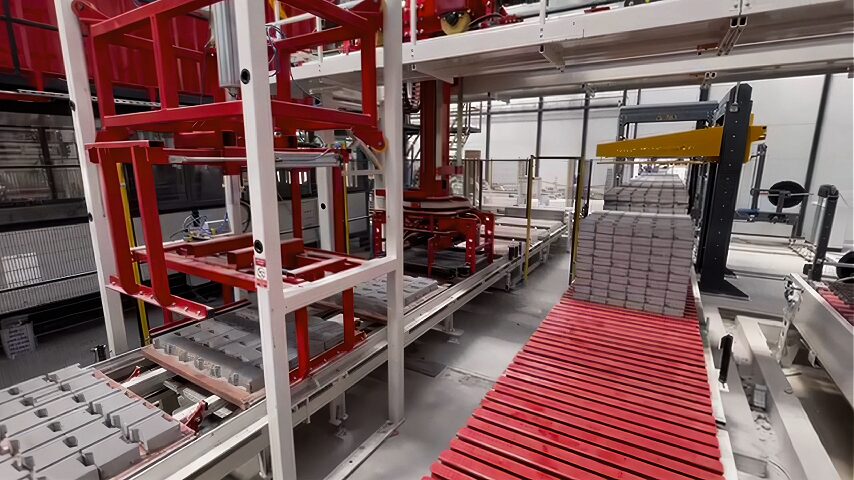
High-capacity plants may connect the washing line directly to automatic cubing or robotic palletizing. The washing system, final rinse, drainage and cubing equipment should be balanced so that products do not accumulate unnecessarily between sections.
If cubing is much slower than washing, products may queue at the exit. If washing is significantly slower, expensive downstream automation may spend much of the shift waiting. The correct approach is to evaluate the complete dry-side flow rather than individual machine maximum speeds.
Washing Line Maintenance Directly Affects Product Quality
Pumps, filters, nozzles, conveyors and valves all require regular inspection. A partially blocked nozzle or worn pump may not stop the machine completely, but it can gradually reduce surface consistency.
This type of problem is particularly dangerous because production may continue while product appearance slowly moves outside the approved standard. Preventive maintenance therefore protects quality as well as machine availability.
Maintenance points should be easy to access, and the operator should be able to identify early signs of pressure or flow problems.
Spare Parts Strategy Should Include Water-System Components
A small pump seal, nozzle or valve can stop the complete finishing process if no replacement is available. Buyers should therefore consider critical spare parts together with the washing machine investment.
The most useful strategy is not to purchase large quantities of every component. Instead, parts should be classified according to failure risk, replacement time and production impact. Components that are standard and locally available may require less stock than machine-specific items with long delivery times.
Energy Use Should Be Evaluated with Water-System Performance
Washing machines consume energy mainly through pumps, conveyors and water-treatment systems. Total installed power provides a basic reference, but the more useful comparison is energy consumed per square metre of saleable washed product.
A system using slightly more electrical power may still be economically better if it processes significantly more acceptable product with lower water waste and fewer rejects. Energy, water and surface quality should therefore be evaluated together rather than as separate specifications.
Operating Cost Should Be Calculated Per Square Metre
For investment decisions, buyers can estimate the total finishing cost per square metre of washed paver. This may include electricity, freshwater, water treatment, maintenance, filters, spare parts, chemicals where used and additional labour.
This metric makes it easier to compare different machine concepts and determine whether the decorative product can achieve the required market margin. The cheapest washing machine at purchase may not create the lowest finishing cost over several years of operation.
Washing Machines Can Expand the Product Portfolio
A washing line can create a new decorative category without requiring the factory to replace its main paver production equipment. Different aggregate colours, pigments and washing depths can create multiple visual families from similar basic product geometries.
This flexibility allows manufacturers to target premium landscaping, architectural and municipal projects while continuing to produce standard paving products on the same main line. The investment value therefore includes both production capacity and the commercial opportunity created by higher-value products.
The Investment Should Be Supported by Market Demand
Not every paver producer needs a washing system. In a market dominated by low-cost standard pavers, the investment may take longer to justify. In markets where architectural design, landscaping and exposed-aggregate surfaces are valued, washed products can provide stronger margins and product differentiation.
Buyers should therefore estimate annual decorative sales volume before deciding on machine capacity. Technology should support a market strategy rather than being purchased simply because a competitor has the same equipment.
Existing Plants Can Often Add Washing Later
A washing machine can often be integrated into an existing paver plant, but retrofit projects require careful review. Sufficient floor space, water supply, drainage, filtration, sludge handling and conveyor routing must all be considered.
The product also needs a route from the existing dry side into the washing system and then back toward cubing and packaging. If these connections are poorly planned, excessive forklift handling or manual work may reduce the benefit of the automation.
Factories that expect to add decorative production later can reduce future retrofit cost by reserving space and infrastructure during the original plant design.
New Plants Should Plan Surface Treatment from the Beginning
For a new plant, the washing line can be integrated much more efficiently. Bypass conveyors, buffers, water recycling areas and maintenance access can all be incorporated into the factory layout before construction is complete.
The main production machine, face-mix system, curing, washing and packaging can then be sized according to the same product strategy. Investors comparing machine capacities and complete plant options can review the Ermak Makine concrete block and paver production catalogs to evaluate how the main machine and finishing systems can be planned together.
What Should Buyers Compare Between Two Washing Machine Proposals?
The first comparison should be based on the same target product and surface quality. Buyers should compare sustainable square metres per hour, not only maximum conveyor speed. Water pressure, flow control, nozzle arrangement, filtration, recycling capacity and sludge handling should also be reviewed carefully.
Maintenance accessibility, critical spare parts and the integration with existing conveyors and cubing systems are equally important. A washing machine is most valuable when it works efficiently inside the complete paver production line, not when it achieves the highest standalone specification.
Ermak Makine’s Approach to Washed Paver Production
At Ermak Makine, we consider decorative surface treatment as part of the complete concrete paver production process. The main machine, concrete preparation, face mix, curing, washing, quality control and packaging should all support the same target product and production capacity.
This complete-line approach helps avoid a common investment problem: selecting strong individual machines that do not work efficiently together. The objective is to create a balanced system capable of producing repeatable decorative surfaces without creating unnecessary bottlenecks, water consumption or downstream handling problems.
Companies planning a new washed paver production line or evaluating surface-treatment equipment for an existing factory can contact Ermak Makine to discuss target products, production capacity and complete plant configuration.
What Ultimately Defines a Good Concrete Paver Washing Machine?
A good washing machine is not simply the system with the highest pump pressure or the fastest conveyor. It should expose aggregate evenly, protect product edges, control water consumption and maintain the same decorative finish across long production periods.
The machine should also be supported by effective filtration, recycling and sludge-management systems, while fitting naturally into the plant’s curing and packaging flow. Maintenance should be practical, and operating cost should remain proportional to the commercial value of the finished product.
For buyers, the most important principle is therefore to evaluate surface quality, real capacity, water management and complete-line integration together. When these elements are balanced correctly, washing can become a reliable way to transform standard concrete pavers into consistent, higher-value decorative products.
Frequently Asked Questions
What does a concrete paver washing machine do?
It removes a controlled amount of surface cement paste to expose decorative aggregate and create a textured, architectural appearance.
Is higher water pressure always better?
No. Excessive pressure can damage edges or remove too much material. Pressure should be adjustable according to product strength and required surface exposure.
Why is water flow important?
Flow determines how effectively loosened cement paste and particles are removed from the surface. Pressure and flow need to be balanced together.
When should pavers be washed?
The correct timing depends on concrete composition, curing conditions and the surface-treatment process. Washing too early or too late can reduce quality.
Is a surface retarder always required?
Not necessarily. It depends on the selected process and product design, but retarders are commonly used in exposed-aggregate production to create a controlled washing window.
How should washing-machine capacity be measured?
Capacity should be measured using the real product and target surface quality, preferably in square metres per hour or per shift.
Does the washing machine need to match the full production capacity of the paver plant?
Not always. If only part of total output will be washed, capacity can be sized according to actual decorative production requirements and future growth.
Why is water recycling important?
It can reduce freshwater consumption and lower operating cost, particularly in high-volume production.
Why is filtration necessary?
Concrete fines can damage pumps and block nozzles. Effective filtration supports both machine reliability and consistent washing quality.
What happens to the concrete sludge?
It needs to be separated, collected and managed as part of the water-treatment system. Sludge handling should be included in the original project design.
Can washing damage paver edges?
Yes. Excessive pressure, incorrect timing or insufficient product strength can cause edge and corner damage.
Can washed pavers be sent directly to automatic cubing?
They can be integrated with automatic cubing, but drainage, final cleaning and product condition should be considered before packaging.
Can a washing line be added to an existing plant?
In many cases, yes. Water supply, drainage, filtration, floor space, conveyor routing and connection to the packaging system must first be evaluated.
Is face-mix production useful for washed pavers?
Yes. A decorative face layer allows selected aggregate and pigment to be concentrated in the visible surface while the structural base can use a different mix.
What is the most important factor when selecting a concrete paver washing machine?
The most important factor is the ability to produce the required surface consistently at the planned capacity while controlling water use, protecting product quality and integrating correctly with the rest of the production line.