Shotblasting is one of the most effective surface treatment methods used to transform standard concrete pavers into higher-value decorative products. By removing a controlled amount of the thin cement-rich layer from the product surface, the process exposes the aggregate underneath and creates a more textured, natural and architectural appearance.
For concrete paver manufacturers, the value of shotblasting goes beyond visual improvement. A properly planned shotblasting line can expand the product portfolio, support premium market segments and allow the same basic paver geometry to be offered in several surface finishes. However, the quality of the final result depends on much more than the shotblasting machine itself. Concrete mix design, face-mix quality, aggregate selection, curing condition, machine settings and line capacity all influence the final surface.
This is why shotblasting should be planned as part of the complete paver production process rather than as an isolated finishing machine added at the end of the line.
What Does Shotblasting Do to a Concrete Paver?
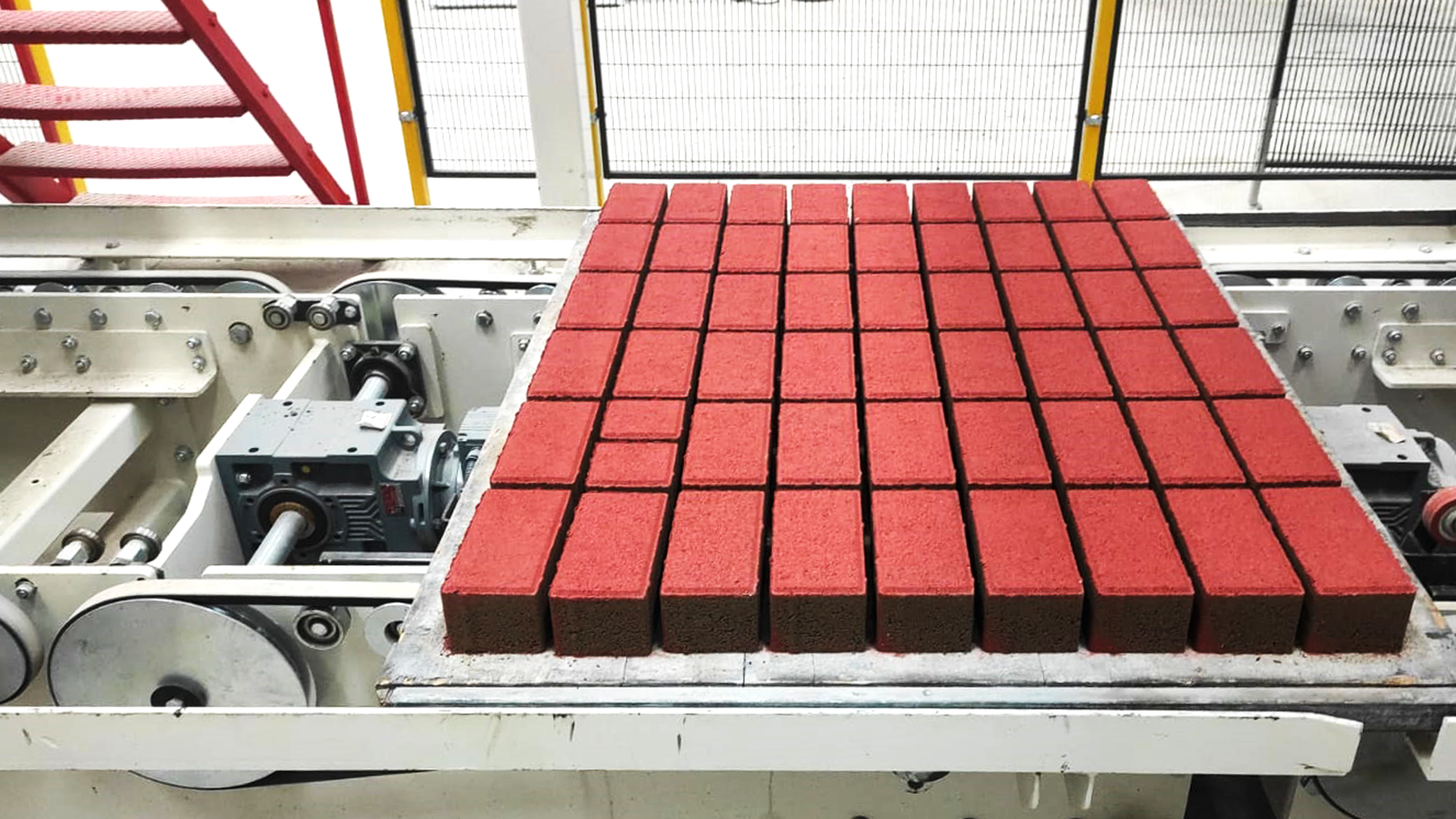
A standard concrete paver normally leaves the mould with a relatively closed cementitious surface. The colour, aggregate and fine particles are present inside the concrete, but much of this material is visually covered by the surface paste.
Shotblasting removes part of this upper layer through controlled mechanical abrasion. Small metallic blasting media are accelerated against the paver surface, breaking away the thin outer cement film and making the aggregate more visible. The result is a textured appearance that can resemble natural stone, depending on the concrete recipe and aggregate used.
The process does not create a decorative aggregate that was not already present in the product. It reveals what was built into the concrete during production. For that reason, shotblasting quality begins at the batching and mixing stage, long before the product enters the finishing machine.
Aggregate Selection Determines the Final Appearance
The aggregate used in the surface layer has a major influence on the finished product. Colour, particle size, shape and distribution all become more visible after blasting, so raw material selection becomes part of the product design.
A grey aggregate will produce a different appearance from white stone, granite or coloured natural aggregate, even when the same pigment is used in the concrete. The visible contrast between cement paste and aggregate also changes the perceived colour of the paver after surface treatment.
For manufacturers developing premium paver ranges, it is therefore useful to create trial batches using different aggregates and blasting intensities. The objective is to establish a repeatable combination of concrete recipe and shotblasting parameters rather than trying to correct appearance only through machine settings.
Face-Mix Production Offers Greater Decorative Flexibility
Shotblasting can be applied to different types of concrete products, but it is especially useful in double-layer paver production where a separate face mix is used.
The structural base layer can be designed primarily for strength and economical material use, while the upper decorative layer can contain selected aggregate, pigment and a more controlled surface recipe. Shotblasting then exposes this designed surface rather than removing material from the full structural product.
This approach can provide greater control over appearance and raw material cost. Expensive decorative aggregate does not necessarily need to be used throughout the complete paver body if the product design only requires it in the upper layer.
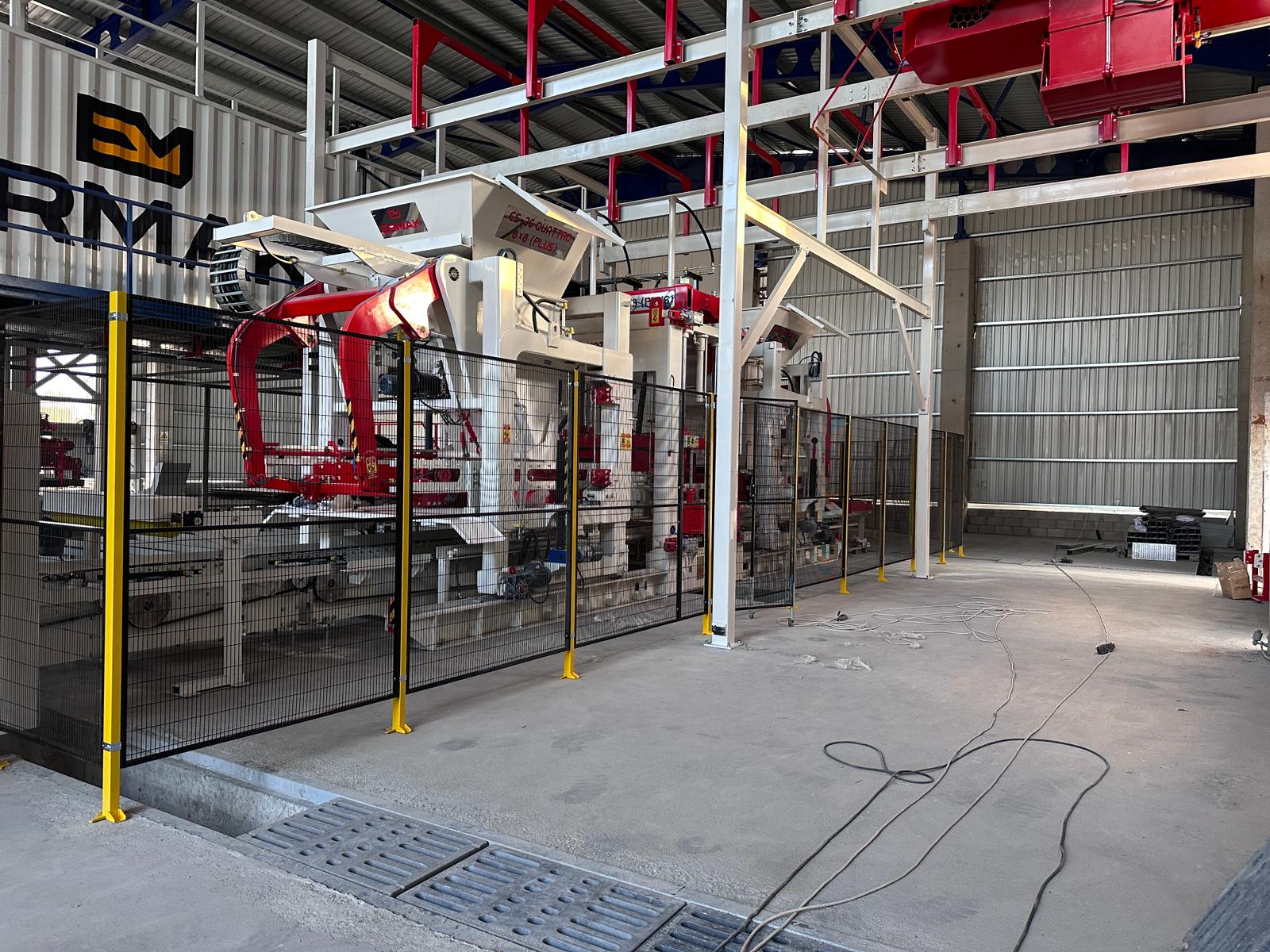
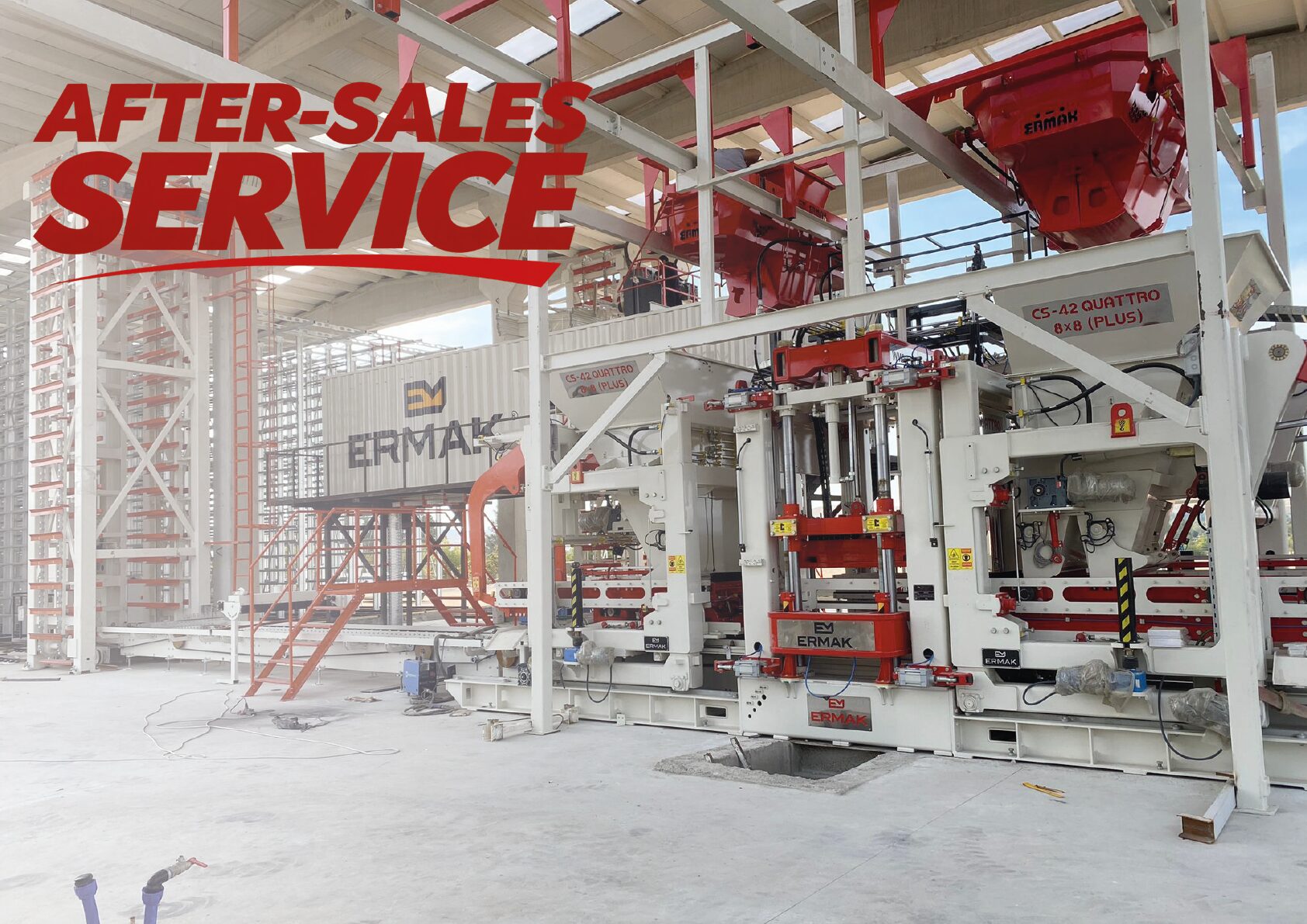
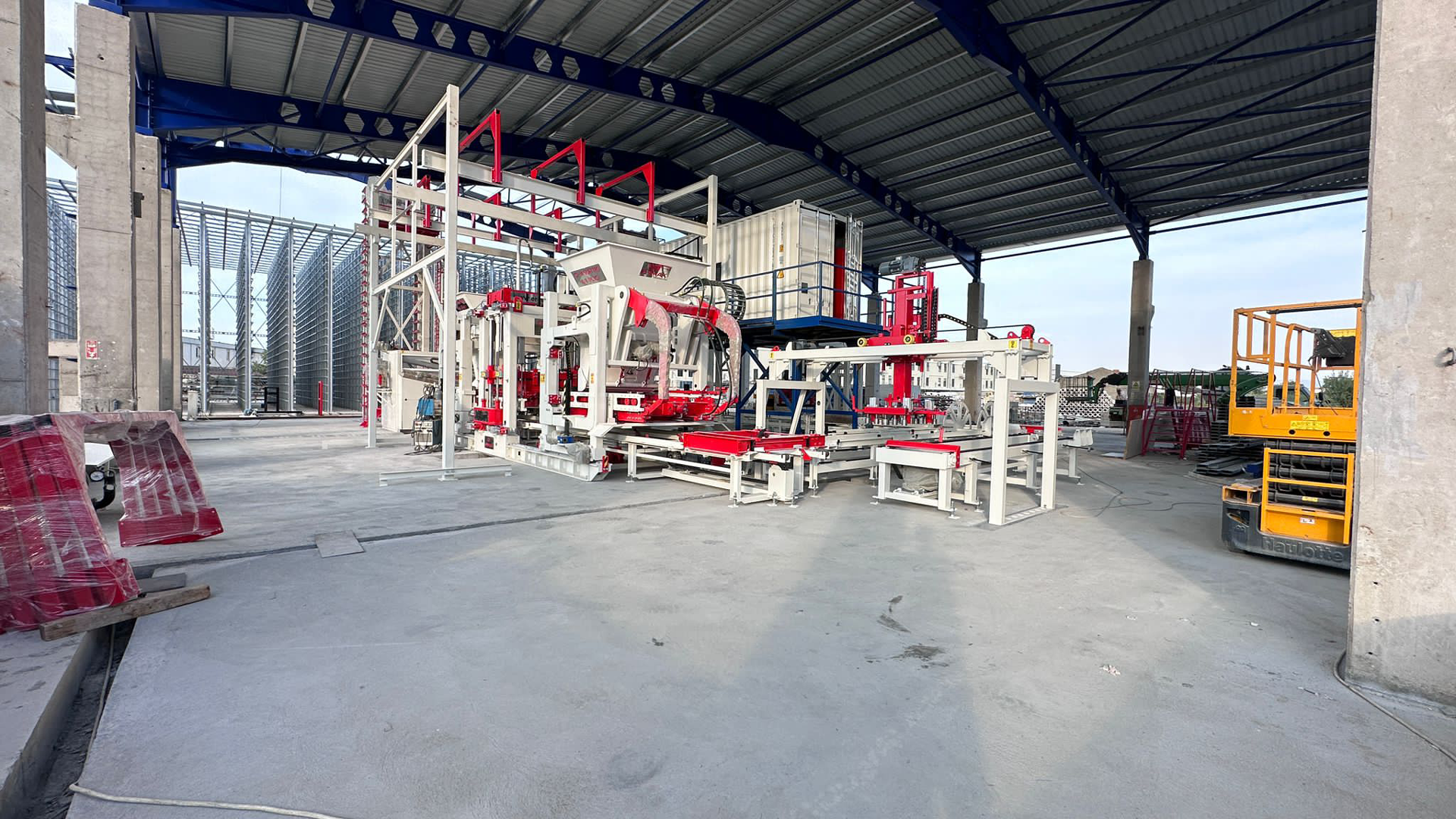
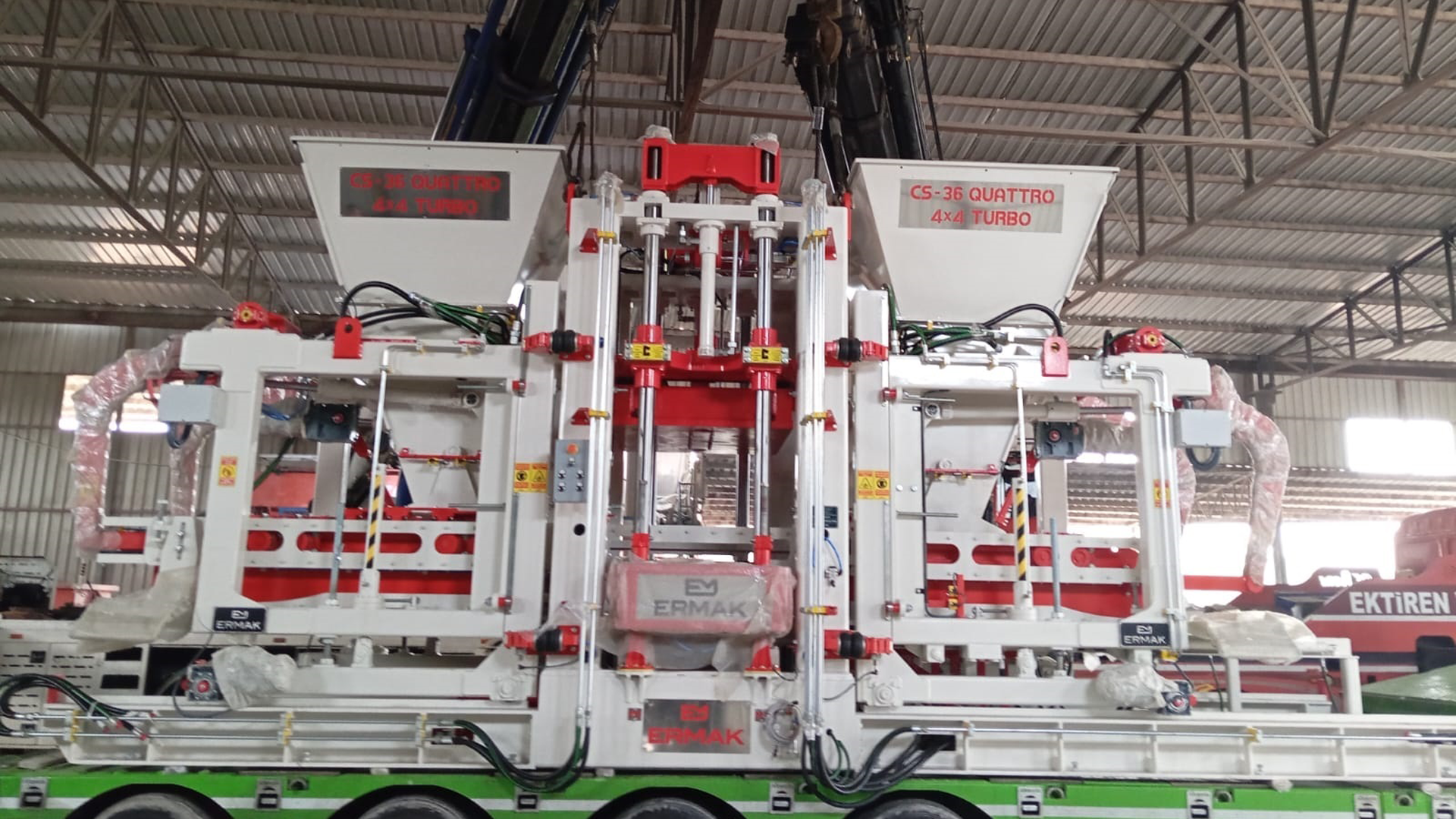
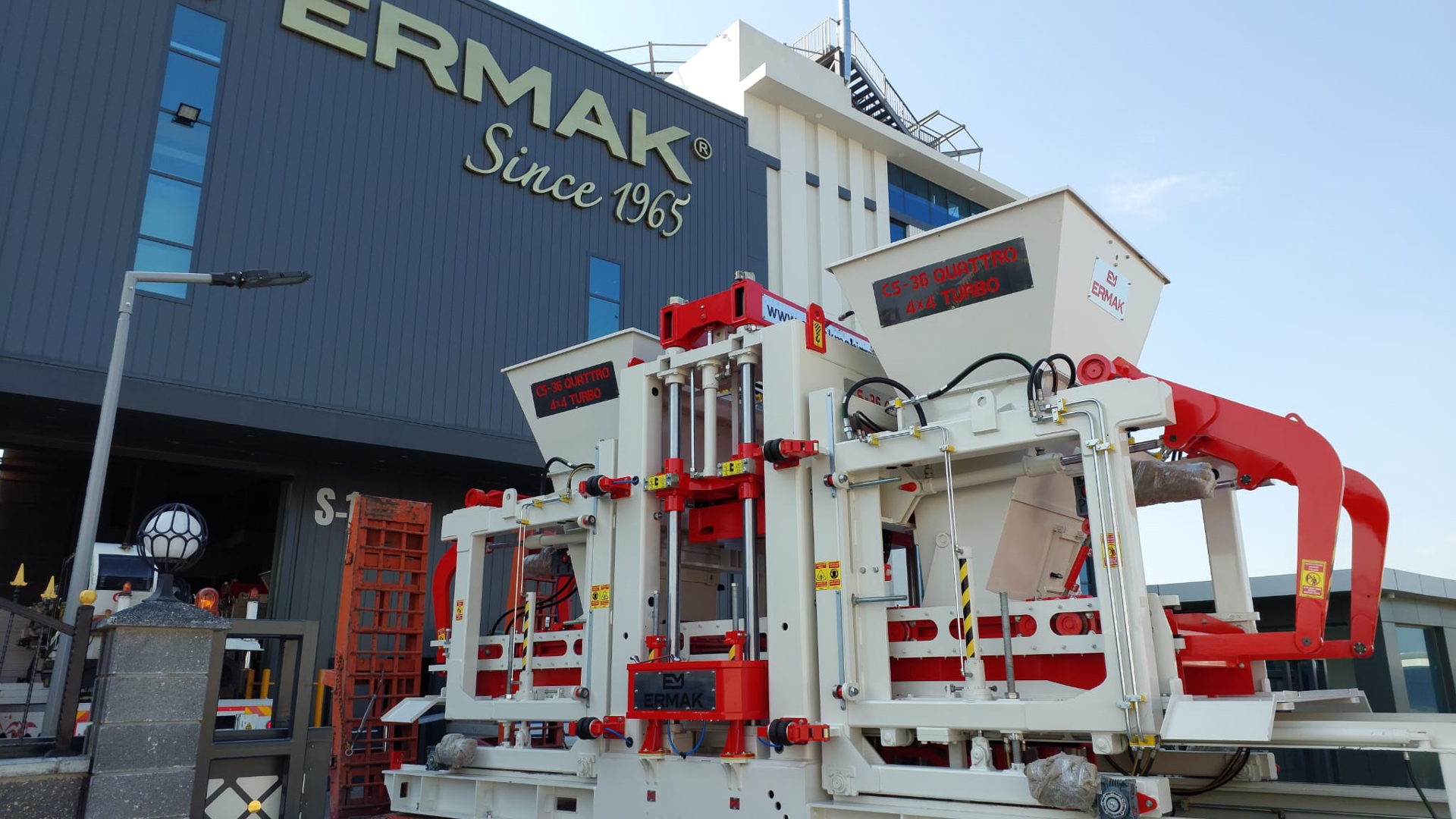
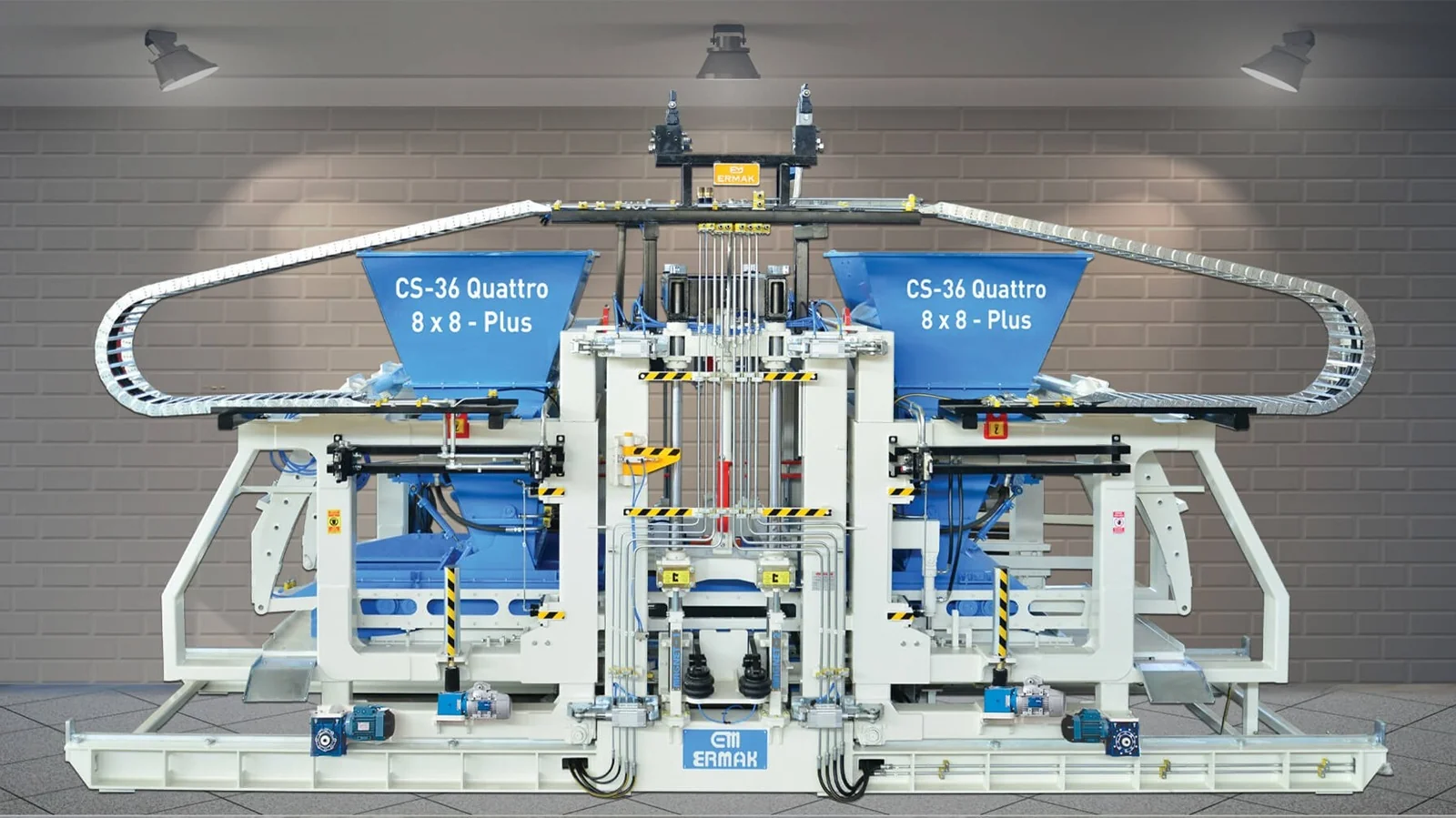
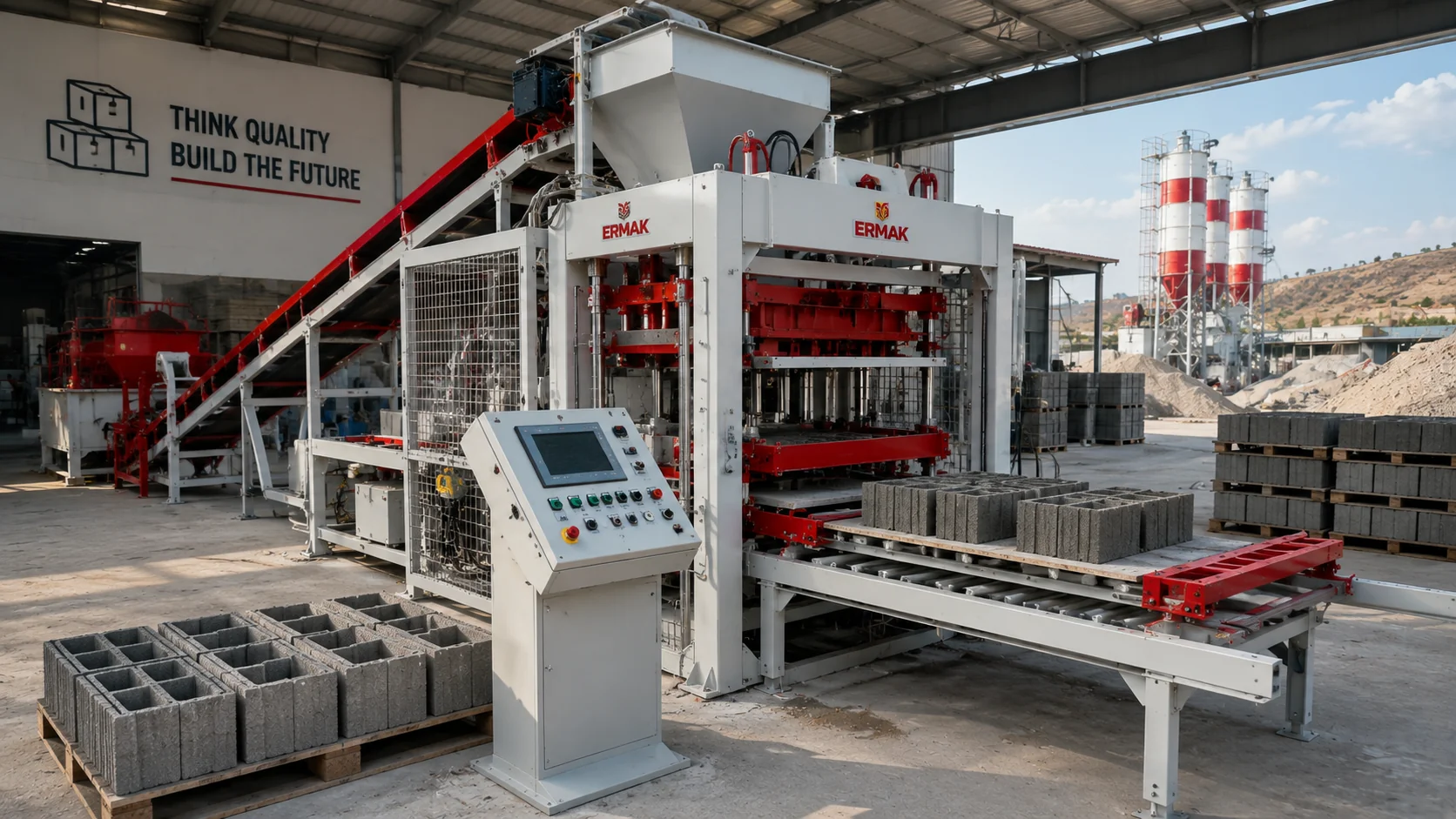
For high-capacity and flexible production lines, systems such as the Quattro 8X8 Plus concrete block machine can be evaluated together with face-mix and downstream surface treatment requirements when planning decorative paver production.
Shotblasting Should Not Be Used to Hide Poor Base Product Quality
A shotblasting machine is a finishing system, not a correction system for inconsistent paver production.
If the original paver has poor geometry, uneven density, visible filling defects or weak edges, blasting may make those problems more obvious rather than hide them. The surface process removes material and reveals more of the internal structure of the product, so inconsistencies in aggregate distribution or compaction can become visible.
For this reason, pavers entering the shotblasting line should already meet the required dimensional and structural quality. Surface treatment should improve the appearance of a good product, not attempt to rescue a poor one.
Product Strength Before Shotblasting Is Important
The paver needs to reach sufficient strength before entering the shotblasting process. If the product is treated too early, the surface may be removed too aggressively and corners or edges may become damaged.
The required timing depends on the concrete recipe, curing method and product design, so there is no single universal waiting period that applies to every plant. What matters is that the paver has enough stability to tolerate the mechanical impact of the blasting media while still achieving the desired surface exposure.
This relationship between curing and surface treatment should be considered when planning the line. A high-capacity shotblasting machine does not provide useful output if the products are not ready to be processed at the same rate.
How Does a Shotblasting Machine Work?
In a typical shotblasting system, pavers move through the machine on a conveyor while blasting turbines project abrasive media onto the exposed concrete surface. The media strike the surface at high speed, remove the desired amount of material and then enter a recovery system.
The abrasive is separated from dust and broken particles so that reusable media can return to the blasting circuit. Dust and fine concrete particles are collected through the filtration system.
This creates a continuous production process in which pavers enter with a standard surface and leave with a controlled textured finish. The consistency of this transformation depends on conveyor speed, blasting intensity, media condition and product positioning.
Blasting Intensity Must Be Controlled
More aggressive blasting does not automatically produce a better decorative paver. If too much material is removed, the surface may become excessively rough, aggregate can be dislodged and edges may lose their intended definition.
If blasting is too light, the aggregate may remain insufficiently exposed and the surface may look inconsistent or weakly treated.
The correct setting depends on the product design. A lightly textured architectural paver may require a different process from a heavily exposed natural-stone-style product.
This is why shotblasting parameters should be developed as part of the product recipe. Once a successful setting is established, it should be recorded so that future production batches can reproduce the same appearance.
Conveyor Speed Directly Affects Surface Finish
Conveyor speed is one of the most important shotblasting variables. The longer the paver remains in the blasting zone, the greater the surface treatment intensity will generally be.
Reducing conveyor speed can increase exposure, while increasing speed can produce a lighter finish and higher throughput. However, the relationship should not be viewed only as a capacity adjustment. Any change in speed also changes the appearance of the product.
For this reason, production planning needs to balance required surface finish and line output. Capacity should be defined at the quality level the factory actually intends to sell, not at the fastest possible conveyor setting.
Shotblasting Capacity Should Be Measured Using Real Products
Machine brochures may express capacity in square metres per hour, but actual output depends on product dimensions, conveyor loading, blasting intensity and required finish.
A machine that processes one paver type at high speed may operate more slowly when a deeper finish is required. Similarly, gaps between products on the conveyor can reduce effective square metres processed per hour.
For this reason, capacity evaluation should use the actual product range. Buyers should consider the expected percentage of shotblasted production, product size and working shift rather than only comparing maximum machine throughput.
The most useful figure is sustainable output at the required surface quality.
The Shotblasting Line Does Not Need to Match Total Plant Capacity in Every Project
Not every paver produced in a factory needs to be shotblasted. Many plants manufacture standard, coloured and surface-treated products within the same facility.
If only 20 or 30 percent of total paver sales are expected to require shotblasting, the finishing line may not need to equal the full theoretical capacity of the main paver machine.
At the same time, undersizing the shotblasting line too aggressively can create a finishing bottleneck when demand for decorative products increases. The appropriate design therefore considers current product mix and realistic future growth.
This is another reason to plan the complete product strategy before selecting surface treatment equipment.
Buffer Capacity Can Improve Line Stability
The main paver production line and the shotblasting line do not always need to operate at exactly the same moment or speed. A controlled buffer area can help manage differences between production, curing and finishing schedules.
For example, shotblasting can continue with previously cured products while the main machine is producing another product type. This gives the plant more flexibility in daily scheduling.
However, buffer areas should not be used to hide a permanent capacity mismatch. If large amounts of cured product are always waiting for surface treatment, the finishing line may be undersized.
Buffers are useful for short-term process flexibility, not as a permanent substitute for correct capacity planning.
Dust Collection Is a Core Part of Shotblasting Performance
Shotblasting generates a significant amount of fine concrete dust. An effective dust collection and filtration system is therefore essential for both machine performance and workplace cleanliness.
If dust is not removed efficiently, it can circulate inside the machine, contaminate components and reduce visibility around the process. Filter condition also affects airflow, so neglected filtration can gradually reduce system performance.
Maintenance access to filters and dust collection components should therefore be evaluated when selecting a machine. A system that is difficult to clean or service may create unnecessary downtime even if its blasting performance is good.
Abrasive Recovery Affects Operating Cost
Blasting media are reused continuously inside the machine, so recovery efficiency influences operating cost.
The system should separate reusable abrasive from concrete dust, broken material and contaminants. If too much usable media is lost, operating cost rises. If contamination remains in the circuit, blasting quality may become less stable.
Media condition should therefore be checked regularly. Particle size distribution and contamination can change over time, and these changes may affect the surface appearance even when conveyor and turbine settings remain the same.
Stable shotblasting quality requires control of both machine settings and abrasive condition.
Edge Quality Needs Special Attention
Concrete paver edges are often more vulnerable to blasting than the centre of the product. Sharp decorative edges can become rounded or chipped if treatment is too aggressive or the product is not sufficiently cured.
This is particularly important for products with chamfers, narrow sections or detailed geometries. The shotblasting process should therefore be tested using the actual paver design rather than assuming that one setting will work for every product.
Edge damage also has a commercial impact. A surface may look attractive overall but still be rejected if chipped edges create an inconsistent installed appearance.
Colour Perception Changes After Shotblasting
The same paver can appear noticeably different before and after blasting. Once the cement-rich surface film is removed, the colour of the aggregate becomes more visible and the overall surface can appear lighter, darker or more varied.
This means pigment dosage should not be evaluated using the unprocessed product alone. Product development should consider the appearance after the final surface treatment.
Approved reference samples are particularly useful. They give production teams a physical target for both colour and blasting depth and reduce subjective interpretation between shifts.
Reference Samples Improve Repeatability
Decorative surface quality is partly visual, which can make quality control difficult if the factory has no defined reference.
A reference sample or approved reference board can establish the acceptable appearance for a specific product. Operators can compare ongoing production against the approved level of aggregate exposure, texture and colour.
This is especially useful for large projects where products may be manufactured over several days or weeks. Without a reference, small setting changes can gradually create visible differences between production batches.
A stable decorative product therefore requires visual quality standards as well as technical machine settings.
Quality Control Should Check More Than Appearance
The surface may be the most obvious result of shotblasting, but quality control should also inspect product dimensions, edges and structural condition after processing.
The treatment should not create excessive damage or remove so much material that the product geometry changes beyond acceptable limits.
Operators should also monitor whether products from different areas of the conveyor receive similar treatment. Uneven surface exposure across the machine width may indicate turbine, media or loading problems.
Quality control is therefore useful for monitoring both the product and the condition of the shotblasting process.
Upstream Production Consistency Is Essential
Shotblasting can reveal differences in the concrete that were not obvious before processing. Variations in aggregate distribution, pigment, moisture or compaction can become more visible after the surface paste is removed.
This means batching and mixing consistency are especially important for decorative products.
A factory may have a very capable shotblasting machine but still produce inconsistent finishes if the face mix varies from batch to batch.
For this reason, surface treatment should be viewed as the final step of a controlled manufacturing process rather than a standalone visual upgrade.
Downstream Cleaning Should Be Planned
Products leaving the shotblasting machine may carry loose dust or small abrasive particles. Before packaging, the surface should be sufficiently clean so that the final product reaches the customer in an acceptable condition.
Depending on the line design, brushing, air cleaning or other cleaning methods may be used after blasting.
This stage is easy to overlook, but it influences the customer’s first impression of the product. A premium decorative paver should not arrive covered with loose dust simply because the surface treatment itself was successful.
Shotblasting and Automatic Cubing Need to Be Balanced
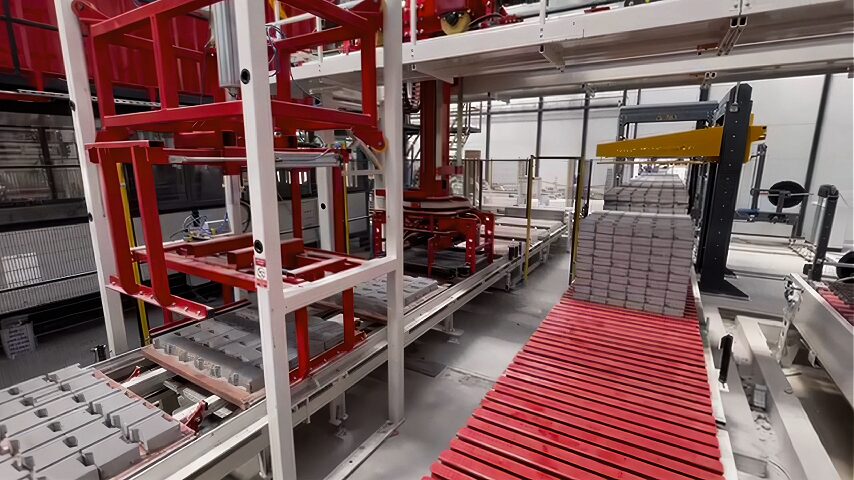
After surface treatment, products may continue directly to automatic cubing or robotic palletizing.
If the shotblasting machine operates more slowly than the cubing system, the packaging equipment may wait. If the shotblasting machine is much faster, products can accumulate before packaging.
The entire dry-side line should therefore be planned as one system.
Product cleaning, quality control, cubing, commercial pallet handling, strapping and forklift removal all influence final line capacity.
The shotblasting machine should fit into this flow rather than operate as an isolated high-speed unit.
Bypass Design Adds Production Flexibility
Plants producing both standard and shotblasted pavers can benefit from a bypass arrangement. Products that do not require surface treatment can continue directly toward cubing and packaging, while decorative products are directed through the shotblasting machine.
This prevents unnecessary processing and gives the plant more flexibility to change product types.
A good bypass layout can also support maintenance. If the shotblasting machine is temporarily unavailable, standard products may continue through the dry-side line depending on the plant configuration.
For factories with mixed product portfolios, this flexibility can be more valuable than maximizing the capacity of one individual machine.
Maintenance Has a Direct Effect on Surface Consistency
Shotblasting machines operate in an abrasive environment, which makes maintenance especially important. Turbines, internal wear plates, conveyor components and media recovery systems are exposed to continuous abrasive action.
As these parts wear, blasting behaviour can change. Surface treatment may gradually become uneven even though the machine settings have not been changed.
Routine inspection and planned replacement of wear components therefore support product quality as well as machine reliability.
Maintenance should not begin only when the machine can no longer operate. Surface consistency itself can be an early indicator of wear.
Wear Parts Should Be Included in the Operating Cost
Shotblasting machinery has a different maintenance profile from the main block machine because the process intentionally uses abrasion. Wear components and blasting media are normal operating costs.
When comparing machines, buyers should ask about expected wear parts, replacement accessibility and typical maintenance intervals. A lower machine purchase price may become less attractive if wear components are expensive or difficult to replace.
The most useful economic comparison is therefore based on total operating cost per square metre of finished product rather than purchase price alone.
Energy Consumption Should Be Compared with Real Throughput
Shotblasting systems use power for blasting turbines, conveyor movement, dust extraction and media handling. The total installed power provides a basic reference, but it does not fully describe operating efficiency.
Energy should ideally be considered in relation to the amount of saleable treated product produced.
A machine operating at a lower speed but with highly consistent finish may still provide better commercial value than a faster system that requires rework or produces unacceptable surface variation.
As with the main block machine, the relevant question is not simply how much power is installed, but how efficiently that power is converted into saleable output.
Product Development Should Be Done Before Full-Scale Production
Before launching a new shotblasted paver series, it is useful to produce controlled trials.
Different aggregates, pigments and blasting settings can be compared. The team can then select the final combination based on appearance, product integrity and production cost.
Once the target finish is approved, the concrete recipe and shotblasting parameters should be documented.
This reduces trial-and-error during commercial production and makes it easier to reproduce the same surface months later.
For premium products, this type of process standardization becomes particularly important.
Shotblasting Can Expand the Product Portfolio
One of the biggest advantages of shotblasting is the ability to create additional product categories without completely changing the basic production process.
A standard paver geometry can potentially be offered in untreated, lightly shotblasted and more deeply textured versions, depending on product design and market demand.
Different aggregate and pigment combinations can further expand the range.
This gives manufacturers more flexibility to serve landscaping, architectural and premium paving markets while using much of the same core production infrastructure.
The economic value of the machine should therefore also include the additional product opportunities it creates.
Shotblasting Investment Should Follow Market Demand
Not every factory needs a shotblasting line.
If the local market is dominated by basic low-cost paving products and demand for decorative finishes is very limited, a large finishing investment may have a long payback period.
In markets where architects, municipalities, commercial developments and landscaping projects demand premium finishes, the economics can be very different.
The investment should therefore be based on expected annual volume of surface-treated products, achievable selling price and operating cost.
The machine should solve a market requirement rather than simply add another technology to the factory.
Existing Paver Plants Can Often Add Shotblasting Later
Shotblasting can often be added to an existing concrete paver plant, but retrofit planning requires careful review of the dry-side layout.
The project needs sufficient floor space, product feeding, dust extraction, cleaning and a route back into cubing or packaging. If the existing conveyors were not designed for a finishing branch, modifications may be necessary.
This is why plants expecting to add decorative products in the future can benefit from reserving space and connection points during the original factory design, even if the shotblasting machine is not purchased immediately.
New Plants Should Consider Surface Treatment from the Beginning
For a new production facility, surface treatment planning can be integrated much more efficiently.
The dry-side layout can include a bypass, buffer zones and direct connection to packaging. Dust collection areas and maintenance access can be designed without disturbing the main production flow.
The batching and face-mix systems can also be selected with future decorative product development in mind.
Investors reviewing block, paver and complete plant configurations can use the Ermak Makine product and production line catalogs to evaluate how the main machine and downstream equipment can be planned as one system.
How Should a Buyer Evaluate a Shotblasting Machine?
The buyer should first define the required product finish and expected annual decorative production volume. Machine capacity should then be compared using the actual paver dimensions and required blasting intensity.
Dust collection, abrasive recovery, wear components and maintenance accessibility should be reviewed together with nominal machine throughput. Buyers should also examine how easily the system can switch between different products and treatment intensities.
Most importantly, machine selection should consider how shotblasting fits into the complete dry-side flow. A powerful finishing machine creates limited value if product feeding, cleaning or cubing cannot support the same output.
Surface Quality Depends on the Complete Process
Shotblasting is highly visible because it creates the final decorative appearance, but the process does not operate independently. Concrete batching determines aggregate distribution, the main paver machine establishes compaction and geometry, curing develops product strength and the shotblasting line reveals the designed surface.
When all of these stages are stable, shotblasting can create highly repeatable decorative products. When upstream production varies, the finishing process often makes those variations easier to see.
This is why surface quality should be managed as a complete production system.
Ermak Makine’s Approach to Paver Surface Treatment
At Ermak Makine, we consider surface treatment within the broader paver production line rather than as an isolated finishing step. The main machine, concrete preparation, face-mix system, curing, shotblasting, cleaning and packaging should all support the same product and capacity target.
This approach helps prevent situations where a high-capacity main machine is restricted by a smaller finishing section or where a surface treatment machine is oversized for the actual decorative product volume. The objective is to create a balanced line that can produce both standard and premium products efficiently.
Companies planning new concrete paver production or evaluating an additional surface treatment line can contact Ermak Makine to discuss product types, target capacity and complete plant configuration.
The Real Value of a Shotblasting Machine
A shotblasting machine should not be judged only by turbine power or maximum conveyor speed. Its real value comes from the quality and consistency of the finished product it can produce over long operating periods.
The best system is one that exposes aggregate evenly, protects product edges, maintains a repeatable finish and operates at a capacity that matches the rest of the production line. It should also provide manageable wear costs, effective dust control and practical maintenance access.
For concrete paver manufacturers, the objective is ultimately to convert a standard concrete product into a higher-value decorative product without losing production stability. Process control, realistic capacity planning and repeatable surface quality are therefore more important than maximum shotblasting intensity alone.
Frequently Asked Questions
What does shotblasting do to concrete pavers?
Shotblasting removes a controlled amount of the cement-rich surface layer and exposes the aggregate underneath, creating a more textured and decorative appearance.
Is shotblasting suitable for all concrete pavers?
Many paver types can be shotblasted, but the product should have suitable strength, geometry and surface composition before treatment.
Does shotblasting increase product strength?
The main purpose of shotblasting is surface treatment, not structural strengthening. Product strength primarily depends on mix design, compaction and curing.
Why is aggregate selection important?
Shotblasting exposes the aggregate, so aggregate colour, size and distribution become major elements of the final appearance.
Is face-mix production useful for shotblasted pavers?
Yes. A separate decorative face layer allows selected aggregates and pigments to be concentrated in the visible surface.
When should pavers be shotblasted?
They should have sufficient strength to tolerate the process without excessive surface or edge damage. The exact timing depends on the concrete mix and curing conditions.
What determines shotblasting intensity?
Conveyor speed, turbine settings, abrasive condition and product design all influence the final treatment level.
Is maximum shotblasting intensity better?
No. Excessive treatment can damage edges, remove too much material and create an unnecessarily rough surface.
How should shotblasting capacity be measured?
Capacity should be evaluated using real products and the required finish, preferably in square metres per hour or per shift.
Does the shotblasting machine need to match the full paver plant capacity?
Not necessarily. If only part of total production requires surface treatment, the finishing line can be sized according to the real decorative product volume and future growth plans.
Why is dust collection important?
The process generates fine concrete dust, and effective extraction supports machine performance, maintenance and workplace cleanliness.
Are blasting media reused?
Yes. The machine typically recovers and separates reusable media, although media condition and losses need to be monitored.
Can shotblasting damage paver edges?
Yes, if the product is too weak or blasting is too aggressive. Product strength and treatment settings should therefore be controlled carefully.
Can shotblasting be added to an existing paver plant?
In many cases, yes. Space, conveyor routing, dust collection, cleaning and connection to the packaging system need to be evaluated.
What is the most important factor in shotblasted paver quality?
The most important factor is repeatability across the complete process: stable concrete composition, consistent compaction, adequate curing and controlled shotblasting must work together to produce the same decorative surface from batch to batch.