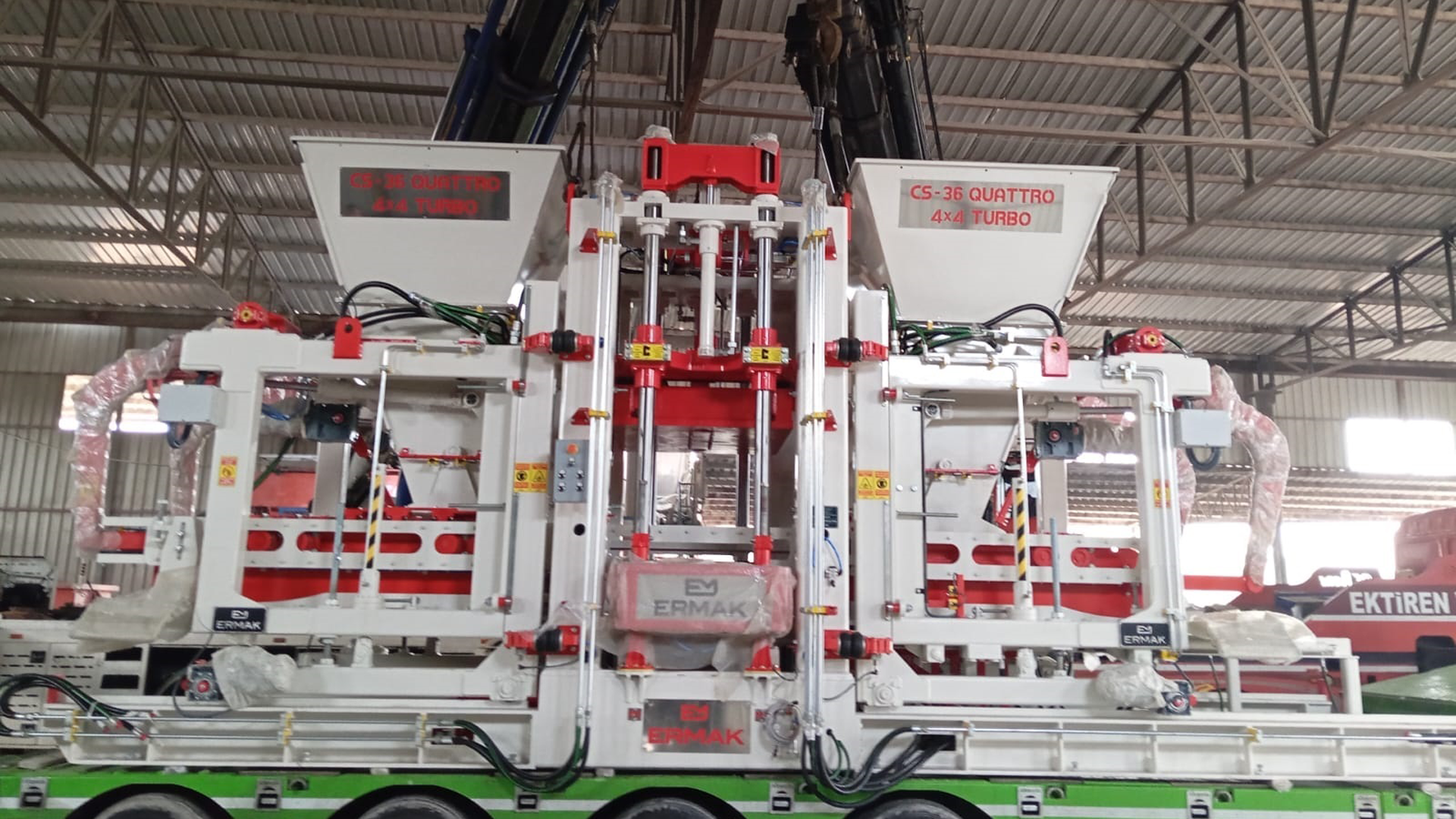
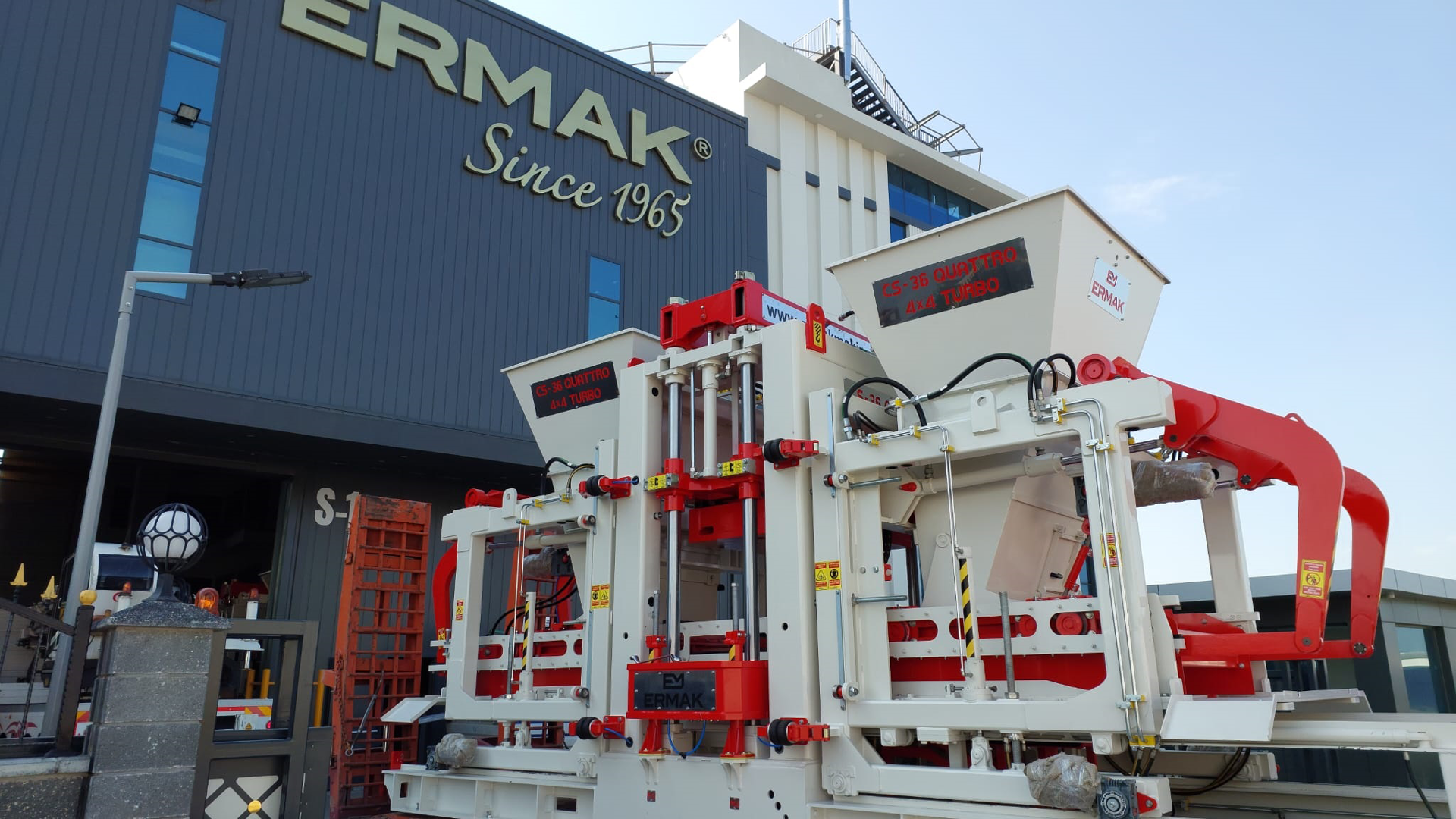
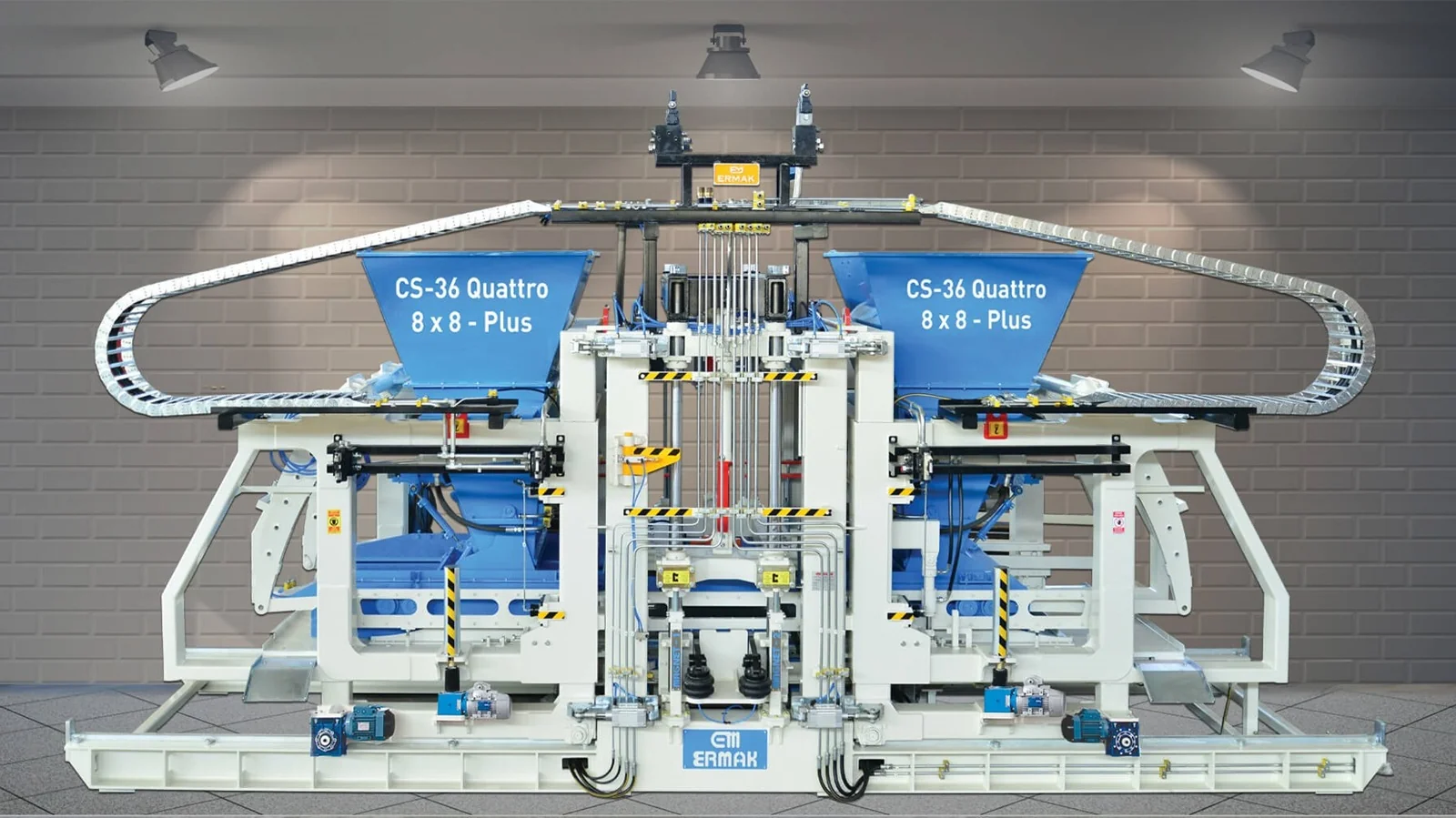
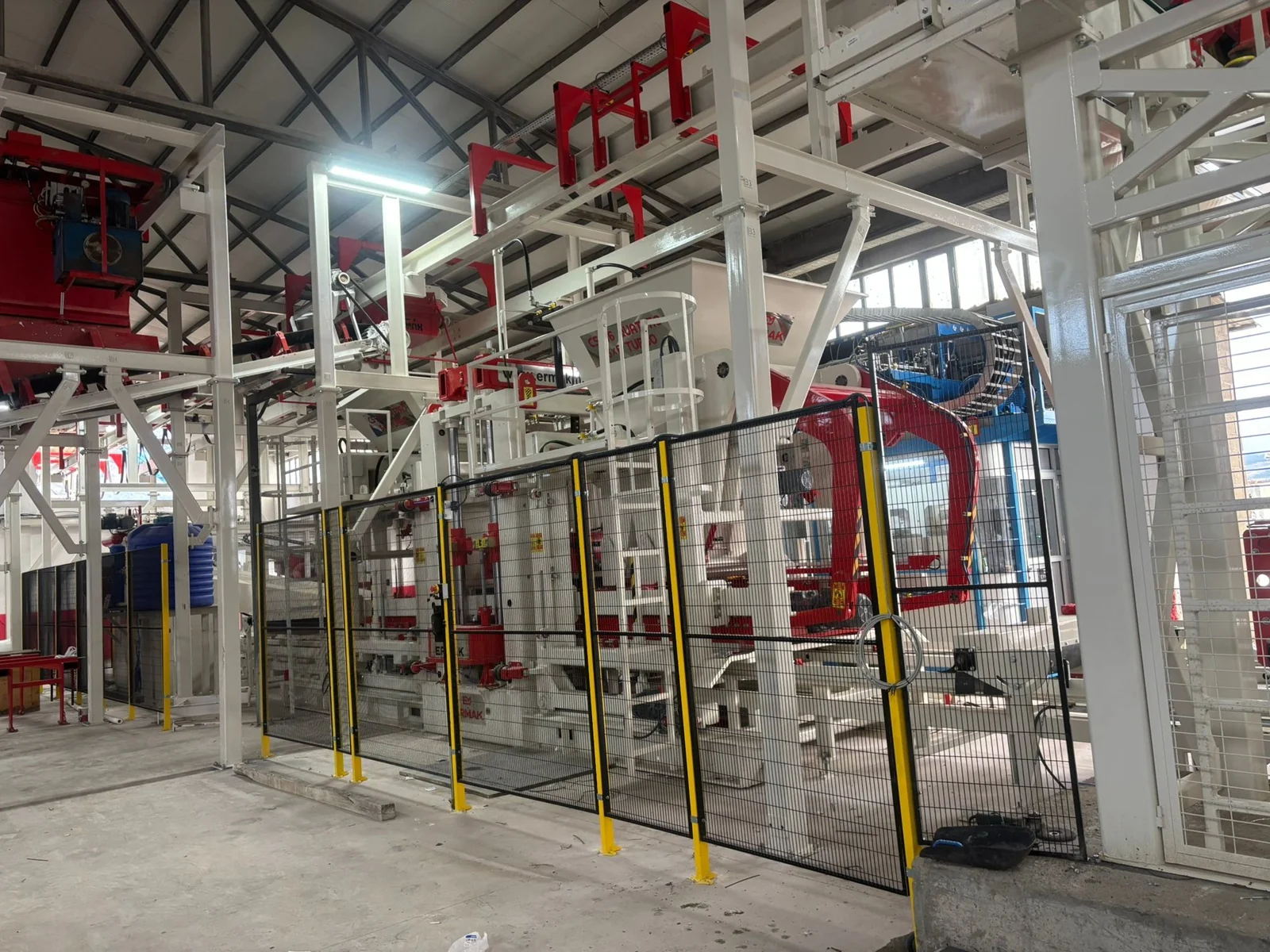
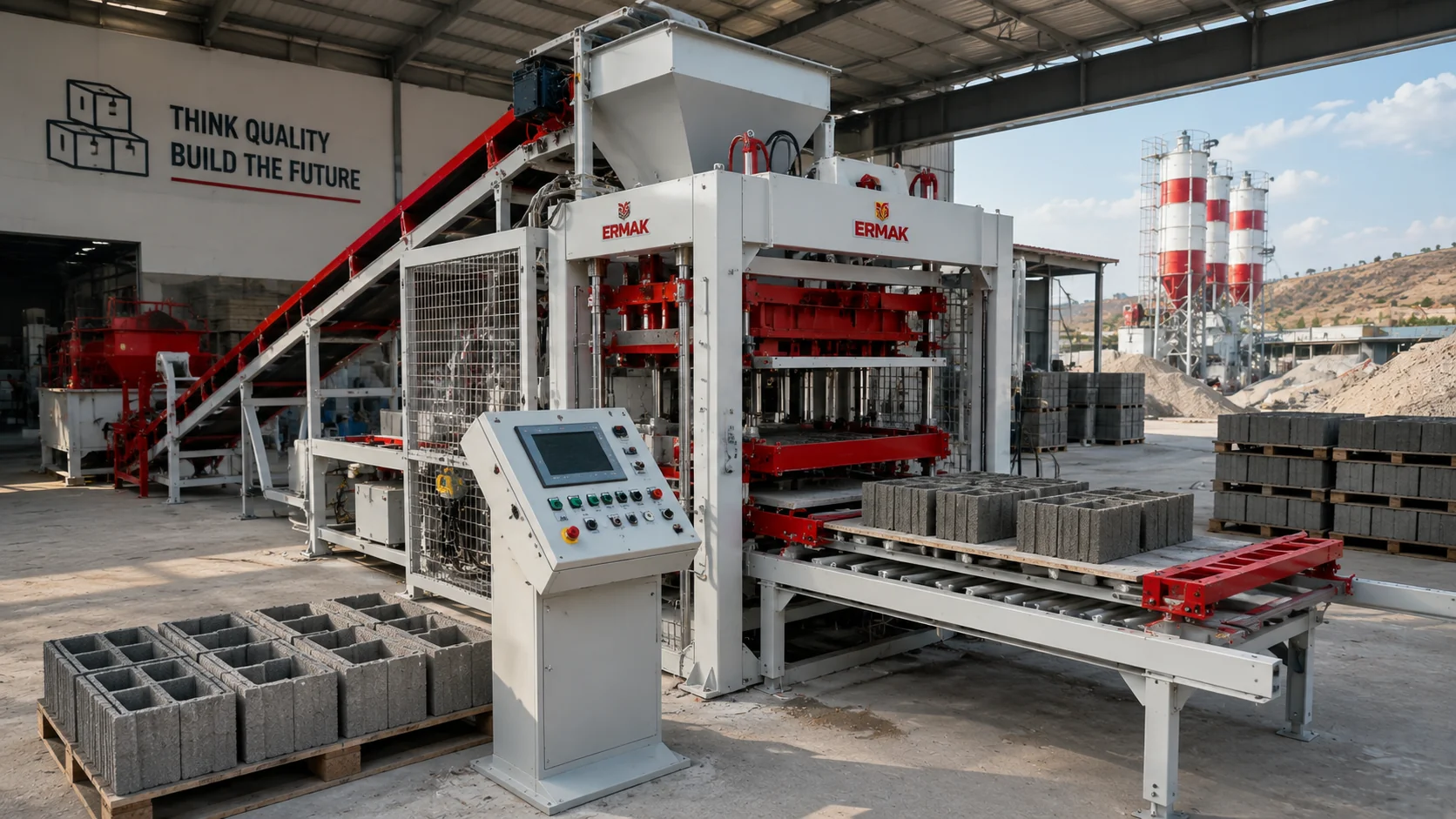
Selecting the right concrete batching plant for block production is just as important as choosing the concrete block machine itself. A high-capacity block machine cannot deliver its expected performance if the batching plant supplies concrete too slowly, produces inconsistent mixtures or cannot adapt to different product recipes.
In concrete block, paving stone and kerbstone production, the batching plant is not merely a raw material preparation unit. It directly affects:
- Product strength
- Surface quality
- Colour consistency
- Production cycle stability
- Cement consumption
- Product rejection rates
- Machine utilisation
- Labour requirements
- Overall production cost
For this reason, the batching plant, mixer and block machine should be designed as parts of the same production system.
The correct plant must prepare the required concrete quantity within the available cycle time while maintaining consistent moisture, aggregate distribution and cement content from one batch to the next.
Why Is the Batching Plant Critical in Block Production?
Concrete blocks and paving stones are generally manufactured using a low-moisture, stiff concrete mixture commonly described as zero-slump concrete. This type of mixture behaves differently from conventional ready-mixed concrete.
Because the mixture contains limited water, it must be blended intensively to distribute:
- Cement
- Fine aggregates
- Coarse aggregates
- Water
- Pigments
- Chemical additives
evenly throughout the batch.
An unsuitable batching plant may create variations in moisture and material distribution. These variations can cause:
- Inconsistent product density
- Weak corners and edges
- Uneven block heights
- Poor surface texture
- Colour differences
- Irregular mould filling
- Excessive cement consumption
- Increased waste
The batching plant must therefore do more than prepare concrete. It must supply a stable and repeatable mixture that supports the vibration and pressing process of the block machine.
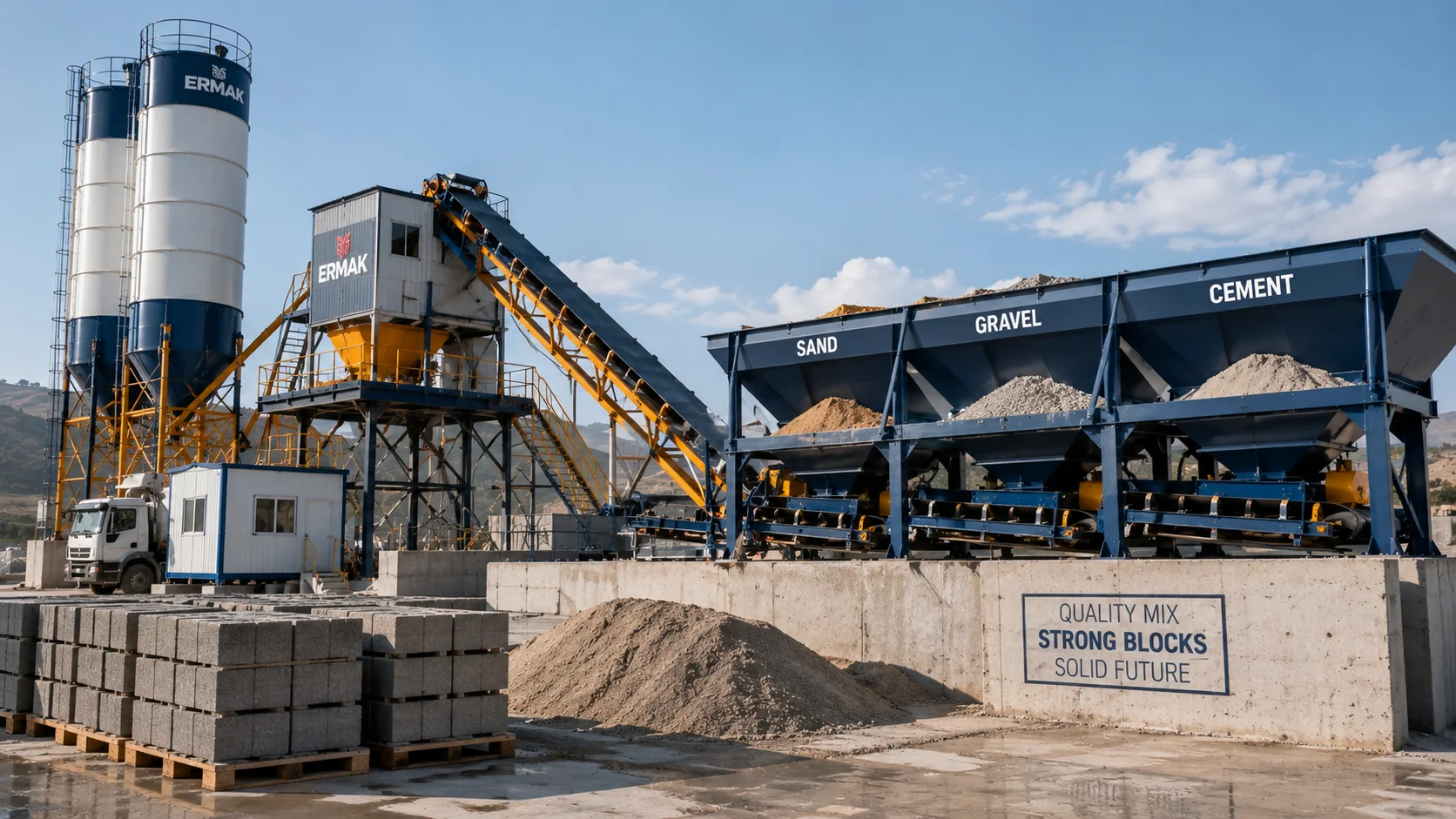
Ermak has produced professional concrete batching plants and its registered Milano Mixer systems since 2000. The company designs its batching plant solutions for integration with concrete block, paving stone and other precast concrete production lines.
Start with the Block Machine’s Concrete Demand
The first step in selecting a batching plant is to determine how much concrete the block machine consumes during real production.
This calculation should consider:
- Production pallet dimensions
- Number of products per cycle
- Product dimensions
- Product height
- Concrete density
- Machine cycle time
- Number of layers
- Number of operating shifts
- Expected production efficiency
The block machine manufacturer should calculate the approximate concrete consumption for the selected products.
For example, a machine producing standard hollow blocks may consume a different volume of concrete per cycle than the same machine producing thin paving stones. Even when the cycle time is similar, the product volume and required batch quantity may change substantially.
The batching plant must supply enough concrete to prevent the block machine from waiting. However, selecting a plant far above actual requirements can create unnecessary investment, energy use and maintenance costs.
The target should be a controlled capacity margin rather than excessive oversizing.
Calculate Net Mixer Output, Not Only Nominal Capacity
Mixer models are often described using two numbers, such as:
- 750/500
- 1500/1000
- 2250/1500
The first value generally represents the input or charging capacity, while the second represents the approximate compacted concrete output per batch.
However, mixer capacity alone does not determine hourly production.
The real output depends on the complete mixing cycle:
- Aggregate charging
- Cement charging
- Water and additive dosing
- Dry mixing
- Wet mixing
- Discharge
- Mixer preparation for the next batch
A nominally large mixer may deliver less concrete per hour if charging, mixing or discharge takes too long.
The hourly output should therefore be calculated using:
Net concrete per batch × completed batches per hour
For example, a mixer that delivers 1 m³ per batch and completes 30 full cycles per hour has a theoretical output of 30 m³ per hour. In practice, plant efficiency, recipe changes, cleaning and material supply must also be considered.
The batching plant should be selected according to realistic hourly output rather than the largest number printed in a catalogue.
Match the Mixer to the Block Machine Cycle
The mixer and block machine must operate in rhythm.
If the block machine completes production cycles faster than the mixer can prepare concrete, the following problems may occur:
- The machine waits for material.
- Actual output remains below catalogue capacity.
- Production becomes irregular.
- Operators make manual adjustments.
- Concrete consistency changes between batches.
- Energy is consumed while equipment remains idle.
The mixer does not necessarily need to prepare concrete for every individual machine cycle. A properly sized buffer hopper can hold mixed concrete and supply several cycles.
However, the buffer hopper must not be used to hide a serious capacity mismatch. Concrete should not remain in the hopper long enough to begin losing workability or consistency.
The correct configuration depends on:
- Concrete required per machine cycle
- Mixer batch size
- Mixing cycle duration
- Buffer hopper volume
- Material discharge speed
- Number of block machines supplied
A capacity study should show how many block machine cycles can be supported by each mixer batch.
Pan Mixer or Planetary Mixer?
Mixer type has a direct impact on concrete homogeneity, mixing time, maintenance and investment cost.
Two common options for concrete block production are pan mixers and planetary mixers.
Pan Mixers
In a pan mixer, mixing arms rotate inside a circular mixing chamber. The system can be suitable for a wide range of concrete block and precast applications.
Potential advantages include:
- Relatively straightforward mechanical construction
- Reliable operation
- Easier maintenance in some configurations
- Suitability for many standard block products
- Competitive investment cost
A pan mixer can be a practical choice for facilities producing standard hollow blocks, brickets or paving products at controlled capacities.
Ermak’s 1500/1000 Pan Mixer uses a 45 kW motor and is designed for difficult zero-slump concrete used in precast elements and interlocking paving stone production. Its published design includes replaceable arms and blades, wear-resistant lining options and a wide discharge opening intended to support fast emptying.
Planetary Mixers
Planetary mixers use rotating mixing tools that also move around the mixer chamber. This movement can provide intensive coverage of the mixing area and help distribute materials rapidly.
They are frequently considered for applications requiring:
- High mixture uniformity
- Short mixing cycles
- Coloured face concrete
- Fine aggregate distribution
- High-quality paving products
- Multiple concrete recipes
- Demanding zero-slump mixtures
Planetary mixers may require a higher initial investment, but they can provide important advantages where surface appearance, pigment distribution and recipe consistency are critical.
Ermak’s Milano Mixer range includes a 750/500 Planetary Mixer with 37 kW power and a 2250/1500 Planetary Mixer with 75 kW power. Both are presented as systems designed for zero-slump concrete used in paving stone and precast product manufacturing.
The final selection should be based on product requirements, not mixer labels alone. Blade design, mixing coverage, discharge speed, wear protection and maintenance access must also be evaluated.
Single-Layer or Double-Layer Production
The required batching plant configuration changes significantly when double-layer paving stones are planned.
Single-layer products use one concrete mixture throughout the product body.
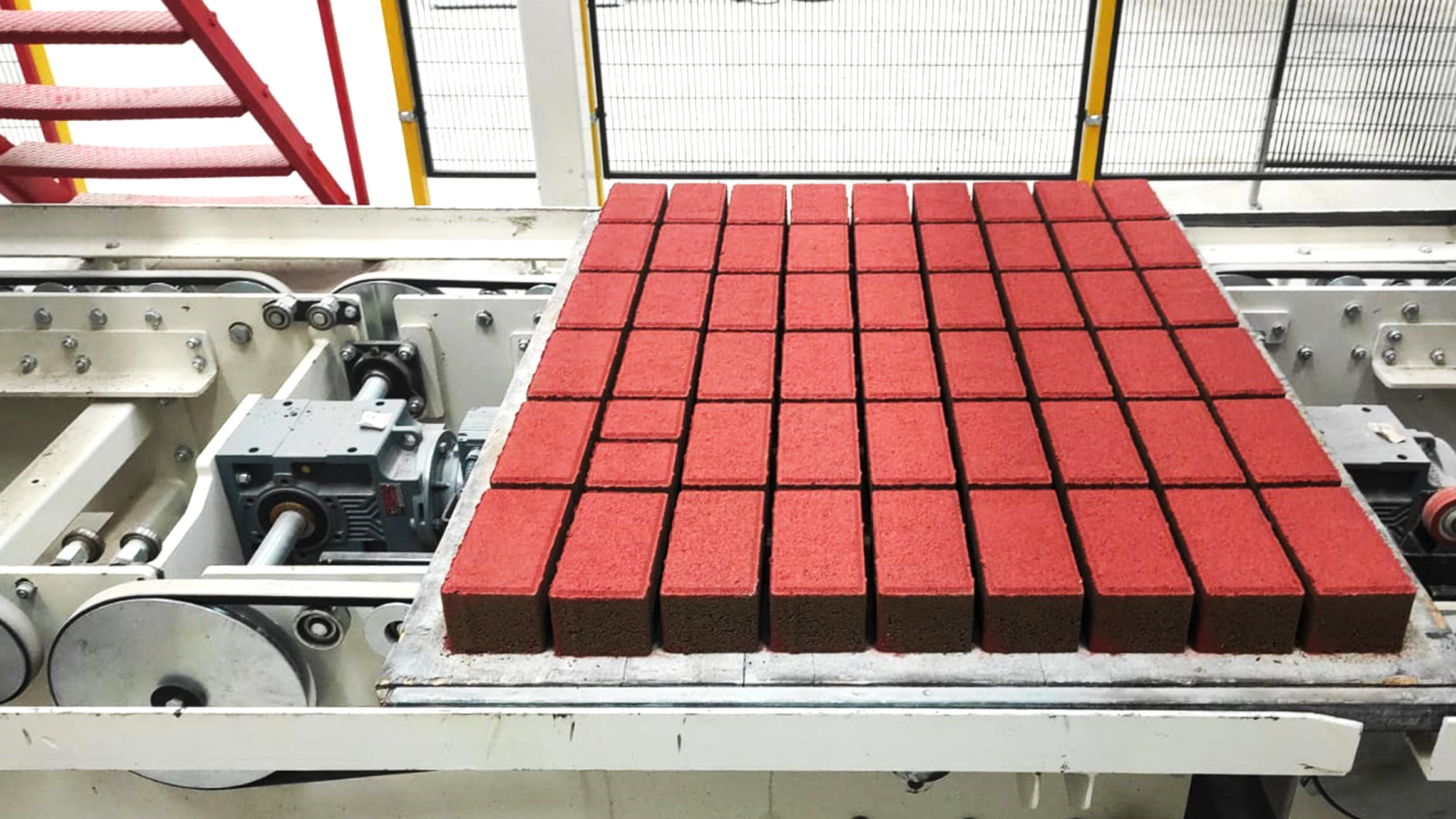
Double-layer paving stones usually consist of:
- A structural base layer
- A finer, often coloured face layer
The base mix and face mix typically require different:
- Aggregate gradations
- Cement contents
- Pigments
- Water ratios
- Mixing times
- Batch quantities
A double-layer production line may therefore require:
- Separate aggregate bunkers
- Two weighing systems
- Two mixers
- Separate water dosing
- Separate pigment dosing
- Independent buffer hoppers
- Coordinated automation
The base concrete mixer is normally sized according to the main material demand of the machine. The face-mix mixer may be smaller because the surface layer uses less material per cycle.
However, the face-mix system must still prepare concrete quickly and consistently. A small mixer with slow discharge can become a bottleneck even when the required volume is limited.
Determine the Required Aggregate Bunker Capacity
Aggregate bunkers must store and separate the different materials used in production.
A typical block production plant may require separate compartments for:
- Fine sand
- Coarse sand
- Crushed stone
- Lightweight aggregate
- Recycled aggregate
- Decorative aggregate
- Face-mix aggregate
The number of bunkers depends on the number of recipes and the required product range.
A plant producing only one standard hollow block may operate with fewer aggregate types. A facility producing coloured pavers, kerbstones, grass stones and special blocks may require more compartments.
Bunker capacity should be determined according to:
- Hourly aggregate consumption
- Daily production target
- Loader capacity
- Material delivery frequency
- Available factory space
- Number of recipes
- Required reserve stock
Very small bunkers require frequent loader filling. This increases equipment movement and may interrupt material supply.
Excessively large bunkers increase structural cost and occupy more space.
The correct design should keep the plant supplied without creating unnecessary construction or handling costs.
Examine Aggregate Feeding Methods
Aggregates may be loaded into the batching plant using:
- Wheel loaders
- Underground hoppers
- Conveyor systems
- Radial conveyors
- Material transfer systems
The selection depends on site conditions and production scale.
Wheel-loader-fed bunkers are common because they provide flexibility and can handle several material types.
However, the layout should minimise loader travel and prevent cross-contamination between aggregates.
The feeding system should also maintain a consistent flow. Fine or wet materials may bridge inside the bunker, while lightweight aggregates may behave differently from crushed stone.
Useful equipment may include:
- Bin vibrators
- Controlled discharge gates
- Belt feeders
- Level sensors
- Flow assistance systems
The bunker and gate design should match the physical properties of the aggregate rather than relying on one standard arrangement for every material.
Weighing Accuracy Directly Affects Product Quality
Accurate dosing is essential for repeatable block production.
The plant should weigh or measure:
- Aggregates
- Cement
- Water
- Chemical additives
- Pigments
Small variations can affect moisture, colour, strength and compaction behaviour.
Aggregate weighing systems may use:
- Weighing belts
- Weighing hoppers
- Load cells
- Individual bin weighing
- Cumulative weighing
The correct system depends on production speed and required precision.
Important points include:
- Load-cell accuracy
- Calibration access
- Gate response time
- Fine dosing capability
- Protection from vibration
- Software correction functions
- Material fall compensation
The control system should account for material that continues falling after a gate begins closing. Without this compensation, repeated overfeeding can alter the recipe.
High weighing accuracy is especially important for:
- Coloured products
- Thin paving stones
- High-strength products
- Lightweight blocks
- Products manufactured under strict specifications
Moisture Control Is Essential
Aggregate moisture is one of the most influential variables in concrete block production.
Sand and fine aggregates can retain significant amounts of water. If the control system adds a fixed water quantity without accounting for existing moisture, the final mixture may become too wet.
Excess water can cause:
- Products sticking to the mould
- Deformation after demoulding
- Poor edge definition
- Height variation
- Longer cycle times
- Surface defects
Insufficient water can lead to:
- Weak compaction
- Crumbling edges
- Porous surfaces
- Incomplete mould filling
- Reduced strength
Moisture probes can be installed in aggregate bunkers, weighing systems or mixers. The automation software can then adjust the added water according to the measured moisture level.
Moisture control should not be treated as an optional luxury in high-quality production. Inconsistent water content quickly becomes inconsistent product quality.
Water Dosing Must Be Fast and Precise
Water dosing should provide both accuracy and speed.
The system may use:
- Weighed water tanks
- Flow meters
- Controlled valves
- High-flow and fine-flow dosing stages
A two-stage system can add most of the required water quickly and then complete the dose more slowly for accuracy.
The water system should also account for:
- Aggregate moisture
- Admixture water
- Mixer washing water
- Seasonal temperature changes
- Recycled water quality
The automation system should store separate water settings for each product recipe.
Operators should not need to manually guess the water quantity for every batch. Manual correction may still be useful, but it should be controlled and recorded.
Cement Storage and Dosing
Cement storage must support the plant’s daily consumption and delivery schedule.
The required silo capacity depends on:
- Hourly cement consumption
- Daily operating hours
- Number of shifts
- Cement delivery frequency
- Number of cement types
- Required safety stock
A plant using different cement types may require more than one silo.
The cement system may include:
- Cement silos
- Screw conveyors
- Cement weighing hopper
- Filters
- Pressure relief valves
- Level indicators
- Fluidisation equipment
- Safety systems
The screw conveyor must supply cement quickly enough to support the mixing cycle.
A slow cement transfer system can lengthen every batch and reduce hourly plant capacity. This is a classic hidden bottleneck: the mixer receives all the attention while the screw conveyor quietly steals the shift.
Ermak states that its batching plants use specialised components from established suppliers, including WAM equipment for elements such as screws, gates and vibrators. The company also offers standard or project-specific automation depending on the production line.
Pigment and Chemical Additive Dosing
Coloured paving stone production requires controlled pigment dosing.
Pigments may be added through:
- Manual bags
- Weighed pigment systems
- Screw feeders
- Automated dosing units
- Pre-mixed liquid systems
Manual pigment addition may be acceptable for limited production, but it increases dependence on the operator.
Automatic dosing can improve:
- Colour repeatability
- Recipe control
- Batch traceability
- Workplace cleanliness
- Dosing accuracy
Chemical additives may also be used to influence compaction, strength development, water demand or surface quality.
The additive system should provide:
- Accurate low-volume dosing
- Separate storage
- Chemical-resistant components
- Recipe integration
- Calibration access
- Safe handling
Pigment and additive systems should be planned at the beginning of the project. Adding them later can require significant changes to the plant structure and software.
Mixer Blade and Wear-Liner Quality
Zero-slump concrete is abrasive. Mixer blades and internal wear plates are therefore exposed to continuous mechanical wear.
When comparing mixers, examine:
- Blade material
- Blade geometry
- Arm design
- Wear-liner material
- Replaceable component structure
- Adjustment capability
- Maintenance access
- Spare-part availability
Worn blades increase the distance between the mixing tools and the chamber. This can reduce mixing efficiency and increase batch time.
Adjustable arms allow the position of the blades to be corrected as they wear.
Ermak states that Milano Mixer blades use Ni-hard cast material with a published hardness of 54 HRC. Its mixer pages also describe optional Ni-hard or Hardox wear plates, replaceable blade assemblies and adjustable mixing arms.
Wear parts should be viewed as planned operating components. Their cost, expected lifetime and replacement time should be included in the investment assessment.
Discharge Speed Affects the Entire Cycle
A mixer may prepare concrete quickly but still limit plant capacity if discharge is slow.
The discharge opening should be large enough to release stiff concrete without prolonged waiting.
The receiving conveyor or skip must also be positioned correctly to prevent:
- Material accumulation
- Spillage
- Segregation
- Delayed mixer cycles
The discharge gate should open and close reliably under dusty and abrasive conditions.
Useful features may include:
- Wide discharge opening
- Hydraulic discharge gate
- Manual emergency opening
- Fast-discharge option
- Position sensors
- Replaceable seals
Milano Mixer product information describes wide discharge covers and optional quick-discharge systems. A manual hydraulic opening method is also provided for power-loss situations.
Discharge time should be included in the full batch-cycle calculation. Ignoring it can produce an overly optimistic capacity estimate.
Buffer Hopper Design
A buffer hopper is installed between the mixer and the block machine to maintain a controlled material supply.
The hopper must:
- Hold enough concrete for continuous operation
- Discharge evenly
- Prevent material bridging
- Avoid excessive concrete storage time
- Match the machine feeding system
A hopper that is too small may empty before the next mixer batch arrives.
A hopper that is too large may allow concrete to remain inside too long, particularly during production interruptions.
The interior shape should promote material flow. Vibrators or agitators may be required for difficult mixtures, but uncontrolled vibration can also cause segregation.
Level sensors should inform the plant automation when another batch is required.
Automation and Recipe Management
The batching plant control system should coordinate:
- Aggregate dosing
- Cement dosing
- Water correction
- Additive dosing
- Pigment dosing
- Mixing sequence
- Mixing time
- Discharge
- Buffer hopper level
- Communication with the block machine
Recipe management is especially important when the plant manufactures several products.
Each recipe may contain different:
- Aggregate ratios
- Cement quantities
- Water targets
- Pigment quantities
- Mixing times
- Discharge settings
The control system should store recipes securely and prevent unauthorised changes.
Useful automation functions include:
- User access levels
- Batch records
- Material consumption reports
- Alarm history
- Moisture correction
- Calibration tools
- Production totals
- Remote service access
- Maintenance warnings
Ermak states that its concrete batching plants can use standard market software or project-specific automation. This allows the control system to be adapted to the requirements of the associated block production line.
Communication with the Block Machine
A modern batching plant should communicate with the block machine rather than operating as a completely independent island.
The systems may exchange information such as:
- Product recipe
- Concrete demand
- Buffer hopper level
- Production status
- Machine stop condition
- Batch request
- Alarm status
When the block machine stops, the batching plant should avoid preparing unnecessary concrete.
When the product recipe changes, the correct mixture should be selected automatically or through a controlled operator command.
Integrated communication reduces the risk of:
- Wrong concrete being supplied
- Excess material remaining in the hopper
- Recipe mismatches
- Unnecessary mixer cycles
- Manual coordination errors
The batching plant and block machine should ideally be planned by teams that understand both systems.
Plant Layout and Material Flow
A technically capable batching plant can still perform poorly when installed in a bad layout.
The site plan should consider:
- Aggregate delivery
- Loader routes
- Cement tanker access
- Mixer position
- Conveyor routes
- Block machine position
- Maintenance access
- Electrical room
- Drainage
- Cleaning areas
- Future expansion
The distance between the mixer and block machine should be kept practical. Long conveyor routes increase:
- Transfer time
- Material loss
- Cleaning requirements
- Energy consumption
- Risk of mixture changes
However, the batching plant should not obstruct production, curing or forklift traffic.
The layout must also allow safe access to:
- Mixer maintenance covers
- Load cells
- Conveyor drives
- Screw conveyors
- Silo equipment
- Water systems
- Electrical panels
A compact layout is useful only when maintenance can still be performed safely.
Electrical Power and Infrastructure
The total installed power of the batching plant may include:
- Mixer motor
- Aggregate conveyors
- Cement screws
- Air compressor
- Water pumps
- Hydraulic units
- Vibrators
- Control panels
- Pigment systems
The electrical design should consider both installed power and simultaneous demand.
The plant may also require:
- Transformer capacity
- Backup generator
- Voltage protection
- Power-factor correction
- Proper grounding
- Dust-protected panels
- Emergency systems
Compressed air is commonly used for gates and valves. Compressor capacity must be sufficient for peak demand.
Water pressure and supply must remain stable throughout production. If the plant depends on a storage tank, the tank and pump should be sized for the maximum production rate.
Cleaning and Maintenance Access
Concrete batching plants operate in dusty and abrasive conditions.
Daily and periodic maintenance may include:
- Mixer cleaning
- Blade inspection
- Wear-liner inspection
- Conveyor adjustment
- Load-cell cleaning
- Cement filter maintenance
- Gate inspection
- Moisture probe cleaning
- Lubrication
- Sensor checks
The plant should be designed so that these tasks can be performed without dangerous or time-consuming disassembly.
Mixer cleaning is especially important. Hardened material reduces effective capacity and may contaminate future batches.
Optional washing systems can reduce cleaning time, but they do not eliminate the need for inspection.
Milano Mixer product pages describe optional pump-and-nozzle washing systems and safety switches on maintenance covers. These features are intended to support cleaning access and maintenance safety.
Safety Systems
The batching plant contains moving conveyors, rotating mixers, pneumatic gates and elevated equipment.
Required safety measures may include:
- Emergency stop buttons
- Mixer cover switches
- Conveyor guards
- Access platforms
- Safety railings
- Lockout points
- Silo pressure protection
- Dust filters
- Level alarms
- Electrical protection
- Restricted access areas
Maintenance covers should prevent the mixer from operating while open.
Platforms and stairs should provide stable access for inspection.
The manufacturer should supply operating manuals, electrical diagrams and maintenance instructions. Operators must be trained before production begins.
Consider Future Expansion
A batching plant should support current production without preventing future growth.
Possible future requirements include:
- A larger block machine
- A second production line
- Additional aggregate types
- Face-mix production
- New pigment systems
- Higher silo capacity
- Additional mixers
- Automated moisture control
- Expanded reporting software
Expansion planning may affect:
- Bunker arrangement
- Structural design
- Conveyor position
- Control panel capacity
- Electrical infrastructure
- Factory layout
Leaving suitable connection points and physical space during the original installation is usually less expensive than rebuilding the plant later.
However, expansion potential should remain realistic. Paying for a plant twice the required size based only on vague future hopes is not planning; it is expensive optimism wearing a hard hat.
Evaluate the Complete Cost of Ownership
The lowest-priced batching plant is not necessarily the most economical option.
The total cost should include:
- Purchase price
- Installation
- Structural works
- Electrical infrastructure
- Cement silos
- Aggregate bunkers
- Mixer
- Conveyors
- Automation
- Moisture control
- Maintenance
- Wear parts
- Energy consumption
- Cleaning time
- Production interruptions
- Product waste
A plant with poor weighing accuracy may increase cement consumption.
A slow mixer may reduce block machine utilisation.
A weak discharge system may lengthen every batch.
An unreliable moisture system may increase rejected products.
These costs are often less visible than the original quotation, but they continue throughout the working life of the plant.
Concrete Batching Plant Selection Checklist
Before finalising the plant design, confirm that:
- The block machine’s real concrete demand has been calculated.
- Required hourly output is based on net mixer capacity.
- The complete mixing cycle has been measured.
- Mixer type is suitable for zero-slump concrete.
- Single-layer or double-layer production has been defined.
- Face-mix requirements have been calculated.
- Aggregate bunker quantity is sufficient.
- Bunker capacity matches material consumption.
- Aggregate weighing accuracy has been verified.
- Cement silo capacity is sufficient.
- Cement screw capacity supports the cycle time.
- Water dosing is fast and precise.
- Moisture control has been included.
- Pigment and additive systems are properly sized.
- Mixer blades and wear liners are replaceable.
- Discharge speed matches production demand.
- Buffer hopper capacity is suitable.
- Automation can store and control recipes.
- The batching plant communicates with the block machine.
- Maintenance access is safe and practical.
- Electrical and pneumatic infrastructure is sufficient.
- Future expansion has been considered.
- Spare parts and technical service are available.
- Total ownership cost has been calculated.
Building a Balanced Block Production System
The best concrete batching plant for block production is not simply the plant with the largest mixer or the highest theoretical output.
It is the system that delivers the correct concrete:
- In the required quantity
- At the correct time
- With consistent moisture
- With accurate material proportions
- Without interrupting the block machine
Mixer type, batching accuracy, moisture control, automation, material storage and discharge speed must all work together.
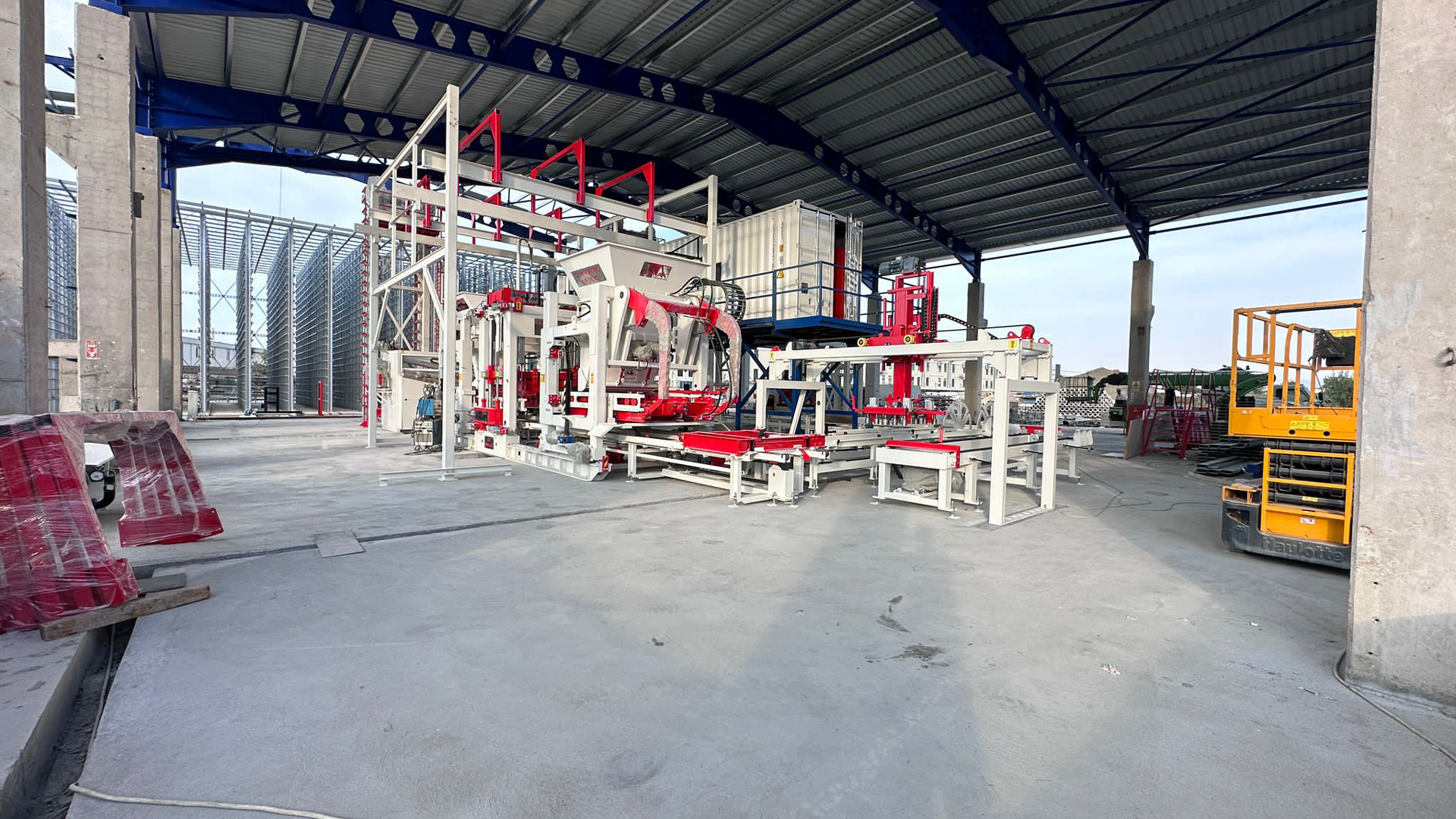
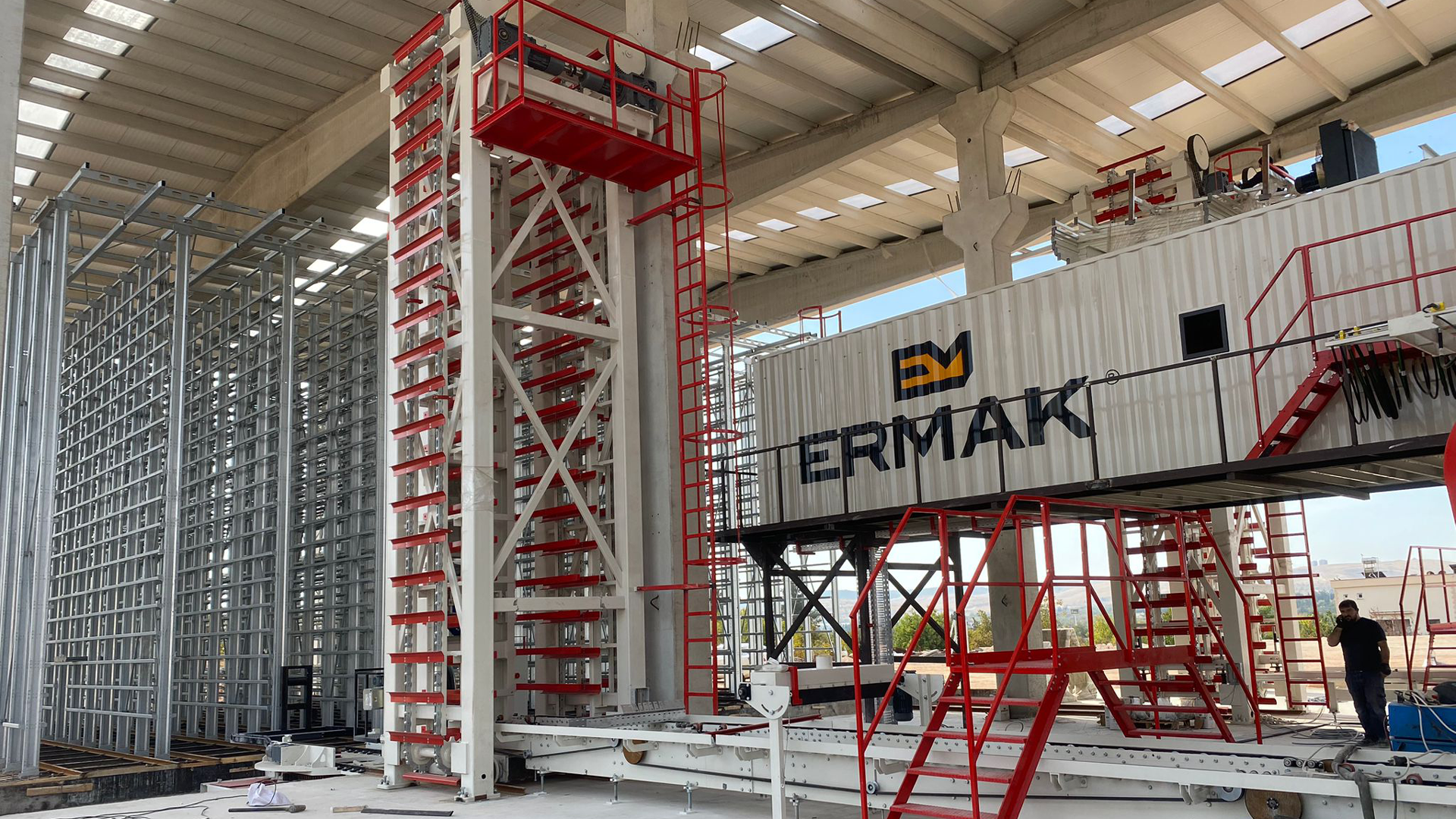
Ermak develops concrete batching plants, Milano Mixer systems, block production machines, moulds, curing racks, transport systems and packaging equipment. This allows the batching plant and block machine to be evaluated as a coordinated production line rather than as unrelated equipment.
For a new block production facility, the batching plant should be sized according to the actual products, target capacity, operating hours and planned automation level. A properly balanced system improves product consistency, reduces unnecessary production interruptions and helps the entire investment operate closer to its intended capacity.
Frequently Asked Questions
What type of batching plant is suitable for concrete blocks?
A plant designed for stiff, low-moisture or zero-slump concrete is required. It should provide accurate aggregate, cement and water dosing together with intensive mixing and fast discharge.
How is batching plant capacity calculated?
Capacity is calculated using the mixer’s net concrete output per batch and the number of complete batches produced per hour. Charging, mixing and discharge times must all be included.
Is a planetary mixer better than a pan mixer?
Neither option is automatically better for every plant. Planetary mixers are often selected for intensive mixing, coloured face concrete and demanding recipes. Pan mixers can provide a reliable and economical solution for many standard block products.
Does a double-layer paver machine require two mixers?
In most applications, separate mixers are preferred for the base concrete and face concrete because the two layers use different aggregates, pigments, quantities and recipes.
Why is moisture control important?
Aggregate moisture changes the real water content of the mixture. Without correction, products may become too wet or too dry, causing compaction, strength and surface-quality problems.
How large should aggregate bunkers be?
Bunker size should be based on hourly consumption, production shifts, loader operation and material delivery frequency. The bunkers should prevent supply interruptions without being unnecessarily oversized.
Can one batching plant supply two block machines?
It may be possible if mixer output, storage, conveyors and automation are designed for the combined concrete demand. A detailed cycle and capacity study is required.
What causes a batching plant to become a bottleneck?
Common causes include an undersized mixer, slow aggregate feeding, low-capacity cement screws, slow discharge, insufficient buffer storage and inaccurate automation timing.
Should the batching plant and block machine use integrated automation?
Integrated communication is strongly recommended. It allows the batching plant to receive concrete requests, respond to machine stops and coordinate product recipe changes.
What should be included in a batching plant quotation?
The quotation should clearly identify aggregate bunkers, weighing systems, mixer, cement silos, screw conveyors, water and additive dosing, automation, moisture control, conveyors, installation, training, warranty and spare parts.