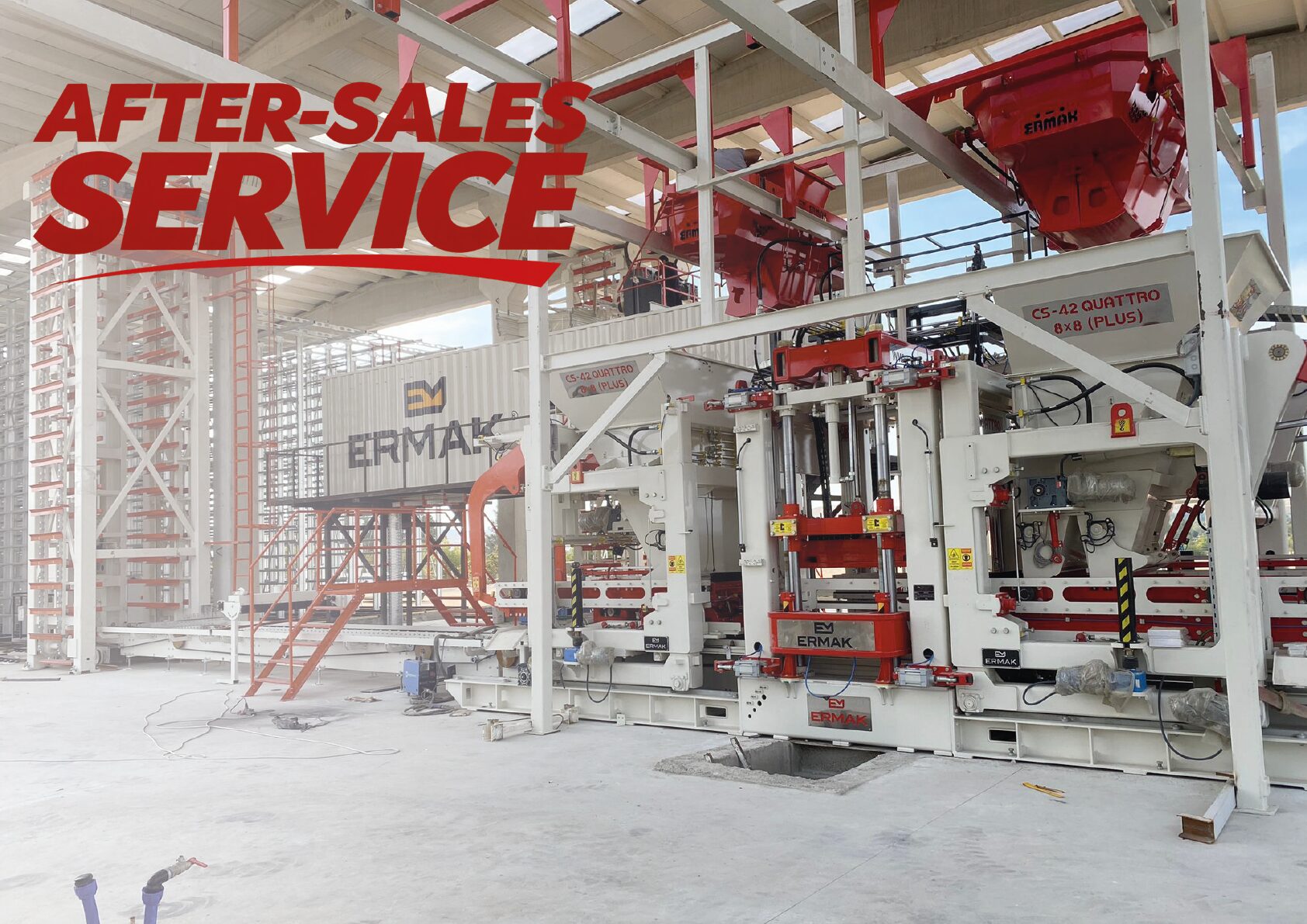
When buyers compare concrete block machines, most of the discussion usually focuses on production capacity, cycle time, automation and purchase price. These are important criteria, but they describe only the beginning of the investment. A block machine may remain in operation for many years, and during that period the quality of after-sales service can have a direct effect on plant availability, maintenance cost and the amount of saleable production the factory can achieve.
For this reason, after-sales service should be evaluated before the machine is purchased, not after the first breakdown. A technically strong machine supported by slow spare parts delivery, unclear documentation or limited technical assistance can still create expensive downtime. The objective is therefore to understand how the supplier will support the factory throughout commissioning, regular production, maintenance, breakdowns and future modernization.
After-Sales Service Is Part of the Machine Investment
After-sales service is sometimes treated as a secondary commercial issue, separate from the machine itself. In reality, it forms part of the machine’s long-term production capability because industrial equipment will eventually require maintenance, replacement components, technical diagnosis and operator support.
The most important question is not whether the manufacturer has a service department. The buyer needs to understand how that service system actually works. Response times, remote support capability, spare parts identification, technical documentation and international service organization should all be reviewed before the contract is signed.
A low purchase price can lose its advantage quickly if a small technical problem stops production for several days.
Ask How Technical Support Requests Are Handled
A good starting point is to ask what happens when the customer reports a problem. Is there a clear service channel? Does the request reach a technical team directly, or does it move through several administrative steps before anyone begins diagnosis?
The supplier should have a practical method for identifying the machine, understanding the fault and assigning the request to the right person. Machine serial number, alarm information, photographs, videos and PLC data can help speed up this process.
For an international customer, this structure becomes even more important because the manufacturer may be hundreds or thousands of kilometres away.
Response Time and Repair Time Are Different
Fast response is valuable, but it does not automatically mean fast problem resolution. A supplier may answer an email within an hour but still require several days to diagnose the issue or identify the correct spare part.
Buyers should therefore think about two different measurements: how quickly the supplier responds and how quickly the machine can realistically return to production.
The second value is usually more important economically. A technically experienced service team that identifies the correct cause quickly can create more value than a larger service organization that responds immediately but requires multiple interventions to solve the same problem.
Remote Support Can Reduce Downtime
Modern PLC and HMI systems can make remote technical support extremely valuable, especially for export projects. With an appropriate and secure connection, the technical team may be able to review alarms, machine states, parameters and automation behaviour without waiting for a technician to travel to the site.
Not every problem can be solved remotely. Mechanical damage, component replacement and physical alignment issues still require local intervention. However, remote diagnosis can help determine what is wrong before anyone travels, allowing the service engineer to arrive with the correct tools and spare parts.
This can reduce both downtime and unnecessary service cost.
Ask What Can Be Solved Without a Site Visit
Before purchasing a machine, buyers should ask the supplier what percentage of common technical issues can normally be diagnosed remotely. This does not need to be expressed as a precise percentage, but the response reveals how the service organization operates.
A mature service system should be able to guide the customer’s maintenance team through basic checks such as sensor status, hydraulic conditions, alarm history and operating parameters. Simple problems should not require an international service visit every time.
At the same time, the supplier should know when remote troubleshooting is no longer appropriate and when a qualified technician needs to inspect the machine physically.
Spare Parts Availability Is Central to After-Sales Quality
A service team cannot restore production quickly if the required spare part is unavailable.
For this reason, spare parts organization should be evaluated together with technical support. The buyer should ask how machine-specific parts are identified, whether critical components are kept in stock and how long international shipments typically take.
The supplier should also distinguish between standard industrial components and custom machine parts. Standard components may be available locally, while specialized mechanical parts may need to come directly from the manufacturer.
The most effective system is not one that forces the customer to buy a large spare parts inventory. It is one that helps the customer identify which parts are truly critical and ensures fast access to them.
Critical Spare Parts Should Be Defined Before Production Starts
A critical spare part is not necessarily an expensive component. A low-cost sensor or valve can stop the entire production line if the machine cannot operate without it and no local replacement is available.
For this reason, a project-specific critical spare parts list should ideally be prepared during commissioning. Machine configuration, shift pattern, production capacity and local supply conditions should all influence the list.
A high-capacity plant operating three shifts may justify a larger critical stock than a one-shift plant located close to the manufacturer. The economic value of the spare parts inventory should therefore be compared with the production loss that a missing component could create.
Serial Number Management Makes Spare Parts Faster
Concrete block machines may remain in production for many years, and component specifications can change during that time. Machines with the same model name may contain different electrical, hydraulic or automation components depending on production year and project configuration.
A strong after-sales system should therefore identify machines by serial number rather than relying only on model name. The supplier should be able to connect the serial number with original drawings, component lists and software versions.
This makes spare parts identification much faster and reduces the risk of shipping the wrong component. It also becomes important when machines are modernized several years after installation.
Documentation Quality Is Part of Service Quality
Good service begins with good documentation. Electrical drawings, hydraulic information, operating manuals and component records should represent the machine actually delivered to the customer.
If documentation is incomplete or outdated, even an experienced local maintenance team may spend unnecessary time diagnosing basic issues. The supplier may also struggle to provide fast support several years later if the original project records cannot be found.
For this reason, technical documentation should be evaluated as part of after-sales support rather than as a separate delivery formality.
Operator Training Reduces Future Service Dependence
A machine that requires manufacturer assistance for every small adjustment is expensive to operate. Operator training should therefore be included in the after-sales evaluation.
Operators should understand normal startup and shutdown procedures, product recipe selection, alarm interpretation and basic production adjustments. They should also know which parameters should not be changed without technical approval.
Good operator training reduces unnecessary service requests and helps the factory recognize abnormal machine behaviour earlier.
This is especially important in multi-shift production, where different operators may otherwise use the machine in different ways.
Maintenance Training Is Equally Important
Maintenance personnel need a different level of training than operators. They should understand lubrication points, filters, hydraulic checks, mechanical wear areas, sensors and basic troubleshooting.
The objective is not to turn the customer’s maintenance team into the machine manufacturer. The objective is to give them enough knowledge to complete routine preventive work and communicate technical problems accurately.
A trained maintenance team can often solve minor issues internally and provide much better information when manufacturer support is required.
Commissioning Quality Predicts Future Support
The installation and commissioning stage gives the buyer one of the first real opportunities to evaluate the manufacturer’s service organization. Technical knowledge, communication, problem-solving ability and training quality are all visible during this period.
A machine should not simply be switched on and handed over. Commissioning should include alignment checks, automation verification, product setup, operator training and review of maintenance requirements.
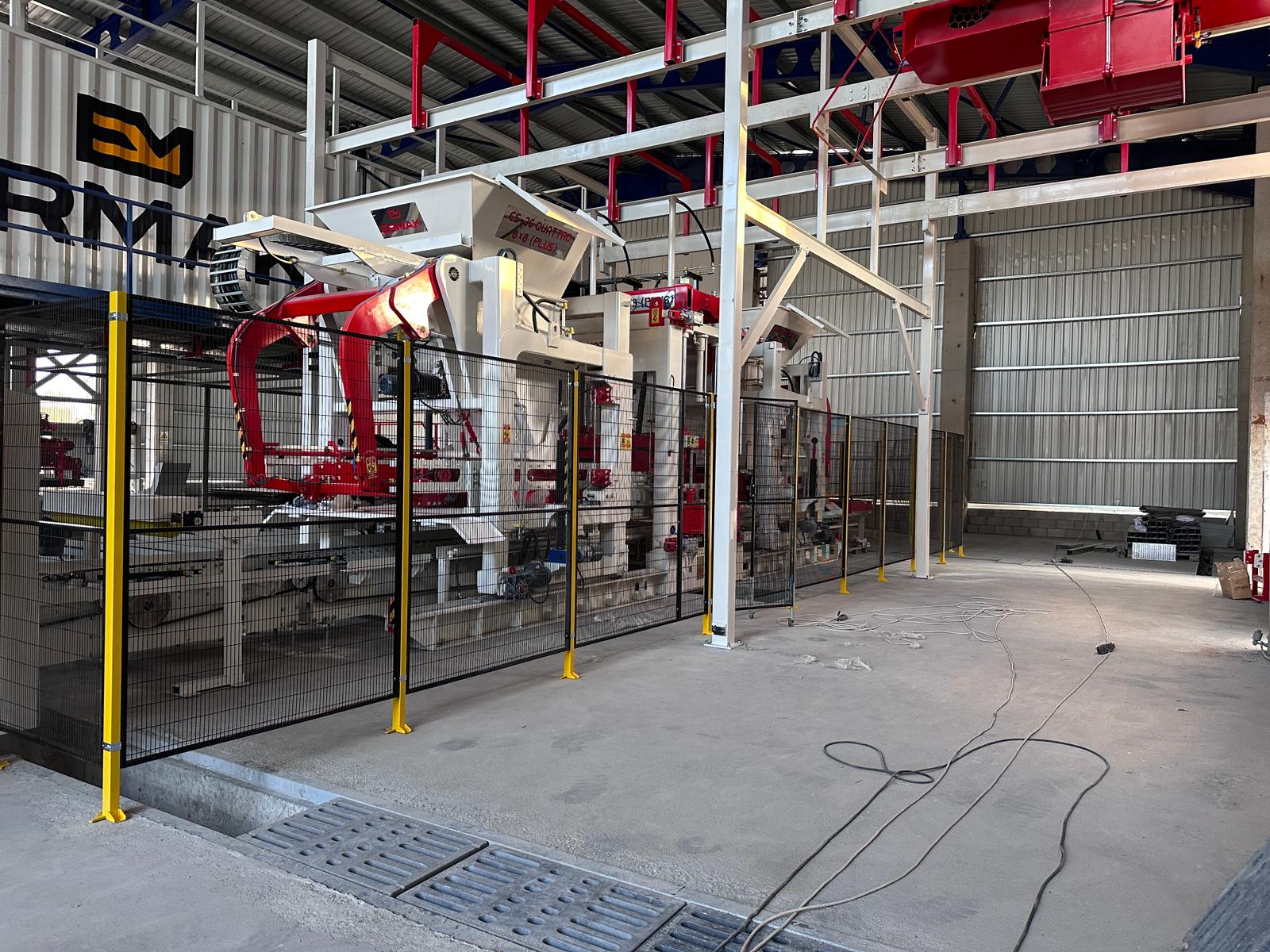
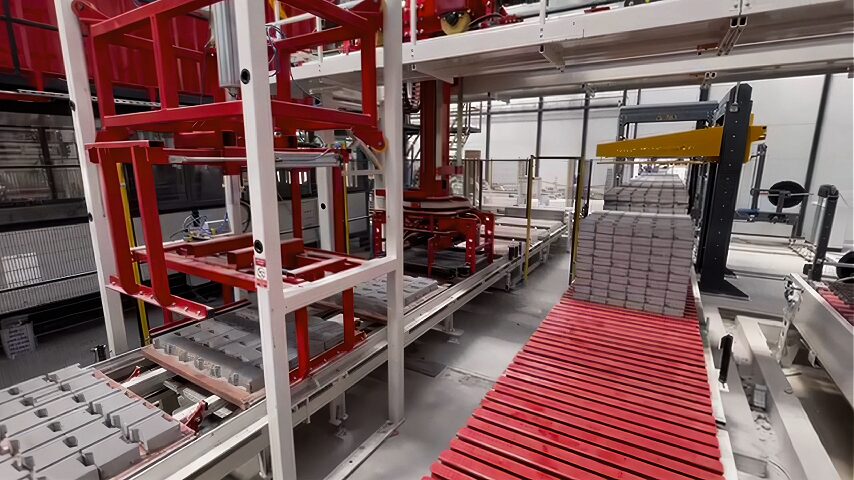
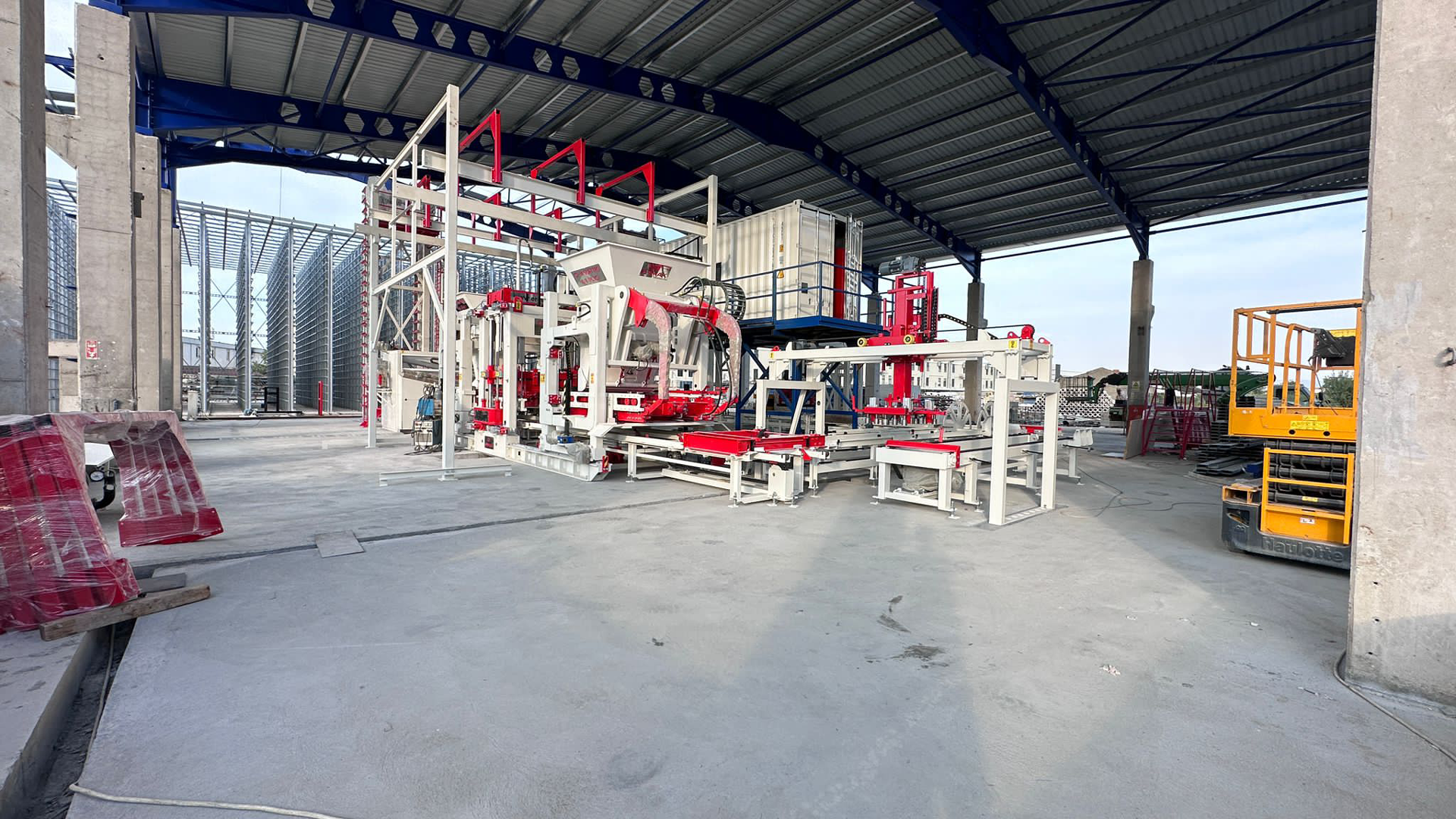
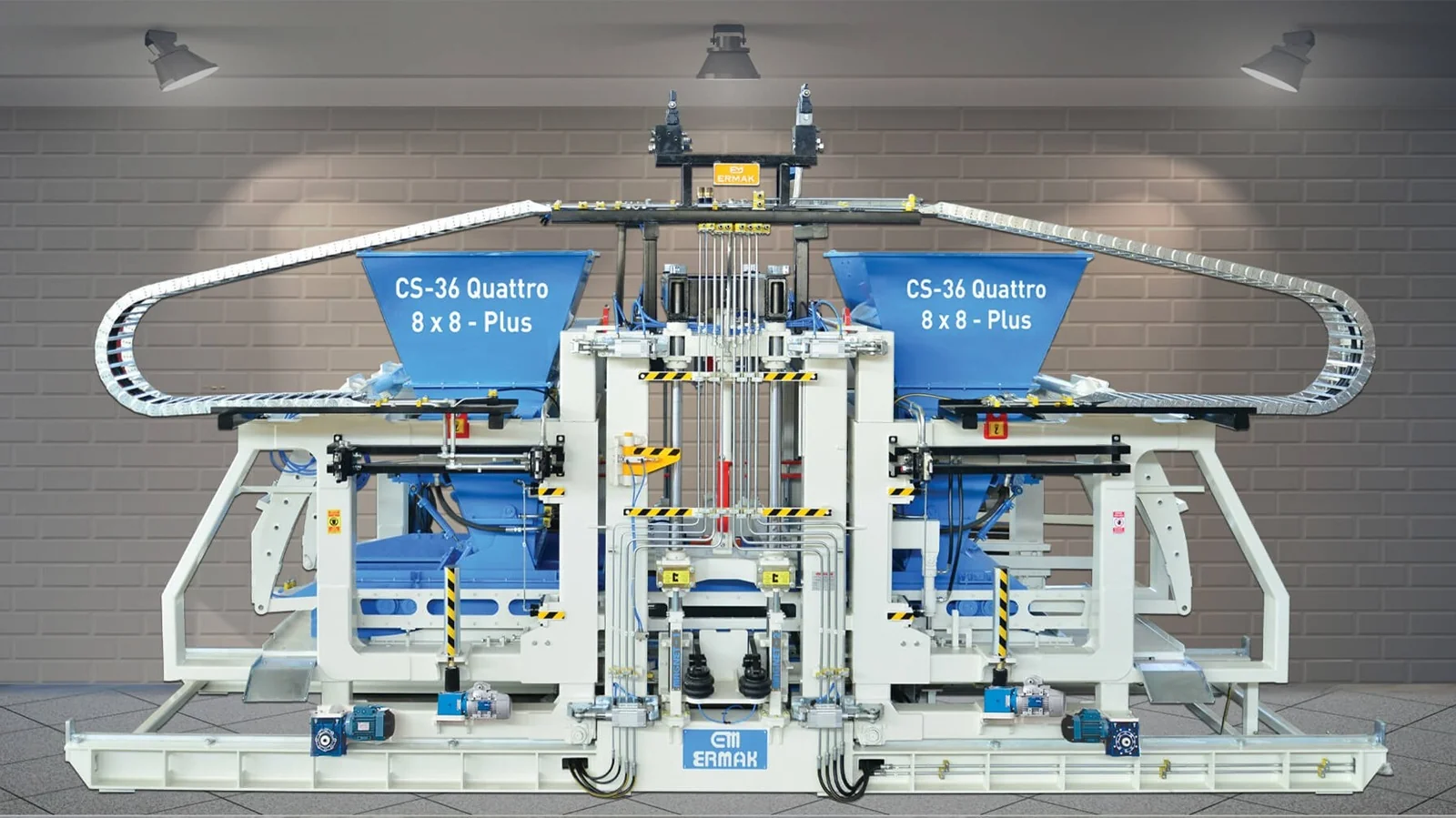
For a production platform such as the Quattro 8X8 Plus concrete block machine, commissioning also needs to consider how the main machine interacts with batching, pallet handling, curing and dry-side systems. A complete line reaches stable production only when these interfaces are working together correctly.
Ask How International Site Visits Are Organized
For export projects, buyers should understand how site service is arranged. Questions should include where service technicians travel from, how quickly a visit can normally be organized and who is responsible for travel, accommodation and local transport costs.
These points should be clarified commercially before a problem occurs. Otherwise, a technical emergency can become a negotiation about service charges.
The buyer should also understand whether the manufacturer has local partners in the region or whether all technical intervention comes directly from the main factory. Either model can work well if responsibilities and response processes are clear.
Local Partners Should Have Defined Technical Capability
Some machinery manufacturers use distributors or local service partners in international markets. This can reduce response time, but only if the local organization has genuine technical capability.
The buyer should ask what type of work the local partner can perform independently. Can they diagnose PLC alarms, replace hydraulic components or complete mechanical alignment work, or do they mainly provide commercial communication?
Local presence is valuable only when the technical responsibilities are clearly defined.
Ask How Older Machines Are Supported
A concrete block machine can remain productive for a long period, so buyers should not evaluate service only for the first warranty years. It is useful to ask how the manufacturer supports machines that are 10 or 15 years old.
Can spare parts still be identified? Are original drawings retained? Can discontinued PLC, HMI or drive systems be modernized? Does the manufacturer maintain service records for older serial numbers?
Long-term support capability is one of the strongest indicators that the supplier views the relationship as more than the initial machine sale.
Electronic Obsolescence Should Be Discussed
Mechanical structures often have a much longer life than electronic components. PLCs, HMIs, drives and other automation equipment can become obsolete even while the machine remains mechanically strong.
A good after-sales strategy should therefore include modernization options. If a critical electronic component is no longer manufactured, the supplier should be able to recommend an alternative or modernization path.
Software backups are also important. Replacing a PLC is much more difficult if the final machine program cannot be recovered.
For this reason, software version management should be considered part of long-term service support.
Preventive Maintenance Support Creates More Value Than Emergency Repair Alone
Good after-sales service should not begin only after the machine has stopped.
Preventive maintenance guidance can help the customer identify wear before it becomes a production failure. Maintenance schedules, inspection points and recommended replacement intervals provide a structure for this work.
The supplier may also be able to use service history and production data to identify recurring issues. If the same component repeatedly fails, simply replacing it faster is not enough. The root cause should be investigated.
The strongest service relationship therefore focuses on keeping the machine in production, not only repairing it after every failure.
Service Records Help Identify Recurring Problems
A professional service organization should maintain a history of significant customer interventions. If a machine experiences similar faults several times, previous records can shorten future diagnosis.
This information can also support product improvement. If the manufacturer sees the same issue across several machines, engineering changes may be introduced in future production or retrofitted where appropriate.
For the customer, service history creates continuity even if different technicians handle the machine over time.
Warranty Terms Should Be Read Carefully
Warranty period alone does not describe warranty quality. Buyers should understand what is covered, what is considered a wear part and which costs remain the customer’s responsibility.
Travel and accommodation for warranty visits may be treated differently by different manufacturers. The buyer should also understand whether unauthorized modifications can affect warranty coverage.
Clear warranty conditions reduce disputes and help both parties understand how technical problems will be handled during the early operating period.
Service Pricing Should Be Transparent
After-sales service has a cost, and buyers should expect to pay for support after the warranty period. The important issue is whether that cost is reasonably predictable.
Service labour rates, travel conditions and remote support policies should be explained clearly. Buyers should also ask how spare part prices are determined and whether quotations include logistics.
A low service rate does not automatically mean lower total cost. If the intervention takes twice as long or requires repeated visits, the production loss may be much higher.
Measure Service Through Production Downtime
From an investor’s perspective, one of the best ways to evaluate service quality is through its effect on downtime.
Imagine two manufacturers facing the same machine problem. The first responds immediately but takes three days to identify and solve the fault. The second takes several hours to respond but restores production the same day.
The second service organization may create significantly more economic value.
This is why service quality should be evaluated through diagnosis speed, spare parts availability and successful problem resolution rather than response messages alone.
After-Sales Support Affects OEE
Service quality can directly influence Overall Equipment Effectiveness. Slow repairs reduce availability, repeated technical problems reduce performance, and incorrect machine settings can affect product quality.
For this reason, after-sales support is not simply a customer satisfaction topic. It can have a measurable effect on plant productivity.
A machine that returns to production quickly after faults and receives effective preventive support can achieve higher annual saleable output than a technically similar machine with weak service infrastructure.
After-Sales Support Affects Total Cost of Ownership
The purchase price of the block machine is paid once. Service, downtime and spare parts continue throughout the life of the equipment.
A machine with lower initial price can therefore become more expensive if it creates frequent production losses or requires difficult-to-source components.
Total Cost of Ownership calculations should include expected maintenance, spare parts and service costs together with downtime risk.
This makes it easier to understand why after-sales capability should be considered before the original purchasing decision.
Reference Customers Can Reveal Service Quality
One of the best ways to evaluate a supplier’s service is to speak with existing customers. The most useful references are plants that have operated the equipment for several years rather than newly commissioned installations.
Questions should focus on what happens when a problem occurs. How quickly does the manufacturer respond? Are spare parts easy to identify? Does remote support work? Are older machines still supported?
Reference customers can provide information that is difficult to understand from brochures or proposals.
Service for a Complete Plant Is More Complex Than Service for One Machine
When a supplier provides a complete production line, service responsibility becomes broader. A problem may occur in the batching plant, wet side, curing system, main machine or dry side.
If different suppliers are responsible for each section, troubleshooting can become difficult because each party may assume another system is causing the problem.
A complete-line supplier can reduce this complexity by taking responsibility for the interfaces between systems. However, buyers should still understand which parts of the plant are supplied directly and which systems involve third-party components.
Clear responsibility boundaries reduce downtime during troubleshooting.
Ask What Happens When Production Is Urgent
Most suppliers can provide acceptable support during normal conditions. The real test comes when the customer has urgent orders and the machine stops unexpectedly.
Before purchasing, buyers should understand whether emergency technical support is available and how critical spare parts are handled outside normal working routines.
This does not mean expecting unlimited 24-hour service without cost. It means understanding the escalation process before an emergency occurs.
Industrial service works best when both sides know whom to contact and what information is required.
Ermak Makine’s Approach to After-Sales Support
At Ermak Makine, we consider after-sales service as part of the complete machine lifecycle. Installation, commissioning, operator training, technical support and spare parts planning all contribute to the customer’s ability to maintain stable production after the machine enters operation.
Because our machines are supplied to different international markets, service planning also needs to consider distance, local component availability and customer maintenance capability. The objective is to solve technical issues efficiently while also helping customers reduce unnecessary dependence on external intervention.
Investors evaluating different block machine capacities and complete plant configurations can review our concrete block machine and production line catalogs when comparing machine scope, auxiliary systems and long-term support requirements.
A Practical After-Sales Evaluation Before Purchase
Before selecting a supplier, buyers should ask how service requests are received, how remote diagnosis works, what critical spare parts are recommended and how machine serial numbers are tracked. They should also understand commissioning scope, operator and maintenance training, international site service conditions and support for older machines.
The buyer should then compare these answers with reference customers and the expected operating model of the planned factory. A one-shift plant close to the supplier may tolerate a different service structure than a three-shift export plant where every hour of downtime has high economic value.
The correct after-sales service model therefore depends on the production risk of the project.
Good After-Sales Service Starts Before the Machine Is Delivered
The strongest after-sales relationship is prepared during the original project. Critical spare parts can be identified, maintenance teams can be trained, documentation can be completed and remote support arrangements can be established before commercial production begins.
Waiting for the first breakdown to discuss these topics creates unnecessary risk.
A concrete block machine is a long-term industrial asset, and its service infrastructure should be evaluated with the same seriousness as frame design, vibration technology or automation. The real value of after-sales support is its ability to keep the machine producing, shorten unexpected downtime and support the customer throughout the working life of the investment.
Companies planning a new concrete block, paver or kerbstone production facility can contact Ermak Makine to discuss machine configuration, complete plant requirements and long-term technical support.
Frequently Asked Questions
Why should after-sales service be evaluated before purchasing a block machine?
Because service quality affects downtime, spare parts availability, maintenance cost and long-term production performance after the machine enters operation.
What is more important: fast response or fast repair?
Both matter, but the time required to return the machine to production is usually more important economically than the initial response time alone.
Can concrete block machines be supported remotely?
Many automation and diagnostic issues can be analysed remotely when the machine has suitable secure connectivity. Mechanical repairs may still require on-site service.
Why are critical spare parts important?
A small unavailable component can stop the complete production line. Keeping selected critical parts at the customer site can significantly reduce downtime.
Should every spare part be kept in stock?
No. Stock decisions should consider production impact, failure risk, delivery time and local availability.
Why is the machine serial number important for service?
The serial number allows the supplier to identify the correct machine configuration, drawings, components and software versions.
Should operator training be included in after-sales support?
Yes. Good operator training helps reduce setup errors, unnecessary alarms and avoidable service requests.
Why does the maintenance team need separate training?
Maintenance personnel require deeper understanding of lubrication, wear areas, hydraulic systems, sensors and troubleshooting than normal operators.
What should buyers ask about international service visits?
They should ask about technician availability, travel time, service rates, travel costs and whether local technical partners are available.
How important is support for older machines?
Very important. A block machine may remain in production for many years, so buyers should understand how spare parts and modernization are handled after the warranty period.
Can outdated PLC or HMI systems be modernized?
In many cases, yes. Long-term service planning should include possible migration paths for obsolete automation components.
How does service affect OEE?
Faster diagnosis and repair improve availability, while correct technical support can also reduce performance and quality losses.
Does after-sales service affect Total Cost of Ownership?
Yes. Maintenance, spare parts, service costs and production downtime are all part of the machine’s long-term operating cost.
Are customer references useful for evaluating service?
Yes. Long-term customers can provide practical information about actual response times, spare parts support and the manufacturer’s behaviour after the initial machine sale.
What defines strong after-sales service for a concrete block machine?
Strong after-sales service combines technical competence, fast diagnosis, reliable spare parts support, clear documentation, effective training and long-term support that helps keep the production line operating.