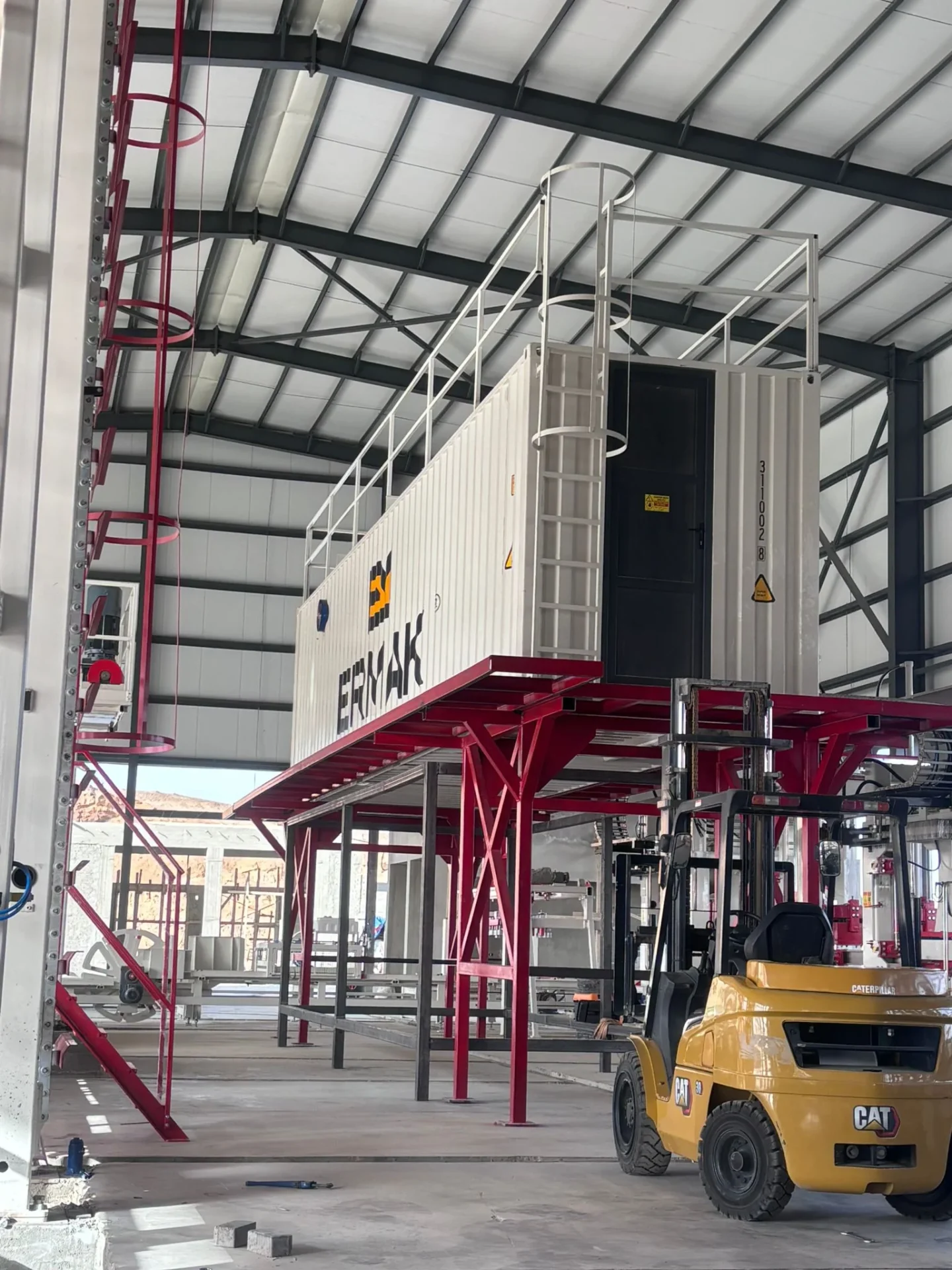
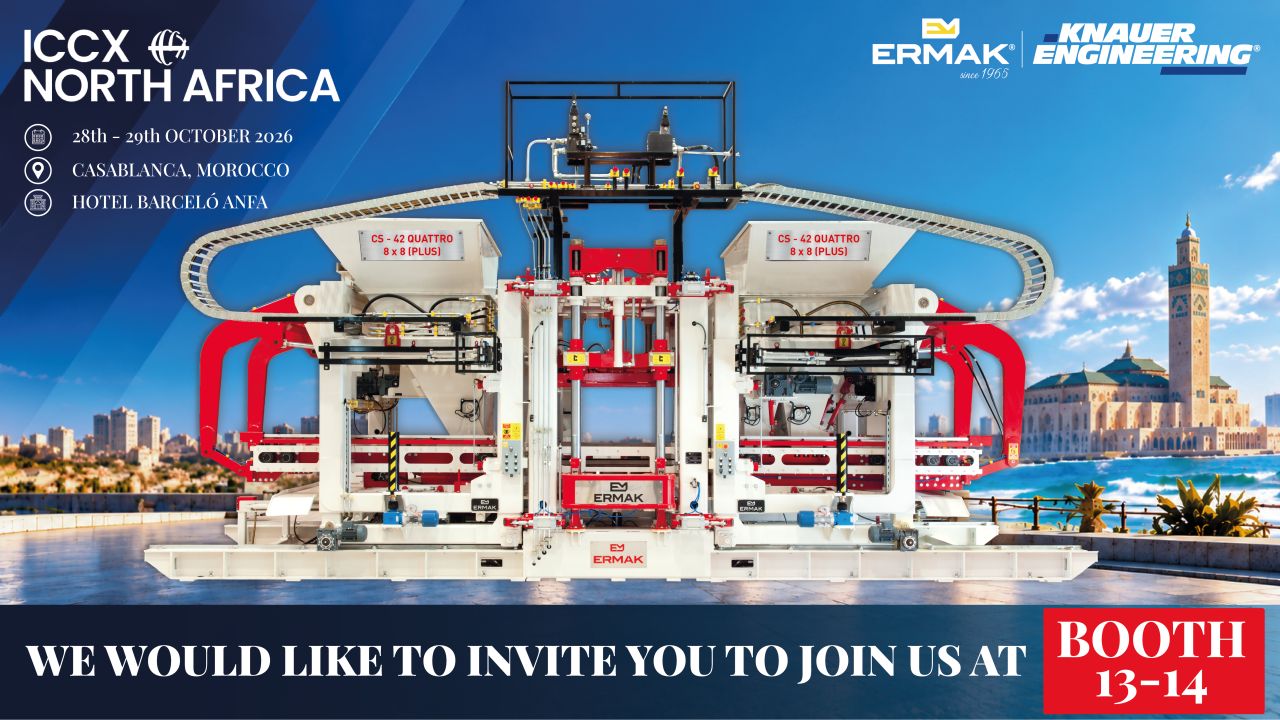
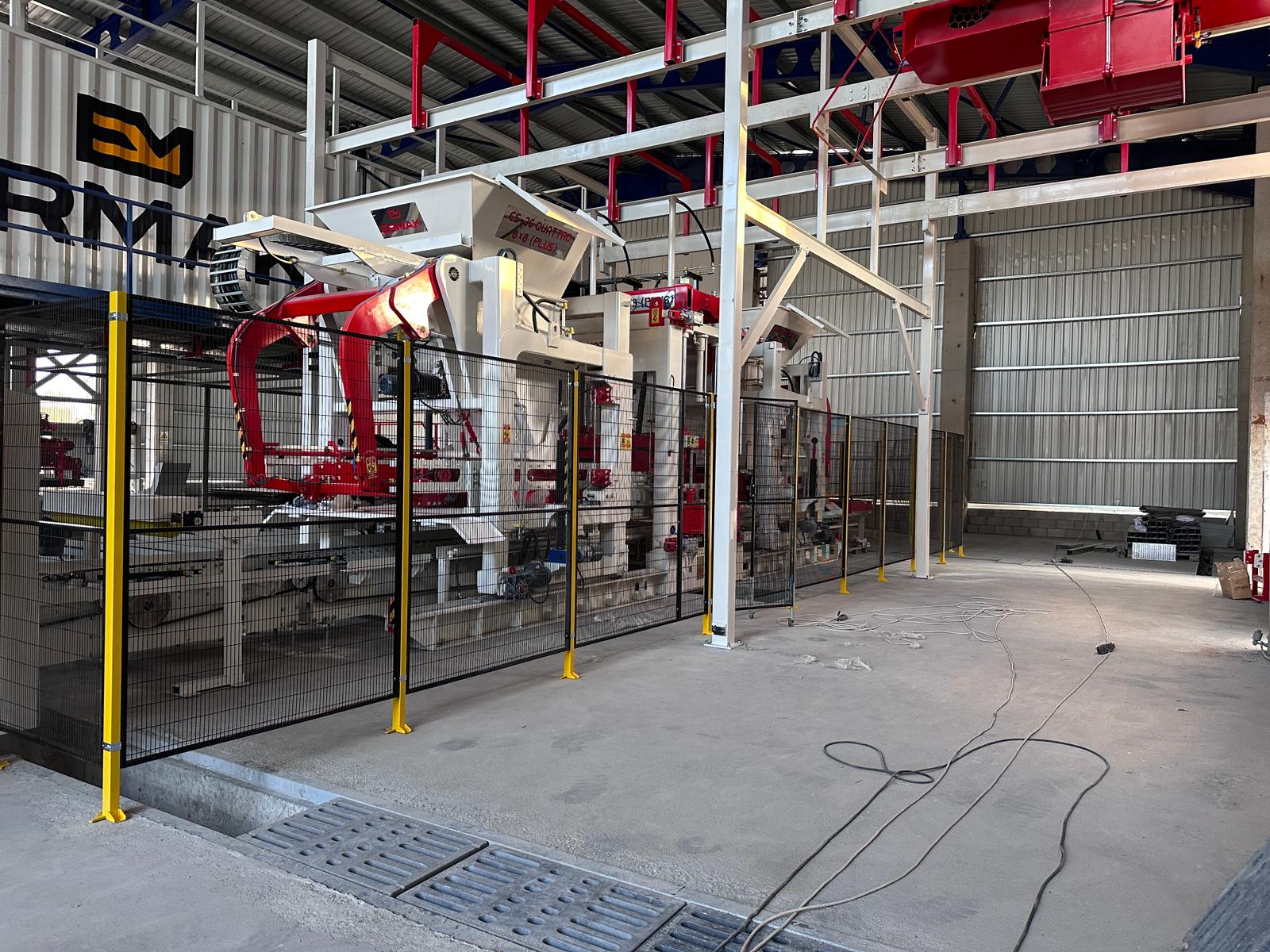
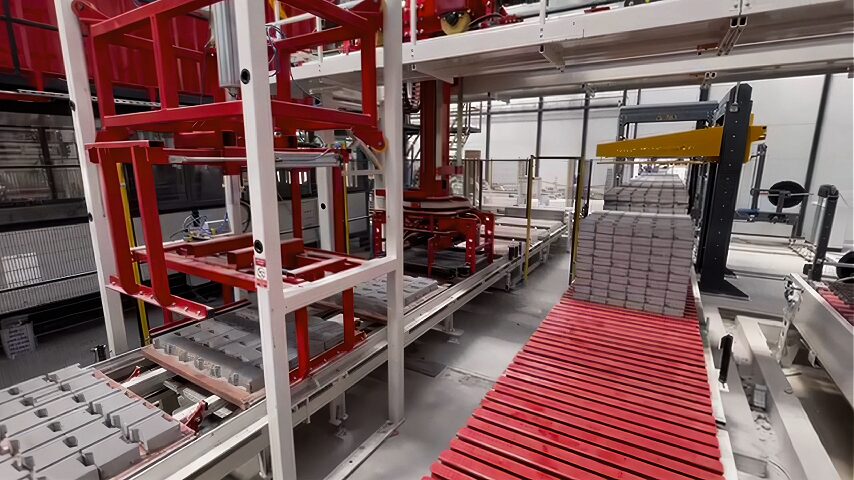
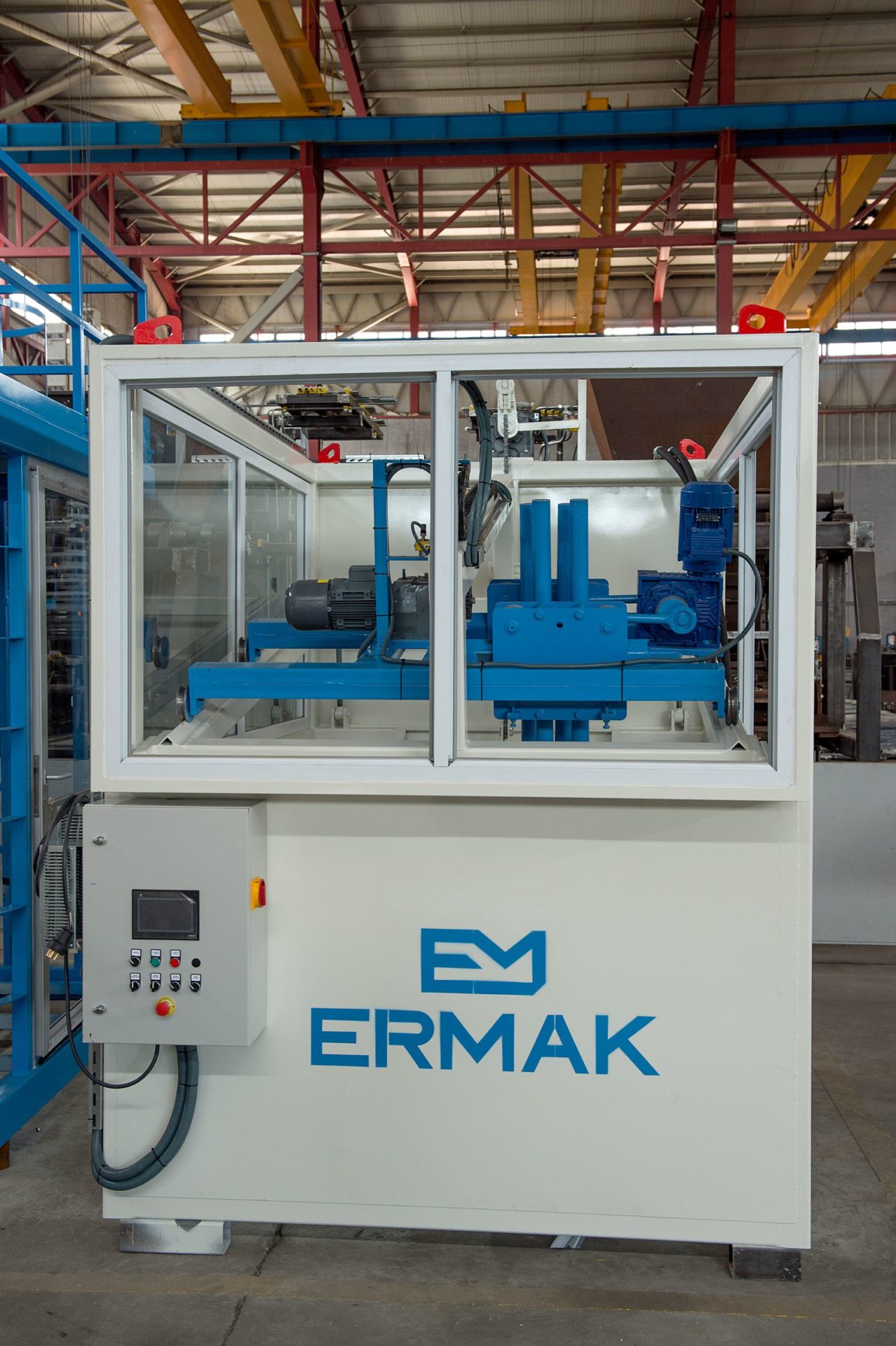
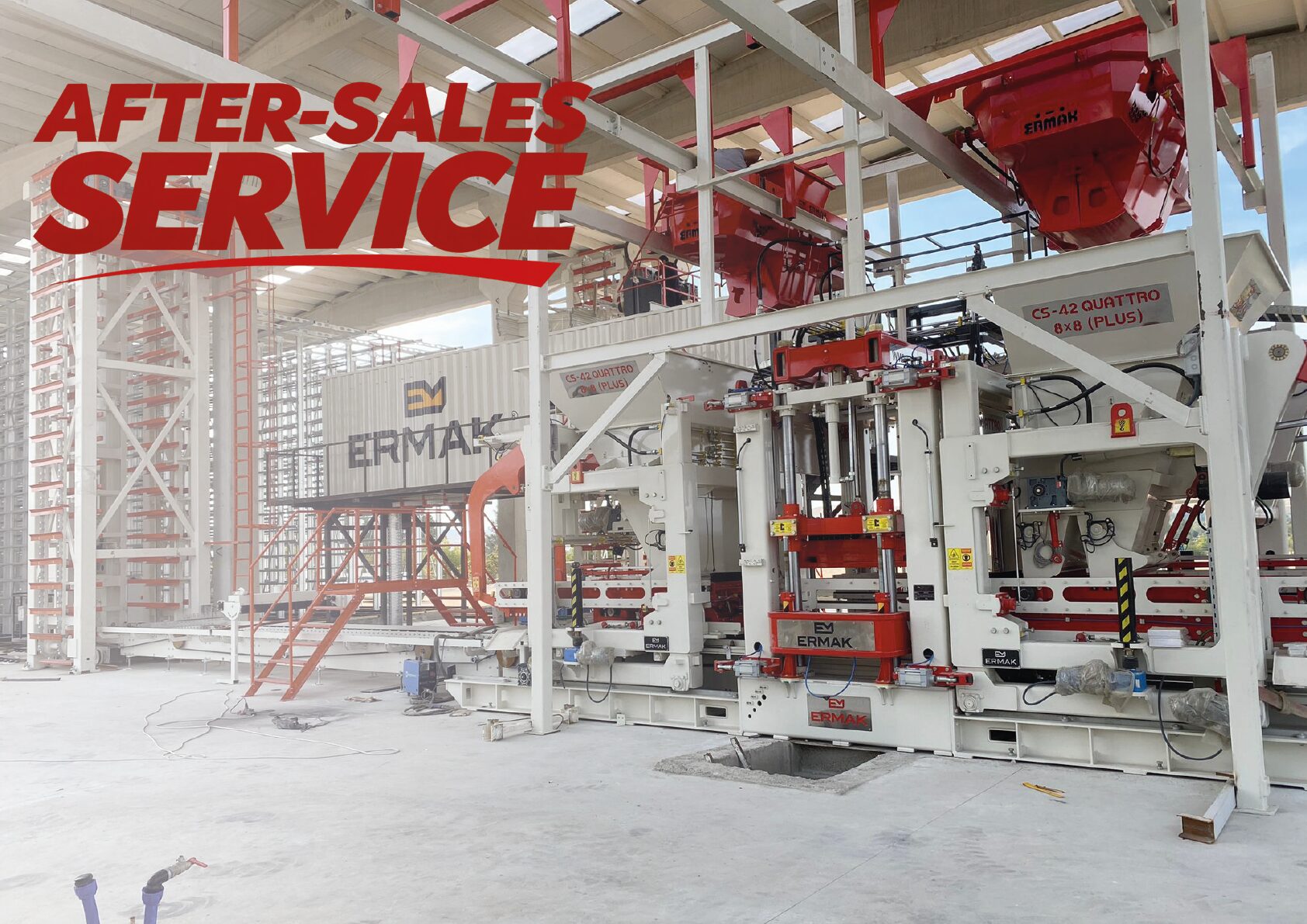
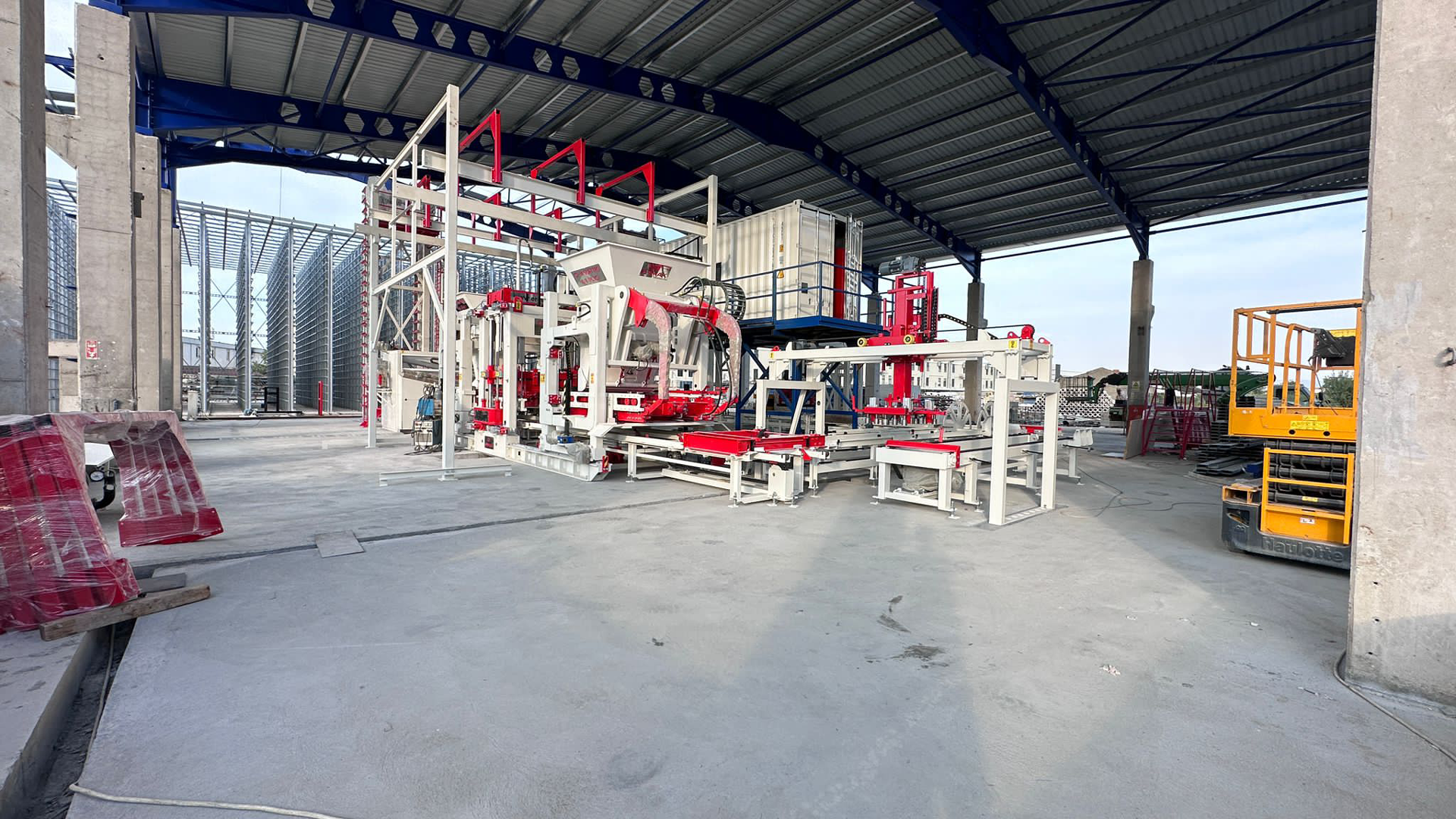
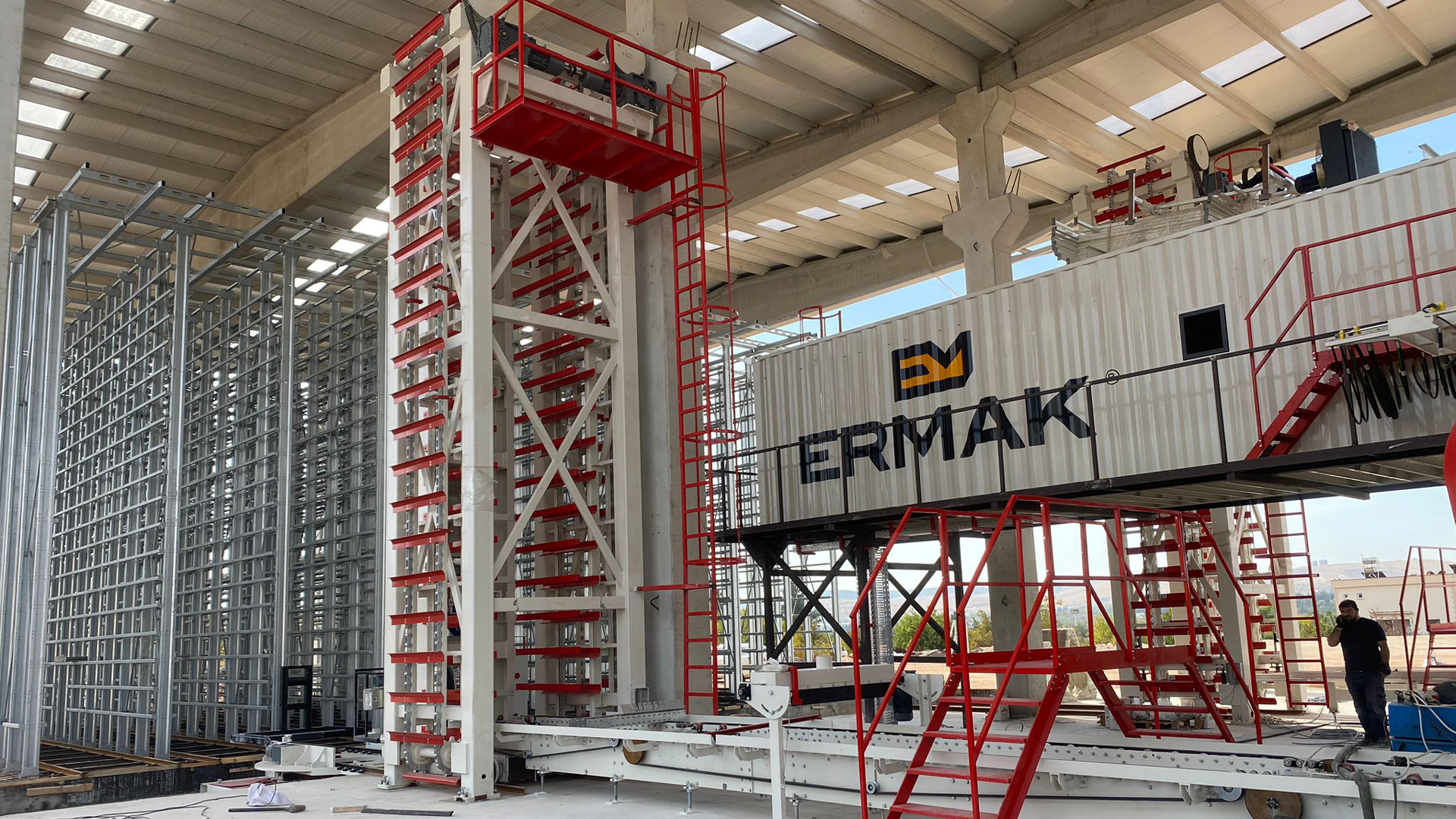
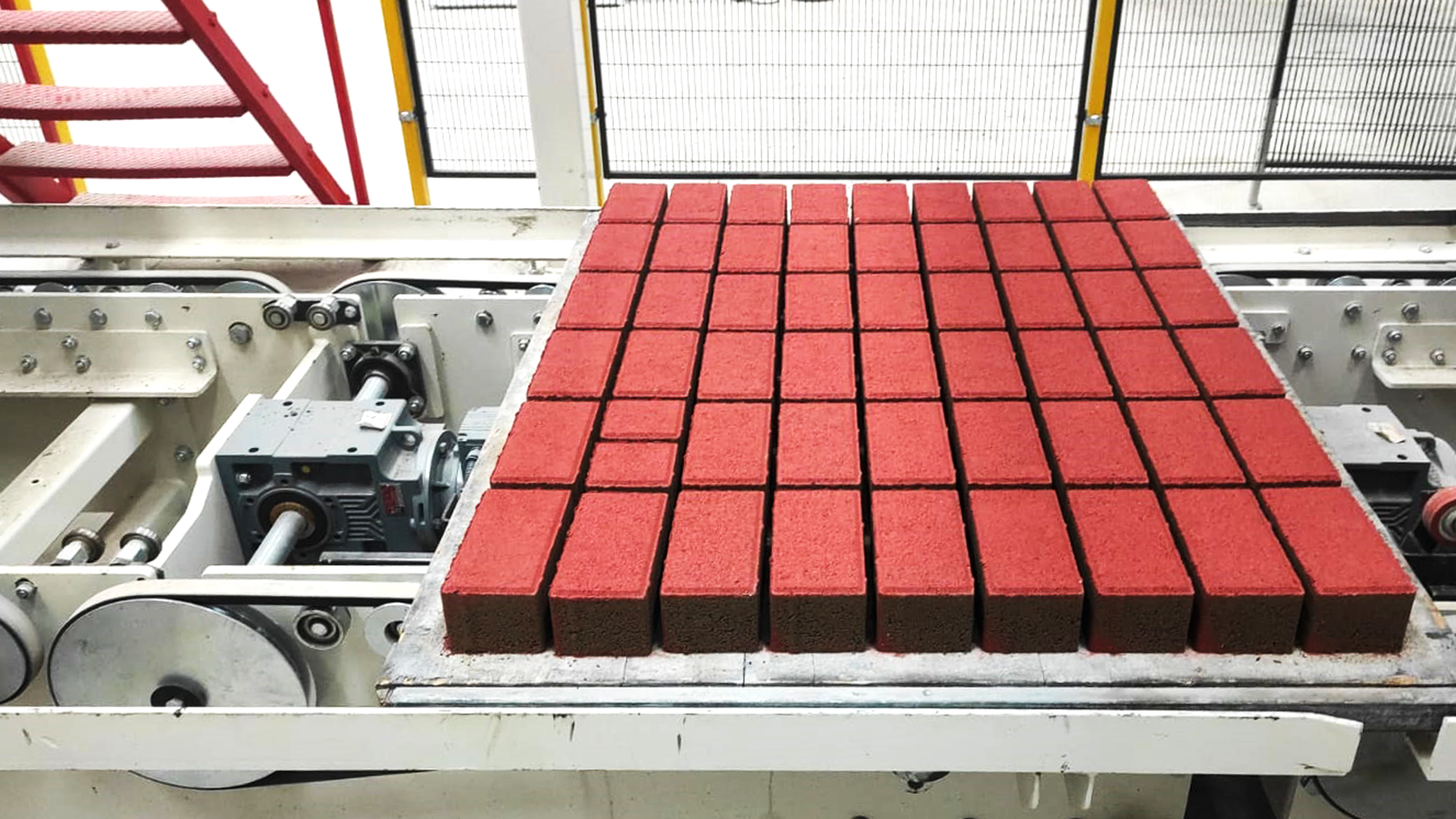
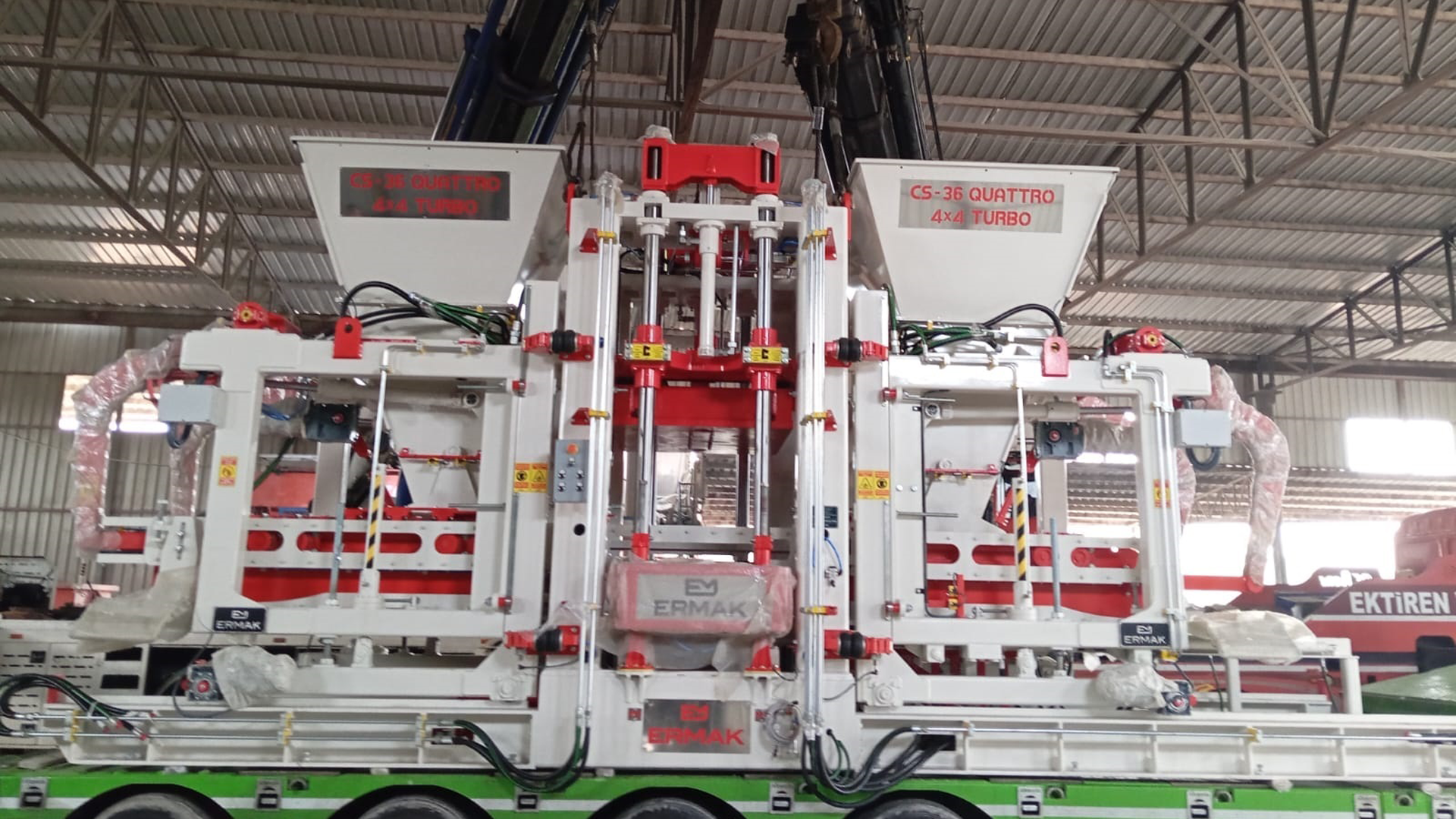
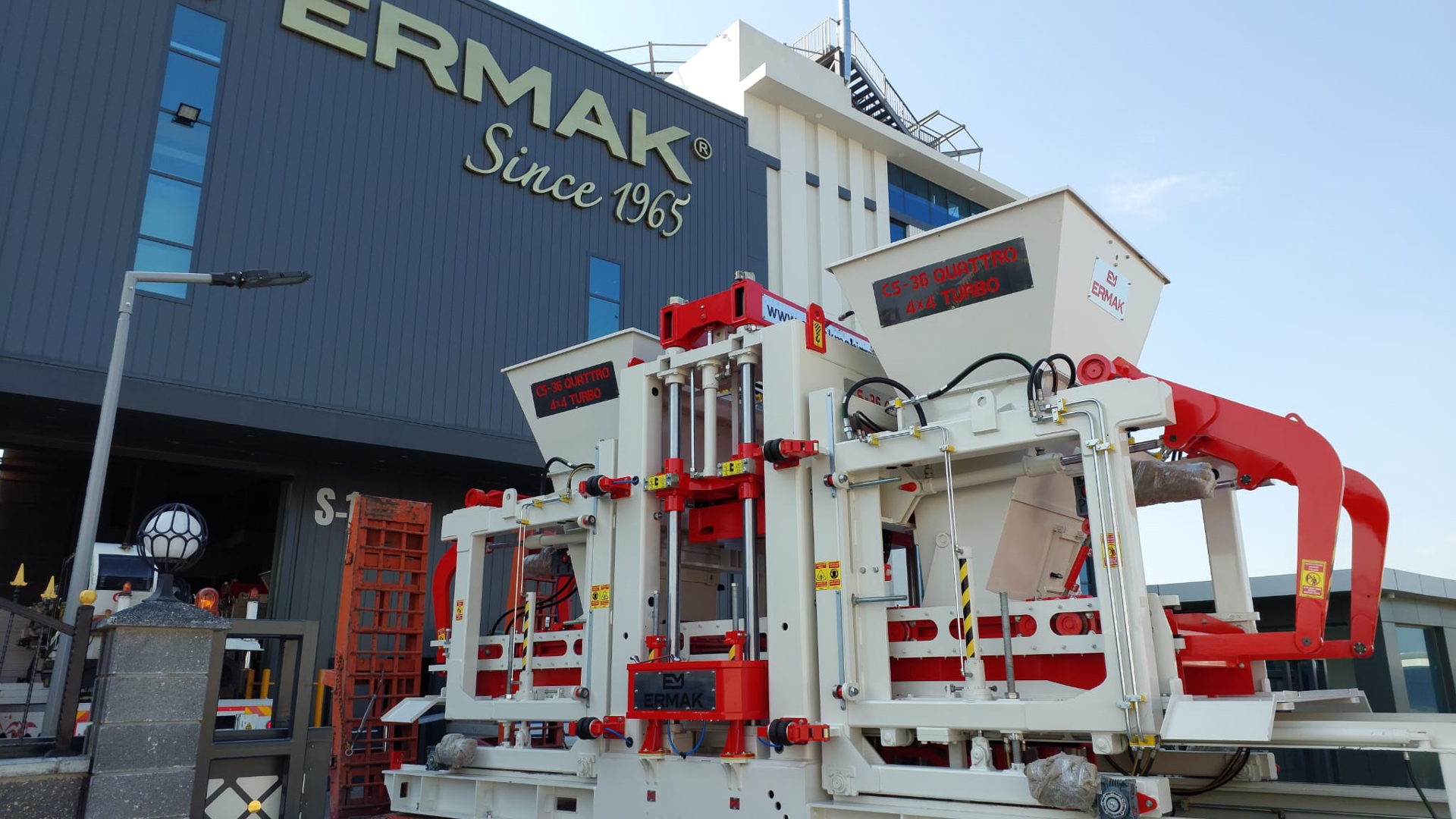
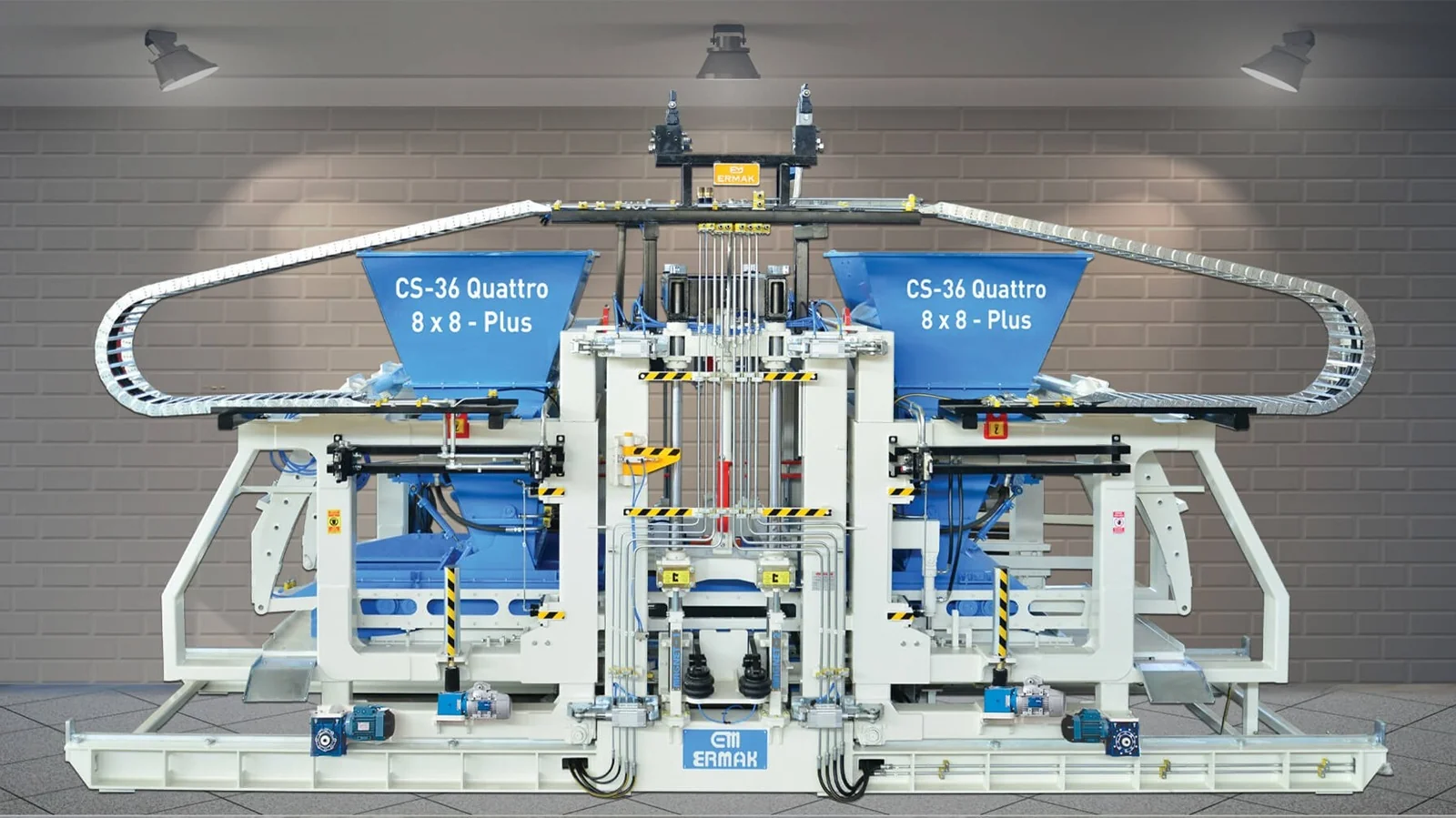
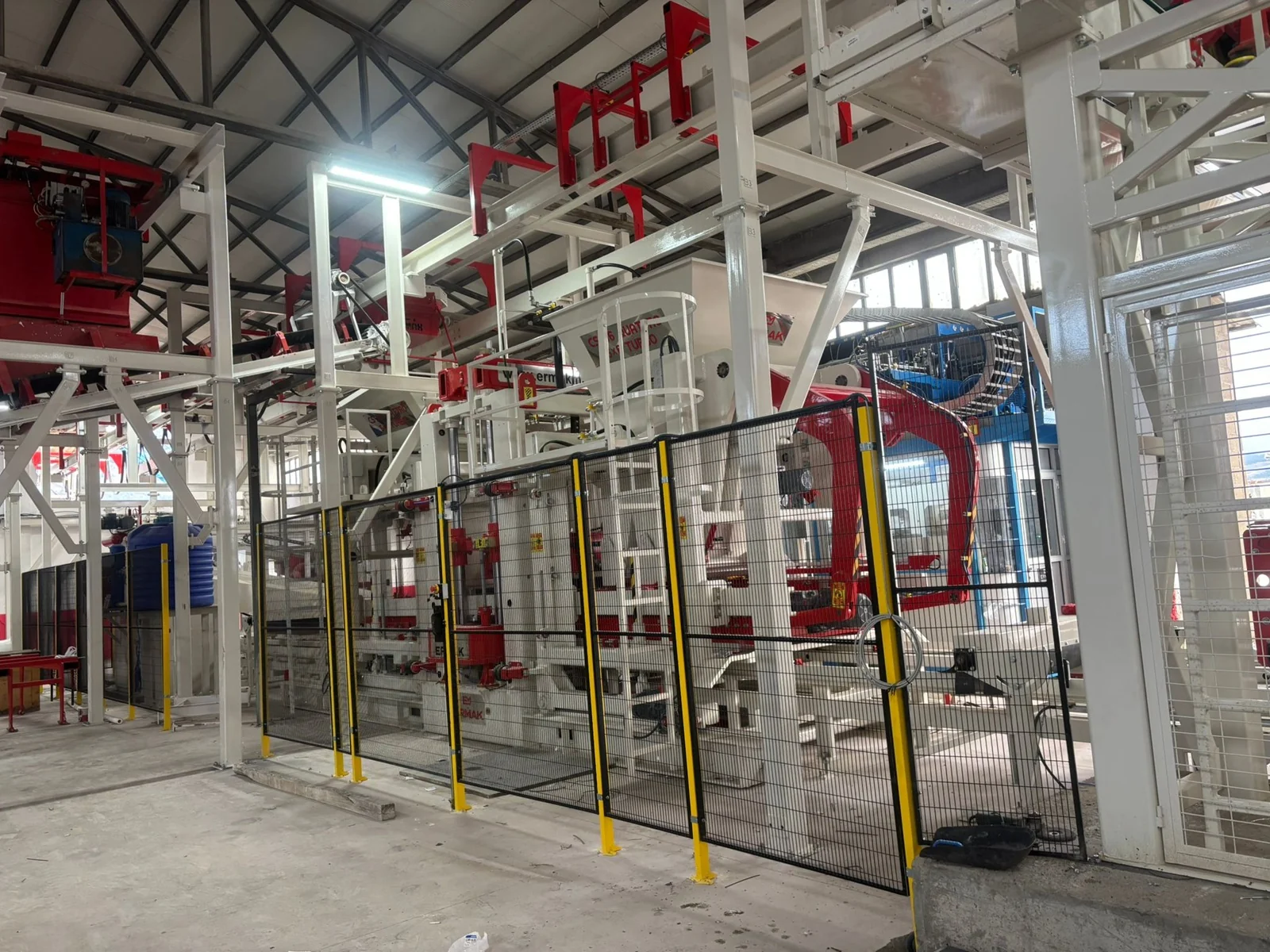
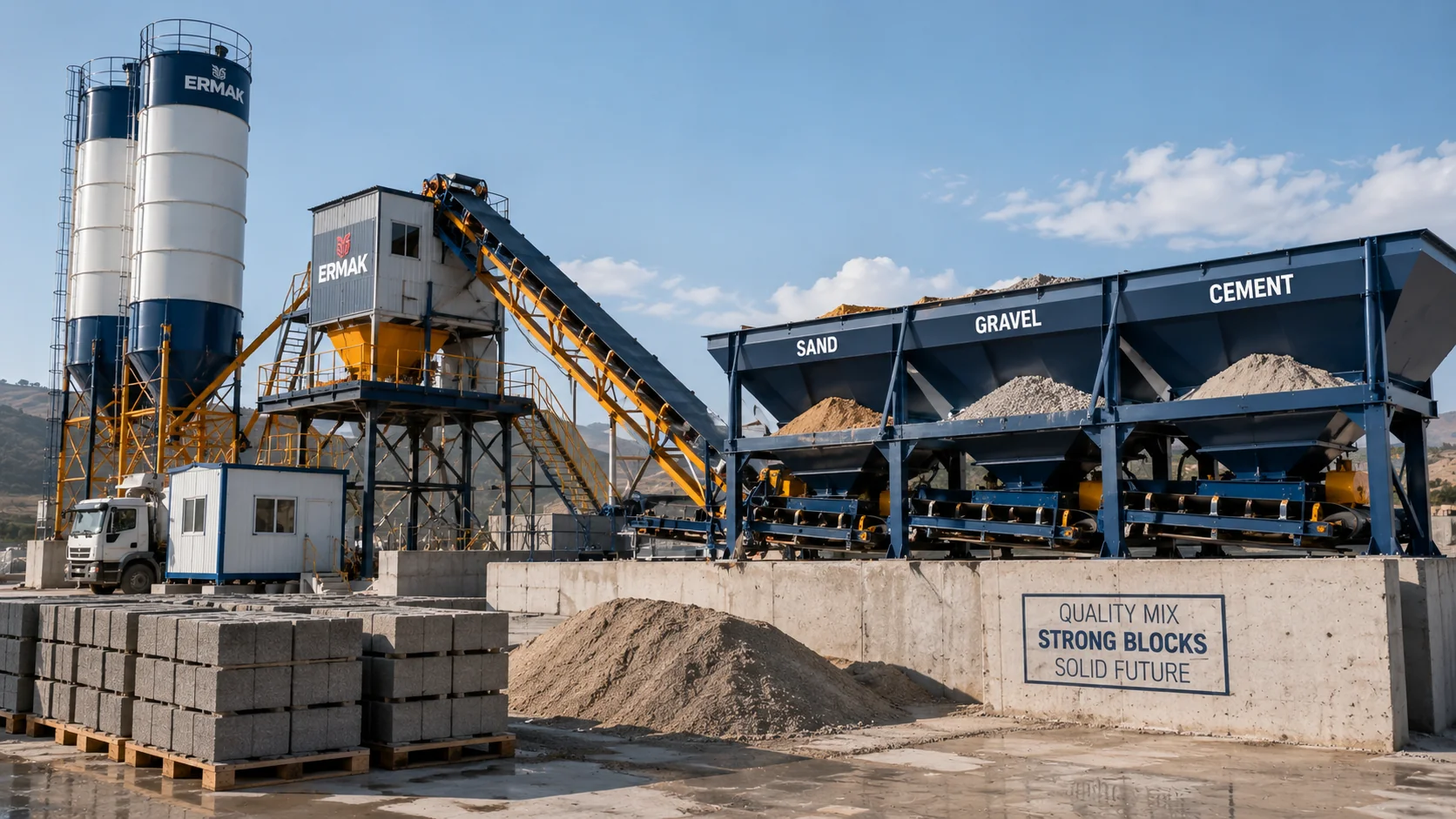
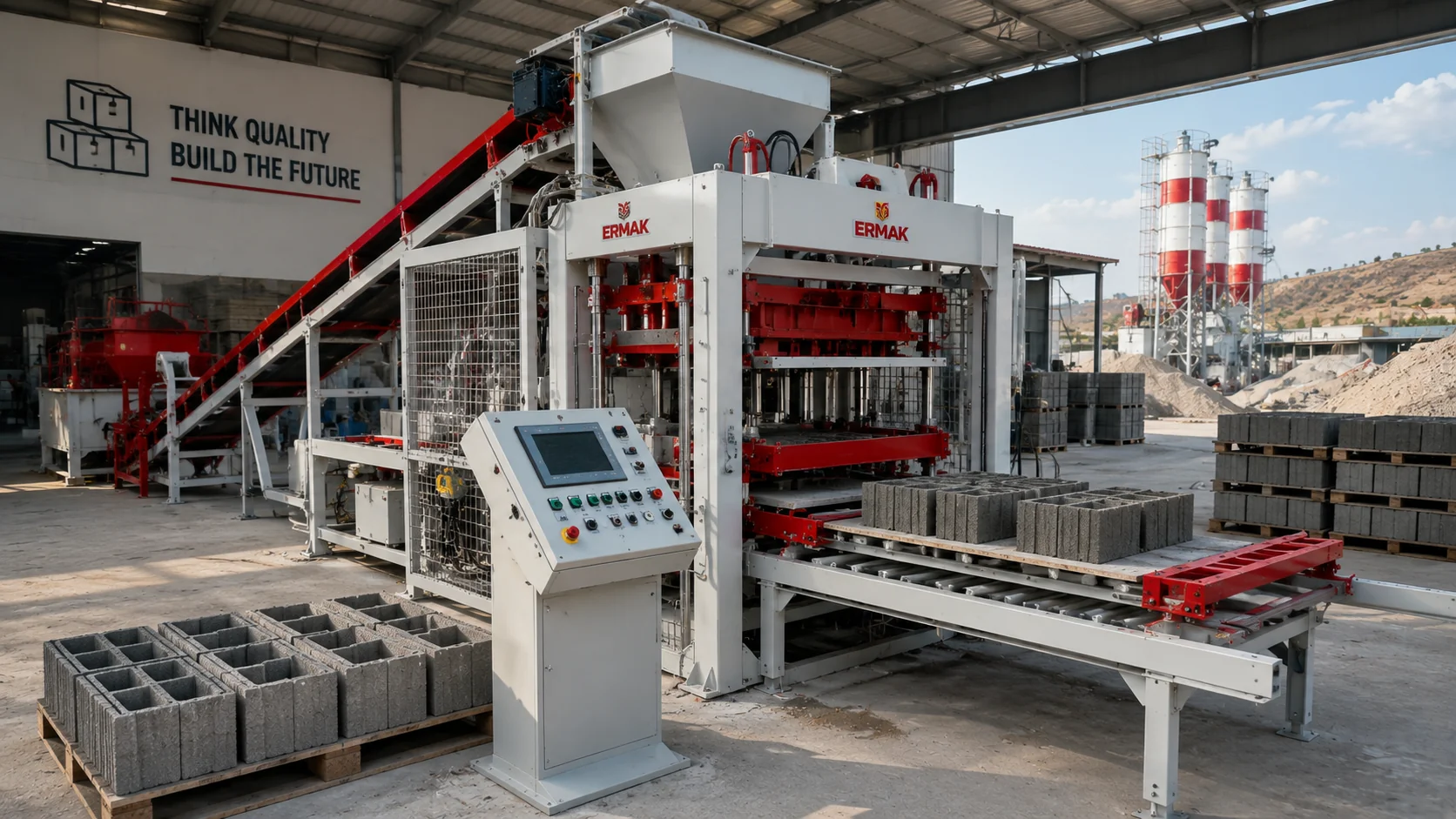
Turkey has become an important sourcing market for machinery used in concrete block, paving stone, curbstone and other precast concrete production.
For international buyers, however, selecting a block machine manufacturer should involve much more than comparing quotations.
A concrete block machine is normally expected to operate for many years. The manufacturer selected today may later be responsible for supplying moulds, spare parts, technical support, upgrades and additional equipment.
The real purchasing decision is therefore not simply:
“Which manufacturer offers the lowest machine price?”
A more useful question is:
“Which manufacturer can support our production requirements throughout the life of the plant?”
Global buyers evaluating a block machine manufacturer in Turkey should look at manufacturing experience, real production references, machine range, mould capability, after-sales service and the manufacturer’s ability to support a complete production line.
Start with the Product You Need to Manufacture
Before comparing Turkish machine manufacturers, buyers should first define their own project.
The machine should be selected according to the products the factory intends to sell.
These may include:
paving stones, hollow blocks, solid blocks, curbstones, grass blocks or other concrete elements.
A manufacturer may offer an excellent machine, but it still needs to be suitable for the buyer’s actual product range.
Product dimensions can influence:
- Mould configuration
- Production capacity
- Pallet size
- Concrete demand
- Handling requirements
For this reason, the discussion with the manufacturer should begin with product drawings and commercial targets rather than only a general request for a “block machine.”
Evaluate Real Manufacturing Experience
Company age alone does not guarantee machine quality, but long-term manufacturing experience can still provide useful information.
A company that has been building industrial machinery for many years has usually experienced different:
production environments, customer expectations and machine generations.
Global buyers should therefore investigate how long the manufacturer has been operating and how long it has specifically been producing concrete-product machinery.
Ermak states that it was founded in Istanbul in 1965 and began manufacturing paving-stone production machines in 1990. The company also states that its production activities now continue through its Dilovası and Tuzla facilities following the move to its new Dilovası headquarters in 2023.
The important point for a buyer is not the anniversary number itself.
It is whether the manufacturer has a long-term industrial production background and can still support machines after delivery.
Visit the Factory Whenever Possible
One of the best ways to evaluate a block machine manufacturer is to visit its production facility.
Brochures and websites can present a strong image, but a factory visit gives the buyer a much clearer understanding of the company.
During a visit, buyers can observe:
how machines are manufactured, how components are organised, whether mould production is carried out internally and how final assembly is managed.
It also provides an opportunity to meet:
engineering, sales, production and service teams.
A machine factory should look like a machine factory.
The buyer should be able to understand where the equipment is actually being designed, manufactured and assembled.
Ask to See Operating Reference Plants
A new machine in a showroom can look impressive.
An operating machine that has been working for several years provides much more useful information.
Reference plants allow buyers to evaluate real-world factors such as:
production stability, mould changes, maintenance requirements and product quality.
If possible, visit a factory manufacturing products similar to your own target products.
For example, if the investment is primarily for coloured paving stones, a hollow-block reference plant alone may not provide all the information required.
The more closely the reference factory resembles the planned investment, the more useful the visit becomes.
Do Not Compare Capacity Figures Without Context
Capacity is one of the most commonly misunderstood parts of block-machine purchasing.
A quotation may state:
20,000 blocks per shift
but this figure has limited value without additional information.
The buyer should know:
what block size is being used, how many products are produced per mould cycle and how long the assumed shift is.
The same machine can produce different quantities when the product changes.
Paving-stone capacity is also often better compared in square metres rather than pieces.
This means global buyers should compare manufacturers using the same product and operating period.
Otherwise two capacity figures may appear comparable even though they represent completely different production conditions.
Ask for Realistic Production, Not Only Maximum Output
A very short demonstration cycle does not necessarily represent sustainable factory production.
Normal manufacturing includes:
material preparation, quality checks, mould changes and normal production interruptions.
For an investor, saleable production per shift is usually more valuable than theoretical maximum cycles.
A manufacturer should be able to explain how the stated production capacity is calculated and what assumptions are included.
A buyer should be cautious when extremely high production numbers are presented without clearly defining the product and production conditions.
Evaluate the Complete Machine Range
A useful manufacturer should ideally offer different machine sizes rather than forcing every project into one configuration.
A regional factory producing moderate volumes has different requirements from a large export-oriented plant operating several shifts.
The manufacturer should therefore be able to recommend a machine according to:
required output, product variety and planned future growth.
Buying a machine that is too large can increase the initial investment unnecessarily.
Buying one that is too small can create the need for additional shifts almost immediately.
The best manufacturer should help the buyer find the correct capacity rather than simply sell the largest machine available.
Product Flexibility Can Be Important
Many concrete-product manufacturers do not want to produce one product forever.
Market demand may change.
A factory may initially focus on hollow blocks and later add:
pavers, curbstones or grass blocks.
A machine that can work with different mould configurations can provide useful commercial flexibility.
This is particularly important for manufacturers supplying several construction markets or exporting to different countries.
Product flexibility can allow the factory to respond to new contracts without purchasing a complete second production line.
However, buyers should verify that the proposed product range is realistic for the specific machine configuration being offered.
Mould Manufacturing Capability Should Be Evaluated
The mould is one of the most important parts of a concrete block production system.
The machine provides the production movement, but the mould creates the product geometry.
For global buyers, a manufacturer that also understands mould engineering can offer an important advantage.
If a buyer later requires:
a new paver design, a different hollow-block dimension or a project-specific curbstone,
the ability to obtain compatible moulds becomes extremely valuable.
The buyer should ask how moulds are designed, manufactured and supported over the life of the machine.
A block machine without long-term access to suitable moulds may eventually limit the factory’s product range.
Evaluate Whether the Manufacturer Understands Complete Plants
A block machine does not work alone.
It needs concrete.
The fresh products need to move away from the machine.
They then need curing, handling and packaging.
This is why larger projects should evaluate whether the manufacturer understands the complete production line.
The discussion should include:
Batching and mixing → Block machine → Curing → Dry side → Packaging
If one section is significantly slower than the others, the entire factory may operate below the expected capacity.
A manufacturer that understands complete plant planning can help avoid situations where an expensive main machine repeatedly waits for concrete or empty production pallets.
Batching Plant and Mixer Integration Matter
Concrete quality has a direct effect on block-machine performance.
A high-capacity machine supplied by an undersized mixer cannot use its full production potential.
Similarly, inconsistent concrete can make machine operation more difficult and increase product variation.
Global buyers should therefore ask the block-machine manufacturer how the batching plant and mixer are sized for the proposed production line.
If the project includes:
hollow blocks, paving stones and coloured double-layer products,
the concrete preparation requirements may become more complex.
A complete proposal should take this into account from the beginning.
Evaluate the Automation Level Carefully
The word automatic can mean very different things between suppliers.
One manufacturer may describe the main block machine as automatic while much of the product handling remains manual.
Another quotation may include automated:
pallet circulation, curing transfer, cubing and packaging.
This creates a major difference in both investment and labour requirements.
International buyers should therefore ask:
Which operations are automatic, and which still require manual labour?
This question is much more useful than simply asking whether the plant is “fully automatic.”
More Automation Is Not Always the Best Choice
Automation should solve a real production or labour problem.
A high-capacity factory in a market with expensive labour may benefit significantly from advanced automation.
A smaller one-shift operation may achieve better investment economics with a simpler line.
More automation can also mean more:
sensors, drives and technical components.
The correct automation level should therefore match the customer’s production capacity and available technical team.
A good manufacturer should be able to offer different automation approaches rather than one standard answer for every buyer.
Spare Parts Availability Should Be Discussed Before Purchase
Spare parts are usually discussed seriously only after the first breakdown.
That is too late.
Before signing the purchase agreement, buyers should understand which components are standard commercial parts and which are manufacturer-specific.
They should also ask which critical spare parts should be kept locally.
A relatively inexpensive sensor or bearing can become very expensive if its absence stops production for several days.
Ermak’s current after-sales guidance similarly recommends evaluating service structure, spare-parts organisation, technical documentation and long-running reference plants before purchasing a block machine.
After-Sales Service Is Part of the Machine
For an overseas customer, service support may be just as important as machine performance.
The manufacturer’s service organisation should be evaluated before purchase.
Buyers should understand what happens if:
the machine cannot start, a sensor repeatedly generates an error, a hydraulic component fails or production quality suddenly changes.
The supplier should have a clear process for technical support.
It is also useful to ask existing customers about their experience.
Sales presentations show what the manufacturer promises.
Existing customers show what happens after the machine has been installed.
Remote Technical Support Is Valuable for Export Customers
International service visits require travel and time.
Not every technical issue should require a service technician to fly to another country.
Modern production systems can allow some electrical, automation or diagnostic problems to be evaluated remotely.
This does not replace mechanical service when physical intervention is required.
However, it can help determine the source of the problem before a technician travels.
For global buyers, access to organised remote technical support can significantly reduce unnecessary downtime.
Technical Documentation Should Be Available
Industrial equipment should not depend entirely on one operator who “knows the machine.”
The buyer should ask what technical documentation is delivered with the equipment.
Depending on the project, documentation may include:
operating instructions, maintenance information, electrical drawings, component information and spare-parts references.
Good documentation becomes increasingly important as employees change over the years.
It also helps the buyer’s internal maintenance team solve routine problems without unnecessary delays.
Training Should Be Included in the Project
Installation alone is not enough.
The operators need to understand:
production routines, mould changes, alarms and normal machine operation.
Maintenance staff require a different level of knowledge.
They may need to understand:
preventive maintenance, hydraulic systems, sensors and electrical equipment.
Training should therefore be discussed during the quotation stage.
A properly trained local team can reduce both operating errors and dependence on emergency service.
Evaluate Electrical and Component Compatibility
Global projects operate in different countries with different electrical infrastructure and component preferences.
Before ordering, the buyer should provide information about local:
voltage, frequency and installation requirements.
The manufacturer should also clearly explain the main electrical, hydraulic and automation components used in the machine.
Using internationally obtainable components where practical can simplify long-term spare-parts sourcing for overseas factories.
Consider Shipping and Installation from the Beginning
The machine price does not always represent the full delivered investment.
Global buyers should clarify which commercial terms apply and whether the quotation includes:
transport preparation, installation, commissioning and operator training.
Large production lines may require several shipments.
The factory also needs to be ready before the equipment arrives.
Foundations, electrical supply, compressed air and building access should be planned in coordination with the manufacturer.
This avoids expensive delays during installation.
Factory Layout Should Be Planned Before Shipment
A complete production line requires more space than the main block machine.
The project should include areas for:
raw materials, concrete preparation, curing, packaging and finished products.
Truck access and forklift movement should also be considered.
Poor layout creates unnecessary handling and can reduce plant efficiency for many years.
A good supplier should therefore request factory drawings or site information before finalising a large production-line project.
Evaluate the Manufacturer’s Export Experience
Exporting industrial machinery involves more than placing equipment inside a container.
Different markets have different expectations regarding:
transport, installation, documentation and technical support.
For international buyers, experience with overseas projects can therefore be valuable.
Ermak states that its machines have been exported to more than 40 countries, with markets listed across Europe, the Middle East, Central Asia, Africa and the Americas.
Regardless of manufacturer, buyers should ask whether the supplier has installations in markets with conditions similar to their own.
Do Not Base the Decision Only on Country of Origin
“Made in Turkey” alone does not tell a buyer whether a machine is good or bad.
Manufacturers within the same country can differ significantly in:
engineering, production capability, materials, service and experience.
The same principle applies when comparing machines manufactured in Turkey with machines from Germany, Italy, China or any other country.
The correct comparison is not simply:
Country A versus Country B.
It is:
Machine A, Manufacturer A and complete support package versus Machine B, Manufacturer B and its complete support package.
Compare the Complete Quotation
Two quotations that appear to describe the same concrete block plant may include very different equipment.
One may include only:
the main machine and basic accessories.
The other may include:
batching, mixer, moulds, curing equipment, dry-side handling and installation.
This can create a large price difference that is not actually a difference in machine price.
Before making a decision, buyers should create a simple comparison covering:
| Evaluation Area |
Supplier A |
Supplier B |
| Main machine capacity |
|
|
| Product range |
|
|
| Included moulds |
|
|
| Batching and mixer |
|
|
| Automation scope |
|
|
| Curing and handling |
|
|
| Installation and training |
|
|
| Spare parts package |
|
|
| After-sales support |
|
|
A short comparison like this is often more useful than comparing the final quotation values alone.
Consider Total Cost of Ownership
The lowest purchase price does not always produce the lowest cost over ten years.
A machine’s real economic result is also influenced by:
energy use, labour, maintenance, spare parts, rejects and downtime.
For this reason, global buyers should think in terms of Total Cost of Ownership — TCO.
The objective is not to buy the cheapest machine.
It is to obtain the lowest sustainable production cost for the required quality and output.
This distinction becomes especially important in high-capacity plants where even a small improvement in reject rate or machine availability can represent a significant annual value.
Ermak as a Turkish Block Machine Manufacturer
Ermak is one example of Turkey’s long-established concrete-product machinery manufacturers.
The company states that it was founded in 1965 and today manufactures concrete block machines together with related systems such as batching plants, mixers, moulds and other production-line equipment. Its current company profile also states exports to more than 40 countries.
For an international investor, these facts should not replace normal technical evaluation.
The same purchasing principles should still apply:
inspect the factory, review reference plants, define the target products, verify capacity and understand the after-sales organisation before making the investment.
A strong manufacturer should be willing to be evaluated this way.
A Practical Buying Approach for Global Investors
The safest buying process usually begins with a clearly defined project.
The buyer should provide the manufacturer with:
- Products and dimensions
- Required daily output
- Number of shifts
- Desired automation level
- Available factory area
- Future expansion plans
From this information, the manufacturer can propose a suitable machine and plant configuration.
Once the proposal is received, the buyer should verify production references and review what is included in the quotation.
This process is much more reliable than sending the same short message —
“Please send price for automatic block machine.”
— to ten suppliers and selecting the lowest response.
Choosing a Block Machine Manufacturer in Turkey
Turkey can offer international buyers a wide range of concrete block machinery options.
But successful sourcing requires evaluating the manufacturer as seriously as the machine.
The right supplier should understand not only how to manufacture equipment but also how the equipment will operate inside the customer’s factory.
Global buyers should therefore evaluate:
experience + manufacturing capability + real references + mould support + complete line planning + service + spare parts
as one complete package.
The main objective is not to find the manufacturer with the most impressive brochure or the lowest quotation.
It is to choose a partner capable of supporting reliable production after the machine has been installed thousands of kilometres away.
For a concrete block plant, the purchase ends when the invoice is paid.
The industrial relationship begins when production starts.
Frequently Asked Questions
Why do international buyers source block machines from Turkey?
Turkey has an established industrial machinery sector and manufacturers serving concrete block, paver and curbstone markets. The correct supplier should still be evaluated individually according to manufacturing capability, references and after-sales support.
How should I compare block machine manufacturers in Turkey?
Compare the same target product, capacity and automation level. Also review what equipment is included in each quotation, because apparently similar offers may have very different scopes.
Should I visit the manufacturer’s factory before buying?
For significant industrial investments, a factory visit is highly valuable. It allows the buyer to see actual manufacturing capability and meet the production and technical teams.
Should I visit an existing customer?
Yes, where practical. An operating reference plant can provide useful information about long-term machine reliability, service, mould performance and real production.
Is machine capacity the most important criterion?
No. Capacity must be evaluated together with product quality, plant balance, automation, reliability and market demand.
Can one concrete block machine produce pavers, hollow blocks and curbstones?
Many multi-product machines can produce several concrete products using different moulds, but the exact product range should be confirmed for the selected machine.
Why is mould manufacturing important?
The mould defines the final product geometry. Access to compatible new moulds also allows the factory to expand its product range in the future.
Should batching equipment be purchased from the same manufacturer?
It is not mandatory, but the batching plant and mixer must be correctly matched to the block machine. Integrated planning can simplify capacity matching and commissioning.
How important is spare-parts availability?
Very important. A low-cost critical component can stop an entire production line if it is unavailable. Buyers should discuss recommended spare parts and delivery times before purchasing.
What should overseas buyers ask about after-sales service?
Ask about installation, training, technical support, spare-parts supply, remote diagnostics and service procedures. Existing international customers can also provide useful feedback.
Is the cheapest Turkish block machine usually the best investment?
Not necessarily. Initial price should be considered together with capacity, labour requirements, maintenance, rejects, downtime and long-term support.
What information should I send when requesting a block machine quotation?
Provide target product dimensions, required daily capacity, number of shifts, desired automation level, available factory area and the additional products you may want to manufacture later.
How can I verify a manufacturer’s production claims?
Ask for operating reference plants producing similar products and, if possible, observe the machine under real production conditions rather than relying only on catalogue figures.
What is the most important point for a global buyer?
Select the manufacturer for the complete life of the production plant, not only for the machine delivery date.