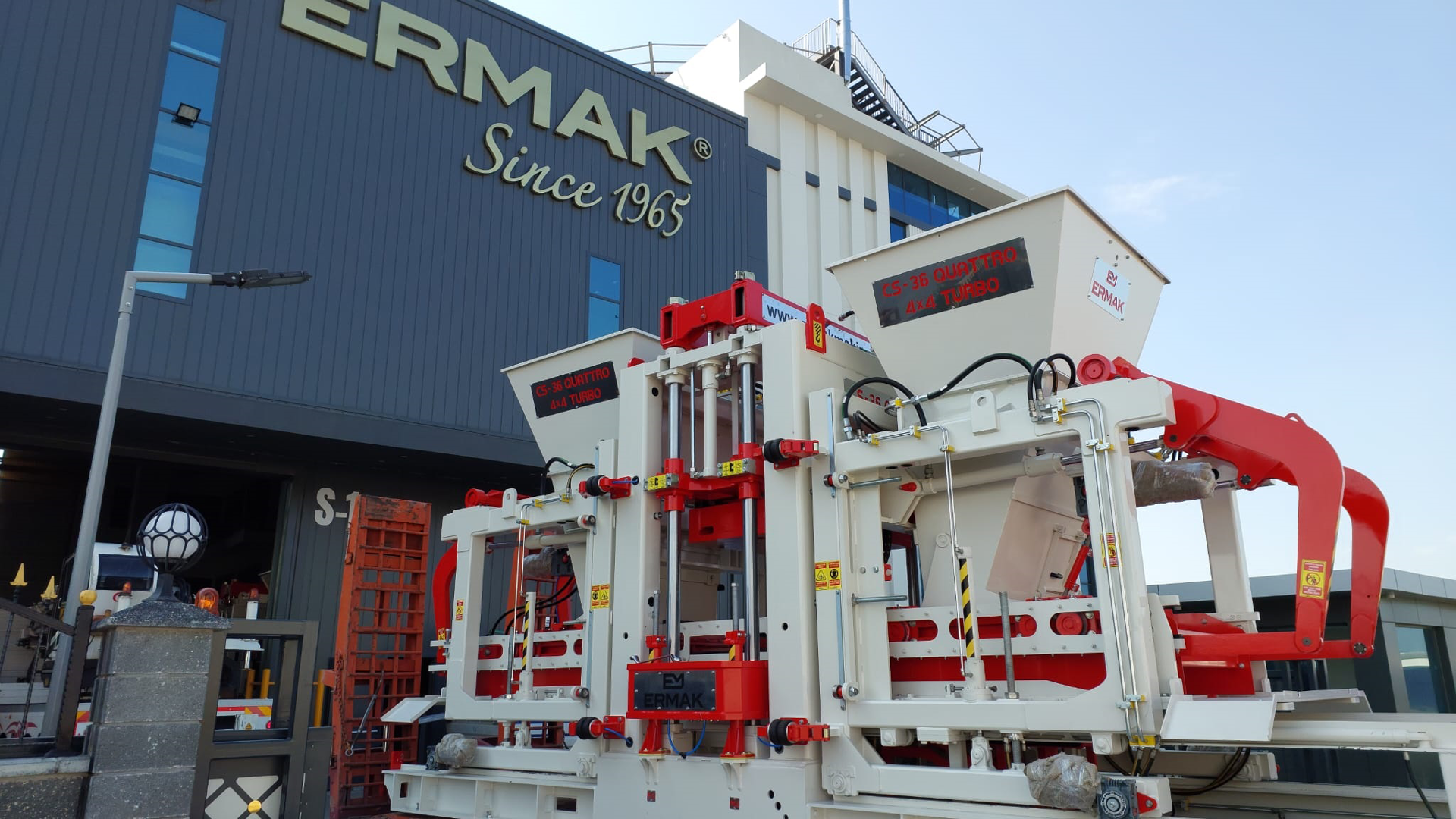
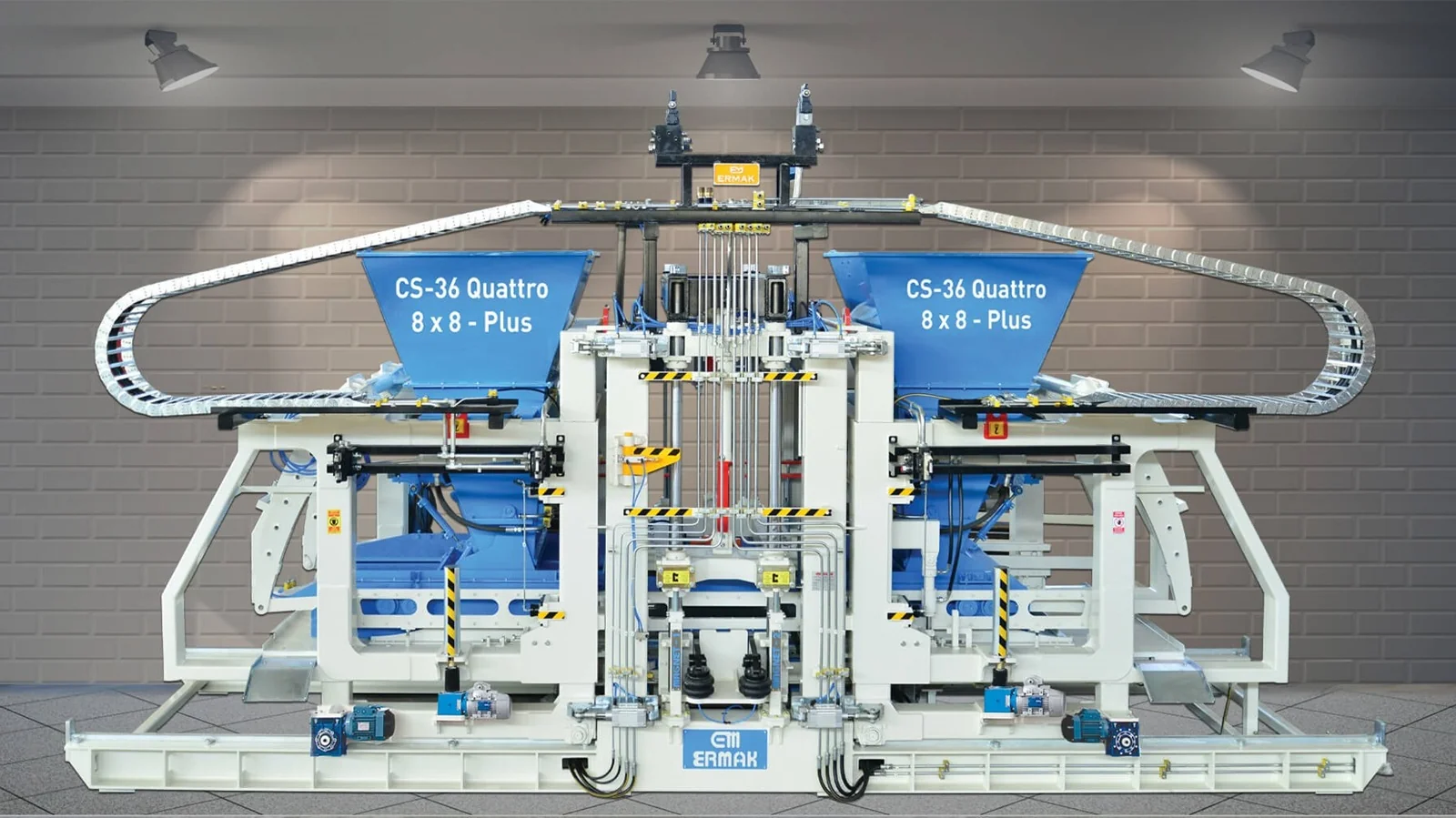
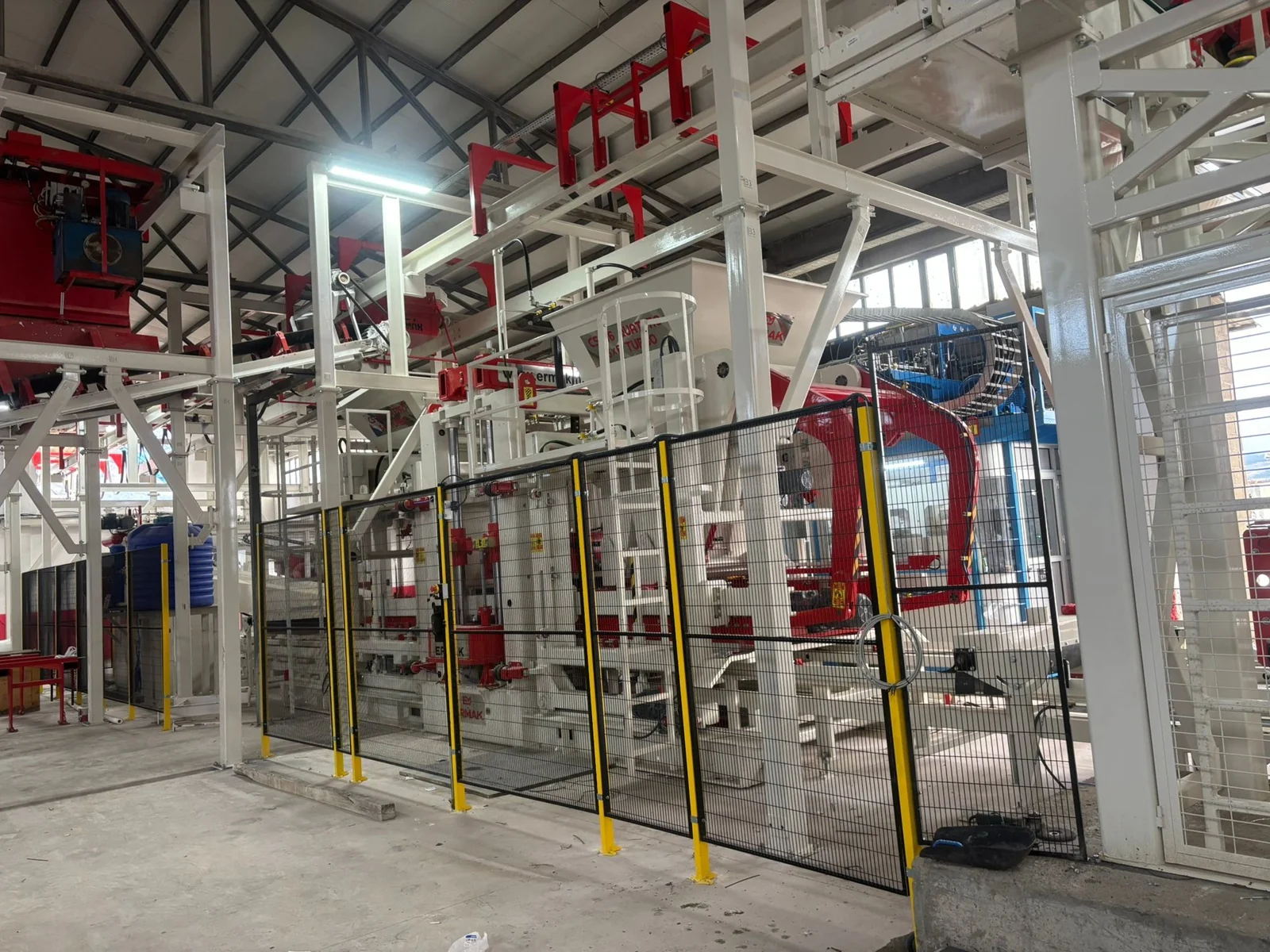
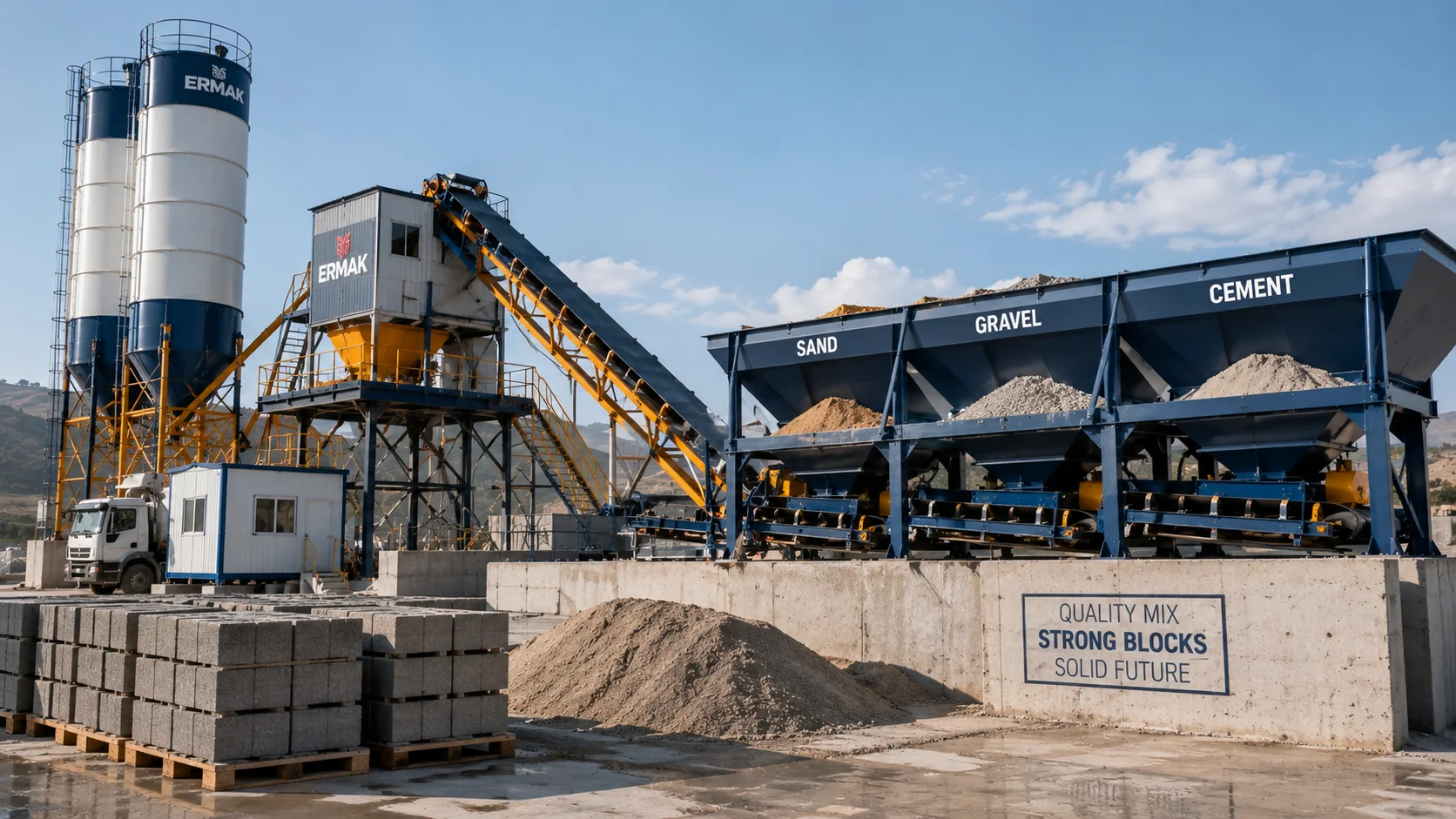
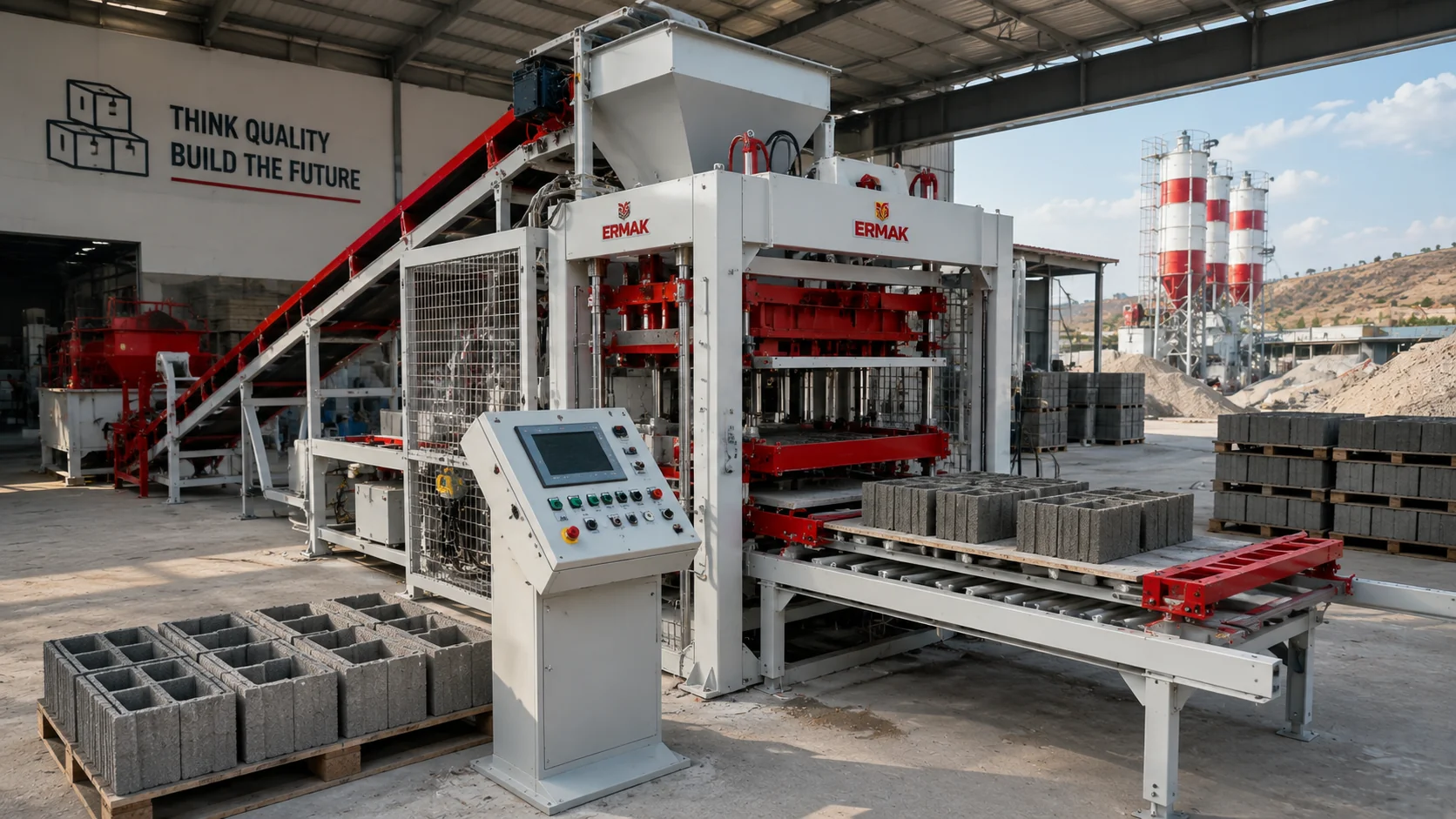
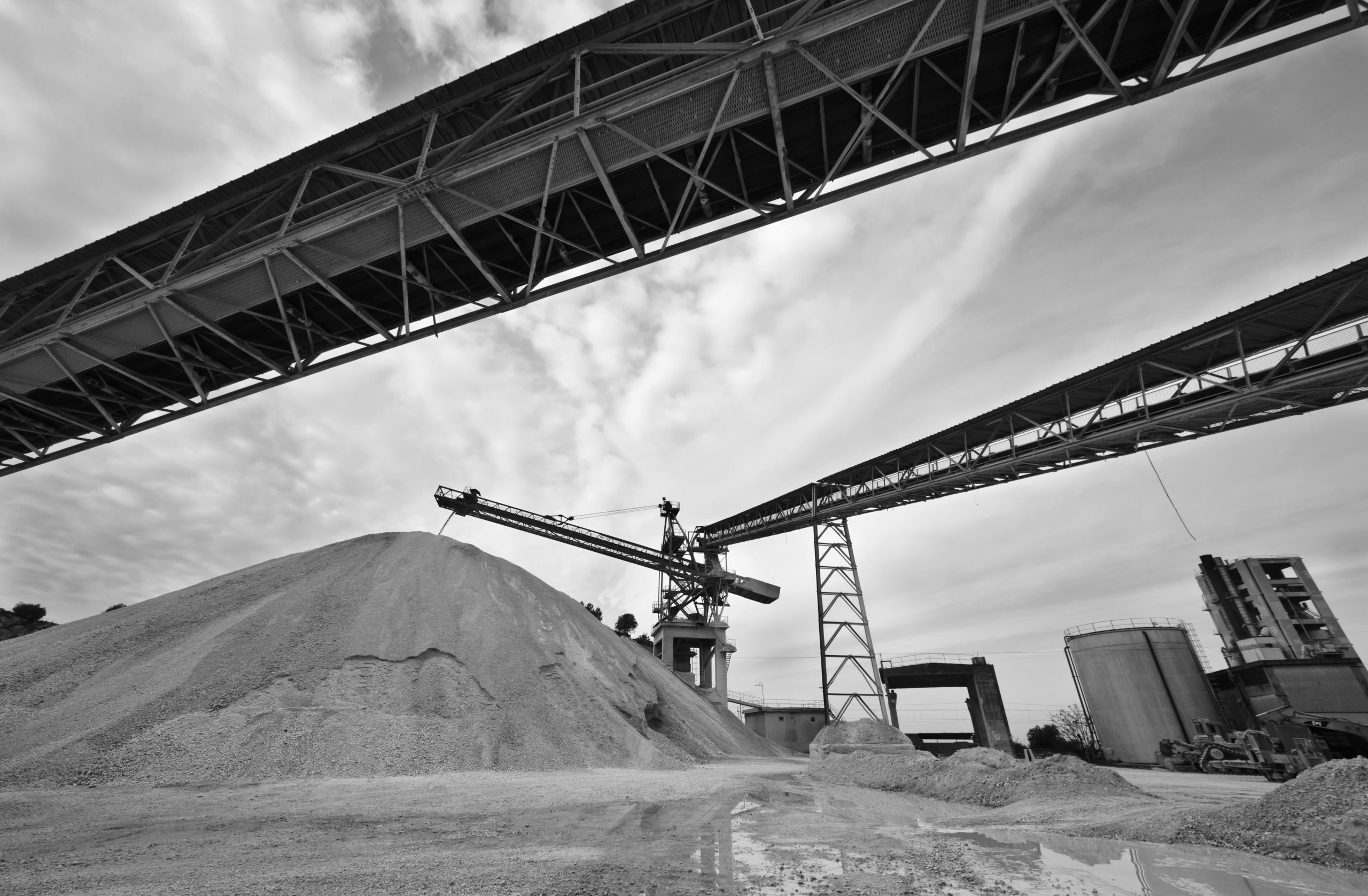
A concrete batching plant for block production should never be selected independently from the concrete block machine it will supply.
The main production machine may be capable of manufacturing thousands of blocks or a large number of square metres of paving stones per shift, but this capacity can only be achieved if the batching and mixing system can continuously provide concrete at the required rate and consistency.
This is why investors planning a new hollow-block, paver or kerbstone factory should look beyond the nominal capacity of the batching plant.
The real question is:
Can the batching plant prepare the right concrete, at the required quality and speed, without making the block machine wait?
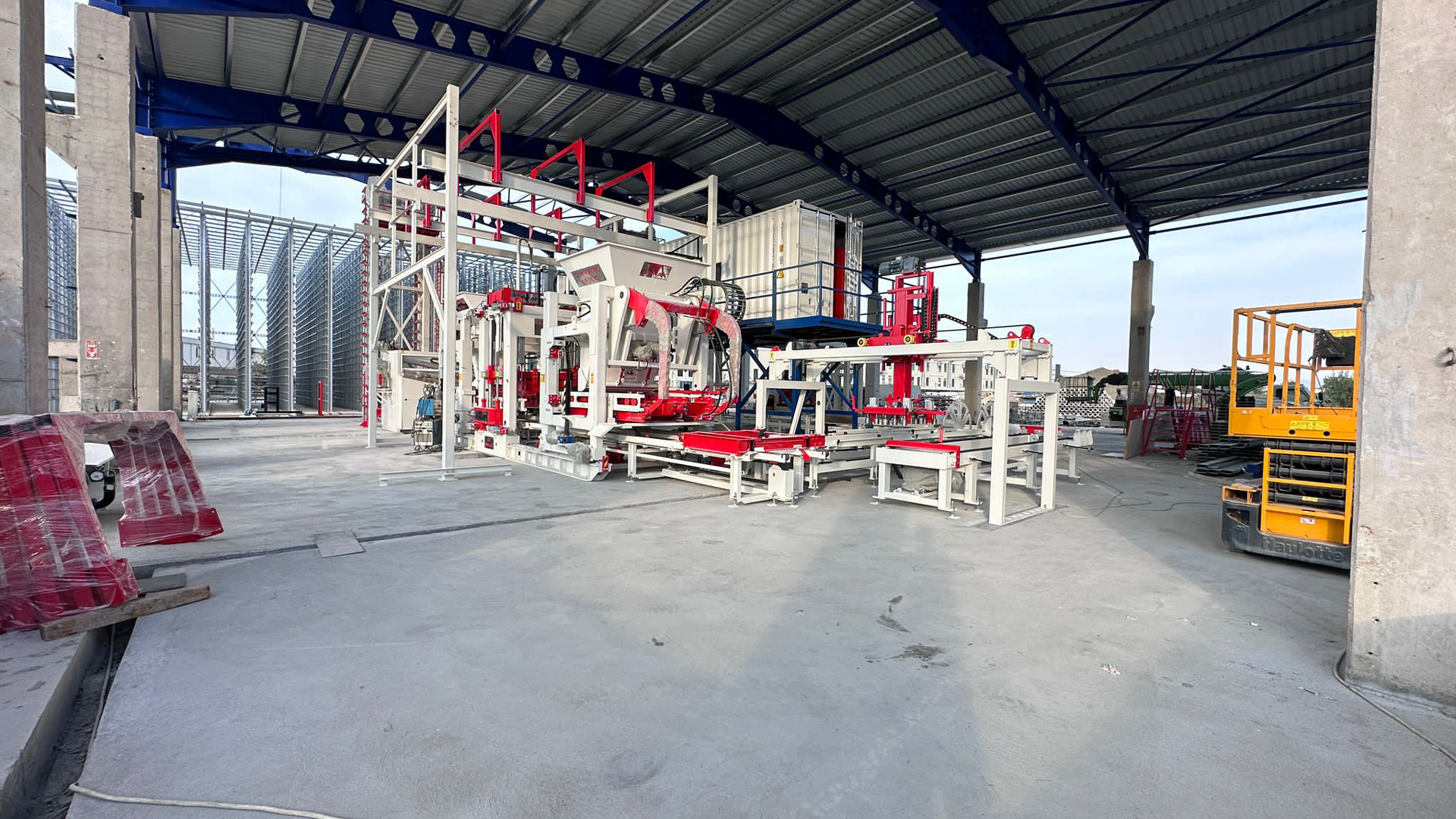
A well-balanced factory is not built by choosing the largest machine in every section. It is built by matching the capacity of the batching plant, mixer, block machine, curing system and packaging line around the same realistic production target. Ermak’s current turnkey plant guidance follows the same principle and emphasises that the different stages of the production line should operate at compatible capacities.
Why the Batching Plant Is So Important in Block Production
In a concrete block factory, the batching plant prepares the material that determines how the main machine behaves.
If the concrete changes significantly from one batch to another, operators may begin adjusting:
- Feeding time
- Vibration
- Pressing
- Product height
even when the actual problem is not the block machine.
For this reason, the batching plant has two main responsibilities.
First, it must provide enough concrete to support the required production capacity.
Second, it must provide that concrete with repeatable quality.
A batching system that is fast but inconsistent can create rejects.
A system that is accurate but too slow can reduce machine utilization.
The correct plant must balance both requirements.
Start with the Concrete Block Machine Demand
The most practical way to select batching capacity is to begin with the concrete demand of the main production machine.
If the block machine requires approximately 20 m³ of concrete per hour during normal production, a batching system that can sustainably deliver only 15 m³/h will become the bottleneck.
The block machine may technically have much more production capacity, but it cannot produce without material.
For example:
Block machine demand: 22 m³/hour
Actual batching and mixing capacity: 17 m³/hour
In this case, the factory cannot sustainably operate at the equivalent of 22 m³/hour.
The concrete preparation system limits production to approximately 17 m³/hour.
This is one of the most important principles in production-line planning:
The real capacity of the factory is determined by the slowest critical section.
Nominal Capacity and Real Capacity Are Not the Same
A batching plant may be advertised with a certain hourly capacity.
However, the figure should be examined carefully.
Real production includes:
aggregate loading, weighing, cement dosing, water addition, mixing and discharge.
All of these operations take time.
The useful capacity for a block factory is therefore not simply:
Mixer volume
but:
Net concrete produced per batch × Actual completed batches per hour
Suppose a mixer produces 1 m³ of usable concrete per batch.
If the complete cycle takes two minutes:
30 batches/hour × 1 m³ = 30 m³/hour
If loading, mixing and discharge increase the real cycle to three minutes:
20 batches/hour × 1 m³ = 20 m³/hour
The mixer size has not changed.
The real hourly output has.
This is why investors should ask for net production capacity under actual operating conditions, not only nominal mixer volume.
The Mixer Is One of the Most Important Components
The mixer is where cement, aggregate, water and other materials become a homogeneous concrete mixture.
For block production, repeatable mixing is particularly important because vibro-pressed products normally use relatively stiff concrete.
The mixture must be suitable for fast mould filling and immediate demoulding while still providing the required product quality after compaction and curing.
A mixer that does not produce consistent concrete may create variation in:
product appearance, density, machine settings and reject rate.
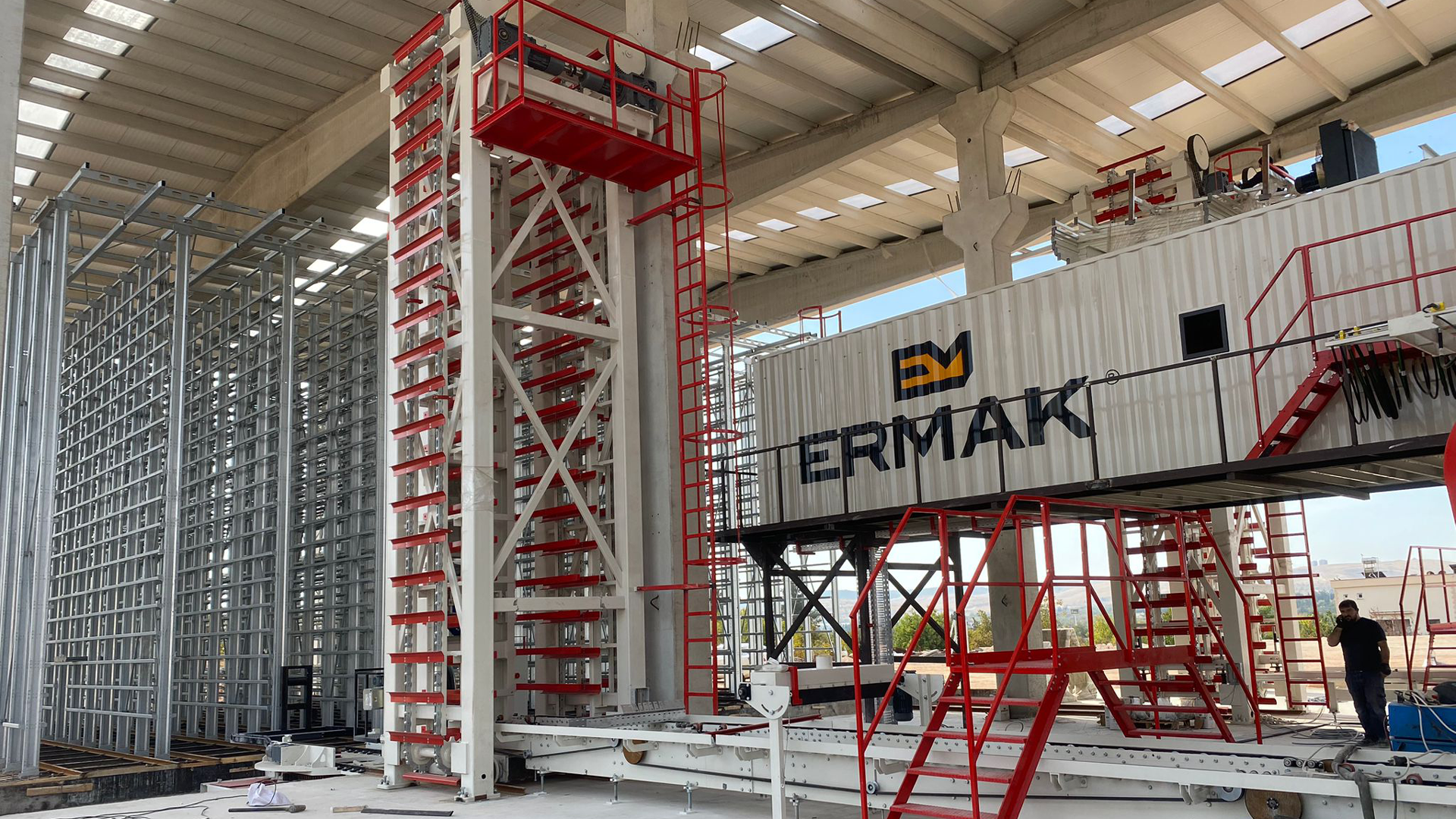
Ermak currently states that its concrete batching plants use Milano Mixer systems and can be configured with standard or project-specific automation depending on the application.
For the investor, however, the brand or mixer type is only part of the decision.
The important point is whether the mixer can deliver the required volume and consistency throughout the complete shift.
Do Not Select the Mixer Only by Its Size
A larger mixer is not automatically the better mixer.
If a production line requires relatively small batches but the installed mixer is substantially oversized, the plant may frequently operate with partial loads.
On the other hand, an undersized mixer may have to work almost continuously and still fail to keep up with the block machine.
The correct mixer size depends on:
- Main machine concrete demand
- Product mix
- Number of shifts
- Expected future capacity
- Required batch frequency
The objective is to create a steady flow of concrete rather than alternating between long waiting periods and excessive concrete accumulation.
Concrete Consistency Matters as Much as Capacity
A block machine performs best when the concrete behaves similarly from one batch to the next.
If one batch is significantly wetter and the next much drier, the operator may see changes in:
- Mould filling
- Vibration time
- Surface quality
- Product weight
This is why batching accuracy is important.
A stable batching plant should be able to repeat approved recipes with minimum unnecessary variation.
Capacity is therefore not only a question of how much concrete is produced.
It is also a question of how much usable and consistent concrete is produced.
Aggregate Storage Should Match the Product Range
A batching plant needs enough aggregate storage for the recipes used in production.
A basic hollow-block plant may require a relatively straightforward aggregate system.
A plant producing several types of pavers, decorative products or different block families may need more flexibility.
Different aggregate fractions may be used to control:
- Product texture
- Concrete packing
- Surface appearance
This does not mean that every factory needs a large number of aggregate bunkers.
The correct number depends on the product portfolio.
Buying unnecessary storage increases investment.
Insufficient storage can limit future product flexibility.
Moisture Control Is Important in Block Concrete
One of the most common reasons for variation in block-production concrete is changing aggregate moisture.
Sand stored outdoors can become wetter after rain and drier during hot weather.
If the batching system continues adding exactly the same programmed amount of water, the actual total water in the concrete changes.
This can affect how the concrete behaves inside the block machine.
Concrete that is too dry may become more difficult to fill and compact.
Concrete that is too wet may lose shape after demoulding.
For this reason, moisture management should be considered during batching-plant selection, especially in plants where raw-material moisture changes frequently.
Water Dosing Should Be Repeatable
Water is inexpensive compared with cement, but incorrect water control can become very expensive.
A relatively small change in moisture may influence the entire production process.
If concrete consistency changes, operators may compensate by adjusting machine settings.
This can create unnecessary variation between shifts.
Accurate and repeatable water dosing helps keep the production process more stable.
The objective is not to use the minimum possible water.
It is to keep the approved recipe within its required operating range.
Cement Dosing Has Both Quality and Cost Importance
Cement is usually one of the major raw-material costs in concrete product manufacturing.
Inaccurate cement dosing can therefore affect both product quality and production cost.
Too little cement may cause the product to fail the required performance criteria.
Too much cement may increase unit cost without delivering a proportional benefit.
For this reason, batching accuracy should be evaluated as an operating-cost issue as well as a quality issue.
A modern concrete block factory should aim to produce the required performance with a stable, tested recipe rather than continually changing cement content to compensate for other process problems.
Single-Layer and Double-Layer Production Need Different Planning
A factory that produces only standard hollow blocks has different batching requirements from a facility producing coloured double-layer paving stones.
Double-layer pavers generally use:
Base concrete + face concrete
The face concrete may use different aggregate, pigment and cement characteristics from the structural base.
This can require a more complex batching and mixing arrangement.
If double-layer production is planned for the future, this should be considered before the original batching system is selected.
Otherwise, adding face-mix production later may require significant modifications.
Product Variety Affects Batching-Plant Selection
The more products a factory manufactures, the more recipe flexibility may be required.
A production schedule might include:
hollow blocks, paving stones, kerbstones and grass blocks during the same week.
These products may not all use exactly the same concrete recipe.
The batching automation should therefore make it practical to store and repeat approved recipes.
This reduces operator dependence and makes product changes more controlled.
At the same time, the system should remain simple enough for the operating team to use and maintain effectively.
Automation Should Support Production, Not Complicate It
Modern batching plants can automate:
material weighing, water dosing, recipe selection and mixing sequences.
This can improve repeatability and reduce the need for manual adjustments.
However, the most advanced automation system is not automatically the best choice for every factory.
Automation should match:
production volume, staff capability, product variety and maintenance resources.
A regional hollow-block factory operating one shift per day may not require the same level of batching automation as a high-capacity paver plant operating continuously.
The goal should be useful automation, not automation for its own sake.
The Batching Plant Should Not Be Dramatically Oversized
Selecting a batching plant with some future capacity is reasonable.
Selecting one several times larger than the realistic demand can create unnecessary investment.
A larger system may require:
larger foundations, more storage capacity, larger electrical infrastructure and additional equipment.
If the block machine cannot use that capacity, the additional investment produces no immediate return.
The correct system should therefore support:
current production + realistic future growth
rather than an undefined maximum future capacity.
Undersizing Is Equally Expensive
A batching plant that is too small creates a different problem.
The main machine may repeatedly stop and wait for concrete.
Suppose a block machine can support 20,000 saleable blocks per shift under the planned product configuration.
If the batching plant can only supply enough concrete for the equivalent of 15,000 blocks, purchasing the larger block machine provides little value.
Ermak’s current capacity guidance makes this exact systems point: the main production machine, batching plant, mixer, curing system and downstream equipment must be planned as one balanced line.
Capacity Reserve Should Be Reasonable
A small amount of reserve capacity can be useful.
For example, if the machine normally requires 20 m³/h, selecting a batching and mixing system capable of somewhat more than this may help accommodate:
production variation, future growth or additional products.
However, the reserve should be based on the business plan.
It should not simply be:
“Buy the largest one available.”
The same principle used when selecting the block machine should also be used for the batching plant.
Layout Affects Batching Efficiency
The batching plant should also be positioned according to material and concrete flow.
A poor layout may create unnecessary transfer distance between the mixer and main machine.
The factory should ideally support a simple flow:
Raw material storage → Batching and mixing → Block machine → Curing → Packaging
The batching plant also requires practical access for:
- Aggregate loading
- Cement delivery
- Cleaning
- Maintenance
Planning these requirements before installation makes daily operation much easier.
Raw-Material Delivery Should Be Considered
Batching capacity is only useful if raw materials are available.
Aggregate bunkers and cement storage should be sized according to:
daily consumption, supplier distance and delivery frequency.
A high-capacity block plant may consume a significant amount of material during a full shift.
If storage is too small, the production team may depend on frequent deliveries.
If delivery is delayed, the complete factory can stop.
At the same time, excessive storage increases investment and requires more space.
The objective is again balance.
Cleaning and Maintenance Access Matter
Concrete batching equipment works in a dusty and abrasive environment.
A plant that is difficult to access can make normal cleaning and maintenance unnecessarily complicated.
Maintenance access should therefore be considered during layout planning.
Operators and technicians should be able to reach critical equipment safely without requiring extensive dismantling for routine work.
This is especially important for:
mixers, weighing systems, conveyors and dosing components.
A few minutes saved during every routine maintenance activity can become meaningful over years of operation.
Batching Accuracy Should Be Monitored Over Time
Installing a well-designed batching plant is not the end of the process.
Scales and dosing systems should continue to operate accurately over the life of the plant.
If weighing performance gradually changes, the actual concrete recipe may change without the operator immediately noticing.
The first warning may appear at the block machine as:
different product weight, surface changes or increased rejects.
This is why recipe control and batching calibration should be part of the plant’s normal quality-management system.
Capacity Should Be Evaluated for Real Products
Investors should avoid selecting a batching plant using only general figures such as:
“Our block machine produces X blocks per day.”
Concrete demand depends on the actual product.
A solid product, hollow block and thin paving stone may consume different amounts of concrete even when produced on the same machine.
The correct calculation begins with the real product portfolio.
For each major product, estimate:
Concrete volume per product × Planned saleable production
This provides a much better basis for batching capacity.
Example of a Simple Capacity Match
Assume a factory’s main product requires approximately:
16 m³ of concrete per hour
during normal production.
The plant is also expected to add new products in the future.
A batching system with a sustainable net output only slightly below 16 m³/h would be risky because any delay could make the machine wait.
A system designed for approximately:
20–22 m³/h of realistic usable production
may provide a more practical operating reserve.
This is only an illustrative example.
The correct reserve must be calculated for each project.
The important principle is that batching capacity should be based on the real concrete demand of the production line, not a generic plant size.
How the Batching Plant Influences Unit Production Cost
The batching plant affects unit cost in several ways.
Accurate material dosing can help control cement consumption.
Stable concrete can help reduce rejects.
Correct capacity matching can reduce block-machine waiting time.
Reliable mixing can reduce unnecessary process adjustments.
For this reason, the cheapest batching plant is not necessarily the lowest-cost plant to operate.
Investment decisions should consider:
purchase cost + production efficiency + maintenance + material control
over the expected operating life.
Concrete Batching Plant Selection for Different Factory Sizes
There is no single correct batching-plant configuration for every concrete block factory.
A small regional plant may benefit from a simpler system with enough capacity for one main machine and a limited product range.
A medium-size plant with several block and paver products may require more recipe flexibility and additional aggregate storage.
A high-capacity plant may require a larger batching and mixing system designed to supply the main production machine continuously across long shifts.
The important point is that each system should be designed around the commercial requirements of the factory rather than copied from another plant.
Future Expansion Should Be Considered Before Installation
The factory may not remain at its original capacity forever.
Future growth can include:
a second shift, additional products, coloured paving stones or a higher-capacity block machine.
This does not mean that all future equipment should be purchased immediately.
However, the original batching-plant layout can be designed so future expansion is not unnecessarily difficult.
Space, electrical infrastructure and material flow should therefore be considered with a reasonable long-term perspective.
Ermak Concrete Batching Plants and Milano Mixers
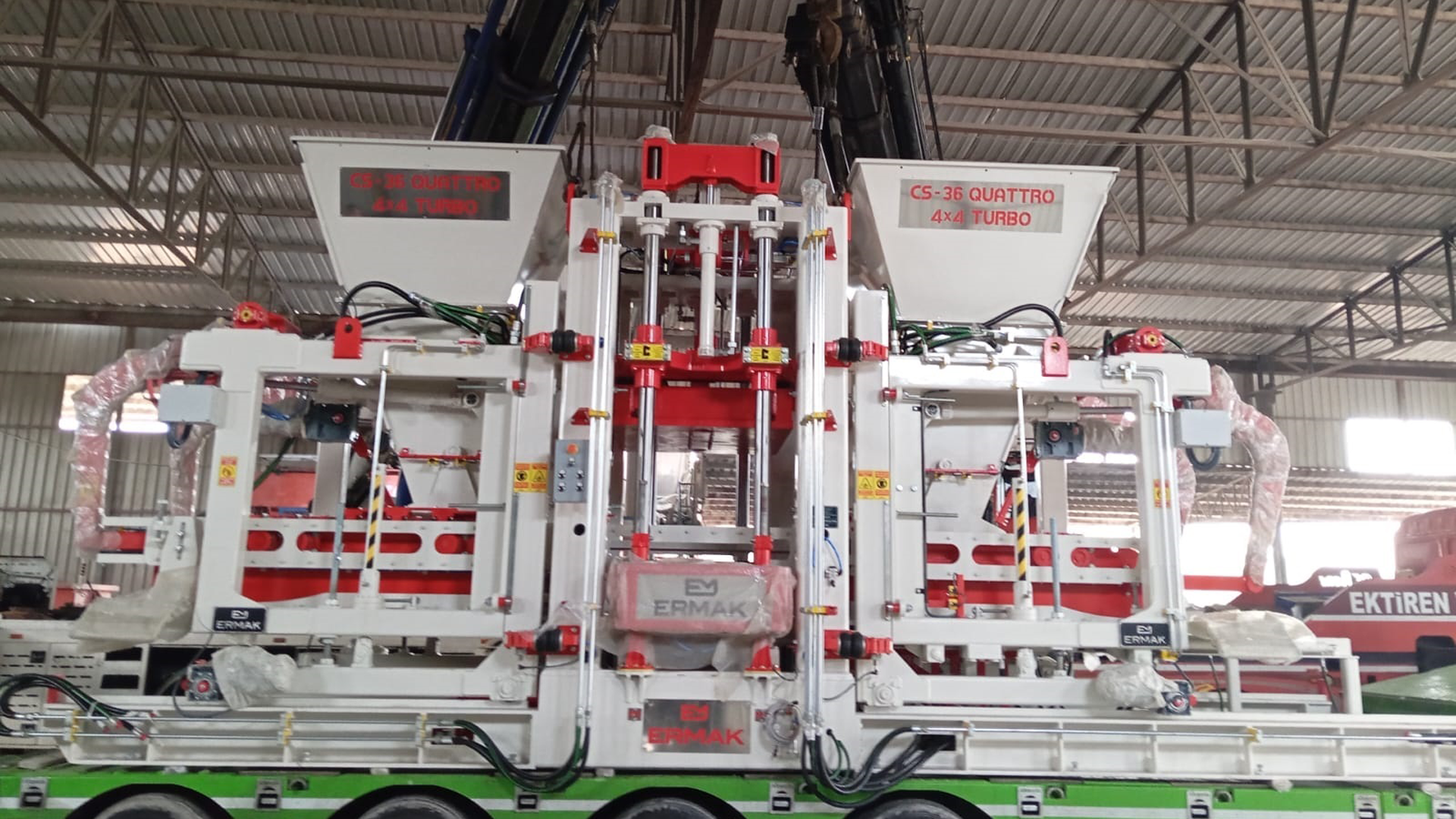
Ermak manufactures concrete block production equipment together with concrete batching and mixing systems.
The company’s current batching-plant information states that Milano Mixers are used within its concrete plants and that automation can be supplied with standard or project-specific software.
For a new block-production project, the important advantage of evaluating these systems together is that the batching capacity can be planned according to the actual requirements of the main production line.
The objective should not be to install the largest batching plant.
It should be to create a system in which:
the batching plant supplies the mixer, the mixer supplies the block machine and the block machine can operate without unnecessary material-related waiting.
How to Choose the Right Concrete Batching Plant for Block Production
Before final selection, the investor should clearly define:
- Target block or paver products
- Required daily production
- Expected concrete consumption
- Number of shifts
- Product and recipe variety
- Future capacity plans
- Available factory space
Once these requirements are known, the batching system can be sized according to the production line rather than selected from a generic capacity figure.
A good batching plant should support production without becoming either a bottleneck or an unnecessarily oversized investment.
The correct system is therefore not simply the plant with the highest m³/h figure.
It is the plant that can supply the required concrete consistently, accurately and at the right speed for the complete block-production line.
For new hollow-block, paving-stone and kerbstone production projects, batching plant, mixer and main production-machine capacities should be evaluated together from the beginning of the investment.
Frequently Asked Questions
What size batching plant is needed for a concrete block machine?
The required size depends on the real hourly concrete demand of the block machine, the products being manufactured and the number of operating shifts. The batching plant should be able to supply the machine continuously with a reasonable operating reserve.
Should batching-plant capacity be higher than block-machine demand?
Some reserve capacity can be useful, but extreme oversizing usually increases investment unnecessarily. The reserve should be based on realistic production growth and product changes.
Why is mixer capacity important in concrete block production?
The mixer determines how quickly homogeneous concrete can be prepared. If its actual hourly output is below the block machine’s demand, the main machine will wait for concrete.
Is mixer volume the same as hourly production capacity?
No. Hourly production also depends on loading, mixing and discharge time. The useful figure is the net concrete per batch multiplied by the number of complete batches per hour.
Can the same batching plant supply paver and hollow-block production?
Yes, if the system has the required recipe flexibility, material storage and capacity. The specific configuration should be based on the product range.
Is moisture control important for concrete blocks?
Yes. Changes in aggregate moisture can change the real water content of the concrete and affect mould filling, compaction and finished-product quality.
Does a double-layer paver plant need a different batching system?
It may. Double-layer pavers normally use separate base and face concretes, so additional mixing, dosing or pigment systems may be required.
Is a fully automated batching plant always necessary?
No. The correct automation level depends on plant capacity, product variety, labour conditions and technical resources. The objective should be reliable and repeatable production.
Can an undersized batching plant reduce block-machine capacity?
Yes. If the batching and mixing system cannot supply concrete fast enough, the block machine must wait regardless of its theoretical production capacity.
What is the most important rule when selecting a batching plant for block production?
Select it as part of the complete production line. Batching capacity, mixer output and block-machine demand should be calculated together rather than as independent equipment choices.