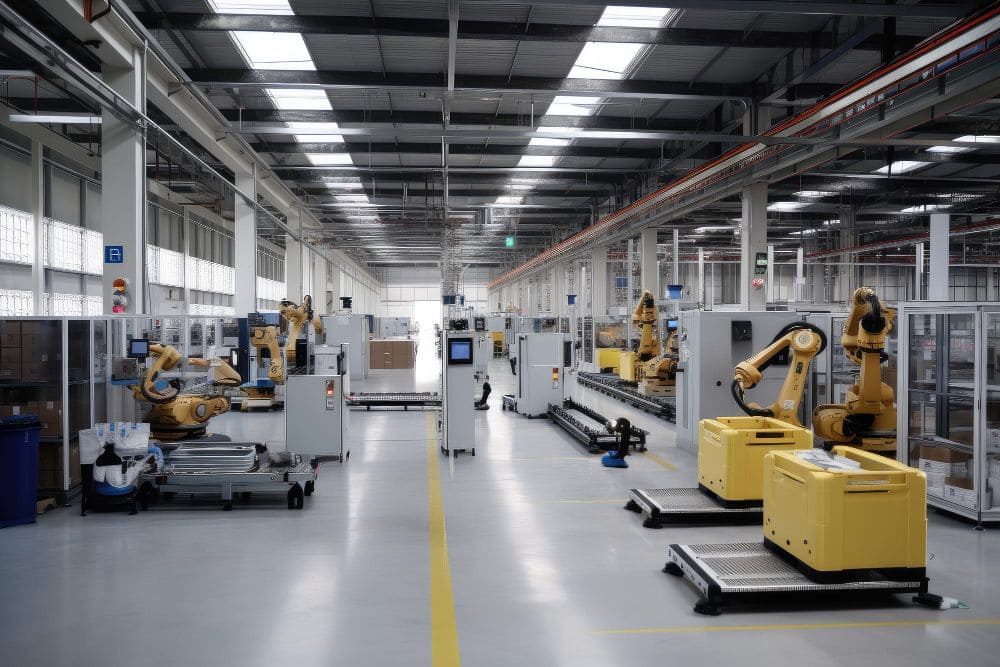
Automatic cubing and packaging systems play a critical role in modern concrete block and paver plants because production is not complete when the product leaves the main machine. After curing, products still need to be removed from production pallets, arranged into stable packs, transferred onto commercial pallets where required, secured for handling and prepared for storage or shipment. If this dry-side process cannot keep pace with the main machine, the entire plant can lose capacity even when the block machine itself is operating efficiently.
For this reason, cubing and packaging should be planned as part of the complete production line rather than as a secondary system added after the main machine has been selected. Product geometry, package design, production pallet circulation, commercial pallet supply, cubing speed, strapping, wrapping and forklift removal all affect real dry-side performance. The objective is to create a system that converts cured products into stable, saleable packages without creating a new bottleneck at the end of the line.
What Is an Automatic Cubing System?
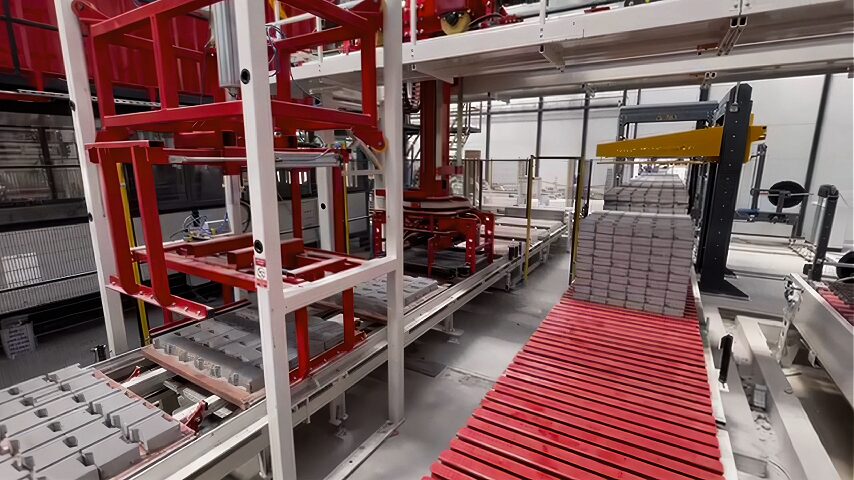
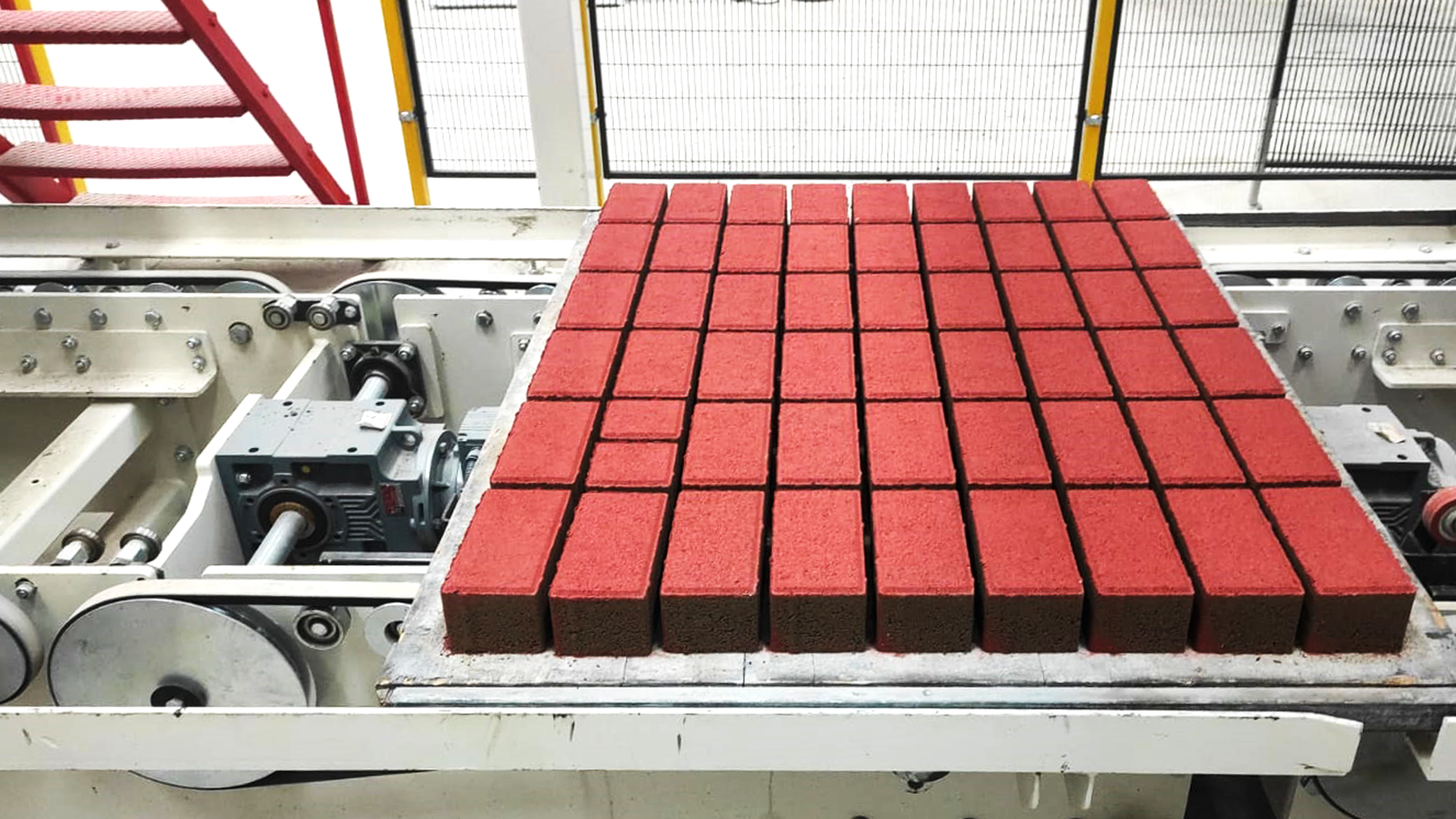
An automatic cubing system takes cured blocks or pavers from the dry side and arranges them into a defined package format. Depending on the product and system design, complete layers may be lifted, rotated, repositioned and stacked according to a programmed pattern. The resulting cube or palletized package is then transferred to the next stage, where strapping, wrapping or other stabilization may be applied.
The main benefit is repeatability. Manual stacking can vary between operators and shifts, while an automatic system follows the same sequence continuously. This helps maintain package geometry, improves handling consistency and supports higher dry-side throughput, especially in plants where product volume or labour availability makes manual packaging increasingly difficult.
Cubing Capacity Must Match the Main Production Line
The cubing system should not be selected as an isolated machine. Its real capacity needs to match the output of the curing system and the main block or paver machine. If cured products arrive faster than the cubing system can process them, products begin to accumulate and production pallets return more slowly to the wet side.
This can eventually affect the main machine. A factory may have a high-capacity block machine with strong theoretical output, yet lose production because the dry side cannot release pallets quickly enough. The useful capacity figure is therefore not simply the maximum speed of the cuber but the sustainable throughput of the complete dry-side process.
Real Throughput Depends on the Product
Different concrete products create different cubing conditions. Standard hollow blocks, interlocking pavers, kerbstones, grass pavers and special landscaping products vary in size, weight, geometry and package arrangement. A system that handles one product very quickly may require more time for another.
This means buyers should avoid comparing cubing systems using one maximum cycle figure. The better approach is to evaluate the actual product portfolio and expected package patterns. Sustainable packages per hour, square metres per shift or units per shift provide a more realistic basis for planning than an unloaded mechanical cycle.
Package Design Should Be Defined Early
The cubing system cannot be selected properly until the factory understands how the finished product should be packaged. Commercial pallet dimensions, layer count, product orientation, total package height and transport method all influence the required equipment.
A package designed for local short-distance delivery may be different from one intended for export containers or long road transport. Product stability during forklift handling is also important. The cubing pattern should therefore be developed together with commercial and logistics requirements rather than determined only by machine convenience.
Layer Rotation Can Improve Stability
Some products can be stacked in identical orientation on every layer, while others benefit from alternating layer direction. Layer rotation may improve package stability and reduce the risk of movement during transport, depending on product geometry.
An automatic cubing system can manage these patterns consistently once they are programmed. This is particularly useful for factories producing several product families because different recipes can be assigned to different pack designs. The important point is that the selected cubing system should have enough mechanical and automation flexibility to create the required patterns reliably.
Production Pallets and Commercial Pallets Have Different Roles
Production pallets circulate continuously inside the concrete product factory. They carry fresh products from the main machine to curing and then return after products are removed on the dry side. Commercial pallets, where used, form part of the finished package and may leave the factory with the customer shipment.
These two pallet flows need to be separated clearly in the dry-side design. Empty production pallets must return quickly to the main machine, while commercial pallets need to be available at the cubing station when a new package is created. Poor coordination between these flows can create unnecessary stops even when the cubing machine itself has enough capacity.
Production Pallet Return Is Part of Dry-Side Capacity
The main machine depends on a continuous supply of empty production pallets. If the dry side releases these pallets too slowly, the wet side can eventually stop despite having no mechanical problem.
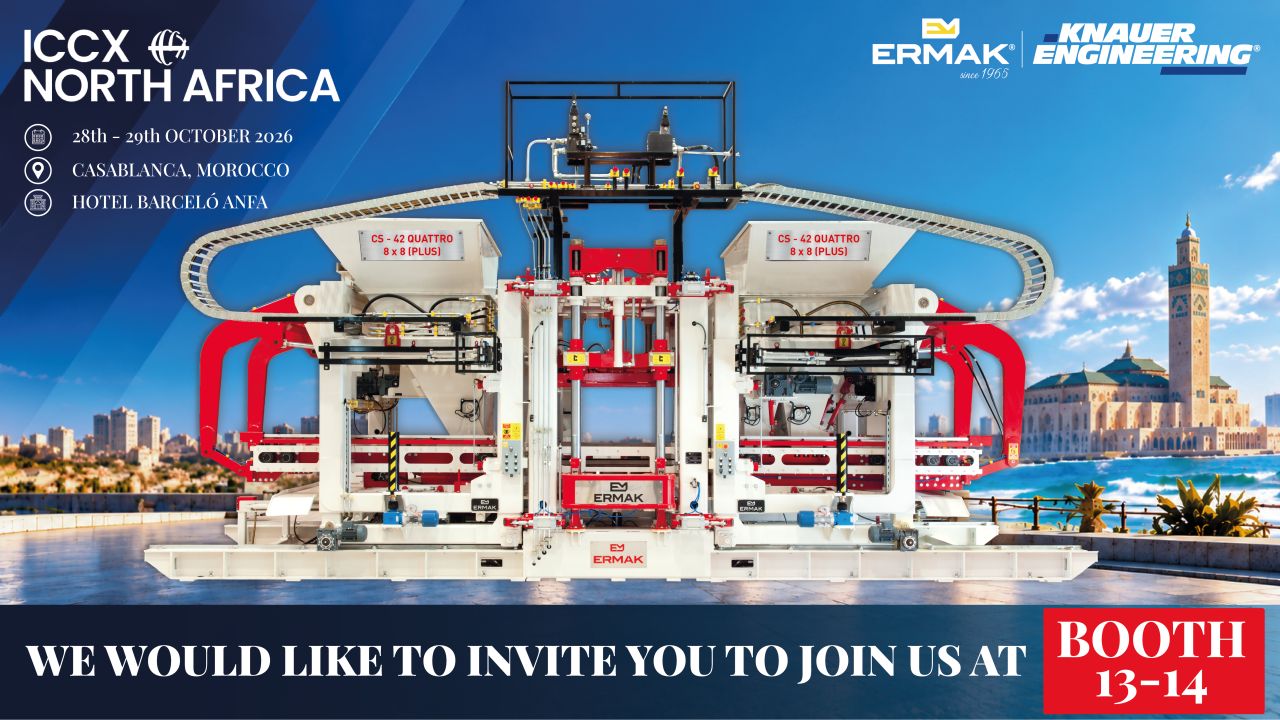
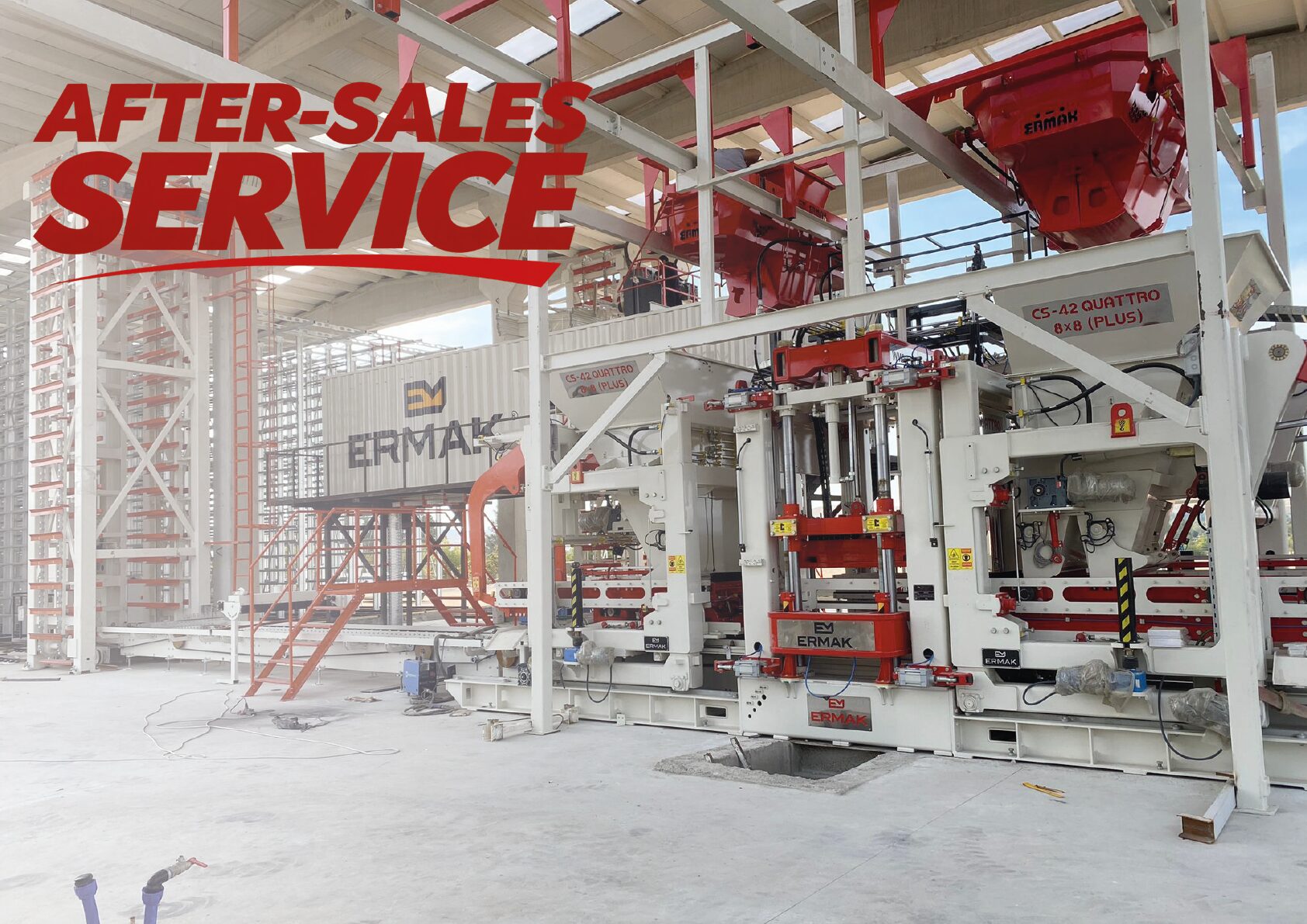
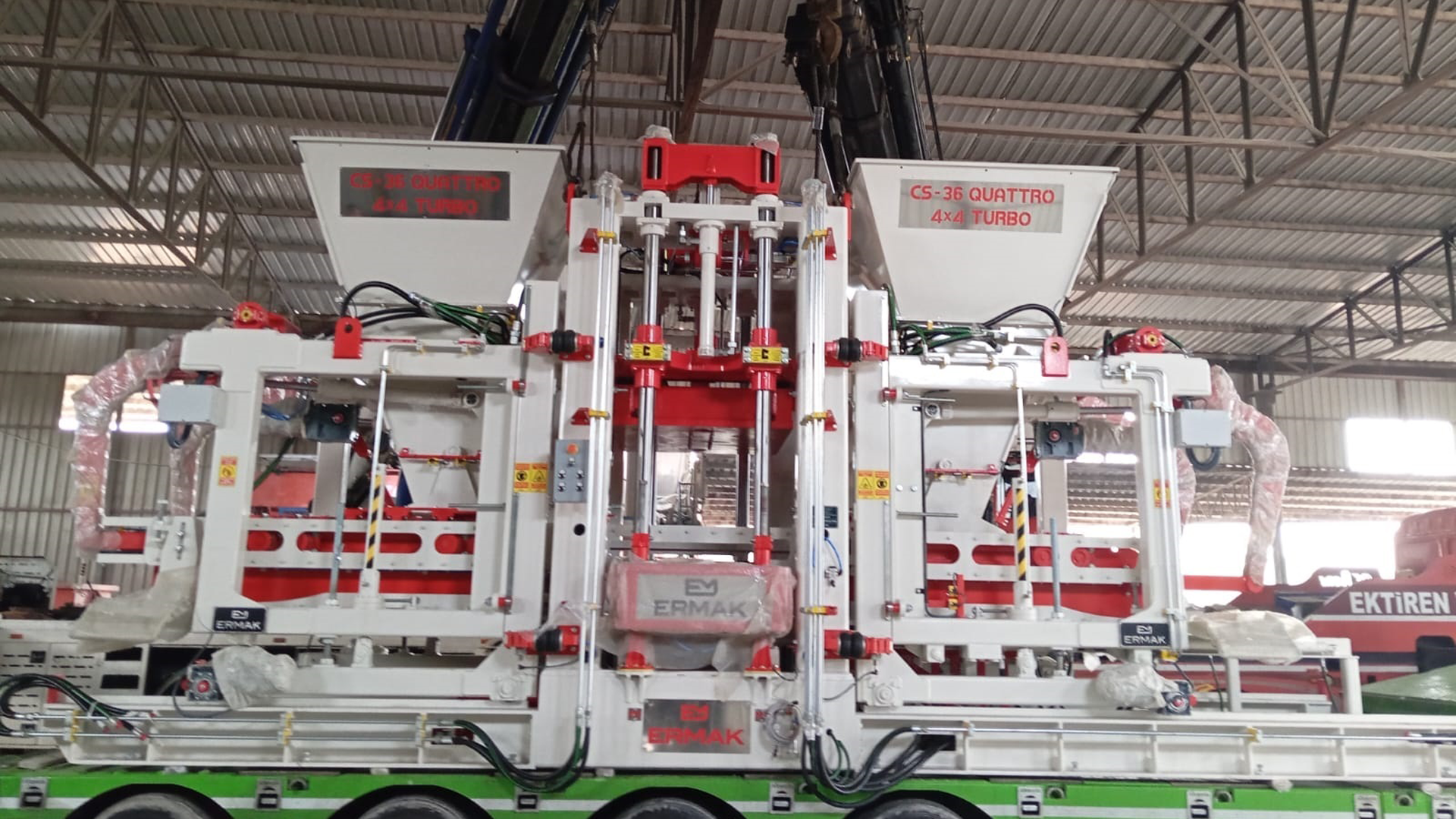
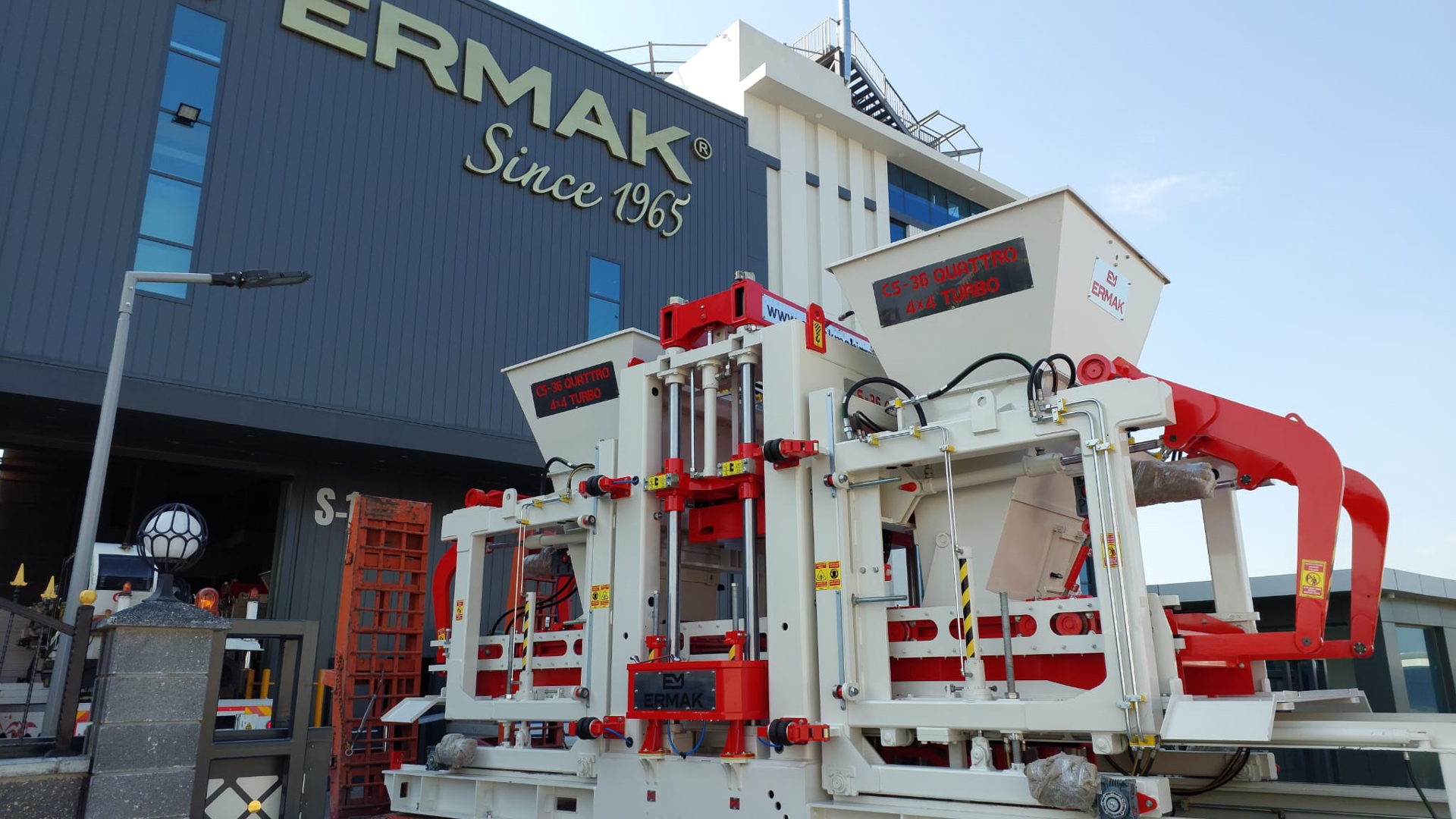
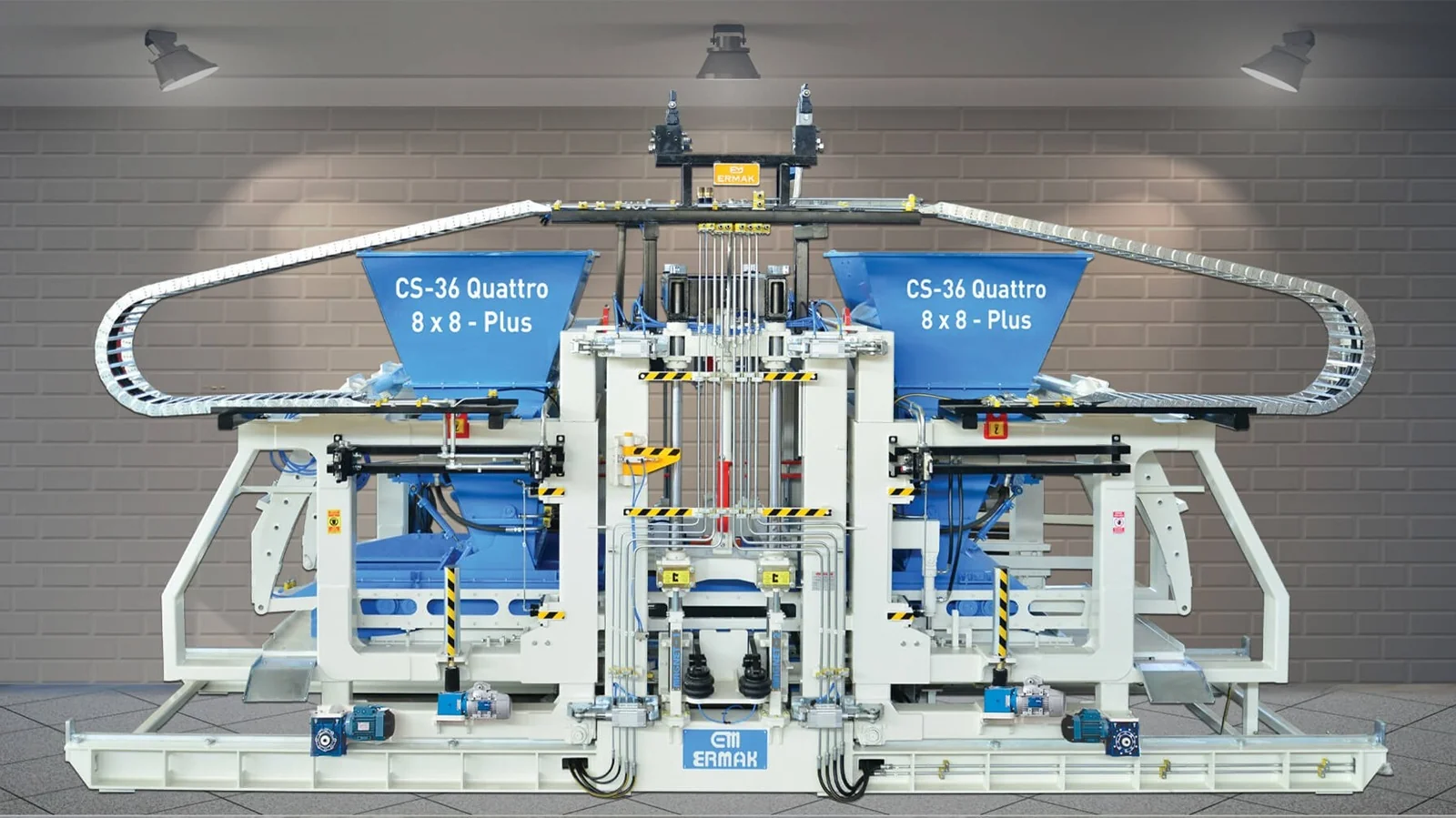
This is why production pallet return should be considered part of the cubing system performance. Conveyors, pallet cleaners, storage sections and return paths should all support the required production rhythm. In high-capacity plants using systems such as the Quattro 8X8 Plus concrete block machine, even small delays in pallet circulation can become significant over a full production shift.
Commercial Pallet Feeding Needs Reliable Automation
A cubing system that builds packages on shipping pallets requires a steady supply of empty commercial pallets. If the pallet magazine is empty or the pallet feeder is too slow, the cubing station must stop regardless of how fast the main handling system is.
For higher-capacity plants, automatic pallet magazines can reduce manual intervention and help maintain a stable rhythm. The refill area should also be accessible so forklift or operator activity does not interfere with the cubing cell. These logistics details are small compared with the cost of the main equipment, but they can have a large effect on real availability.
Automatic Cubing Can Reduce Heavy Manual Handling
Concrete blocks and pavers are repetitive, dense and often heavy products. Manual cubing therefore creates significant physical workload, especially over long shifts. Automatic systems can reduce the amount of repetitive lifting required and move operators toward supervision, quality control and logistics tasks.
The labour benefit becomes stronger in multi-shift factories because the same automation continues operating across longer daily production periods. However, buyers should not evaluate automation only as a direct replacement for labour. Stable throughput, reduced fatigue-related variation and more consistent package formation can also create economic value.
Mechanical Cubing and Robotic Palletizing Are Different Approaches
Automatic packaging can be achieved through different technologies. Mechanical cubers are often highly efficient when handling standardized products and complete layers, while robotic palletizers can provide greater flexibility for multiple geometries and stacking patterns.
Neither solution is universally better. A plant producing large volumes of one standard block may prefer a different system from a factory producing many decorative pavers and special products. The correct choice depends on required throughput, product variety, package complexity and future production plans.
Product Flexibility Should Be Evaluated Before Purchase
A factory may begin with only a few products but expand its portfolio over time. The cubing system should therefore be evaluated not only for current production but also for realistic future products.
The buyer should consider product dimensions, weight, layer arrangement and commercial packaging requirements. If the system has very limited flexibility, adding a new product later may require expensive mechanical modifications. A more adaptable cubing solution can protect the investment as market demand changes.
Cubing Recipes Can Simplify Product Changeovers
Modern PLC and HMI systems can store cubing recipes for different products. These recipes may define layer patterns, rotation, pack height and other handling parameters.
When the factory changes products, the operator can select the correct recipe instead of recreating the sequence manually. This reduces setup time and helps avoid packaging errors. The physical product flow must still be prepared correctly, but recipe management makes frequent product changes easier and more repeatable.
Package Height Should Match Logistics Requirements
A higher package can increase the amount of product moved on each pallet, but it also changes stability, forklift handling and transport conditions. The maximum possible cubing height is therefore not always the best commercial solution.
Product weight, pallet strength, warehouse stacking and truck or container dimensions should all be considered. In some cases, a slightly lower package can improve transport reliability and reduce product damage. Packaging design should be optimized for the complete logistics chain rather than only for maximum product count per pallet.
Strapping Adds Package Stability
After cubing, the product package may require strapping to maintain stability during forklift handling and transport. Vertical or horizontal strapping configurations can be selected according to the product and package design.
The strapping machine should be sized to match cubing output. If each package waits too long for strapping, the packaging system becomes a new bottleneck. Consumable supply, strap tension and maintenance accessibility should also be considered because poor strapping can create unstable packages even when cubing quality is good.
Wrapping Can Protect and Stabilize Products
Stretch wrapping or other protective packaging may be used in addition to strapping. Wrapping can help stabilize the package, protect surfaces from dirt and improve presentation during storage or shipment.
The exact requirement depends on the product and market. Standard concrete blocks may need a different packaging approach from premium decorative pavers. The wrapping system should therefore be selected according to actual commercial requirements instead of automatically adding the same packaging process to every product.
Strapping and Wrapping Should Be Planned as One Flow
Cubing, strapping and wrapping are often purchased as separate machines, but they operate as one packaging process. Their capacities should therefore be balanced.
A fast cuber connected to a slower wrapping machine will eventually create package accumulation. The reverse situation can result in expensive downstream equipment waiting for product. Buffer conveyors can absorb short differences, but the long-term solution is balanced capacity across the complete packaging line.
Product Quality Should Be Checked Before Final Packaging
The dry side is one of the final opportunities to identify damaged products before they are hidden inside a completed package. Cracked blocks, chipped pavers or visibly inconsistent products should ideally be removed before cubing.
Quality control may be performed manually or supported by automated inspection, depending on the plant. The important principle is that packaging speed should not take priority over saleable product quality. An efficient cubing system that packages rejected products only moves the quality problem further downstream.
Decorative Products Require More Careful Handling
Shotblasted, washed or otherwise finished pavers have a higher-value visible surface and may require gentler handling. Contact points, clamping pressure and transfer movements should avoid unnecessary scratching, chipping or rubbing.
The cubing system should therefore be evaluated using the actual finished product rather than only standard concrete blocks. Packaging recipes may also include different layer orientation or protective materials for premium products.
Automatic Cubing Can Improve Package Consistency
Manual stacking depends heavily on operator technique. Two workers may create slightly different package alignment, and fatigue can increase variation during long shifts.
Automatic cubing follows the same programmed movement repeatedly, which helps create more uniform packages. This can improve forklift handling, warehouse organization and visual presentation to customers. For export-oriented producers, consistent package dimensions can also simplify container and truck loading.
Packaging Automation Does Not Eliminate All Labour
Even highly automated dry-side systems still require human support. Operators may monitor production, replenish commercial pallets and packaging materials, perform quality checks and respond to alarms. Forklift drivers may still remove completed packages and manage warehouse movements.
The purpose of automation is not necessarily to eliminate labour completely. It is to use people where judgement and supervision add more value while automating repetitive heavy handling and standardized movements.
Packaging Capacity Should Include Normal Production Variation
The cubing system should not be sized to operate continuously at its absolute maximum. Real production includes short stops, product changes, quality interventions and normal process variation.
A reasonable capacity reserve allows the dry side to recover after short interruptions without immediately creating a backlog. However, excessive oversizing increases investment cost without necessarily improving production economics. The reserve should reflect expected plant growth and operating conditions rather than an arbitrary maximum specification.
Buffer Conveyors Can Improve Stability
A short buffer between cubing and packaging systems can allow one section to continue operating during brief downstream interruptions. This can prevent every small stop from immediately reaching the main machine.
Buffers should not be used to hide permanent capacity problems. If packages continuously accumulate in the same area, the downstream system is probably undersized or the production schedule needs adjustment. A buffer is useful for short-term process flexibility, not as a replacement for correct capacity planning.
Forklift Removal Can Become the Final Bottleneck
A complete package still needs to leave the line. If the forklift cannot remove finished pallets quickly enough, the packaging system may stop even though cubing and wrapping equipment are operating correctly.
The finished-pack area should provide enough temporary space and safe forklift access. Forklift routes should ideally avoid crossing operator walkways or interfering with raw-material traffic. Factory layout therefore remains part of packaging-system performance.
Warehouse Planning Should Match Packaging Output
High-capacity cubing can rapidly create large quantities of finished packages. The warehouse or external storage area needs enough space to absorb this production.
Poor warehouse planning can force forklift drivers to move the same package several times, increasing labour and the risk of product damage. A good layout allows products to move efficiently from packaging to storage and later to dispatch.
This is another example of why production capacity should be considered beyond the machine itself.
Safety Is a Core Part of Automatic Cubing
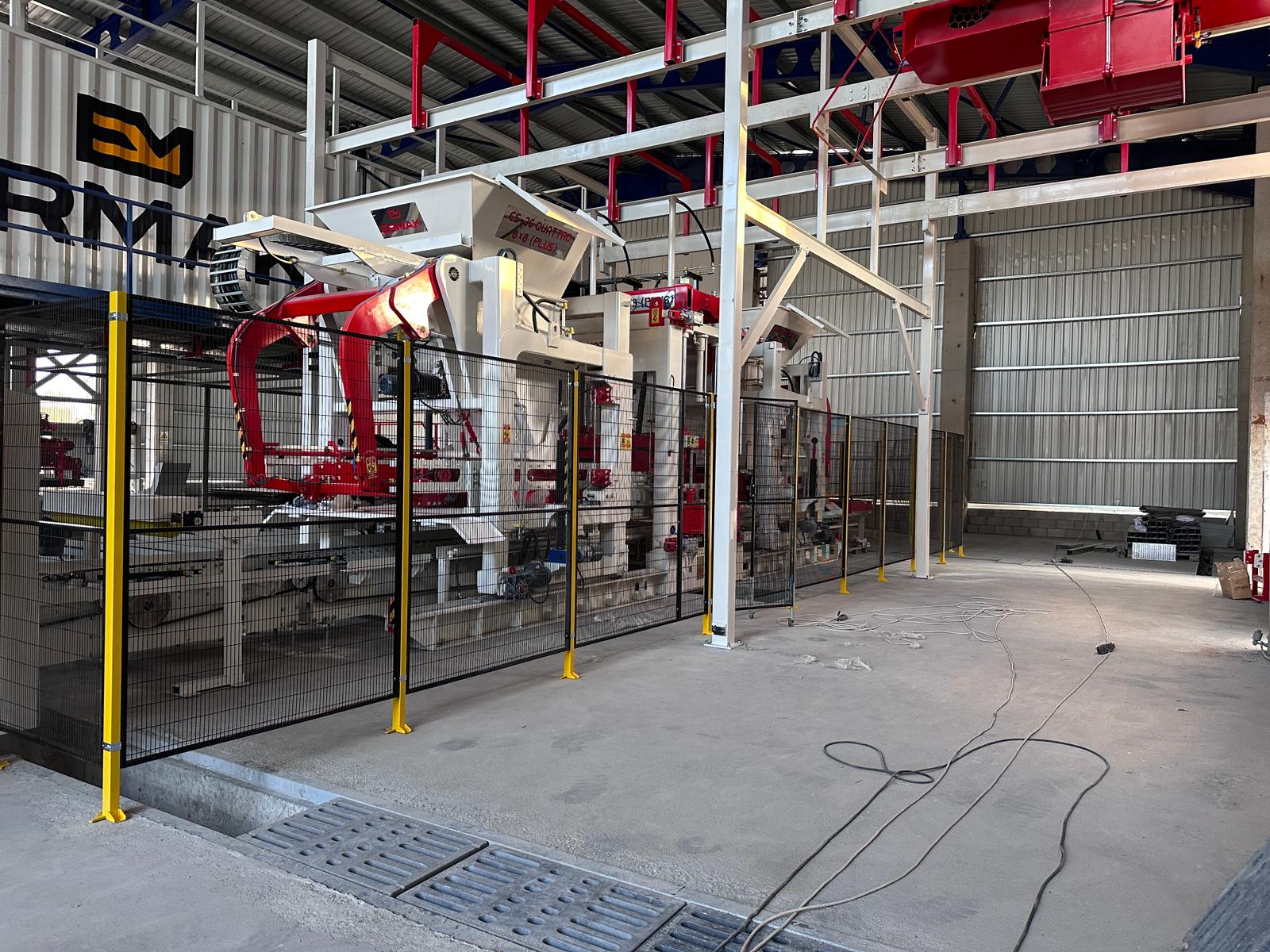
Automatic cubers, conveyors and palletizing equipment contain moving mechanisms capable of handling heavy loads. Appropriate guarding, access control, emergency stops and interlocks are therefore essential.
The safety concept should include maintenance and setup conditions as well as normal automatic operation. Operators need controlled access for product changes, cleaning and troubleshooting without exposure to unexpected movement.
Safety should be designed around the complete cell rather than treating each machine as an independent protected area.
PLC Integration Helps the Whole Dry Side Work Together
Cubing, pallet feeding, strapping, wrapping and conveyors need to exchange status information. If the wrapping system is unavailable, upstream equipment should respond in a controlled way rather than continuing to push finished packages into a blocked area.
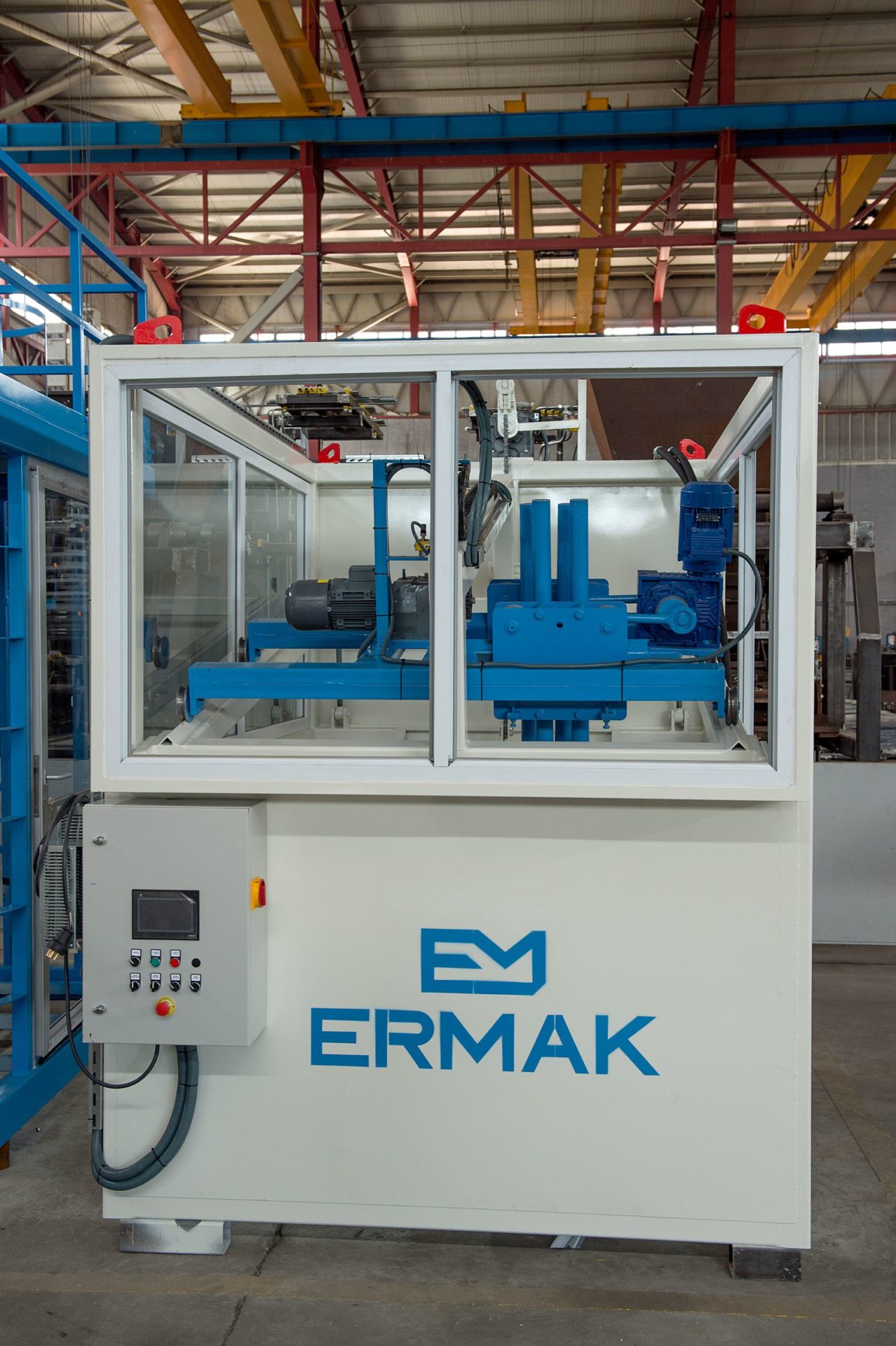
A clear HMI can show product recipes, package counts, machine status and alarm information. This makes the line easier to operate and helps maintenance teams understand why production has stopped.
Good automation turns several separate machines into one coordinated dry-side system.
Alarm History Can Reveal Repeating Losses
Short stops may appear insignificant individually but create substantial production loss over time. Repeated pallet-positioning alarms, packaging-material issues or conveyor sensor faults can reduce effective capacity without causing one major breakdown.
Alarm history allows the maintenance team to identify these recurring problems. Once the pattern becomes visible, the root cause can be investigated instead of simply resetting the machine each time.
This is particularly useful in multi-shift plants where different operators may otherwise report the same problem differently.
Preventive Maintenance Protects Packaging Capacity
Automatic cubing systems contain mechanical guides, conveyors, sensors, lifting components and automation hardware that need periodic inspection. Strapping and wrapping machines also contain wear components and consumable-handling mechanisms.
Preventive maintenance should therefore include the complete packaging line. A minor component in the pallet feeder or wrapping machine can stop the same production flow as a major cubing failure. Maintaining the complete line as one system helps protect dry-side availability.
Critical Spare Parts Should Be Identified
Not every spare part needs to be stored on site, but some low-cost components can have a high production impact. Sensors, pneumatic elements, drive components and selected machine-specific parts may justify local stock if delivery time is long.
The spare-parts strategy should consider failure probability, production impact, lead time and local availability. This prevents the factory from carrying excessive inventory while still protecting against avoidable long shutdowns.
Dry-Side Data Can Support OEE Improvement
The main machine is not the only section that should be monitored. Cubing stops, packaging delays and pallet shortages can all create production losses that eventually reach the wet side.
Recording waiting time, completed packages, alarms and stop reasons helps management understand whether dry-side capacity is being used effectively. If the main machine frequently waits for empty production pallets, the data can help determine whether the cause is cubing, packaging, pallet return or another section.
This supports more accurate OEE analysis for the complete plant rather than measuring only the block machine.
Retrofit Projects Need Detailed Flow Analysis
Automatic cubing and packaging can often be added to an existing plant, but retrofit projects require careful layout study. The existing dry side may not have enough room for new conveyors, commercial pallet feeding, safety fencing and packaging equipment.
The production pallet return route also needs to remain efficient. Adding automation without reviewing the complete flow can create unnecessary transfers or new bottlenecks.
Before selecting equipment, it is useful to map the current process and identify where products, pallets and forklifts move today.
New Plants Can Be Designed Around Automation
A new plant offers more freedom because cubing and packaging can be considered from the initial layout stage. Production flow, maintenance access, commercial pallet storage and forklift routes can all be arranged around the planned capacity.
This also makes it easier to balance the main machine, curing system and dry side. Investors evaluating a new plant can review our concrete block machine and production line catalogs to compare machine capacities and supporting systems before the factory layout is finalized.
Total Cost of Ownership Matters More Than Equipment Price
The purchase price of a cubing and packaging system is only one part of its economic impact. Labour, energy, maintenance, packaging materials, spare parts and downtime all contribute to long-term operating cost.
The investment should also be evaluated according to the additional production it can support. If automation removes a dry-side bottleneck and allows the main machine to operate more consistently, the recovered production capacity may create more value than direct labour savings.
A useful comparison therefore looks at total cost per saleable packaged product over several years rather than only the original equipment price.
When Is Automatic Cubing Most Valuable?
Automatic cubing becomes especially attractive in high-volume plants, multi-shift factories and operations where heavy manual handling is difficult to sustain. It is also valuable when customers expect consistent package geometry or when export logistics require predictable pallet dimensions.
Lower-capacity factories with simple product ranges may not always need the most advanced automation. In some cases, a semi-automatic or simpler mechanical solution can provide better economics. The system should be selected according to real production requirements rather than automation level alone.
Ermak Makine’s Approach to Cubing and Packaging
At Ermak Makine, we consider cubing and packaging as part of the complete production line. Main machine capacity, curing flow, production pallet circulation, cubing, commercial pallet supply and final packaging should all support the same production target.
The product portfolio is equally important. A system intended for blocks, pavers and different concrete products should provide the required flexibility without sacrificing sustainable throughput. The objective is to create a dry-side configuration that supports the main machine and prepares stable, saleable packages efficiently.
Companies planning a new concrete block or paver plant, or considering dry-side modernization for an existing facility, can contact Ermak Makine to discuss product range, capacity requirements and complete plant configuration.
What Defines a Good Cubing and Packaging System?
A good cubing system is not simply the machine that stacks products fastest. It needs to create stable commercial packages, return production pallets efficiently, support the required product range and integrate correctly with strapping, wrapping and logistics.
The packaging section should also have enough capacity reserve to absorb normal production variation without becoming unnecessarily oversized. Maintenance, safety and spare-parts planning should support long-term availability.
For block and paver manufacturers, the real value of automatic cubing and packaging comes from turning cured products into consistent, transport-ready commercial packages without restricting the net output of the complete production plant.
Frequently Asked Questions
What is an automatic cubing system?
It is a dry-side system that arranges cured concrete blocks, pavers or other products into predefined commercial packages or cubes.
Is automatic cubing the same as robotic palletizing?
Not always. Mechanical cubing and robotic palletizing can perform similar functions using different handling technologies and levels of flexibility.
Why can cubing capacity affect the main machine?
If the dry side cannot process cured products quickly enough, production pallets return slowly and the main machine may eventually need to stop.
How should cubing capacity be measured?
It should be evaluated using the real product and package design, preferably as sustainable packages, units or square metres per hour or shift.
Does product type affect cubing speed?
Yes. Product size, weight, geometry and package arrangement can all change the actual handling cycle.
Why are cubing recipes useful?
They allow different stacking patterns and package configurations to be stored and recalled during product changeovers.
What is the difference between a production pallet and a commercial pallet?
Production pallets circulate inside the factory and are reused, while commercial pallets may remain with the finished product and leave the factory.
Is commercial pallet feeding important?
Yes. A cubing system can stop if empty commercial pallets are not supplied at the required rate.
Should packages always be strapped?
Not necessarily. The requirement depends on product geometry, package stability, transport conditions and customer requirements.
Is wrapping always required?
No. It depends on the product, storage conditions and commercial packaging standard.
Can decorative pavers be automatically cubed?
Yes, but handling movements and contact points should protect finished surfaces and sensitive edges.
Can cubing automation be added to an existing plant?
In many cases, yes. Existing conveyors, floor space, pallet return, safety zones and packaging flow need to be evaluated first.
Does automatic cubing reduce labour?
It can significantly reduce repetitive heavy handling, although operators, maintenance personnel, quality-control staff and forklift drivers may still be required.
How does automatic cubing affect OEE?
A properly sized and reliable dry side can reduce waiting caused by packaging and pallet-return bottlenecks, supporting higher plant availability and performance.
What is the most important factor when selecting an automatic cubing and packaging system?
The most important factor is the ability to process the actual product range at sustainable capacity while creating stable packages and maintaining the production pallet flow required by the complete plant.