Selecting the right curbstone machine is an important decision for any company planning to manufacture concrete kerbstones, border elements and related concrete products.
The machine must do more than simply produce a high number of units per shift. It should also help the factory maintain consistent dimensions, surface quality and production stability over long operating periods.
This is why curbstone-machine selection should begin with the product and the market rather than with the largest available machine.
The first question should not simply be:
“Which curbstone machine has the highest capacity?”
A better question is:
“Which production system can manufacture the curbstones required by our market at the right quality, capacity and operating cost?”
The answer depends on several connected factors, including the curbstone dimensions, production method, mould system, desired automation level and the capacity of the rest of the factory.
Start with the Curbstone Products You Want to Manufacture
Curbstones are available in many different dimensions and profiles.
They may be used for:
road projects, pavements, landscaping, industrial areas and public infrastructure.
A factory producing relatively small landscaping borders may have different requirements from a plant manufacturing large road kerbstones.
Before selecting the machine, the investor should therefore identify the main products that will generate sales.
The most important information includes product dimensions, expected daily quantity and whether the factory will also manufacture products such as paving stones, hollow blocks or drainage elements.
This product plan determines the type of machine and mould system required.
One Machine Can Potentially Produce More Than Curbstones
For many investors, production flexibility is an important advantage.
A machine selected only for one curbstone size may be suitable if the factory has a large and stable contract for that product.
However, many manufacturers prefer a machine that can also produce other concrete products by changing the mould.
Depending on the machine configuration, the same production system may be used for:
curbstones, paving stones, hollow blocks, grass blocks and different landscape products.
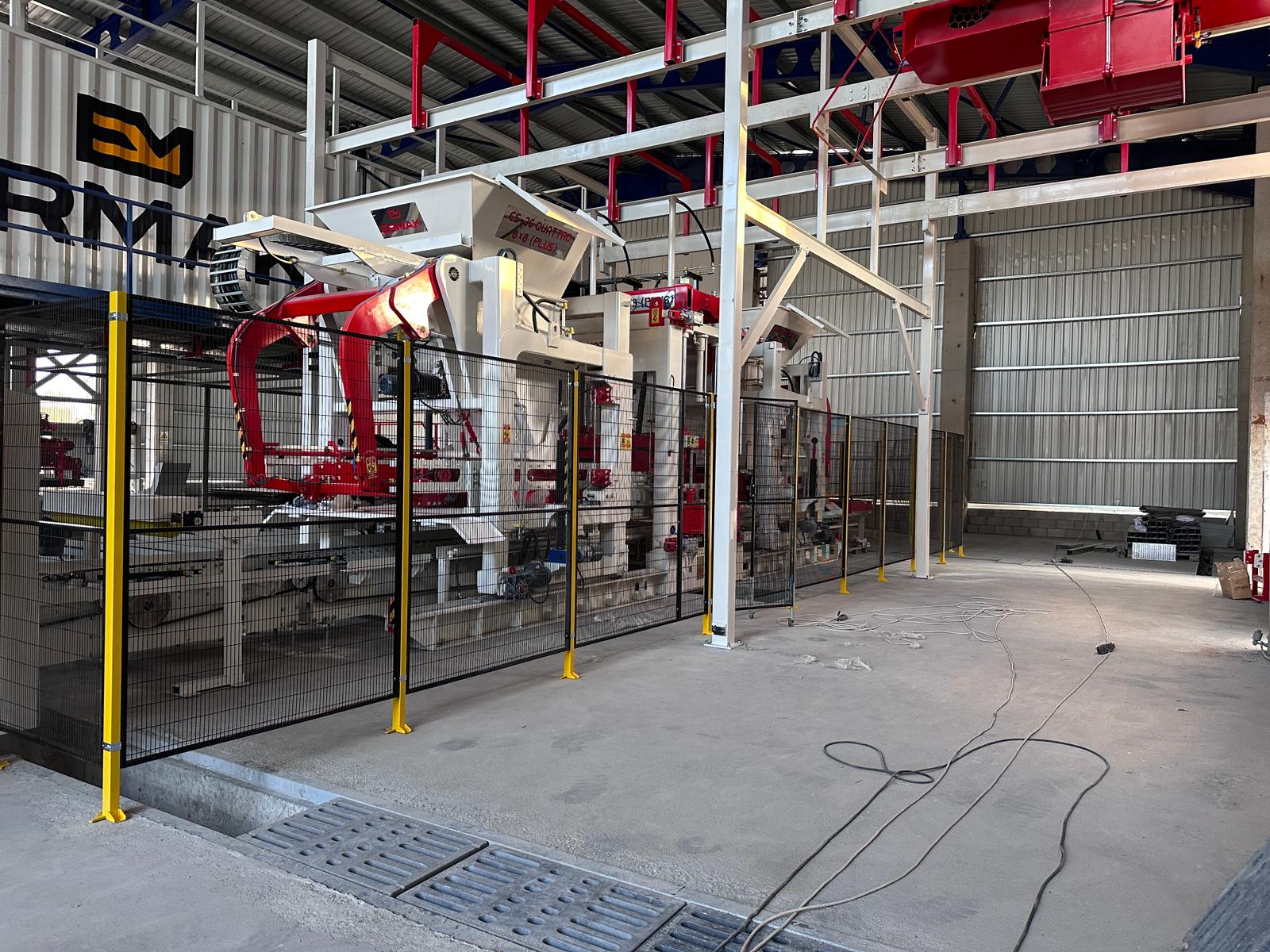
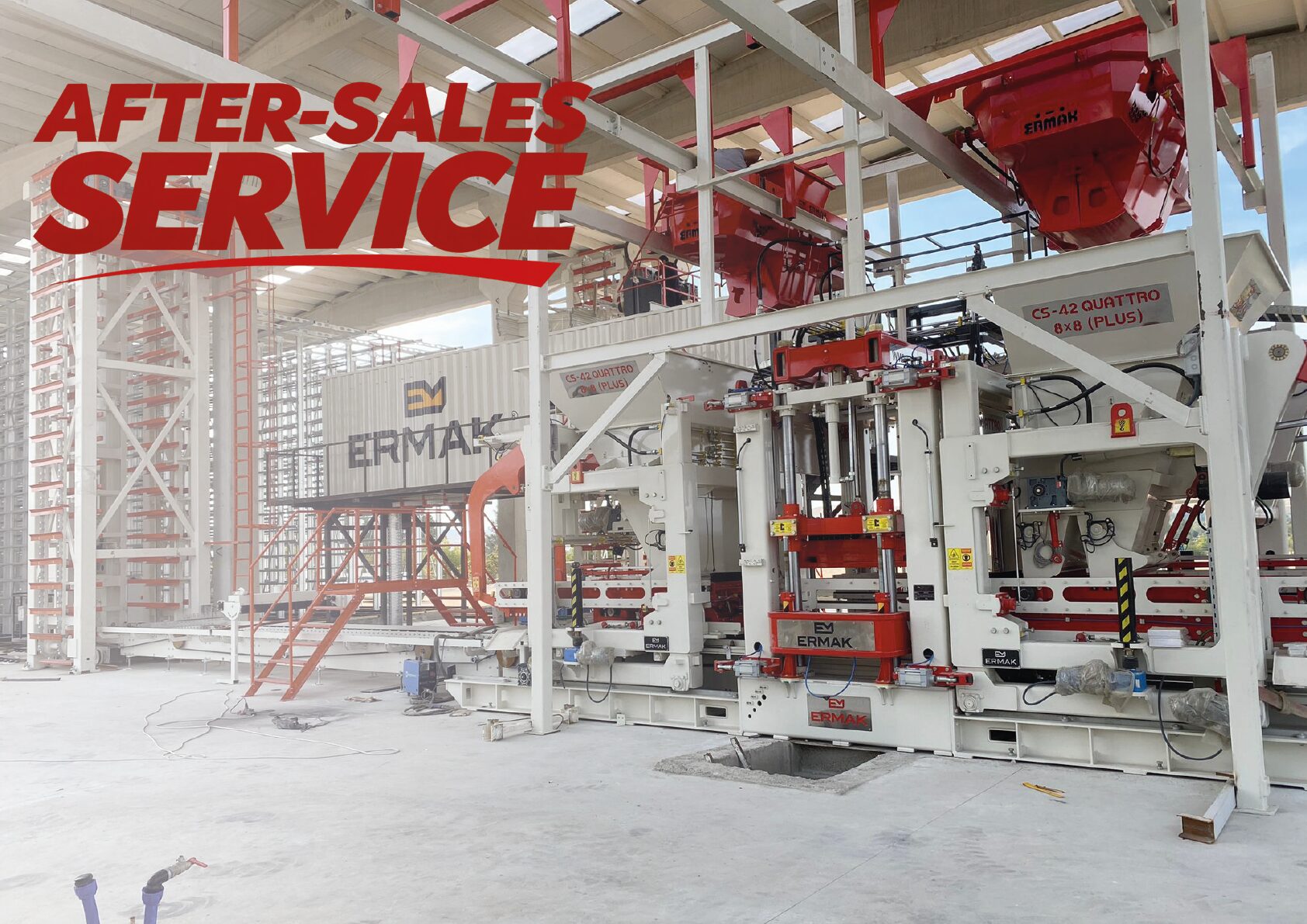
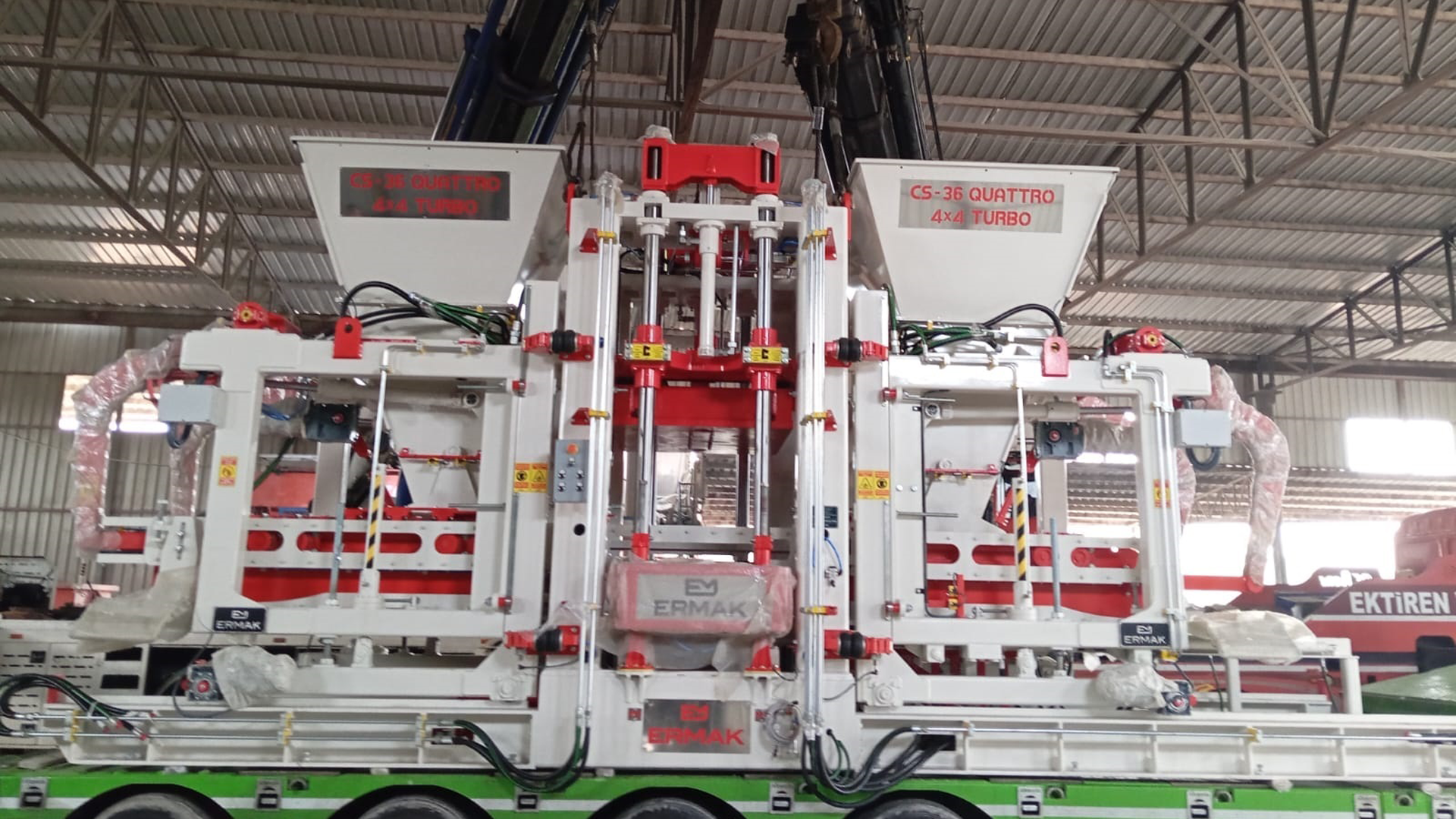
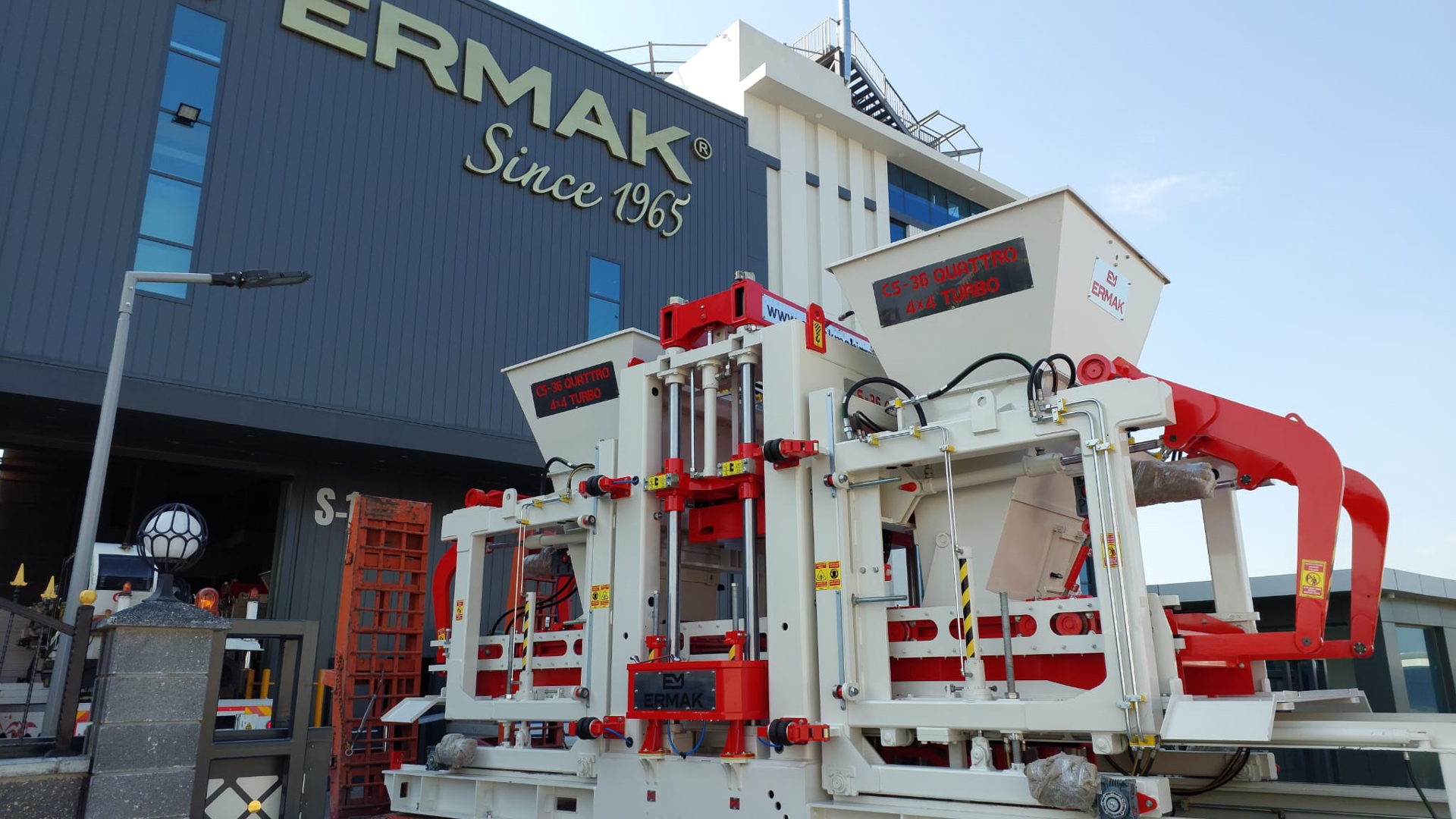
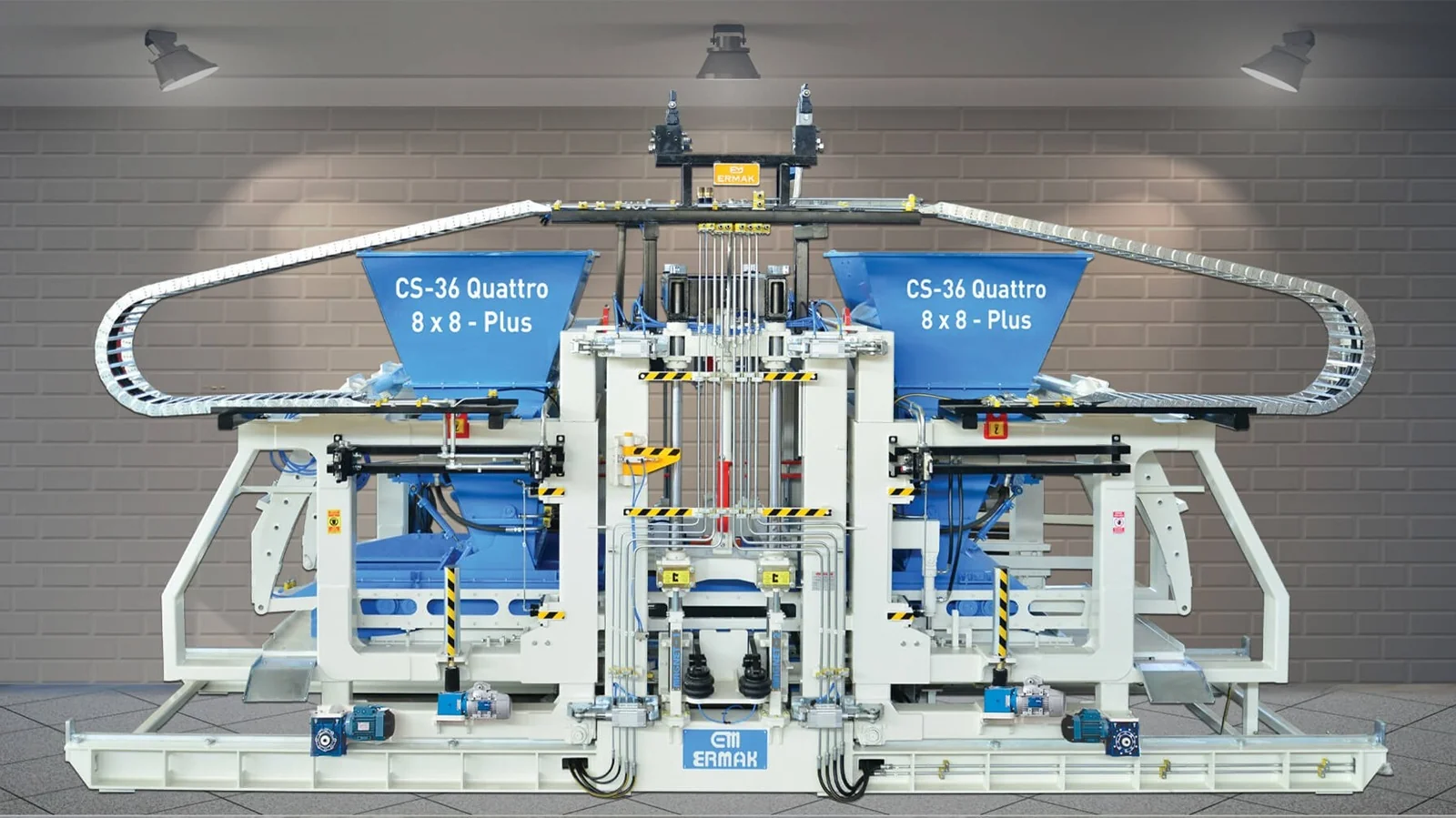
Ermak’s current Quattro product range, for example, is designed for the production of several concrete-product families, including curbstones, pavers and concrete blocks.
For factories serving several market segments, this flexibility can make the investment more useful over the long term.
Vibro-Press or Wet-Press Production?
One of the first technical decisions is the production method.
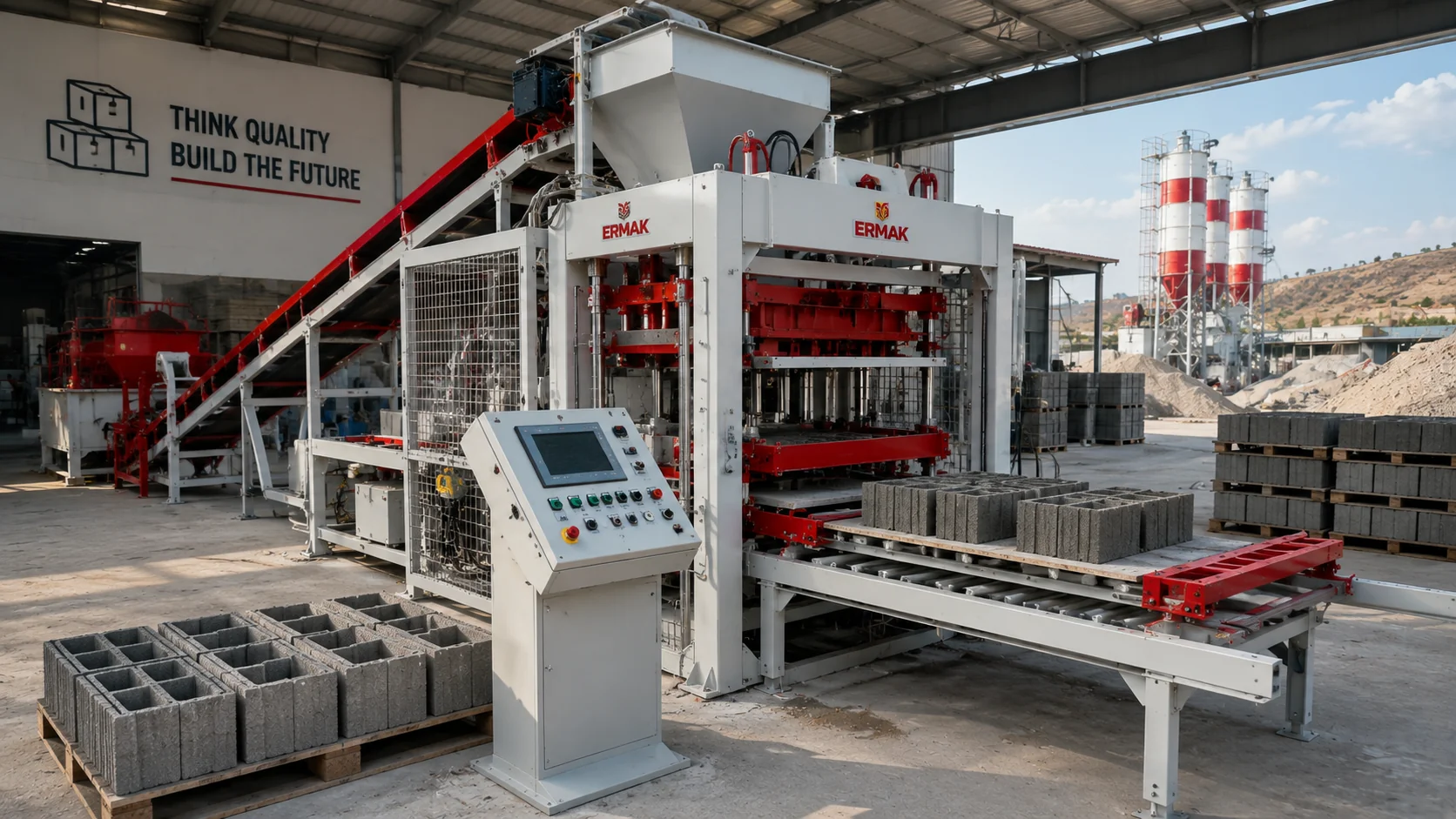
Many curbstones can be produced using a vibro-press concrete block machine. In this process, relatively dry concrete is placed in the mould and compacted using vibration and pressure.
This type of production can be particularly useful when the same factory will also manufacture paving stones or blocks.
Another option for certain curbstone products is wet-press production.
Wet-press machines use a different concrete consistency and production process and can be suitable for specific kerbstone and concrete-element applications.
Ermak currently offers both multi-product vibro-press machines and a dedicated WET-3000 wet-press system for curbstone and related concrete-element production.
The correct technology depends on the exact product specification rather than one method always being better than the other.
Production Quality Should Come Before Maximum Speed
High capacity is valuable, but only when the products are saleable.
A machine running very quickly while creating frequent dimensional or surface defects does not provide strong production economics.
In curbstone production, customers expect products to remain consistent across large project quantities.
This means the machine should help maintain stable:
- Product dimensions
- Edge quality
- Surface appearance
- Product height
- Overall shape
This does not require the production process to become unnecessarily complicated.
It simply means that machine speed and product quality should be evaluated together.
Curbstone Capacity Depends on the Product
A common mistake is expecting one fixed capacity figure for every curbstone.
The number of products manufactured per cycle depends on the dimensions of the curbstone and the available mould area.
A smaller product may allow several pieces to be manufactured in one cycle.
A much larger kerbstone may reduce the number of pieces per production pallet.
For this reason, investors should request capacity information specifically for the curbstone they intend to manufacture.
A statement such as:
“This machine produces X products per shift”
has limited value unless the product dimensions are also defined.
Do Not Oversize the Machine Without a Market Reason
A very large curbstone machine may appear attractive because it offers significant production potential.
However, that capacity must have a commercial purpose.
If the market requires 3,000 curbstones per day and the factory installs equipment capable of producing several times that quantity, the investor may also have to pay for larger:
concrete preparation, curing, pallet circulation and storage systems.
Unused capacity still requires capital.
A more practical strategy is to select a machine that meets current demand while providing reasonable room for future growth.
Avoid Selecting a Machine That Is Too Small
Undersizing creates the opposite problem.
If market demand quickly exceeds production capacity, the factory may need:
additional shifts, more labour and longer daily operating hours.
This can increase maintenance requirements and create unnecessary pressure on the production team.
The most suitable curbstone machine therefore sits between these two extremes.
It should be large enough to support expected growth without being dramatically oversized for the real market.
The Mould Is Central to Curbstone Quality
The curbstone mould is one of the most important components in the production process.
The final geometry of the product is created inside the mould.
This includes:
the width, length, profile, edge shape and other dimensional characteristics of the curbstone.
A high-quality production machine cannot completely compensate for a poor or heavily worn mould.
For this reason, the machine and mould should be considered together.
When purchasing a curbstone machine, investors should make sure the supplier can provide moulds suitable for the required product dimensions and production method.
Mould Quality Influences Long-Term Production Consistency
A new mould may produce good-looking products during initial testing.
The more important question is how well it maintains its geometry after long-term production.
Concrete aggregate is abrasive.
Repeated filling, vibration and pressing gradually wear the mould.
As wear develops, product dimensions can also change.
For large infrastructure projects where thousands of curbstones must be installed together, dimensional consistency is particularly important.
The most economical mould is therefore not always the one with the lowest purchase price.
A better comparison is:
Mould cost relative to the quantity of saleable products produced during its useful life.
Mould Change Matters in Multi-Product Factories
A factory producing only one curbstone size for long periods may rarely change moulds.
A more flexible plant may manufacture:
road kerbstones one day, paving stones another day and hollow blocks later in the week.
In this type of production environment, mould-change time becomes important.
Every long mould change reduces available production time.
This is why factories with a broad product portfolio should consider both:
production capacity and product-change flexibility.
Ermak’s current Quattro range includes configurations with quick mould-change systems designed for multi-product production.
Concrete Preparation Is Part of Machine Selection
A curbstone machine cannot operate efficiently without a stable concrete supply.
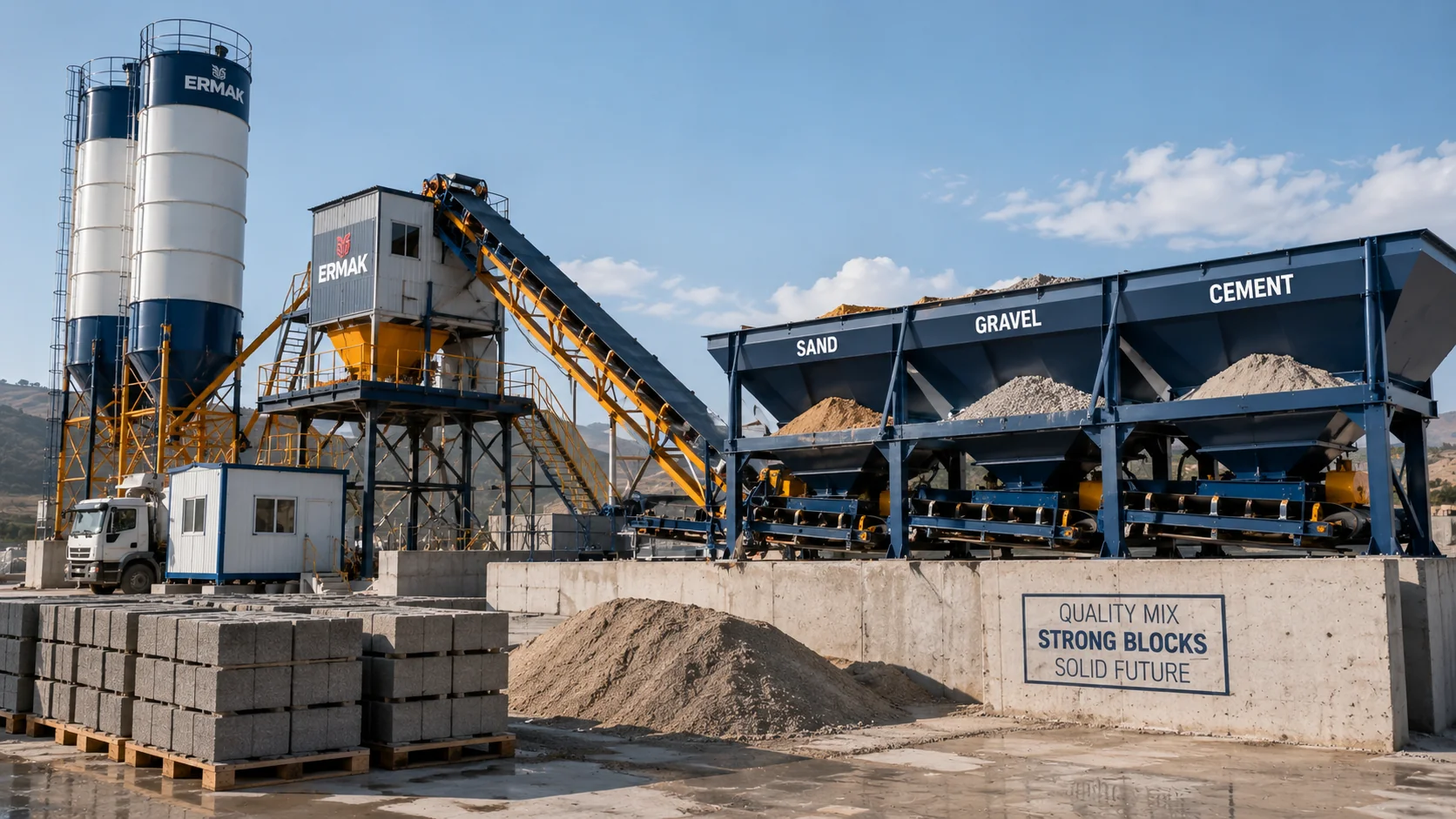
The batching plant and mixer should be able to prepare enough concrete to keep the main machine running without unnecessary waiting.
If a high-capacity machine frequently stops because concrete is unavailable, the additional machine capacity provides little benefit.
The production line should therefore be planned as a connected system:
Concrete preparation → Curbstone machine → Curing → Handling → Storage
The speed of each section should be reasonably balanced.
Concrete Consistency Influences Product Appearance
Curbstone quality is affected not only by the machine and mould but also by the concrete itself.
If concrete consistency changes significantly between batches, products may show differences in:
surface appearance, edge definition and compaction.
This is why reliable mixing and controlled concrete preparation are important.
Operators should not have to continuously change machine settings because the concrete behaves differently from one batch to the next.
A stable production process is easier to manage and generally produces more consistent products.
Vibration Should Produce Consistent Compaction
In vibro-press curbstone production, vibration helps the concrete settle and compact inside the mould.
The objective is not simply to use the highest possible vibration.
The objective is to compact the product consistently.
Correct vibration can contribute to better:
surface structure, density and edge quality.
If product quality begins to change, the factory should not automatically increase vibration.
Concrete consistency, mould condition and production settings should also be checked.
Good production comes from balance rather than relying on one machine parameter.
Automation Should Match the Factory
Curbstone machines are available with different automation levels.
A smaller factory may operate economically with a simpler configuration.
A high-capacity plant producing throughout several shifts may benefit much more from automated:
pallet transport, curing transfer and product handling.
More automation generally increases initial investment.
However, it can also reduce repetitive manual work and make material flow more predictable.
This means automation should not be selected simply because a system is described as “fully automatic.”
The correct question is:
Which level of automation improves the economics of this particular factory?
Labour Costs Should Be Considered
Local labour conditions influence the automation decision.
In a market where labour costs are high, reducing repeated manual handling may provide a relatively fast return on investment.
In another market with lower labour costs and lower production volume, a simpler system may be more appropriate.
This is why the same curbstone-machine configuration is not ideal for every country or factory.
Production planning should reflect local operating conditions.
Curing Capacity Must Follow Machine Capacity
Curbstones are not finished when they leave the mould.
Fresh concrete products require curing before they reach the required handling and final performance characteristics.
If the curbstone machine produces faster than the curing system can accept products, production will eventually slow down.
This creates a common factory problem:
the main machine has high theoretical capacity but the plant cannot use it.
Curing capacity should therefore be calculated during machine selection rather than after the main machine has already been purchased.
Production Pallets Should Also Be Planned
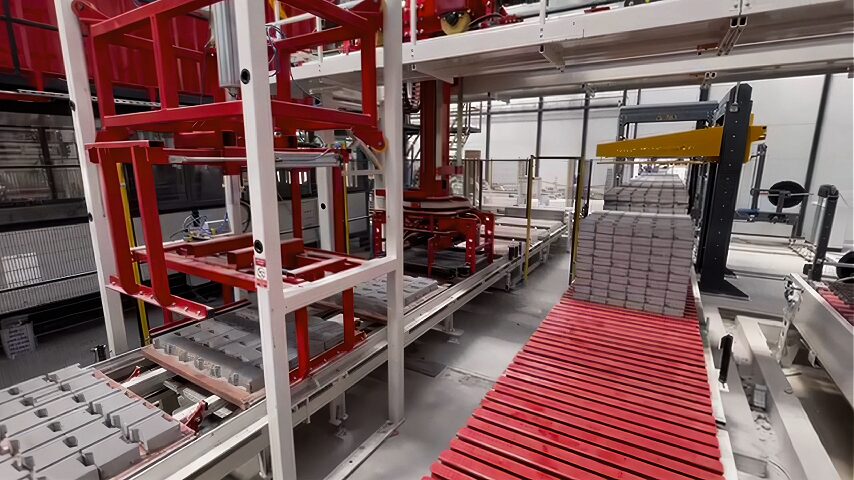
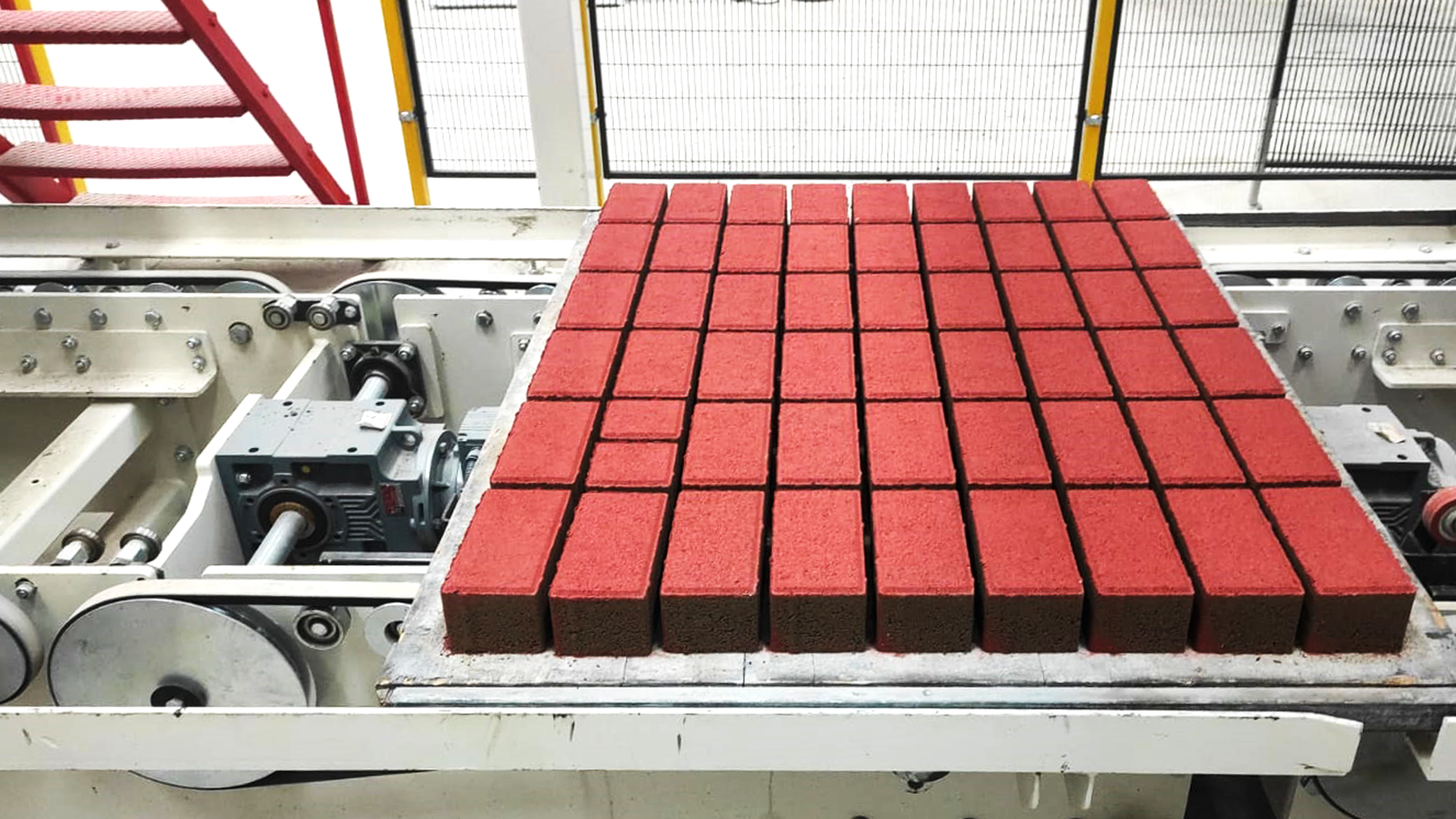
In vibro-press production, fresh products normally travel through the line on production pallets.
These pallets circulate between:
the machine, curing section and dry side.
If too few pallets are available, the main machine may wait for empty pallets to return.
The physical condition of the pallets is also important because damaged or uneven pallets can influence product stability and dimensional consistency.
For this reason, pallet quantity and quality should be included in the original plant budget.
Product Handling Becomes More Important with Heavy Curbstones
Curbstones can be heavier than many standard paving products.
This affects how products are handled after curing.
Low-volume production may allow relatively simple handling methods.
As production capacity increases, manual handling can become inefficient.
Higher-output factories should therefore consider how cured curbstones will be:
removed from production pallets, grouped, stacked and prepared for delivery.
The handling solution does not need to be unnecessarily complex, but it must match production volume.
Factory Layout Can Improve Production Efficiency
The machine should not be selected without considering where it will be installed.
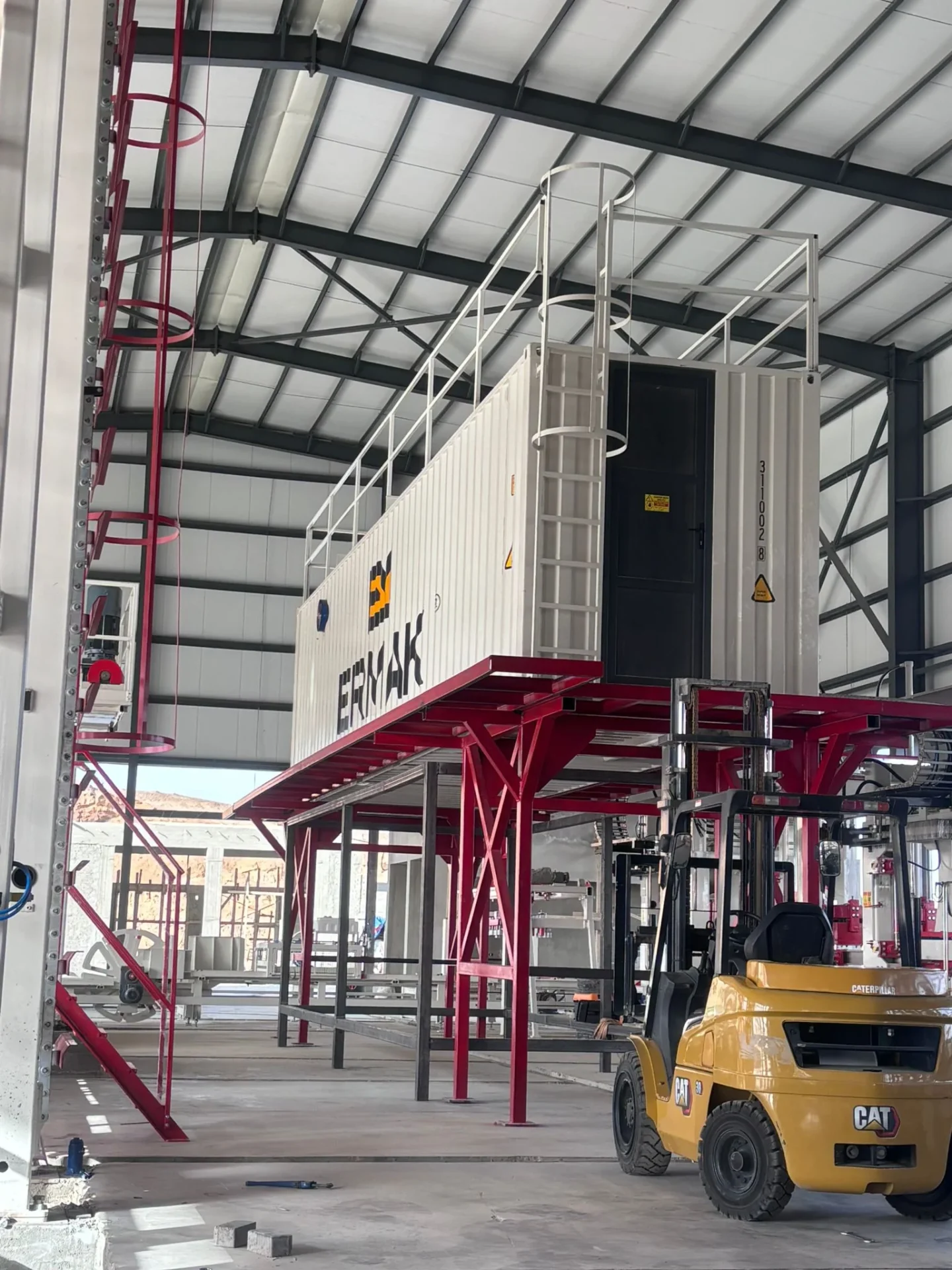
An efficient plant should allow materials and products to move through the factory with as little unnecessary handling as possible.
A practical flow is generally:
Raw materials → Batching → Production → Curing → Finished-product handling → Storage → Shipping
Poor layout increases:
forklift movement, labour and the chance of product damage.
For heavy curbstones, good internal logistics are especially valuable.
Storage Requirements Should Not Be Underestimated
High-capacity production requires sufficient finished-product storage.
Consider a factory producing several thousand curbstones per day.
Even a few days of inventory can require a substantial outdoor or indoor storage area.
The factory should also provide enough space for:
forklift movement and truck loading.
A machine with high capacity is useful only if the facility can physically manage the products being produced.
Quality Control Should Be Simple but Regular
Curbstone quality control does not need to make daily production unnecessarily complicated.
A simple routine can monitor:
product dimensions, visible surface quality and reject rate.
Additional testing should be performed according to the relevant product and market standards.
Regular measurements are particularly useful because they can reveal gradual changes caused by mould wear or production variation.
It is much better to identify a dimensional change early than after a large project quantity has already been produced.
Reject Rate Should Be Considered When Comparing Machines
A machine’s gross production figure does not tell the entire story.
For example:
Machine A
Produces 5,000 curbstones per shift but has a 5% reject rate.
Saleable production:
4,750 curbstones
Machine B
Produces 4,900 curbstones but has a 1% reject rate.
Saleable production:
4,851 curbstones
Although Machine A has a higher gross output, Machine B produces more saleable units in this simplified example.
This is why investors should compare net saleable production, not only theoretical cycles.
Reliability Matters in Long-Term Production
A curbstone machine is expected to operate for many years.
Purchase price should therefore not be the only consideration.
A cheaper machine may become expensive if it suffers from:
frequent downtime, difficult spare-parts availability or excessive maintenance.
Before investment, buyers should also consider:
service support, spare-parts availability and maintenance requirements.
The real economic value of the machine becomes much clearer when these factors are included.
Consider Total Cost Instead of Machine Price Alone
The investment should be evaluated through the complete cost of producing saleable curbstones.
This includes:
Machine investment + Labour + Energy + Maintenance + Moulds + Rejects + Downtime
A more expensive machine may sometimes provide lower long-term operating cost.
A lower-priced machine can also be the correct investment if it matches the real production requirement and operates reliably.
There is no universal answer.
The correct choice is project-specific.
When Is a Multi-Product Machine a Better Choice?
A multi-product vibro-press machine can be particularly attractive when the business wants to serve several market segments.
For example, the factory may produce:
curbstones for infrastructure contracts and paving stones for landscaping customers.
Changing moulds allows the same main production equipment to serve different orders.
This can reduce the need for separate machines.
However, if the factory has a very specific high-volume curbstone product, a dedicated production solution may sometimes be more appropriate.
The product strategy should therefore guide the machine strategy.
Ermak Curbstone Production Solutions
Ermak’s current machine portfolio includes both multi-product concrete block machines capable of producing curbstones and a dedicated wet-press solution for certain curbstone applications.
This allows the production method to be evaluated according to the actual product rather than forcing every curbstone project into the same machine configuration.
For a new factory, the most useful starting information is usually:
the curbstone dimensions, required daily quantity, additional products to be manufactured and desired automation level.
From there, the main machine, moulds and supporting equipment can be selected as one production system.
Choosing the Right Curbstone Machine
The right curbstone machine should provide a balance between:
- Required product quality
- Suitable production capacity
- Product flexibility
- Appropriate automation
- Long-term operating cost
A factory should not select a machine simply because it is the fastest available.
It should also not select the smallest machine simply to reduce initial investment.
The best system is the one that can consistently produce the required products while supporting the factory’s real sales plan.
This approach creates a stronger foundation for long-term concrete production.
For new curbstone manufacturing projects, machine selection should therefore begin with the product and end with the complete production line.
High-quality curbstone production is not created by one machine specification. It is created by the correct combination of machine, mould, concrete preparation, curing and production planning.
Frequently Asked Questions
What type of machine is used to produce concrete curbstones?
Depending on the curbstone design and production method, vibro-press concrete block machines or dedicated wet-press systems can be used.
Can the same machine produce curbstones and paving stones?
Many multi-product vibro-press machines can manufacture curbstones, pavers and other concrete products by changing the mould.
How should curbstone-machine capacity be calculated?
Capacity should be calculated for the actual curbstone dimensions and mould configuration. Different products may have different quantities per machine cycle.
Is the highest-capacity curbstone machine always the best option?
No. The machine should match realistic market demand and the capacity of the rest of the production line.
Why is the curbstone mould important?
The mould creates the product geometry and directly influences dimensional consistency. Mould condition can also affect long-term production quality.
Does automation improve curbstone production?
It can improve material flow and reduce repetitive manual handling, particularly in high-capacity plants. The appropriate level depends on production volume and local labour costs.
Why must the batching plant match the curbstone machine?
If concrete cannot be prepared quickly enough, the main machine has to wait and its production capacity cannot be fully used.
Is curing important in curbstone production?
Yes. Fresh curbstones need controlled curing to develop the required concrete properties. Curing capacity should be able to accept the machine’s production.
Should product handling be considered when selecting a curbstone machine?
Yes. Curbstones can be relatively heavy, so the dry-side handling and storage system should be suitable for the expected daily production.
What should be considered besides machine price?
Capacity, mould costs, labour, automation, maintenance, energy, spare parts, reject rate and after-sales support should all be considered.
When is a wet-press curbstone machine useful?
Wet-press technology can be suitable for certain curbstone and concrete-element products where that production process matches the required geometry and finish. The decision should be based on the actual product specification.
What is the most important rule when selecting a curbstone machine?
Select the machine according to the product, real market demand and complete production-line requirements, rather than choosing equipment based only on maximum theoretical capacity.