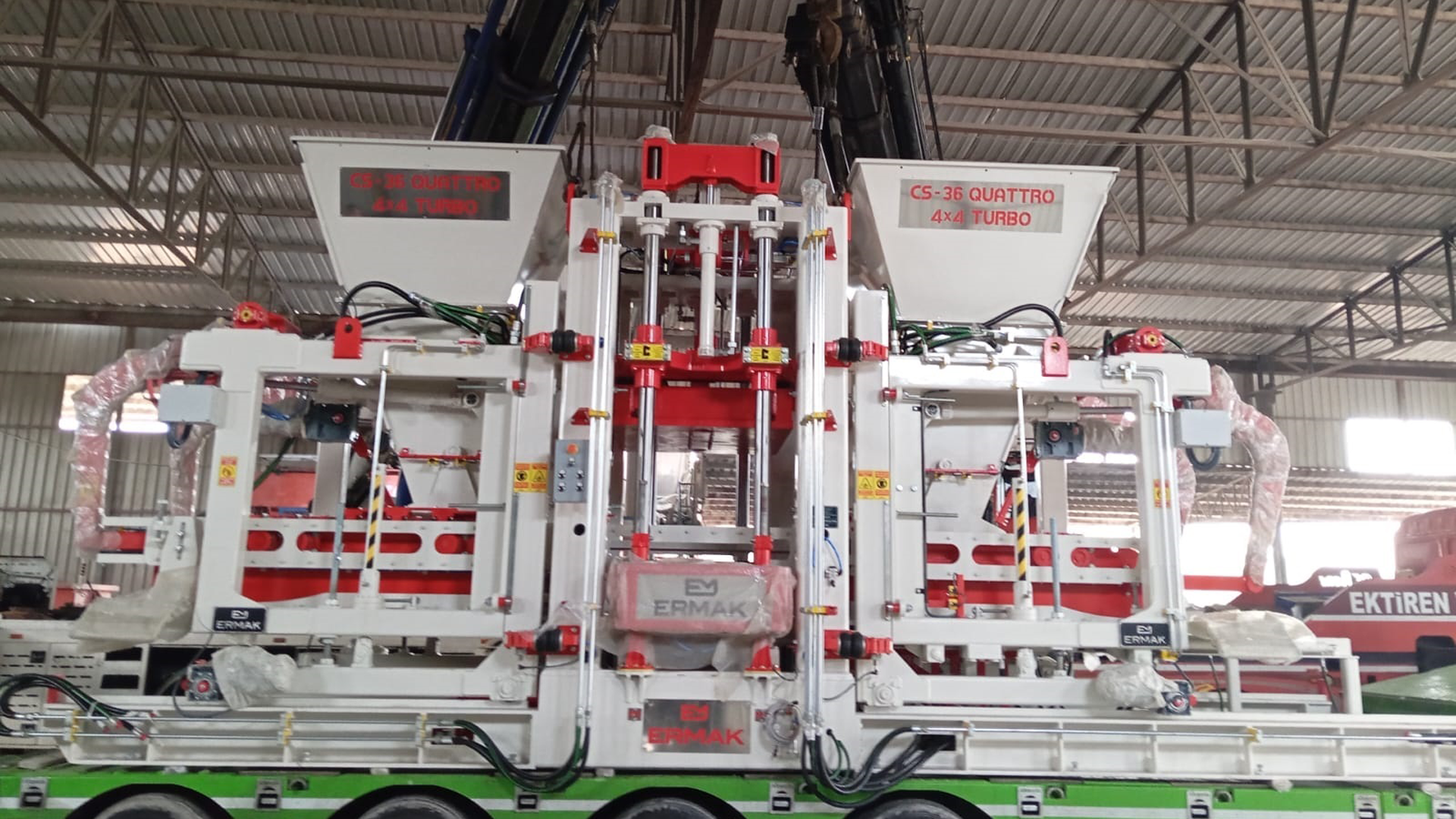
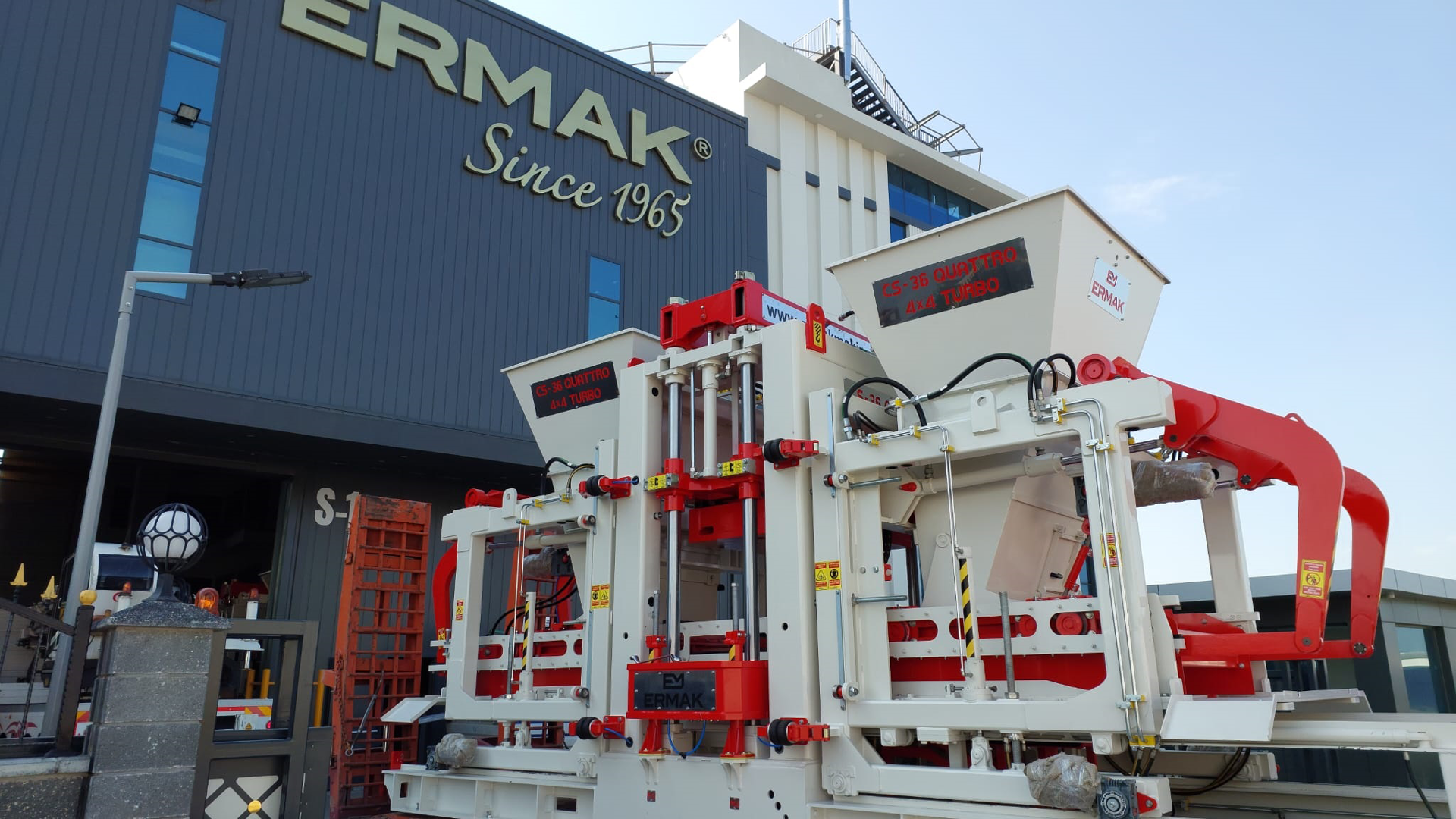
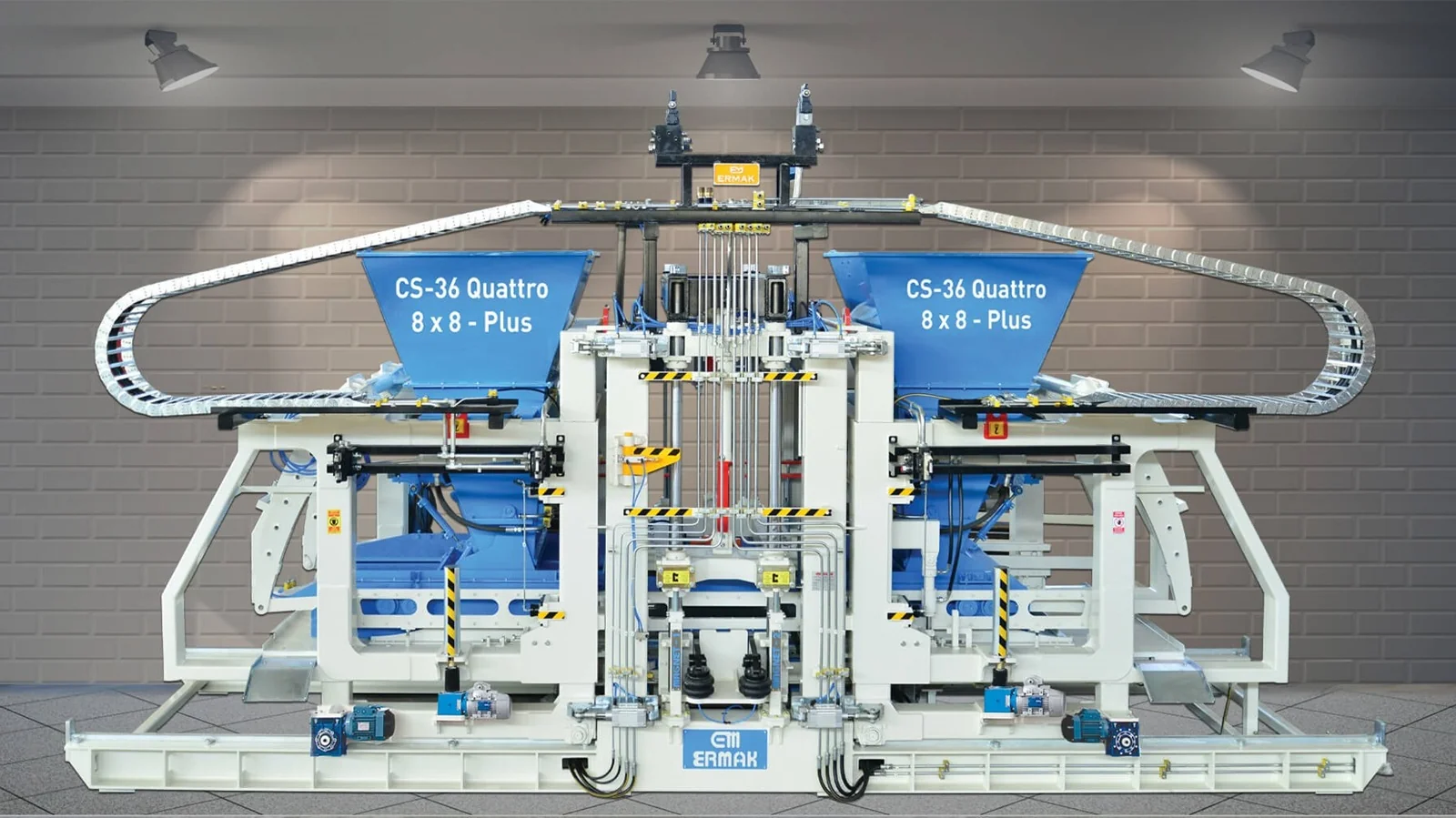
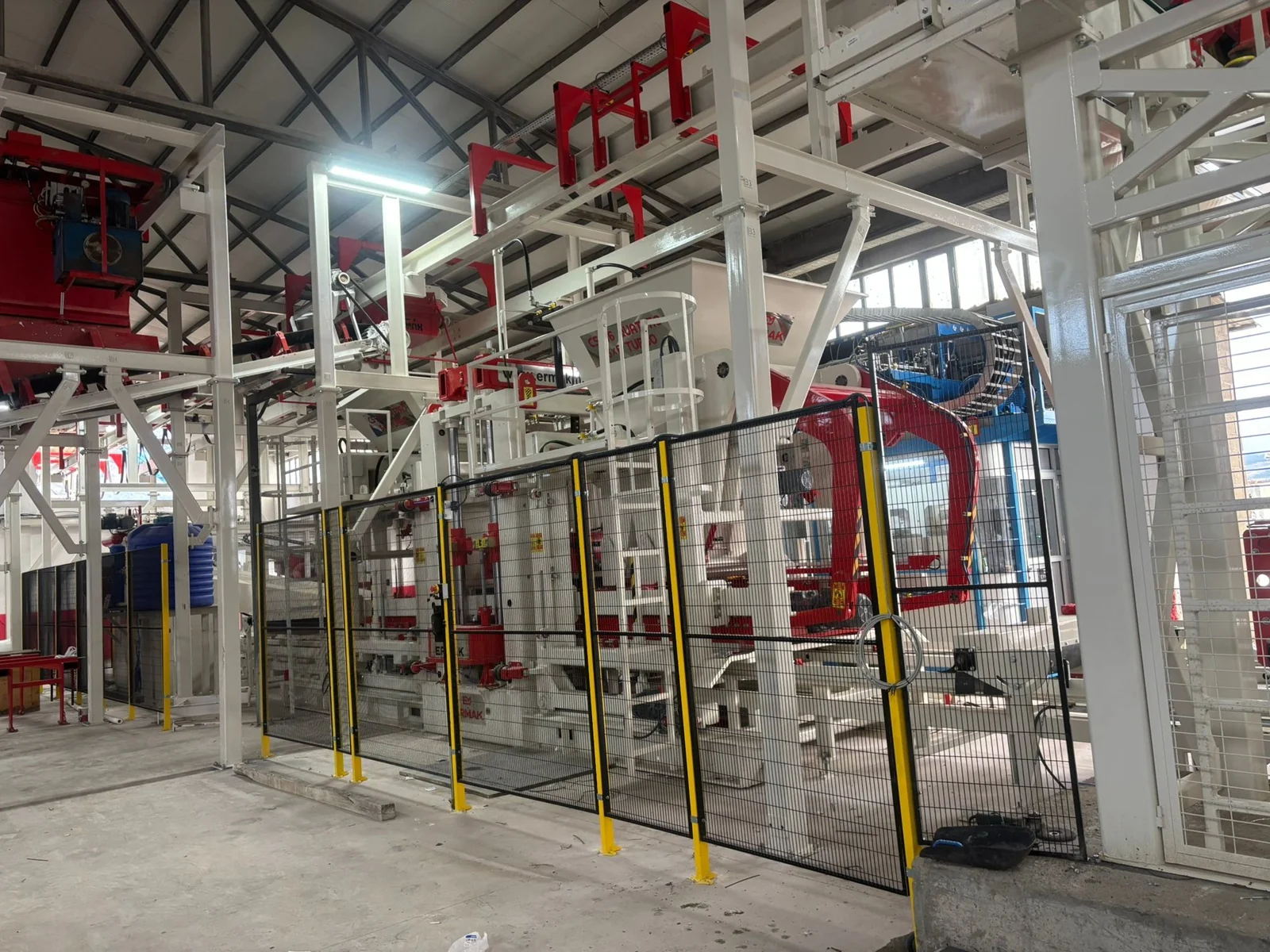
Choosing the right concrete block machine is one of the most important decisions when establishing or expanding a concrete products manufacturing plant. The selected machine affects not only daily production capacity but also product quality, labour requirements, energy consumption, maintenance costs and the long-term profitability of the investment.
A concrete block machine should not be selected solely according to its purchase price or the maximum production capacity stated in a catalogue. Two machines may appear similar at first glance while offering completely different levels of mechanical strength, automation, vibration performance, mould compatibility and operational reliability.
The correct machine must match the products you plan to manufacture, your target market, expected sales volume, available factory space, labour conditions and future growth plans.
Before requesting quotations, investors should therefore answer a more useful question than “How much does a concrete block machine cost?”
The real question is:
Which concrete block machine can manufacture the required products, at the required quality and capacity, with sustainable operating costs?
Define the Products You Want to Manufacture
The first step is to determine exactly which concrete products will be manufactured.
Depending on its design, production height and mould system, a concrete block machine may be used to produce:
- Hollow blocks
- Solid concrete blocks
- Lightweight aggregate blocks
- Bims blocks
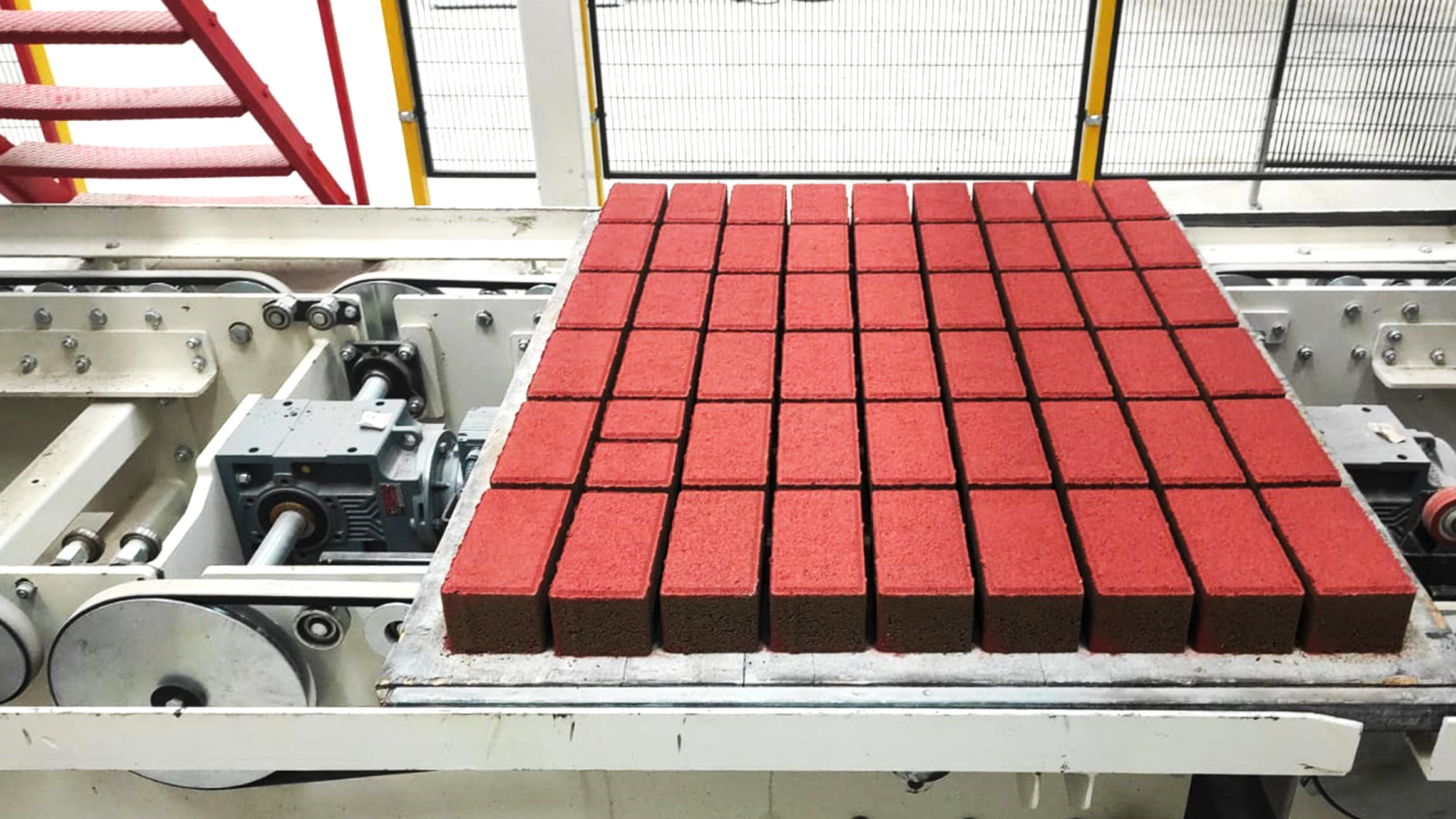
- Interlocking paving stones
- Rectangular pavers
- Kerbstones
- Grass stones
- Drainage channels
- Gutter elements
- Slope protection blocks
- Chimney blocks
- Split-face blocks
- Landscaping products
- Special concrete elements
A plant designed only for standard hollow block production will have different technical requirements from a facility that needs to manufacture pavers, kerbstones and landscaping products on the same line.
Product dimensions must also be identified before choosing the machine. The height, width, thickness and geometry of the products determine the required mould system, pallet size, vibration characteristics and pressing force.
Investors should clarify the following points:
- Which products will be manufactured initially?
- What are the dimensions of each product?
- Will single-layer or double-layer production be required?
- Will coloured paving stones be manufactured?
- How frequently will product types be changed?
- Will custom products be produced for specific projects?
- Is future product diversification planned?
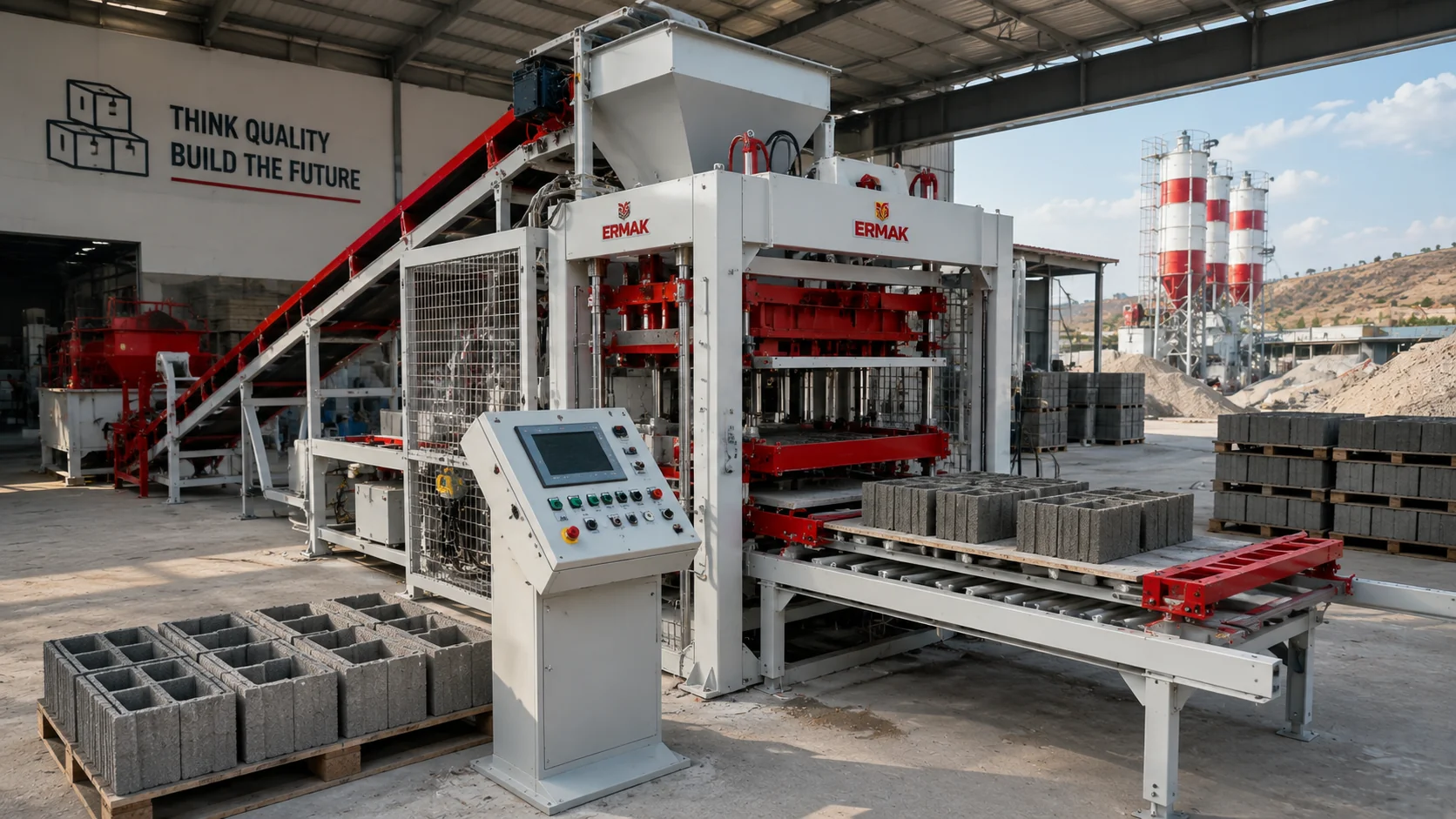
A flexible machine with a wide production height range and interchangeable moulds can reduce dependence on a single product. Ermak manufactures machinery, moulds and auxiliary systems for pavers, interlocks, kerbstones, hollow blocks, grass stones and various other precast concrete products.
Calculate the Required Production Capacity
Production capacity is usually one of the first specifications considered when purchasing a concrete block making machine. However, catalogue capacity must be interpreted carefully.
The actual production capacity depends on several variables:
- Number of products manufactured per cycle
- Machine cycle time
- Product dimensions
- Mould design
- Concrete feeding speed
- Vibration and pressing duration
- Pallet feeding speed
- Mixer performance
- Product transfer system
- Mould changing time
- Cleaning and maintenance periods
- Operator experience
- Number of shifts
- Packaging capacity
For example, a machine may theoretically complete a high number of cycles per hour. However, if the batching plant cannot prepare concrete fast enough, the machine will frequently wait for material.
The same problem can occur when the wet product transport system, curing area or packaging line cannot keep up with the main machine.
For this reason, investors should calculate the net production capacity of the complete plant, not only the theoretical capacity of the block machine.
A realistic capacity calculation should include:
- Planned operating hours per shift
- Expected cycle time
- Products manufactured per cycle
- Time required for mould changes
- Daily cleaning and maintenance periods
- Operational interruptions
- Expected rejection and waste rate
- Seasonal market demand
Purchasing a machine with insufficient capacity can create delivery problems and restrict business growth. Purchasing a machine far above actual market demand can leave expensive production capacity unused.
The goal is not to purchase the largest machine available. The goal is to choose a machine that supports current sales while providing reasonable capacity for future expansion.
Compare Actual Capacity, Not Marketing Figures
Machine capacity should always be evaluated for a clearly defined product.
A statement such as “30,000 units per shift” is incomplete unless it also explains:
- The dimensions of the product
- The number of cavities in the mould
- The assumed cycle time
- The length of the shift
- Whether breaks and maintenance are included
- The required concrete supply rate
- The level of automation
- The type of production pallet
A hollow block machine may produce many small units per cycle but fewer large blocks. Similarly, paving stone capacity is usually expressed in square metres rather than pieces.
Ask the manufacturer to provide production calculations for your actual product dimensions. When possible, request videos or references from facilities manufacturing similar products.
A responsible manufacturer should be able to explain how the declared capacity was calculated rather than simply presenting an attractive maximum figure.
Select the Right Automation Level
Concrete block production systems can be manual, semi-automatic or fully automatic. The correct level depends on the investment budget, labour conditions, production target and required product consistency.
Manual Concrete Block Machines
Manual machines generally require more operator involvement during material feeding, product removal, pallet handling or transportation.
Their main advantages may include:
- Lower initial investment
- Simpler operating structure
- Easier installation
- Suitability for limited production volumes
However, manual systems usually require more labour and may produce less consistent results. Production output can vary according to operator experience and working conditions.
Semi-Automatic Concrete Block Machines
Semi-automatic systems automate the main pressing and vibration processes while leaving some transportation, stacking or packaging operations to workers.
They may be suitable for:
- Small and medium-sized manufacturers
- Regional production facilities
- Investors with controlled production targets
- Markets where labour is readily available
- Plants producing several products in smaller batches
Semi-automatic systems can provide a practical balance between investment cost and production efficiency.
Fully Automatic Concrete Block Machines
A fully automatic concrete block machine can integrate concrete preparation, pallet feeding, mould filling, vibration, pressing, product transfer, stacking and packaging operations.
The main advantages include:
- Higher production capacity
- Reduced manual handling
- More consistent production cycles
- Better product repeatability
- Lower dependence on individual operators
- Easier production monitoring
- Recipe storage and management
- Reduced risk of human error
However, a fully automatic plant requires greater investment in control systems, sensors, transport equipment and safety infrastructure.
Automation should create measurable operational value. Paying for advanced features that the plant will never use is no wiser than buying a truck to deliver a single envelope.
Examine the Vibration System Carefully
The vibration system is one of the most important parts of a concrete block machine.
During production, vibration helps distribute the concrete mixture evenly inside the mould, removes air voids and increases product density. The performance of this system directly affects:
- Compressive strength
- Surface quality
- Edge definition
- Dimensional accuracy
- Product density
- Cement consumption
- Cycle time
- Waste rate
A weak or poorly controlled vibration system can cause:
- Porous surfaces
- Broken corners
- Uneven product heights
- Insufficient density
- Deformation during demoulding
- Quality differences across the pallet
- Higher product rejection rates
The strongest vibration motor does not automatically provide the best result. The vibration force must be transferred evenly to the production table and controlled according to the product and concrete recipe.
When comparing machines, investigate:
- Vibration force
- Frequency control
- Number and position of vibration motors
- Synchronisation of the motors
- Vibration table design
- Bearing quality
- Lubrication system
- Maintenance requirements
- Ability to adjust settings for different products
An advanced vibration system can help manufacture denser products using a more controlled concrete recipe. Over time, this can affect cement consumption, product quality and overall production costs.
Evaluate the Pressing System
Vibration and pressing must work together. The pressing system applies force to the concrete while the vibration system compacts the material inside the mould.
The machine must provide stable and repeatable pressure during every cycle. Inconsistent pressure can result in products with different heights, densities or surface characteristics.
Depending on the machine design, the pressing system may be:
- Hydraulic
- Electric
- Servo-controlled
- Mechanically assisted
- A combination of different technologies
Hydraulic systems are widely used because they can deliver high force and controlled movement. However, they require pumps, valves, hoses, filters, oil cooling and regular maintenance.
Electric or servo-controlled systems may offer precise movement, reduced hydraulic maintenance and improved energy management, depending on the application.
Ermak’s product range includes both conventional block machine technologies and newer solutions such as the Mega Hybrid 42, which uses a fully electric press system without hydraulic press components. The model is presented with automatic mould changing and high-capacity production specifications.
The correct pressing technology should be selected according to product requirements, maintenance capabilities and expected production volume.
Check the Machine Frame and Mechanical Construction
Concrete block machines operate under continuous vibration and high mechanical loads. A weak frame may deform over time, causing alignment problems, uneven vibration and premature wear.
The structural quality of the machine should therefore be examined carefully.
Important factors include:
- Steel grade
- Plate thickness
- Total machine weight
- Frame geometry
- Welding quality
- Stress-relieving processes
- Machining accuracy
- Guide systems
- Bearing arrangements
- Mould alignment
- Accessibility for maintenance
A heavy machine is not automatically a high-quality machine. Weight alone cannot replace proper engineering.
However, the frame must be sufficiently rigid to control vibration and maintain accurate alignment during years of production. Small alignment problems can eventually lead to uneven products, damaged moulds and increased maintenance costs.
Ask the manufacturer how the machine frame is manufactured, machined and tested. Long-term production references are especially valuable because structural weaknesses may not appear during a short factory demonstration.
Consider Pallet Size and Production Area
The production pallet determines the usable mould area and affects the number of products manufactured per cycle.
A larger pallet may allow more products to be produced in each cycle, but it also requires:
- A larger mould
- A stronger machine frame
- More powerful vibration
- Larger pallet handling equipment
- Wider conveyors
- Larger curing systems
- More storage space
- Higher pallet investment
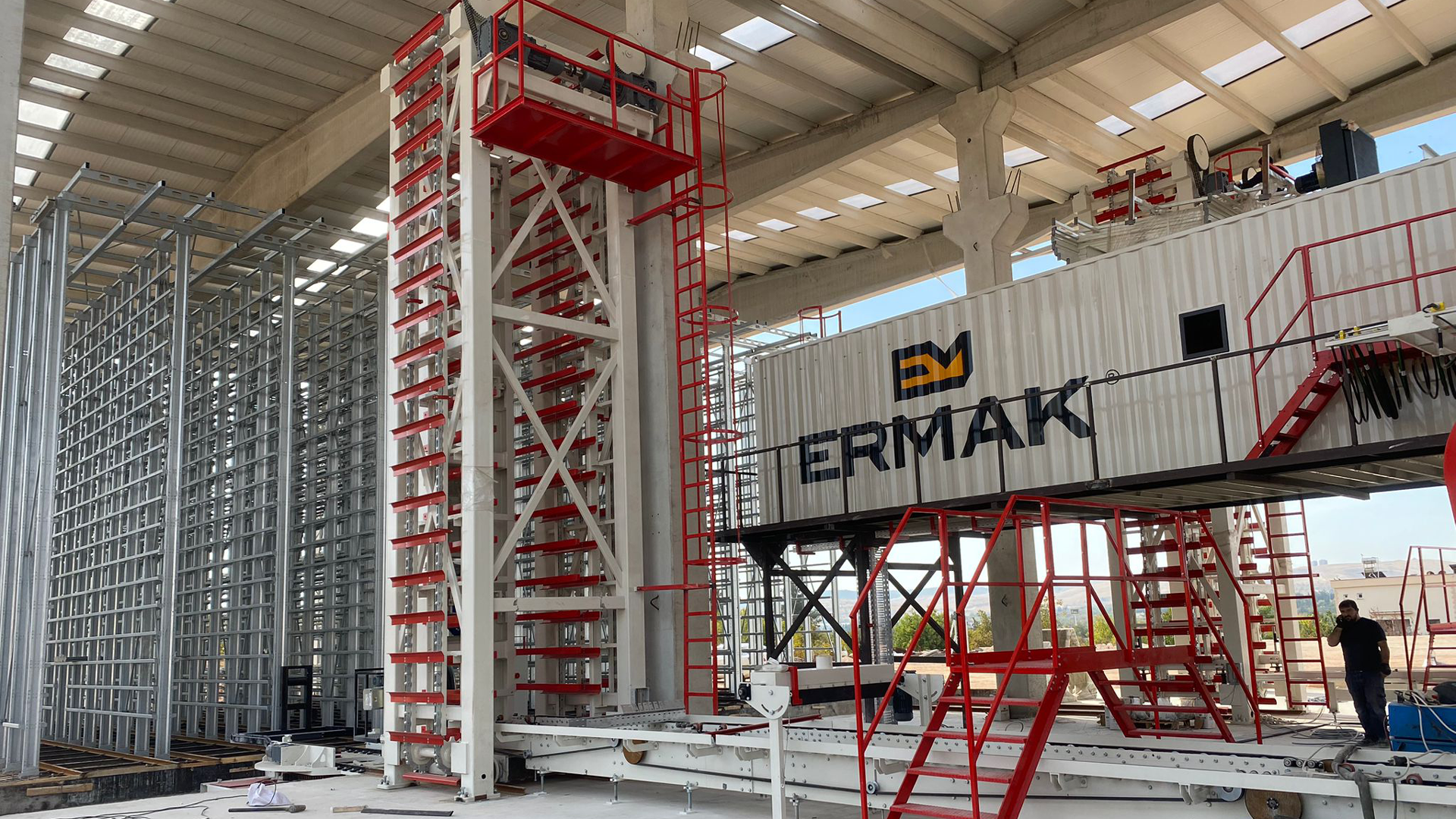
Pallet dimensions also affect the layout of the entire plant. The elevator, lowering device, finger car, curing racks, return line and packaging system must all be compatible with the selected pallet.
When comparing machines, consider:
- Pallet width and length
- Pallet thickness
- Pallet material
- Expected pallet lifetime
- Number of pallets required
- Availability of replacement pallets
- Products manufactured per pallet
- Compatibility with curing racks
A machine with a larger pallet does not automatically provide better economics. The value depends on cycle time, product arrangement, energy consumption and the total cost of the handling system.
Review Mould Quality and Compatibility
The mould determines the dimensions, shape and surface characteristics of the finished product.
A high-quality machine fitted with a poor mould cannot produce consistently high-quality blocks. Mould quality affects:
- Product dimensions
- Surface finish
- Edge definition
- Production speed
- Material distribution
- Product release
- Wear rate
- Waste percentage
Important mould characteristics include:
- Steel quality
- Hardening process
- Heat treatment
- CNC machining accuracy
- Shoe-to-mould clearance
- Replaceable wear components
- Welding quality
- Product tolerances
- Ease of installation
- Maintenance requirements
Investors should also consider mould changing time. Plants that manufacture several products may change moulds frequently. A machine that requires several hours for each change can lose a substantial amount of productive time.
Ask whether the mould changing process requires special lifting equipment, manual adjustments or extensive calibration.
Ermak produces moulds for paving stones, relief-surface pavers, kerbstones, hollow blocks, bims blocks, grass stones, slope elements, split blocks and chimney blocks. Its mould category also states compatibility with different machine models.
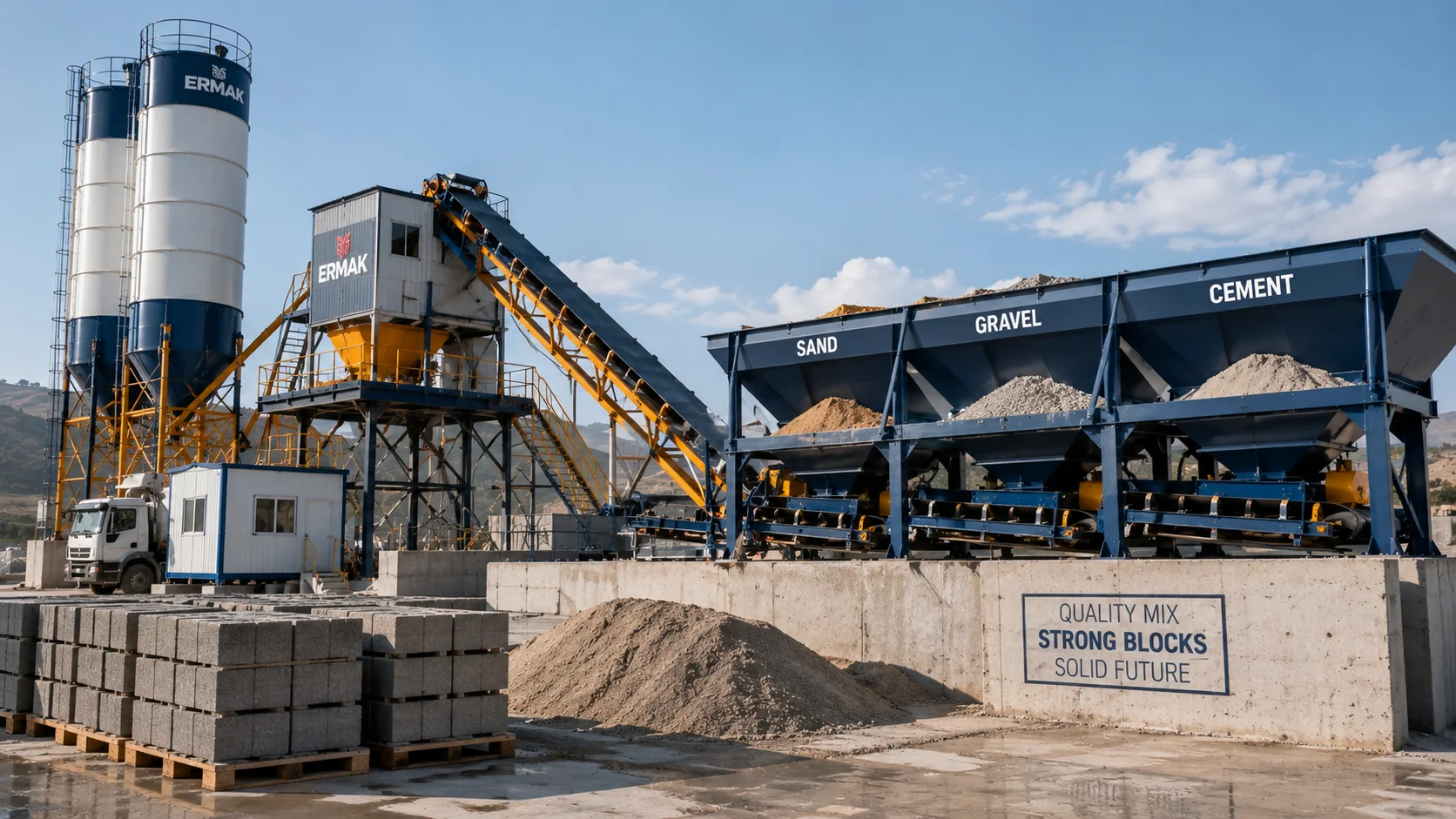
Match the Batching Plant to the Machine
The main block machine is only one component of a complete production facility.
The concrete batching plant must supply a consistent mixture at the required rate. An undersized batching system will restrict production regardless of how fast the block machine can operate.
The batching plant should be evaluated according to:
- Aggregate bunker capacity
- Number of aggregate compartments
- Weighing accuracy
- Cement silo capacity
- Mixer type
- Mixer output
- Mixing time
- Water dosing
- Chemical admixture dosing
- Moisture measurement
- Recipe control
- Main mix and face mix requirements
Double-layer paving stone production may require separate mixers for the base concrete and coloured face concrete.
Mixer output should be calculated according to real production cycles. Filling, mixing and discharge times must all be included. Nominal mixer volume alone does not show how much concrete can actually be prepared per hour.
Ermak manufactures concrete batching plants and uses its Milano Mixer systems within these plant solutions. The company states that standard or project-specific automation software can be used depending on the application.
Plan the Curing System
Freshly produced concrete blocks require controlled curing before they can be handled, packaged or delivered.
The curing system must be sized according to:
- Hourly production
- Number of shifts
- Pallet dimensions
- Products per pallet
- Required curing time
- Temperature
- Humidity
- Product type
- Rack capacity
- Pallet return time
If the curing area is too small, freshly produced goods will accumulate and eventually stop the production line.
Uncontrolled curing can also cause:
- Rapid moisture loss
- Surface cracking
- Colour differences
- Reduced strength
- Uneven product quality
Curing racks, elevators, lowering systems and transfer vehicles should therefore be considered during the initial plant design, not added as an afterthought.
Evaluate Product Handling and Packaging
Production does not end when the block leaves the machine.
Fresh products must be transported to the curing area. After curing, they must be removed from production pallets, stacked, packaged and transferred to storage.
Depending on the automation level, the plant may require:
- Wet product conveyors
- Elevators
- Lowerators
- Finger cars
- Curing racks
- Dry product conveyors
- Cubing systems
- Packaging robots
- Strapping machines
- Stretch wrapping systems
- Empty pallet return lines
Packaging capacity must match machine capacity. A slow packaging system can create a bottleneck even when the block machine and batching plant are operating correctly.
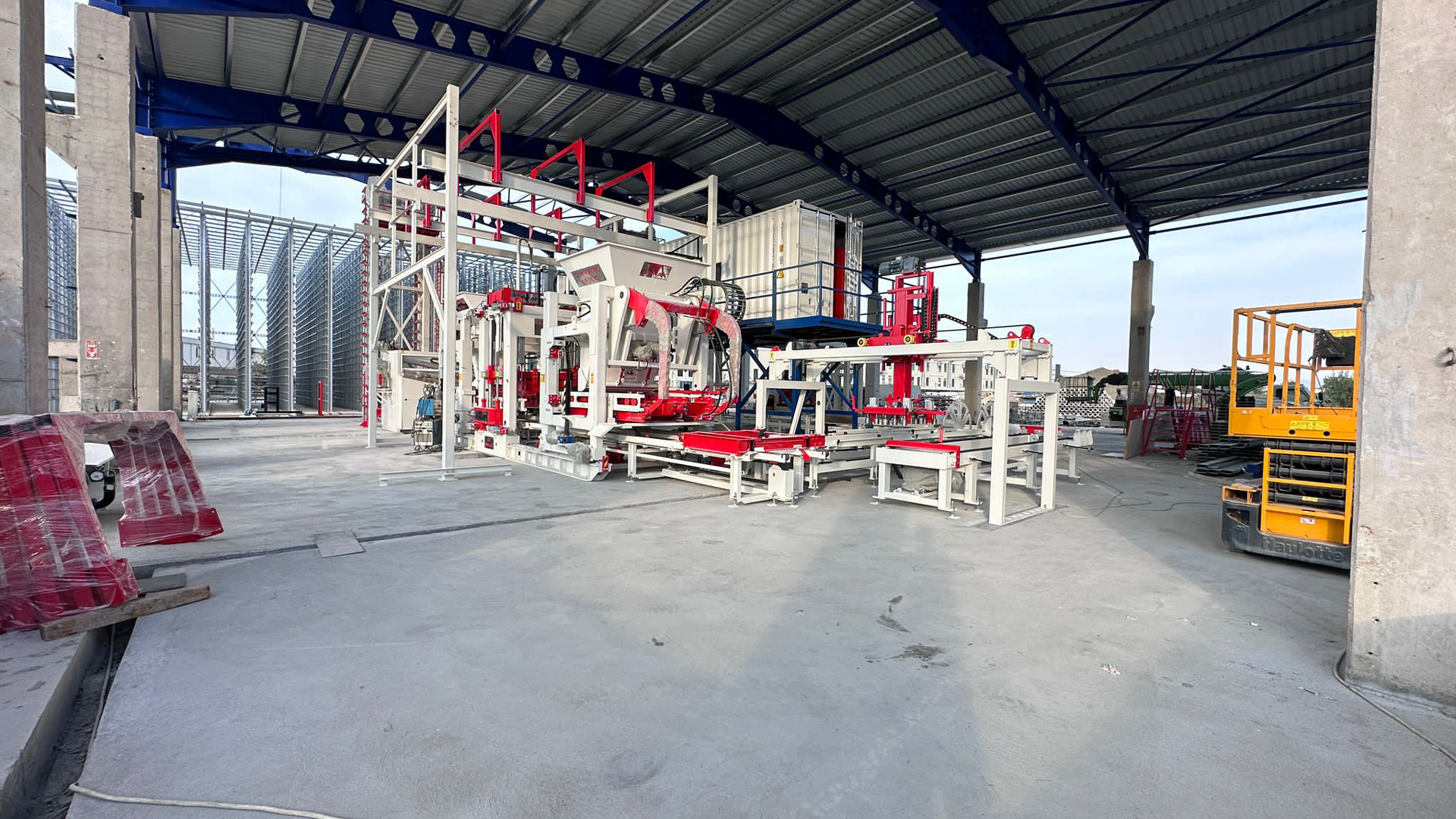
Ermak’s portfolio includes transporting and packaging equipment alongside block machines, moulds, batching plants, mixers and curing rack systems. This makes it possible to evaluate the production plant as an integrated system rather than a collection of unrelated machines.
Calculate Energy Consumption
Energy cost has a direct effect on the manufacturing cost of every concrete block.
When comparing machines, request information about:
- Installed electrical power
- Average operating consumption
- Peak power demand
- Vibration motor consumption
- Hydraulic unit consumption
- Mixer consumption
- Conveyor consumption
- Compressed air requirements
- Standby consumption
Installed power and actual consumption are not the same. A machine may have a high installed power rating but use only part of that power during normal operation.
Energy consumption should be calculated for the complete line, including:
- Block machine
- Batching plant
- Mixers
- Conveyors
- Elevators
- Finger cars
- Packaging system
- Compressors
- Curing equipment
Energy-efficient equipment may have a higher initial purchase price but provide lower operating costs during years of production.
Consider Maintenance and Spare Parts
Even the most advanced concrete block machine requires regular maintenance.
Before purchasing, examine:
- Daily maintenance procedures
- Lubrication points
- Accessibility of wear parts
- Hydraulic filter replacement
- Vibration system maintenance
- Sensor replacement
- Mould cleaning
- Software diagnostics
- Recommended spare parts
- Expected service intervals
The availability of spare parts is just as important as machine performance.
A small unavailable component can stop an entire production facility. This risk becomes especially important for plants operating far from the machine manufacturer.
Ask the supplier:
- Which critical parts are kept in stock?
- Can remote technical support be provided?
- How quickly can service personnel respond?
- Are electrical and mechanical drawings supplied?
- Is operator training included?
- Are standard international components used?
- Is support available for older machine models?
- Can spare parts be shipped internationally?
A machine should be evaluated not only by how well it runs when new, but also by how quickly it can return to production after a fault.
Inspect the Control and Automation System
Modern concrete block machines use PLC systems, operator panels, sensors, frequency drives and automated diagnostic functions.
The control system should be powerful enough to manage production without becoming unnecessarily complicated.
Useful functions may include:
- Product recipe storage
- Automatic parameter adjustment
- Cycle monitoring
- Alarm history
- Sensor diagnostics
- Motor fault detection
- Production counters
- Maintenance reminders
- Remote connection
- User access levels
- Data reporting
The interface must also be understandable for operators. A sophisticated control system that no one at the plant can use effectively becomes an expensive decoration.
Check whether the electrical components are available in the country where the machine will operate. Using internationally supported components can reduce future downtime.
Examine Safety Standards
Concrete block production lines contain moving equipment, heavy moulds, automatic transport systems, high-pressure circuits and powerful vibration mechanisms.
The machine should include appropriate safety systems such as:
- Emergency stop buttons
- Safety doors
- Protective fences
- Interlock switches
- Light barriers
- Movement sensors
- Hydraulic pressure protection
- Audible and visual warnings
- Electrical protection systems
- Lockout procedures
- Safe maintenance access
Safety equipment should be integrated into the original machine design. It should not depend on temporary modifications made after installation.
The manufacturer should also provide operator instructions, maintenance documentation and training.
Consider Factory Layout and Infrastructure
Choosing a concrete block machine without planning the factory layout can result in serious operational problems.
The plant must provide sufficient space for:
- Aggregate storage
- Batching plant
- Cement silos
- Main production machine
- Wet product handling
- Curing system
- Dry product handling
- Packaging
- Finished product storage
- Mould storage
- Production pallets
- Maintenance workshop
- Forklift routes
- Truck loading areas
The infrastructure must also support:
- Electrical demand
- Transformer capacity
- Water supply
- Compressed air
- Drainage
- Machine foundations
- Floor load
- Dust management
- Ventilation
- Lighting
A well-designed layout reduces unnecessary forklift movement and helps materials flow logically from raw material storage to finished product dispatch.
Compare the Total Cost of Ownership
The purchase price is only one part of the real machine cost.
The total cost of ownership includes:
- Machine purchase
- Moulds
- Production pallets
- Transportation
- Installation
- Factory foundations
- Electrical infrastructure
- Energy consumption
- Labour
- Maintenance
- Spare parts
- Product waste
- Production downtime
- Packaging
- Software support
- Expected working life
A low-cost machine may become expensive if it consumes more electricity, requires more workers or produces a high percentage of rejected products.
A more durable machine with reliable service support may provide better long-term value even if the initial purchase price is higher.
Price buys the machine. Performance pays back the investment.
Visit Reference Plants
A factory acceptance test is useful, but a machine that has been operating for several years provides more valuable information.
When visiting a reference facility, examine:
- Actual shift output
- Product quality
- Cycle consistency
- Machine vibration
- Noise levels
- Mould changing time
- Maintenance frequency
- Operator experience
- Spare parts availability
- Service response
- Condition of the machine frame
- Long-term customer satisfaction
Try to visit a facility producing products similar to those planned for your own plant.
Do not rely only on newly installed reference machines. Long-running plants reveal much more about durability and maintenance requirements.
Choose a Manufacturer, Not Only a Machine
A concrete block plant is usually expected to operate for many years. For this reason, the relationship with the manufacturer continues long after installation.
A reliable manufacturer should provide:
- Technical needs analysis
- Plant layout planning
- Capacity calculations
- Product and mould recommendations
- Installation
- Commissioning
- Operator training
- Maintenance guidance
- Spare parts
- Remote support
- Future capacity expansion options
Founded in 1965, Ermak manufactures concrete block machines as well as moulds, batching plants, mixers, curing systems, transport equipment and packaging solutions. The company operates from production facilities in Kocaeli and Tuzla and exports to international markets.
Working with a manufacturer capable of supplying the complete production system can simplify compatibility, installation and after-sales support.
Concrete Block Machine Selection Checklist
Before approving the purchase, confirm the following points:
- Products and dimensions have been defined.
- Real market demand has been calculated.
- Net shift capacity has been determined.
- Machine cycle times have been verified.
- Pallet dimensions are suitable.
- Mould quality has been examined.
- Mould changing time is acceptable.
- Vibration technology has been evaluated.
- Pressing technology matches production needs.
- The batching plant can supply enough concrete.
- Mixer capacity has been calculated correctly.
- Curing capacity matches production output.
- Packaging equipment can support the line.
- Factory space and infrastructure are sufficient.
- Energy consumption has been calculated.
- Safety equipment has been reviewed.
- Maintenance procedures are understood.
- Spare parts availability has been confirmed.
- Installation and training are included in the quotation.
- Reference plants have been inspected.
- Total ownership cost has been calculated.
Making the Right Investment Decision
The best concrete block machine is not automatically the fastest, largest or cheapest option.
It is the machine that can manufacture the required products with consistent quality, realistic production capacity and manageable operating costs.
A successful investment requires the main machine, moulds, batching plant, mixers, curing system, transportation equipment and packaging line to operate as one coordinated production system.
Ermak develops complete solutions for hollow blocks, paving stones, kerbstones and various precast concrete products. Investors planning a new facility or expanding an existing production line can evaluate machine capacity, automation, mould options and auxiliary equipment according to their specific production targets.
For detailed information about concrete block machines, production capacities, mould options and complete plant configurations, contact Ermak to discuss a solution based on your products, target output and factory conditions.
Frequently Asked Questions
What is the most important factor when choosing a concrete block machine?
There is no single factor. Production capacity, product range, vibration quality, mould compatibility, automation level, energy consumption, mechanical durability and after-sales support must be evaluated together.
Should I choose a fully automatic concrete block machine?
A fully automatic system is suitable for plants that require high capacity, consistent product quality and reduced manual handling. A semi-automatic system may be more economical for smaller production volumes or markets with lower labour costs.
Can one machine produce both blocks and paving stones?
Yes. A machine with a suitable production height range and interchangeable mould system may manufacture hollow blocks, pavers, kerbstones, grass stones and other concrete products. Separate moulds and production settings are required for each product.
How is concrete block machine capacity calculated?
Capacity depends on cycle time, products per cycle, product dimensions, working hours and the performance of the complete production line. Maintenance, mould changes and operational interruptions should be deducted from theoretical capacity.
Why is the vibration system important?
The vibration system compacts concrete inside the mould. It affects density, compressive strength, surface quality, dimensional consistency and product rejection rates.
Is the batching plant included with the block machine?
It depends on the quotation. Some quotations include only the main machine, while others cover batching plants, mixers, moulds, production pallets, transport systems and packaging equipment. All quotation scopes should be compared carefully.
How many moulds are required?
At least one mould is required for each product design and dimension. Plants targeting several markets usually invest in multiple moulds for hollow blocks, paving stones, kerbstones and landscaping products.
How much factory space is required?
The required area depends on production capacity and automation. Space is needed for aggregate storage, batching, production, curing, packaging, mould storage, finished products and vehicle movement.
Why is after-sales support important?
An unavailable spare part or delayed technical intervention can stop the entire plant. Reliable service, documentation, training and spare parts supply reduce production downtime.
How should different machine quotations be compared?
Compare the same scope: machine capacity, moulds, pallets, batching plant, mixers, transport systems, curing, packaging, installation, training, warranty and spare parts. Comparing only the final price can be misleading.